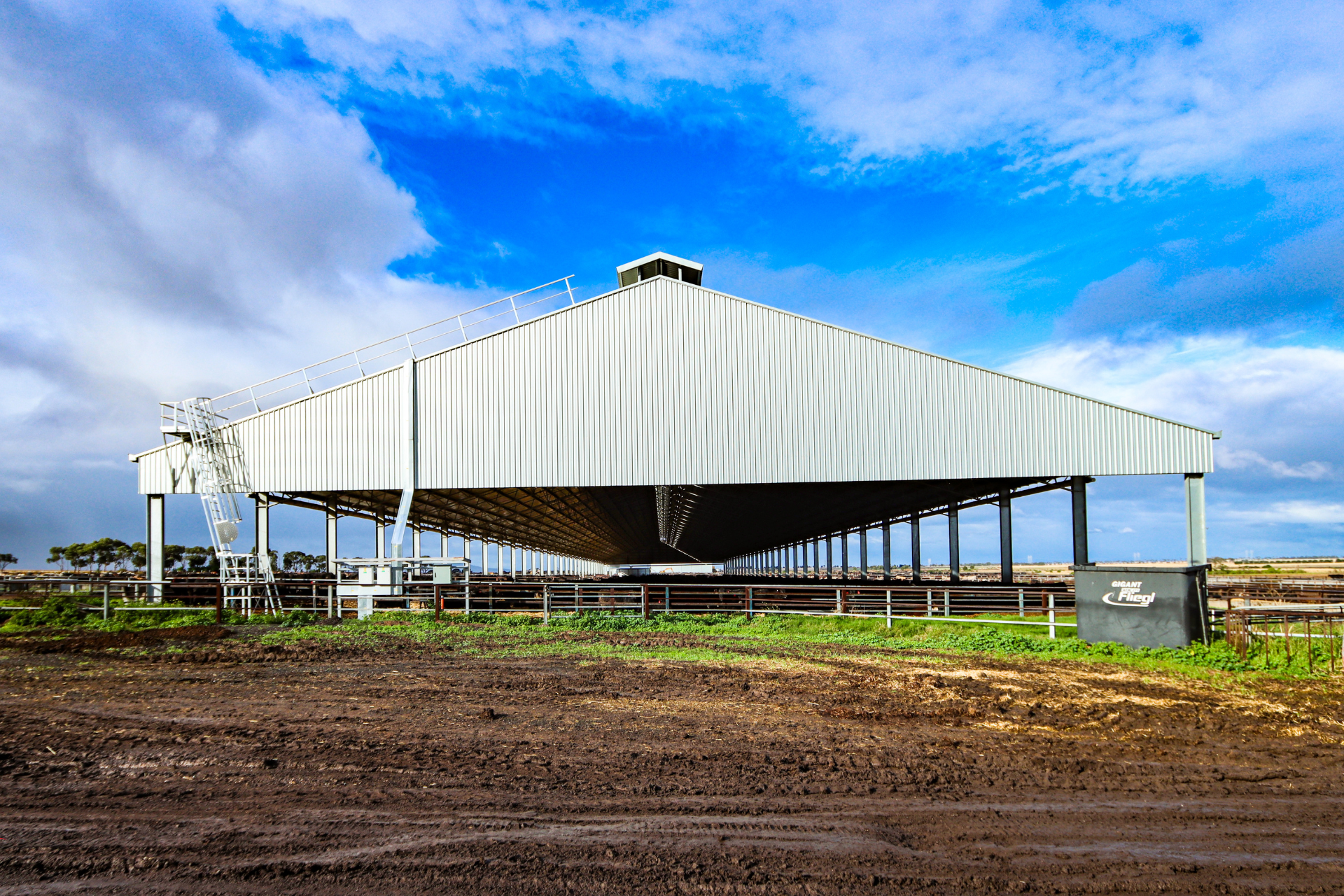
Covered housing for beef feedlots has moved from a niche concept to a mainstream consideration.
Since the introduction of the ALFA Shade Initiative in 2020, more than 75 percent of cattle in Australian feedlots now have access to shade, as outlined in ‘ALFA’s Shade Initiative – Our Journey Towards Having All Feedlot Cattle with Access to Shade’.
This reflects the industry’s willingness to invest in new infrastructure and adjust management practices to improve animal welfare and maintain social license.
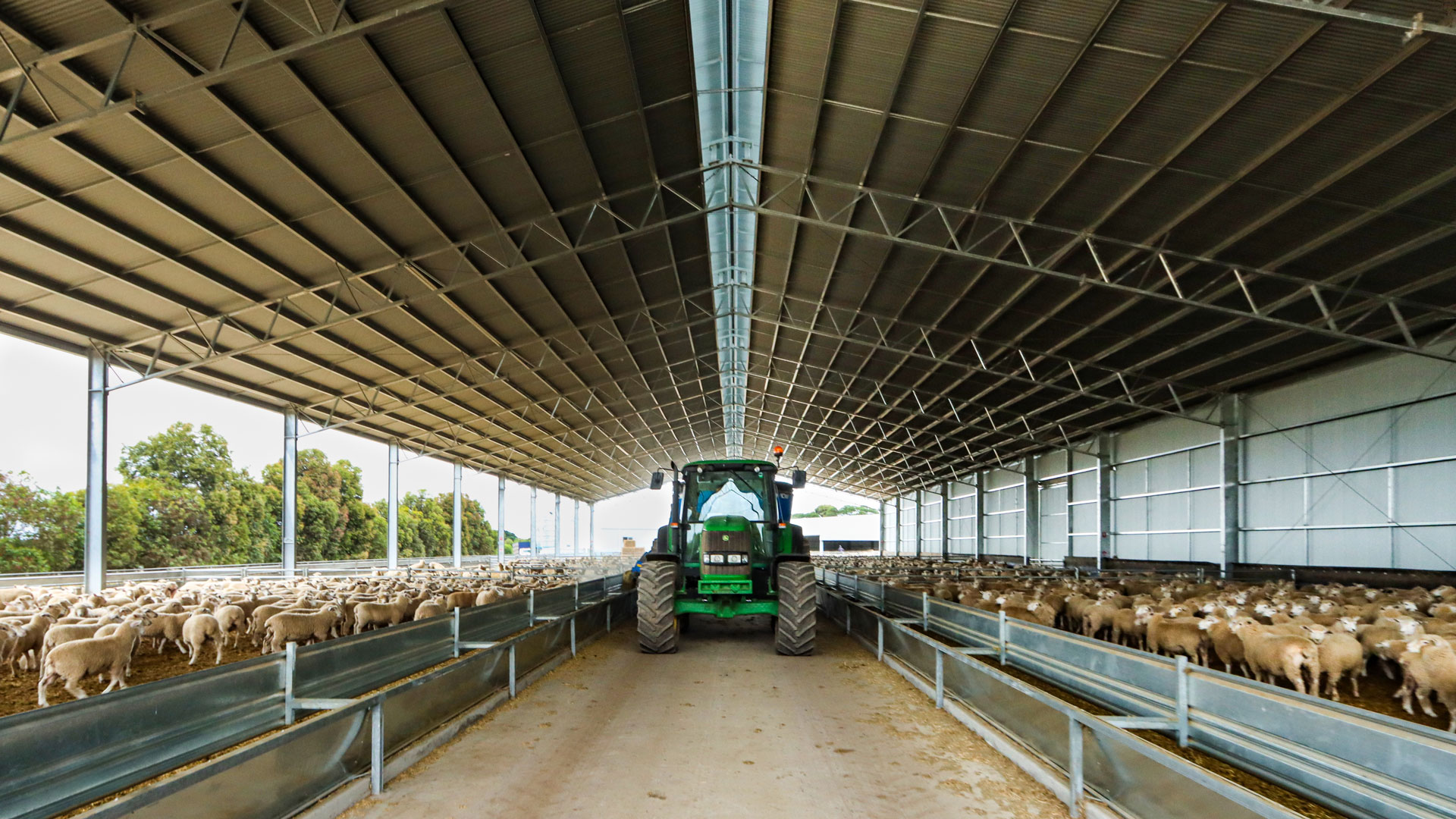
In recent years, fully covered or contained housing systems, using purpose-built sheds rather than shade cloth, have become popular. Similar to trends seen in the dairy sector with loafing barns, these systems are being adopted to better manage heat load, improve pen conditions and increase production.
However, installing a shed alone does not guarantee better outcomes. The performance of covered feedlot housing is strongly influenced by how the system is managed day to day – and many of these management decisions need to be made early in the planning process.
This article focusses on 5 management details that influence animal comfort, growth rates, and operational efficiency.
- The ratio of bunk space to stocking density
- Bedding supply and management
- Pen sizes for finished cattle
- Site layout, including feed lane placement, supporting infrastructure and future expansion
- Roof design for ventilation and stormwater catchment
Getting these details right is what turns covered housing for beef feedlots into a productive, profitable and sustainable system.
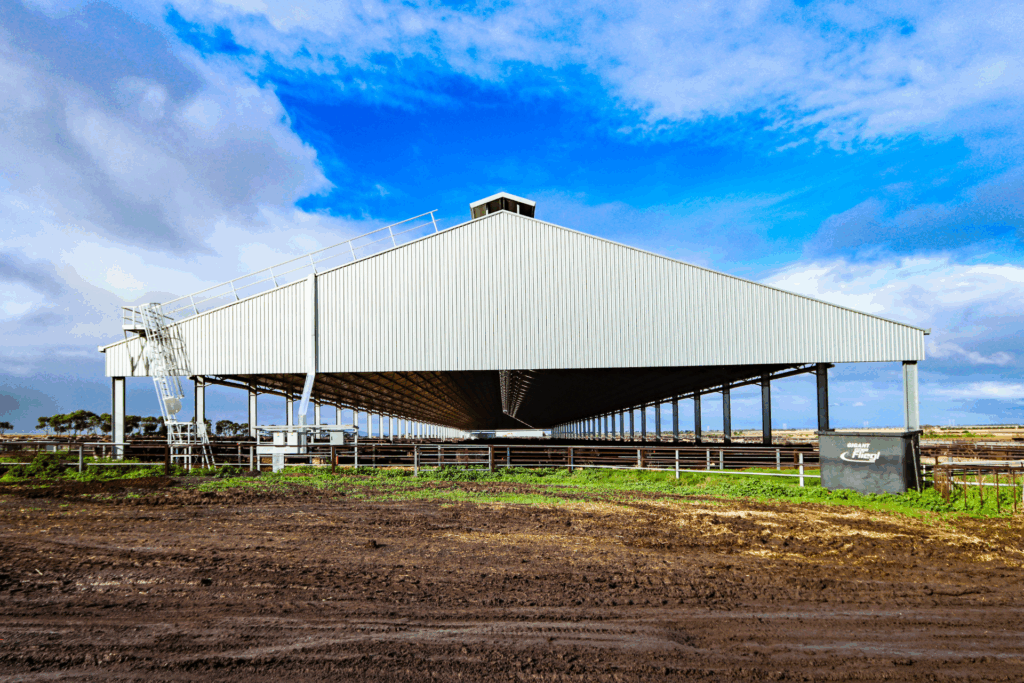
5 Management Considerations For Covered Housing In Beef Feedlots
Should I change pen sizes for finished cattle? What is the best bedding? How should I lay out the site? Does the roof shape influence airflow?
Read on and find out!
1
1. Bunk Space & Stocking Density
The ideal bunk space and stocking density for covered housing depend on several factors, including animal size and the length of time cattle are housed under the shed.
Long-fed cattle are larger and spend more time in the shed, which increases pressure on both bunk space and pen area. Short-fed programs typically allow higher stocking densities, particularly in the early stages.
There are several industry recommendations for bunk space and stocking density under covered systems, including:
- A minimum stocking density of 9 m² per SCU in Queensland, or around 6 m² per SCU in other states
- A bunk space of about 250mm per head
Finding the correct ratio of bunk space and stocking density helps ensure there is no unused capacity or, conversely, a lack of space.
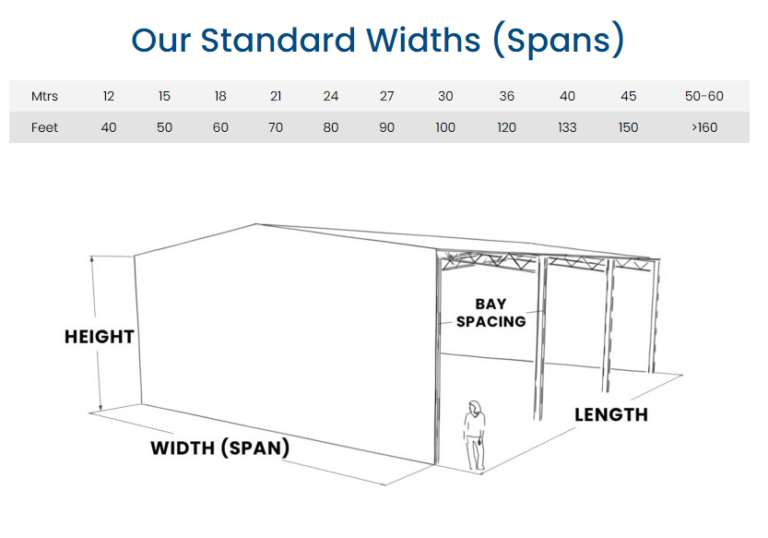
We have developed several calculators to help you determine the correct ratio and shed size for your program – try them out below.
Pen Area Size Calculator
Use this calculator to determine the ideal width and length of a pen based on your chosen head count, desired bunk space and stocking density.
Bunk Space & Density Calculator
Already have existing pens? Use this calculator to determine how many cattle it can hold and it’s impact on density and bunk space.
2
2. Bedding Management
The most suitable bedding for your covered housing system will largely depend on what bedding is available in the area and how much it costs
Keep in mind that different types of bedding perform differently and have different management practices.
For example, wood chips are hard-wearing but absorb less effluent, while straw works well but breaks down faster and needs to be removed and replaced more often.
When selecting bedding, it is also important to consider the machinery, labour, access, and storage you will need to manage it. These factors should be accounted for early, as they influence shed design, site layout, and ongoing operating costs.
3
3. Pen Sizes For Finished Cattle
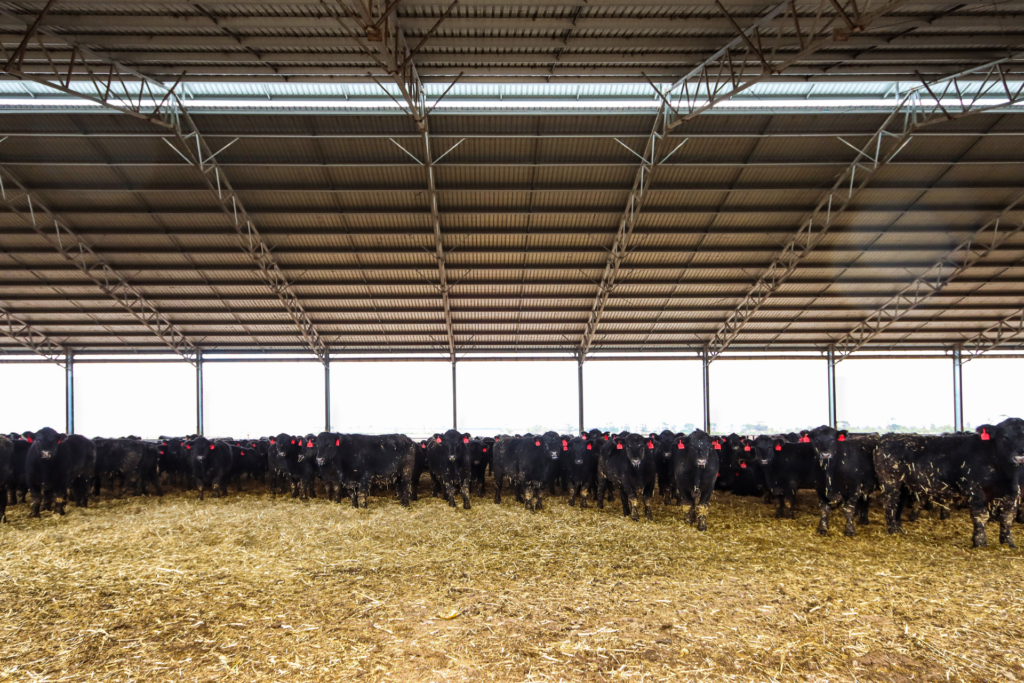
Pen size is another important consideration, particularly for long-fed cattle such as Wagyu.
Cattle enter the shed as smaller animals and can initially be stocked at higher densities. As they are finished, they leave the shed significantly larger and require more space. One way to manage this is by adjusting pen sizes or reducing stocking density as cattle progress through the feeding program.
Planning for this change early helps avoid overcrowding in the later stages of feeding and supports consistent growth and animal comfort.
4
4. Site Planning
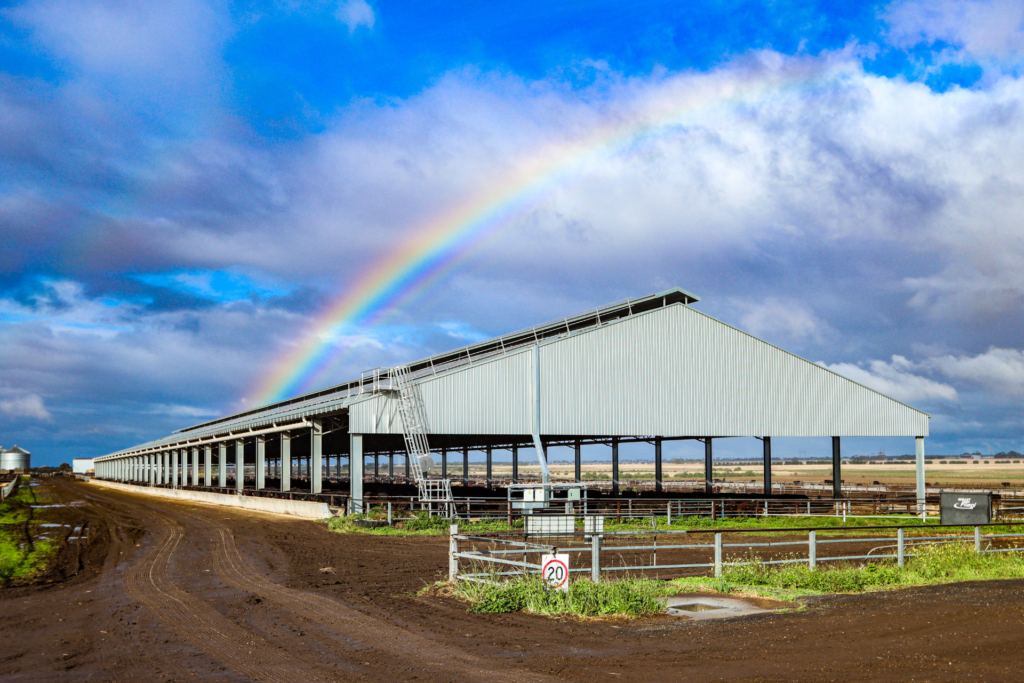
Site planning plays a major role in creating a safe, low-stress environment for both cattle and staff. These decisions also influence airflow, drainage, infrastructure placement, and future expansion.
This is particularly important where existing infrastructure is being incorporated, or where multiple shed builds are planned.
Key considerations include:
- How the sheds can be safely accessed and with minimal stress on the cattle (such as access roads and feed lane position)
- Placement of water storage tanks to capture run-off
- Whether there will be adequate cross ventilation (especially if there are multiple sheds)
- Additional storage sheds required for fodder and bedding
- Orientation of your shed/s (east-west is usually recommended)
For example, a centre feedlane may provide safer access and faster feeding out with less interaction with other traffic. However, you will need to remember that the wider the shed, the more difficult it can be to ventilate (Hot air collects in the middle where cattle are feeding, as it rises through the ridge vent).

5
5. Roof Design
Once you have finalised management details like pens sizes and bedding for covered housing, you can turn your attention to capitalising on the advantages of a shed – and the roof design is a great place to start.
A roof over your feedlot allows you to stock heavier because the cattle are protected from the heat, and it also protects the pen surface from getting wet.
The roof design plays an important role in ensuring there is adequate ventilation to help keep the cattle cool and the pens dry.
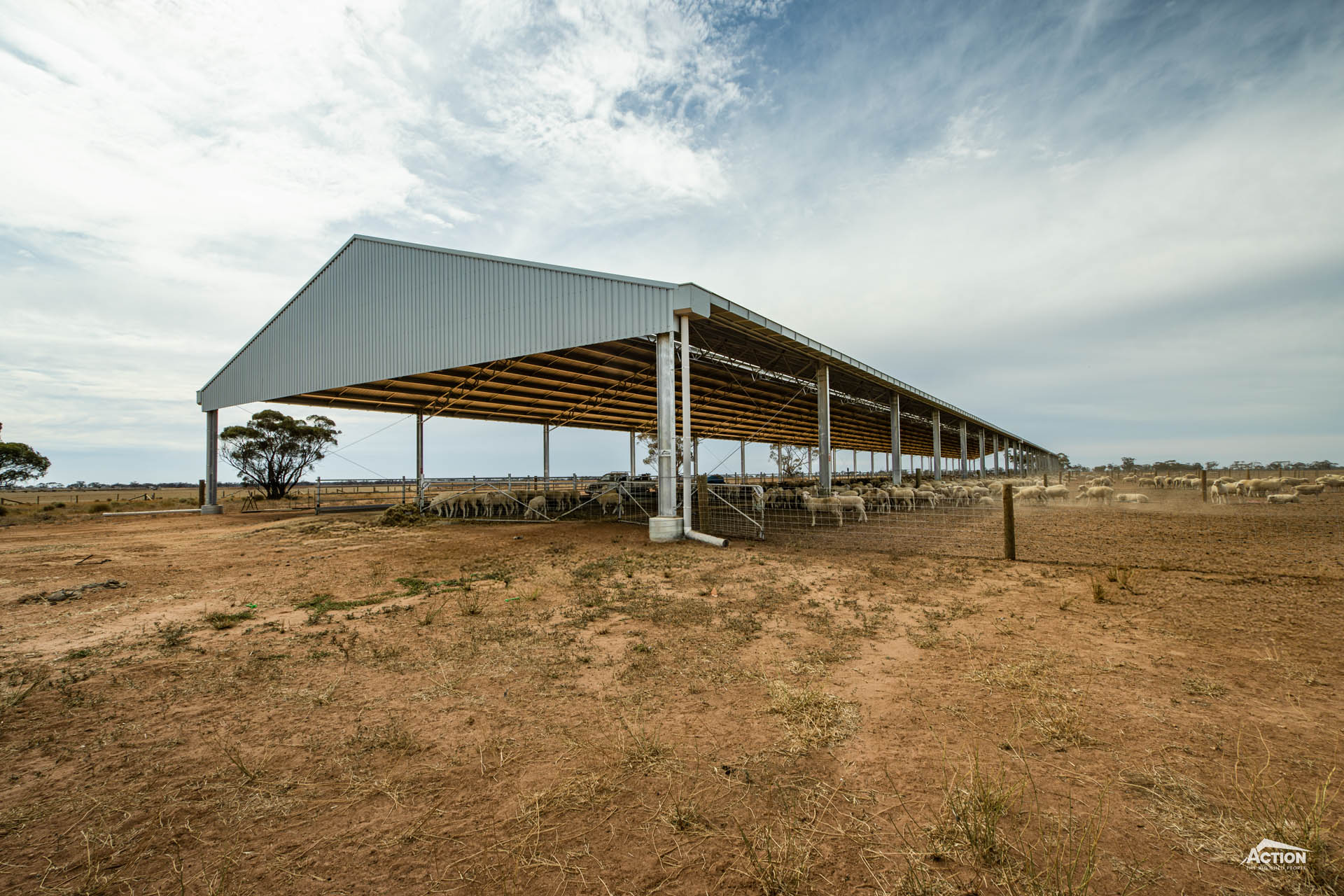
Based on CFD studies, the recommended roof design for covered housing for beef feedlots is a straight gable with a steep roof pitch (usually 18 degrees) and an open ridge vent. A “pop-top” cover over the ridge vent prevents rain and sunlight from entering the cover, while still allowing the hot air to escape.
The other advantage of this roof design is that it works well for stormwater catchment and solar panel installation – contributing to a sustainable set-up.
Frequently Asked Questions About Covered Housing For Beef Feedlots – Answered!
Quick answers to popular questions.
Covered housing for beef feedlots refers to cattle being managed under a permanent roof structure (often called a “feedlot cover”) rather than relying on open pens or shade cloth. These systems use purpose-built sheds designed to protect pens and provide consistent shade and effective ventilation.
Covered housing does not mean cattle are fully enclosed. The sides remain open to allow airflow, with the roof doing most of the work in reducing heat load and keeping bedding drier.
The best design for covered housing for beef feedlots is a “roof only configuration” with an 18-degree roof, open ridge vent and an Action pop-top ridge vent cover.
Using the MLA Feedlot Covered Housing Systems Guide examples, the cost per SCU equates to ~$1,230/SCU for an uncovered feedlot and ~$2,060/SCU for a covered housing system.
These examples include the complete costs of works such as feed bunks and aprons, drainage and solid waste storage.
It is important to remember that costs are very site and design-specific and material and labour costs vary considerably between regions and over time.
Our cost estimate for the feedlot shed construction is around $1400/SCU when stocked at 9m2 (supplied and erected).
Shade cloth is typically a lower-cost option and can be quicker to install. Covered housing provides a longer lasting asset and more opportunity for ROI.
Computational fluid dynamics have shown that there is minimal distinction between a curved and straight roof profiles at cow level.
A straight roof is considered best-practice because it more cost-effective, easier to construct and allows solar panels to be installed.
That’s a wrap on management considerations for covered housing for beef feedlots!
Decisions around bunk space, stocking density, bedding, pen sizing, site layout, and roof design all influence how well a covered system performs.
If you are considering covered housing for your feedlot, careful planning and experienced input at the design stage can make the difference between a shed that simply provides shade and one that delivers measurable operational benefits.
So, book a project consultation with the team at Action – call 1800 687 888 or email [email protected]