Wondering how to plan your grain shed site – and not sure where to start? This article is a good place!
We tapped building consultant Ben McLerie for his insights.
Starting with the end goal in mind is a smart idea when it comes to planning a grain shed site and Ben draws on his experience of project managing commercial and on-farm grain shed builds to provide best-practice and practical recommendations.
Your grain shed site should:
- Make the best use of available space
- Allow safe and efficient logistics year-round
- Address council and compliance requirements
- Accommodate future growth
A well-planned grain shed site will also avoid project delays and prevent unnecessary or unexpected project costs.
So, how do you make sure that is the case?
In this article, you will find a handy checklist of where to start and key points to cover when planning a grain shed site – whether you are building on-farm or a large commercial site.
7 Steps To Planning Your Grain Shed Site
There first few steps are relatively obvious, like location and access points – and then we dive deeper into site preparation, fire design and project timing.
1
1. Site Location
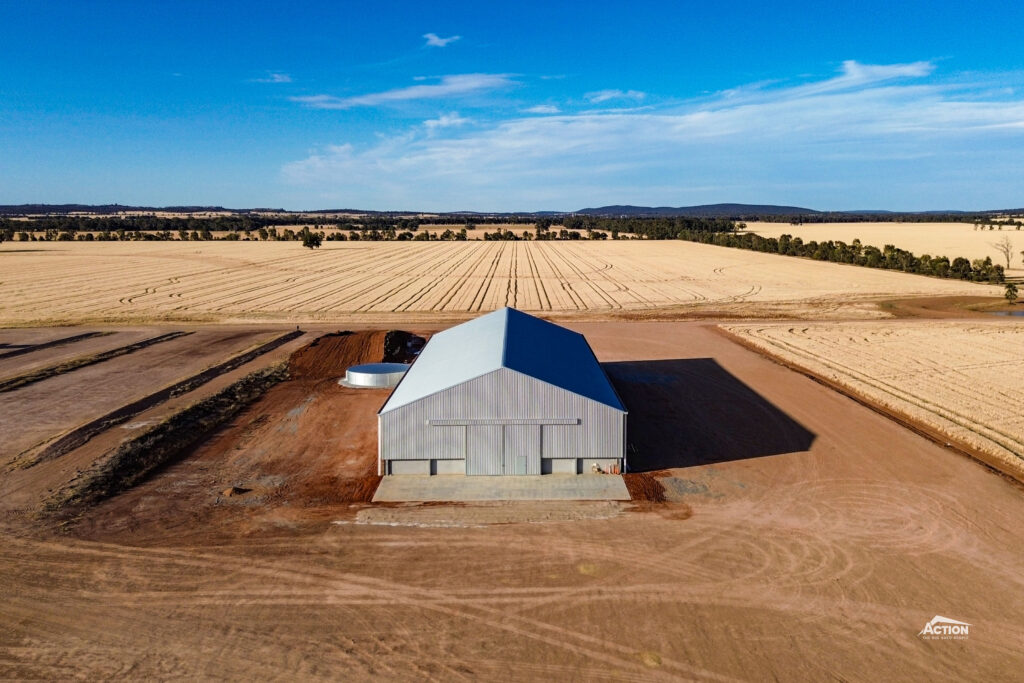
The first step to planning your grain shed site is to decide where the shed is going to be built.
You may already have a clear, logical choice in mind – but if not, here’s what you should be thinking about.
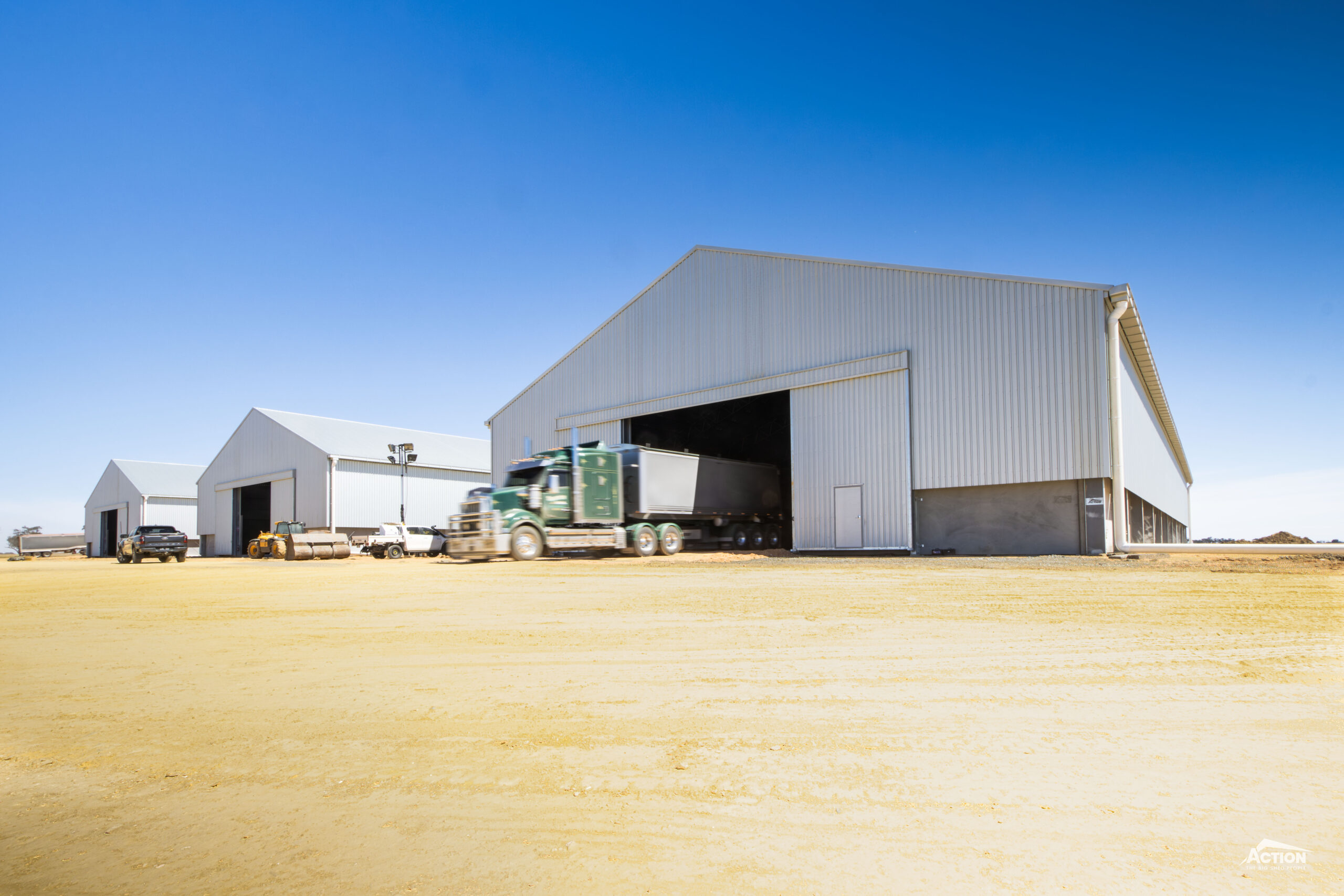
Firstly, is there enough space for my grain shed project? The site needs to include room for the overall shed size, crane access for the installation team and turning circles.
Secondly, is the site conveniently located near main roads or at central point in your operation?
Thirdly, is there any existing infrastructure you want to work in with? Or vice versa?
And finally, have you considered whether there are any site overlays or setback requirements that may influence the site location?
Any potential objections by neighbours?
Or nearby water storage that could be used to satisfy fire design requirements? (More on this later)
2
2. Shed & Site Layout
The next step is to consider how the overall site layout might look.
This will largely be influenced by the shed configuration, particularly the door placement.
For example, is the shed accessed from one gable end or two?
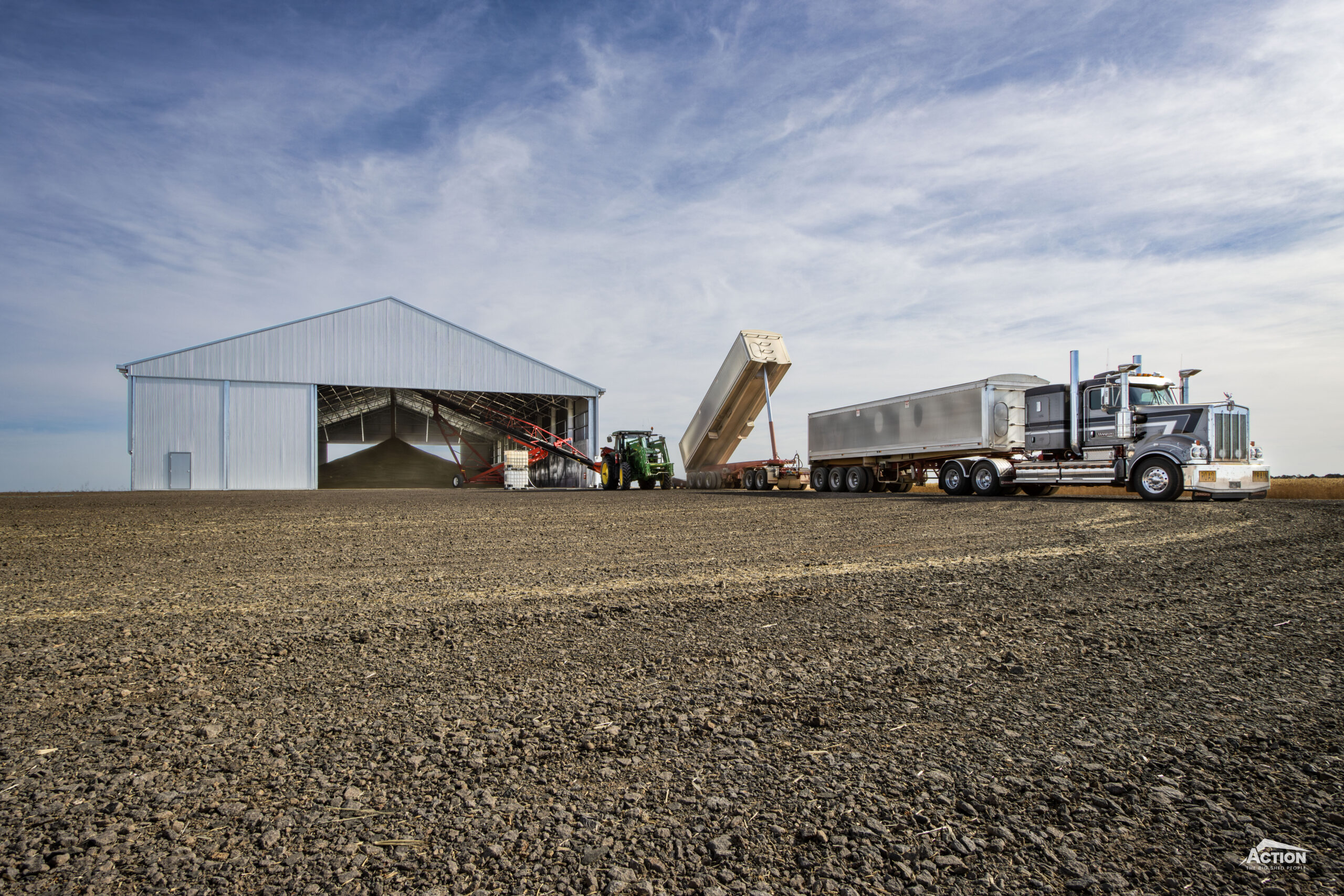
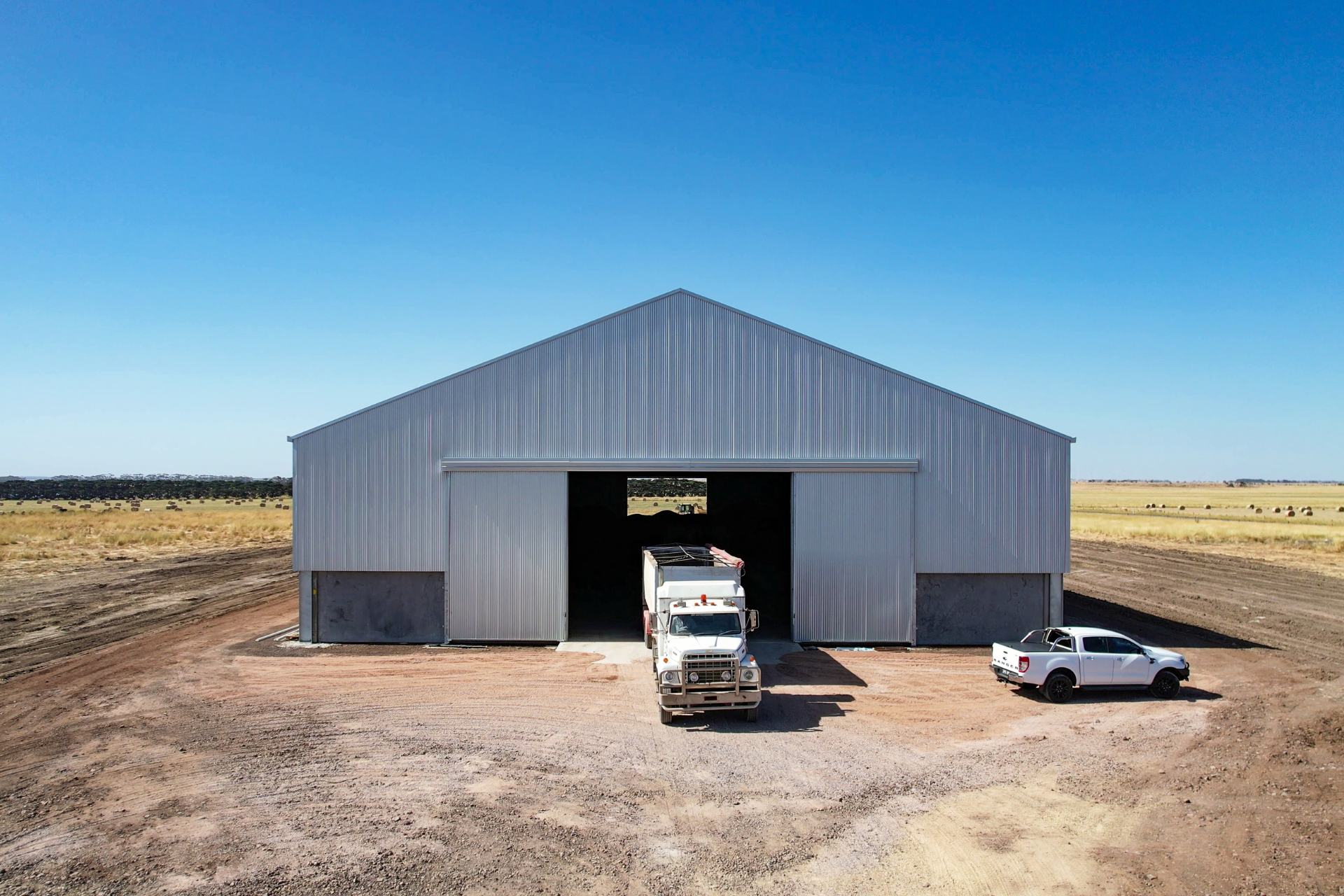
Will trucks drive through or turn in the shed?
Is there a canopy on the side of the shed that will be accessed by road trains?
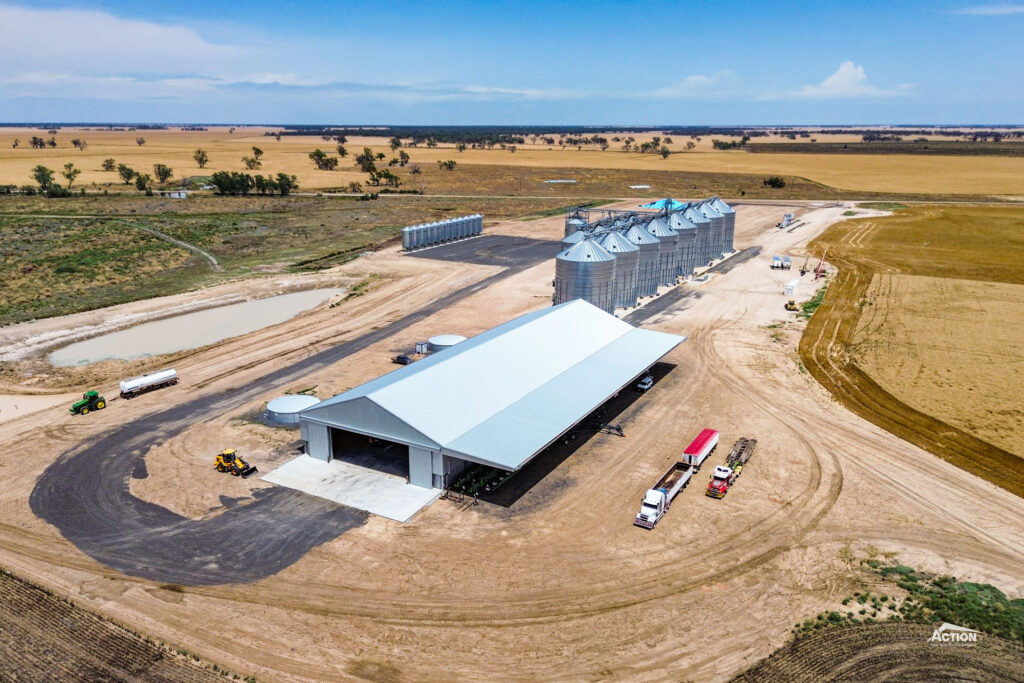
This will influence the space required for turning circles and general traffic management.
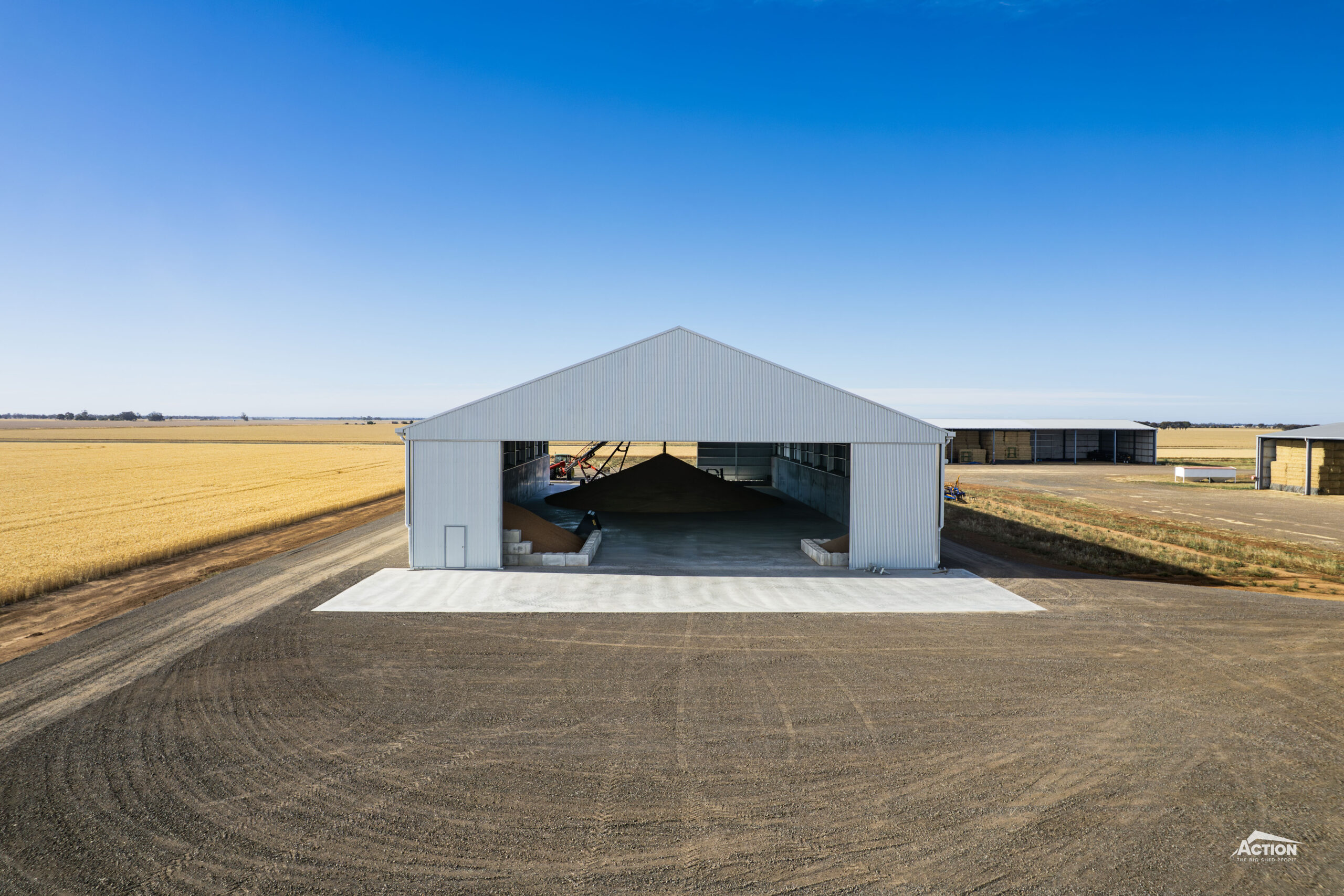
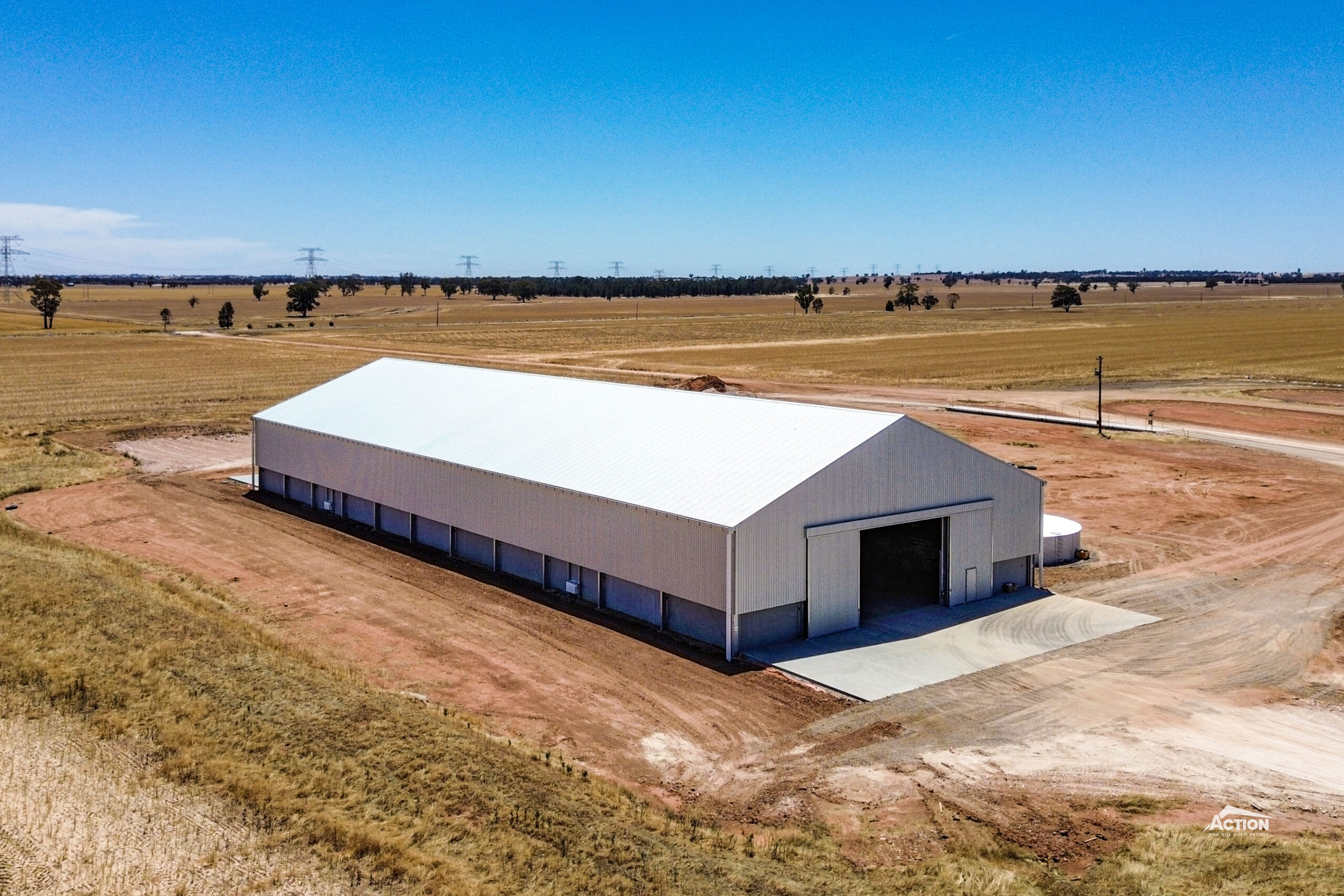
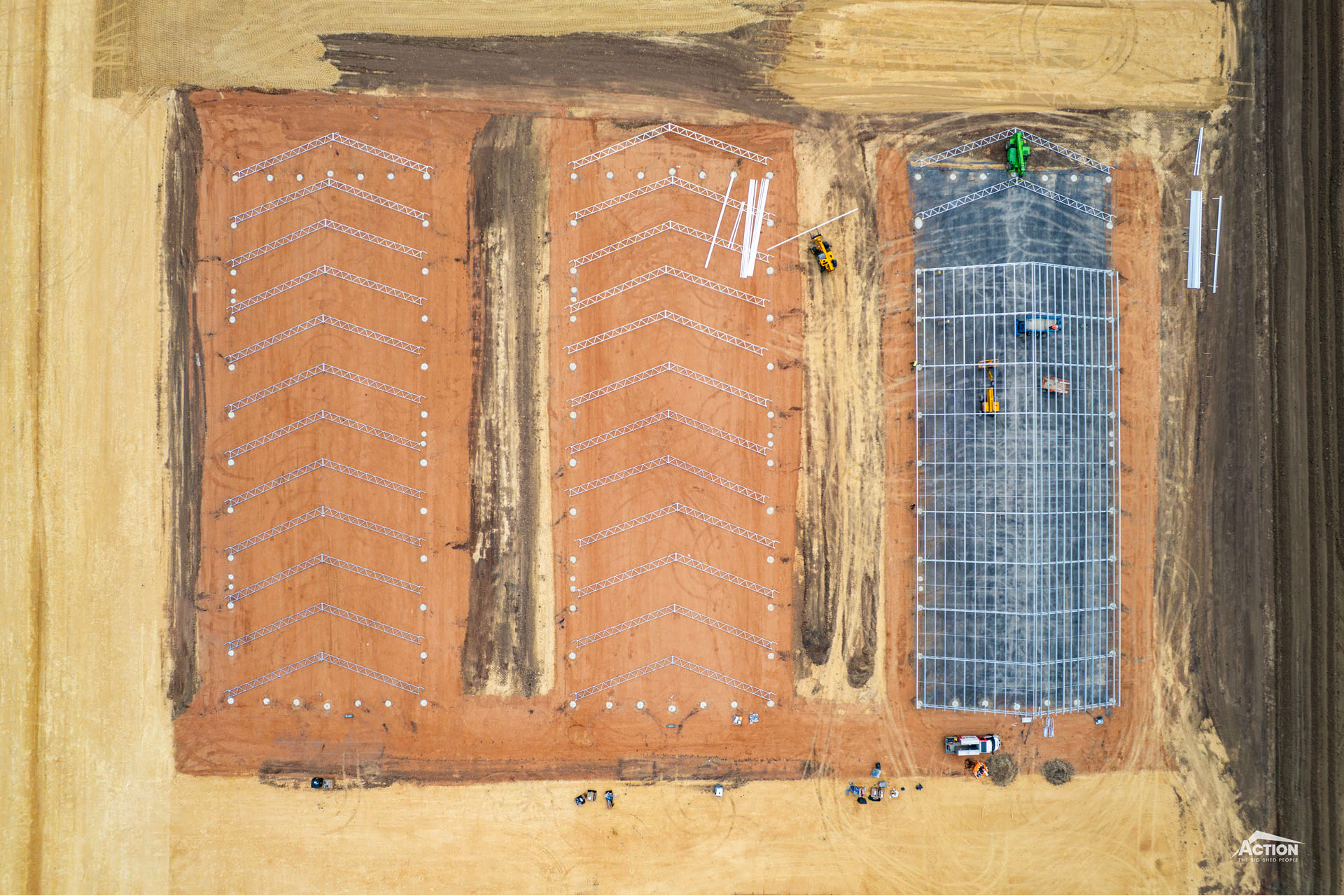
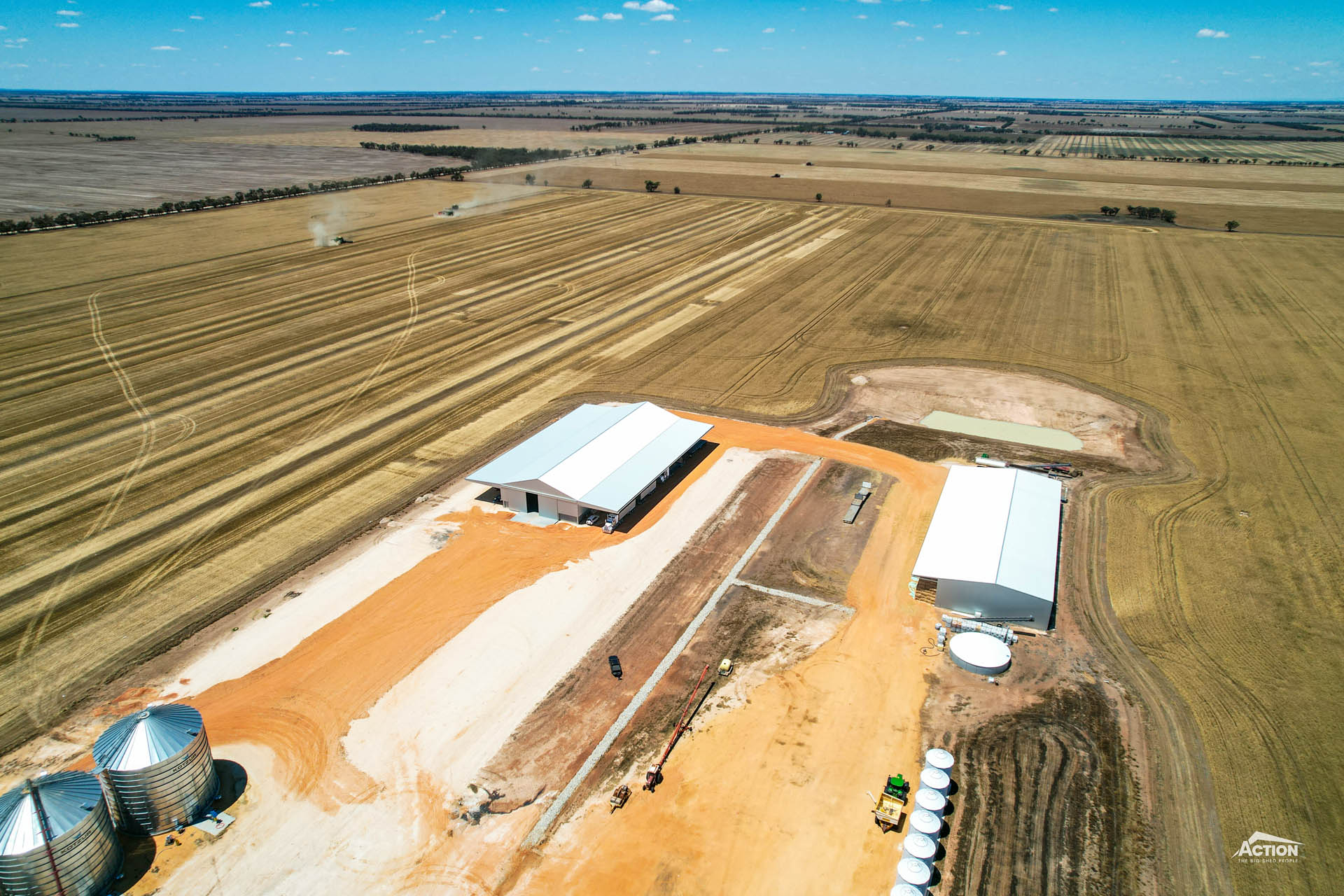
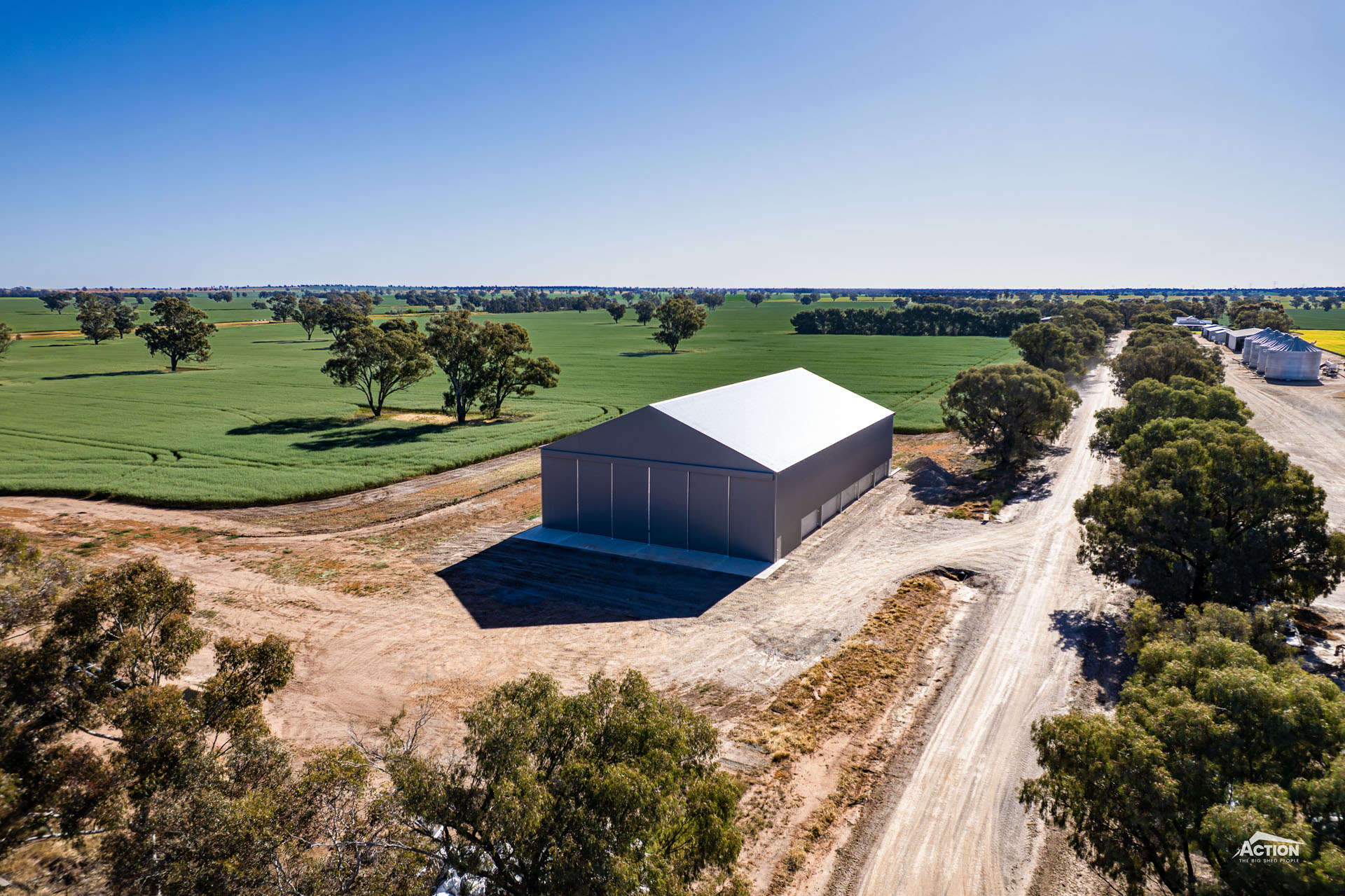
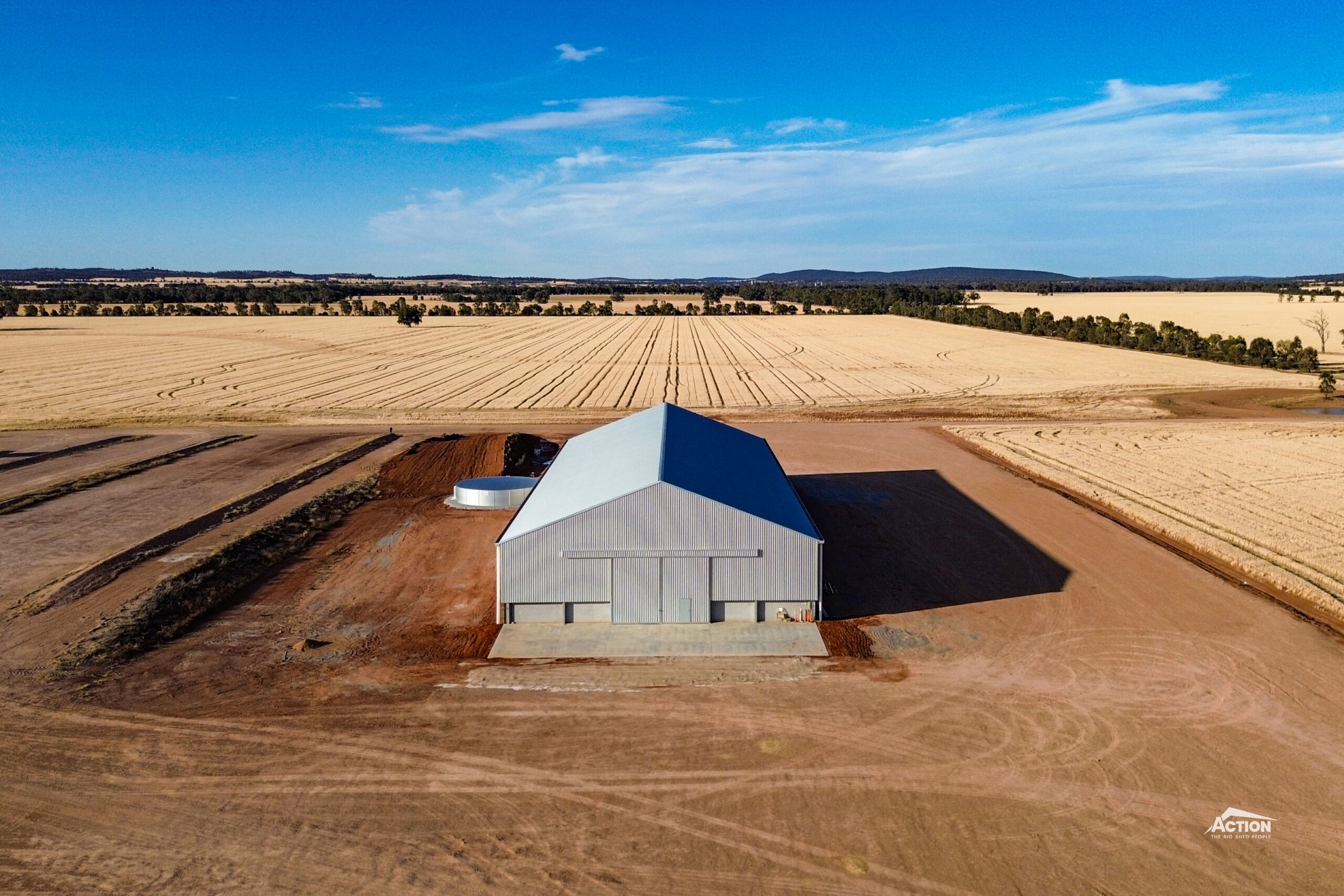
Action building consultants typically use drone site overlays to help customers visualize the layout and make sure everything works.
Overall, the site layout should allow clear entry, exit and manoeuvring space to support safe and uninterrupted operation – more on this in our next point
3
3. Loading & Handling Set Up
How you choose to load and unload your grain shed is a major contributing factor to grain shed design.
And it is also a major contributing factor to the site layout.
Which makes sense, because operational safety and efficient logistics are usually the two highest priorities for both on-farm and commercial grain shed set ups.
So, think about how grain will move in and out of the shed – at harvest, and year-round.
Questions to consider include:
- Will loading happen inside or outside of the shed?
- Where will augers, conveyors or shifters be located when operating?
- Is there enough working room for equipment and loaders?
- Have you established no-go zones or unauthorised personnel?
- How many trucks will be accessing the site at any one time, especially during peak times?
- Is there clear visibility for truck drivers and machinery operators?
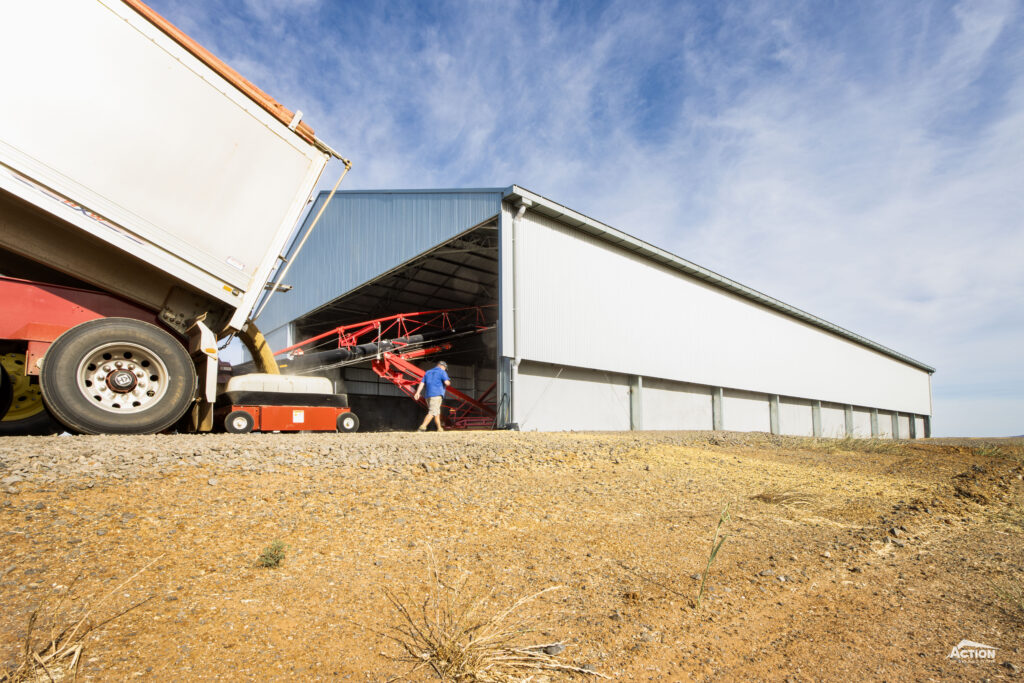
Having a clear, documented traffic management plan and ensuring all staff are briefed on it, also goes a long way to ensuring as a safe and efficient site set-up.
Curious what a site and traffic management plan might look like for your project?
The building consultants at Action are available to assess your site, shed design and access requirements and put together an initial plan.
4
4. Fire Safety & Compliance
The bigger the grain shed and more involved the storage set-up, the more important the site planning becomes.
This is true from a safety and efficiency perspective, particularly during loading and unloading.
It is also true from a compliance perspective, particularly fire design.
The bigger the grain shed, the more involved the fire design requirements become.
This is because the size of your grain shed will determine the building classification, and these classifications have differing fire design requirements.
For example, on-farm grain shed is usually classified as either Class 7b “farm shed” or a Class 7b “farm building” depending on the size.
You learn about the definitions of these classifications and their fire design requirements here – What Are The Fire Design Requirements For Farm Sheds?
However, a commercial site may be classified as a 7b “storage shed” and will have different fire design requirements again.
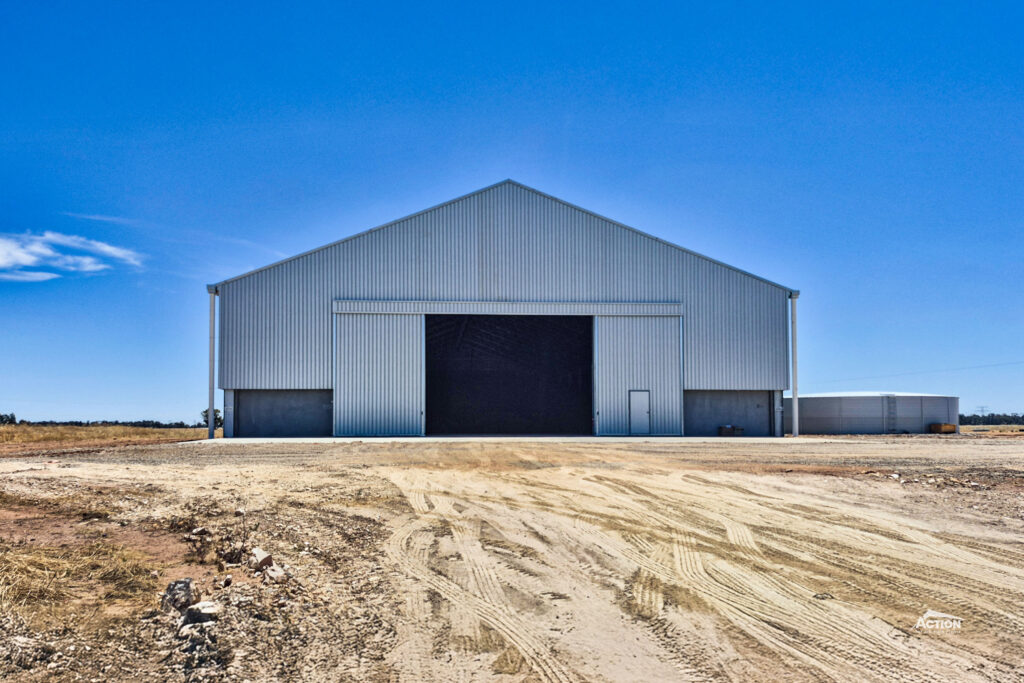
Generally, when planning a commercial grain shed site, you will need to allow space for:
- Fire water tanks
- Booster pumps (if required)
- Hardstand areas for Emergency vehicle access
- Safe separation between buildings.
Our building consultants and projects team are available to provide project-specific fire design advice for your commercial site.
Establishing a compliant fire design can be an involved process, so get this underway early.
5
5. Site Preparation
Site preparation is important for any farm shed project (you may have heard us mention this before!)
A well-prepared shed pad ensures the shed remains accessible year-round, including during the installation stages – even in wet weather.
There are additional considerations for a grain shed site, such as ensuring there are correct site levels and adequate drainage to move water away from the shed and surrounding slab.
It is also a good idea to include concrete and hard stand areas into your site preparation, such as:
- Concrete aprons at doorways and loading areas (the aprons should fall slightly away from the shed)
- A small step-up at door openings (around 30-40mmm) to help stop water running into the shed
- Hardstand zones for high traffic areas
6
6. Multiple Sheds & Expansion
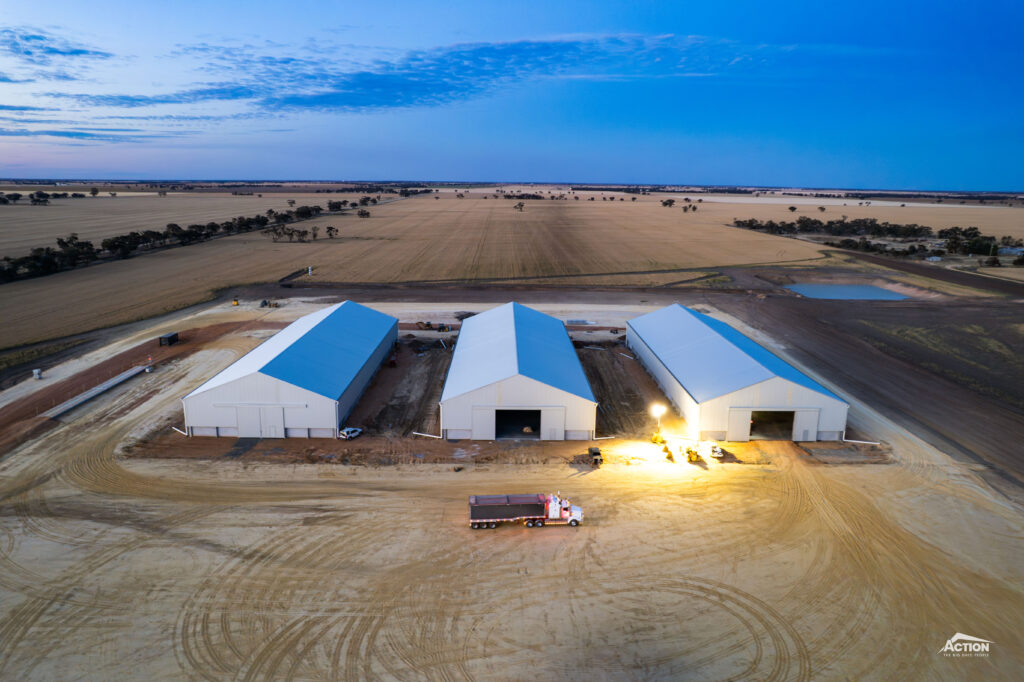
Whether you are building multiple grain storage sheds at once, preparing for a staged project, or simply keeping your options open for the future, there are several recommended steps for site planning.
- Leave enough space for future expansion, including access for installation crews, and room for water storage tanks and turning circles.
- Factor future expansion into the overall site layout, particularly traffic flow and management
- Include multiple sheds in one council approval process for efficiency, cost saving, and to address any concerns ahead of time.
- Confirm fire design requirements upfront and include the full scope, rather than having add-ons later or running the risk of a non-compliant system.
7
7. Project Timing
It is always good practice to work backwards from your target harvest date and allow time for:
- Council approvals
- Fire design
- Engineering
- Contractor engagement and coordination
- Potential weather delays for earthworks and installation (particularly, when building during the winter months)
- Concrete (including curing time)
A few rules of thumb:
- A new grain shed build typically takes four to six months from drafting to landing on site.
- The installation stage can take several weeks, depending on the size of the shed and complexity of the design.
- A concrete slab usually takes around four weeks to cure, before trucks can be driven across it.
While there are exceptions to the rules above, where grain shed project timing mostly varies in the engineering stage and/or the permit and compliance process.
This is why we recommend locking in your design early so that the drawings and engineering can be finalised, and the council permit applications and fire design can get underway.
This puts you in the best position to troubleshoot any unexpected delays, such as objections to the council permits.
Early coordination with other trades also helps to avoid design issues on site, project delays and unexpected costs. This can include:
- Earthmoving contractors
- Concrete teams
- Grain handling and overhead loading system suppliers
The Sales and Projects team at Action work closely with these trades and companies, right from the initial planning stage.
This can include factoring auger specifications into the shed design, providing site plans for the earthmovers or coordinating the concrete slab on your behalf.
We hope this article has helped you kickstart your grain shed site planning!
We’ve also collated some grain shed site examples and further reading – check them out below.
Useful Resources
- Farm Shed Pad Guide (Sizes, Ideas & Prices)
- What Is The Best Grain Shed Loading Method?
- Grain Shed Storage Calculator
- What Is The Future Of Grain Shed Design?
Planning is essential for a safe, efficient and functional grain shed site and design.
Book a consultation with Action to get your project planning underway. Call 1800 687 888 or email [email protected] – we would love to hear from you!