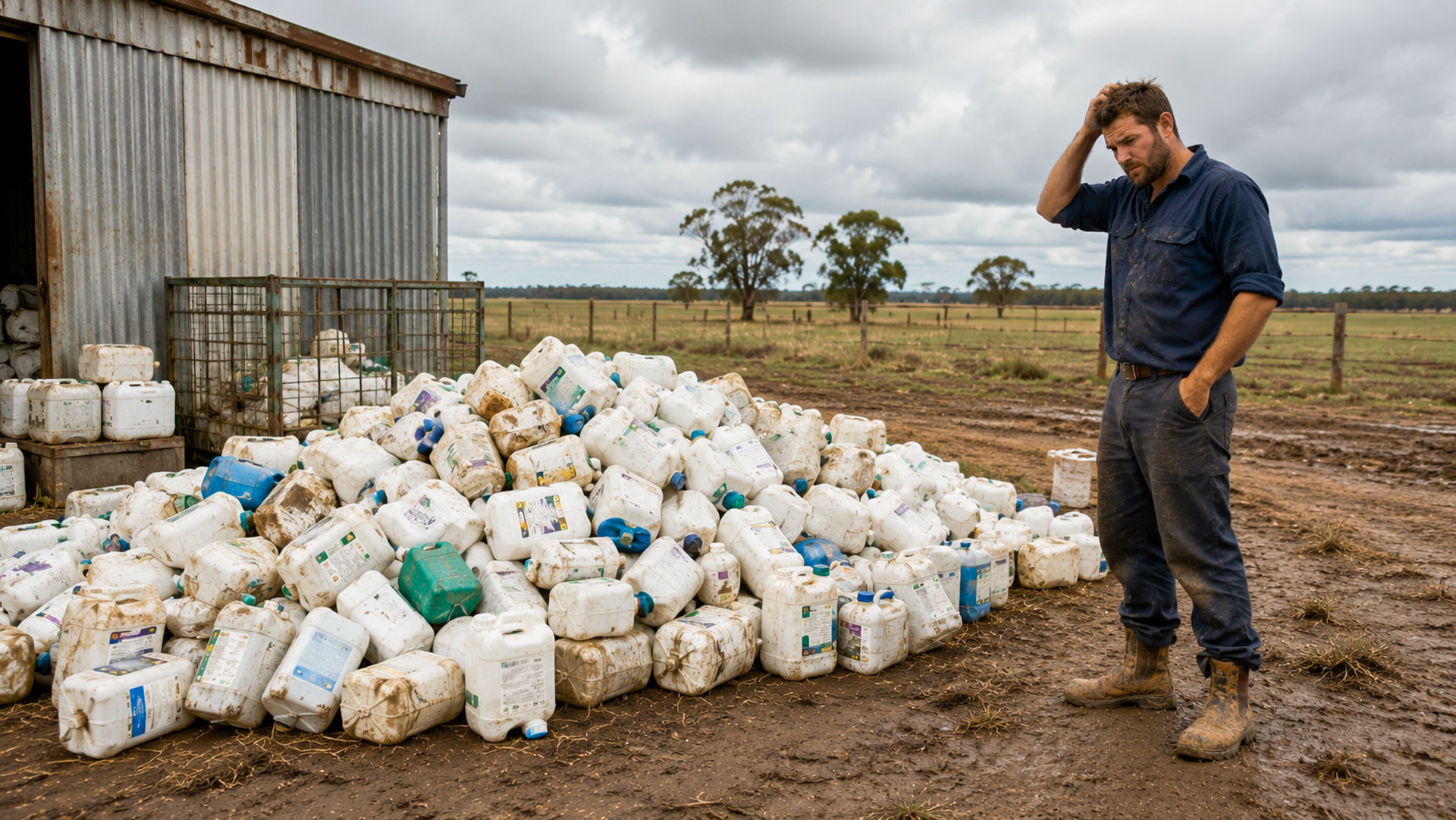
Farm chemical container disposal in Australia is a legal obligation, and chemical containers piling up on the property is a familiar sight on working farms. The question most growers eventually ask is: what’s the right way to deal with them?
Burning them in the paddock or tossing them in general waste isn’t an option, legally or environmentally. Here’s what you need to know to stay compliant, and how to make the whole process as straightforward as possible.
Why You Can’t Just Bin Them
Even an “empty” chemical container still holds residue. Herbicides, pesticides, fungicides – these products don’t fully clear out on their own. Improper disposal means residue can leach into soil, contaminate waterways, and affect livestock and wildlife.
There are also real legal consequences. Every state and territory in Australia has legislation governing how agricultural chemicals and their containers are handled.
Burning is illegal everywhere. So is burying containers or disposing of them in general farm or household waste.
The good news is that compliant disposal has been made straightforward through two national programs most Australian farmers will already know: drumMUSTER and ChemClear.
drumMUSTER: For Empty Containers
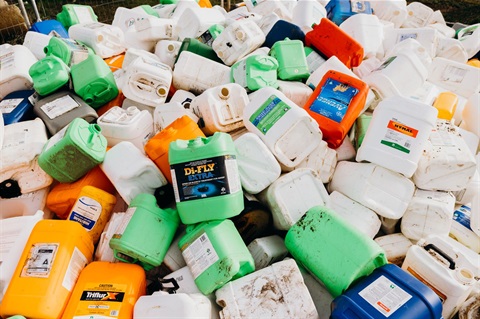
drumMUSTER is a free, industry-funded collection program run by Agsafe. It handles the vast majority of chemical containers generated on Australian farms.
What does drumMUSTER accept? Rigid, non-pressurised containers that have held registered agricultural and veterinary chemicals, drums, jugs and bottles carrying the drumMUSTER logo, from 1 litre up to 205 litres. Flexible packaging like bags and pouches is generally not accepted.
Before drop-off, containers must be triple rinsed, or pressure rinsed. This step is not optional. Turn up with un-rinsed containers and they’ll be turned away.
Triple rinsing works like this:
- After emptying the container completely, add clean water to about 10% of its volume
- Seal the lid and shake thoroughly
- Drain the rinse water into your spray tank
- Repeat steps 1 to 3 so you complete three rinses in total
Pressure rinsing with a dedicated lance for at least 30 seconds is also accepted.
The best habit: rinse at the spray tank immediately after emptying. It takes a couple of minutes and the container is ready to go straight into your collection area.
Containers also need to have lids removed and placed inside, labels still intact, and no pooling liquid remaining.
Collection sites operate through rural merchandise stores, council depots and scheduled collection events. Visit AgSafe here to locate your closest collection site or ask at your local rural supplier for the next event in your area.
ChemClear: For Unwanted Or Outdated Product
ChemClear handles a different problem, chemicals you can no longer use.
Products past their shelf life, containers that were never fully emptied, chemicals you simply don’t need anymore. ChemClear arranges safe collection and disposal of the product itself. There is a fee involved, which varies based on type and volume, but it’s a far better outcome than a contaminated site.
Think of the two programs this way:
- drumMUSTER = empty, rinsed containers
- ChemClear = unwanted or unusable chemical product
Between them, they cover most situations on a working farm.
State-Specific Requirements
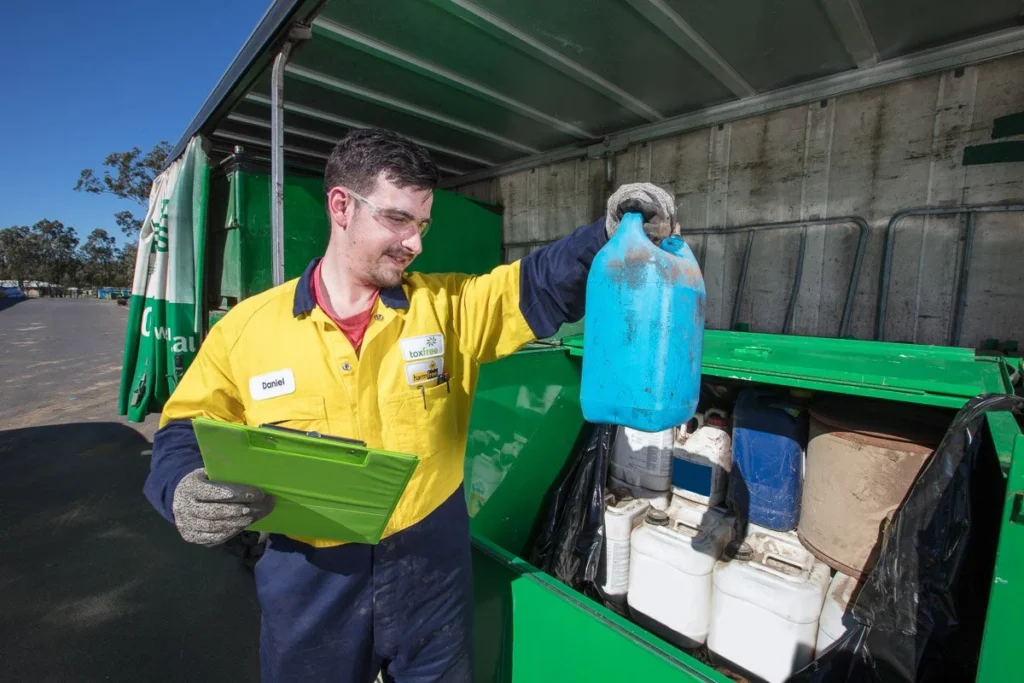
Your legal obligations sit with your state or territory government. Across the board, you can expect:
- No burning of chemical containers – illegal in every state and releases toxic fumes
- No burying containers on your property
- No disposal in general farm or household waste
- Mandatory rinsing before disposal
- Record keeping for restricted-use chemicals and Schedule 7 poisons
Queensland, New South Wales, Victoria, South Australia and Western Australia each have their own agricultural chemicals legislation. If you’re unsure what applies to your operation, your state’s Department of Agriculture or Primary Industries office is the right place to start.
Setting Up A Simple On-Farm System
Getting container disposal right doesn’t need to be complicated. A few straightforward steps make it a seamless part of your routine:
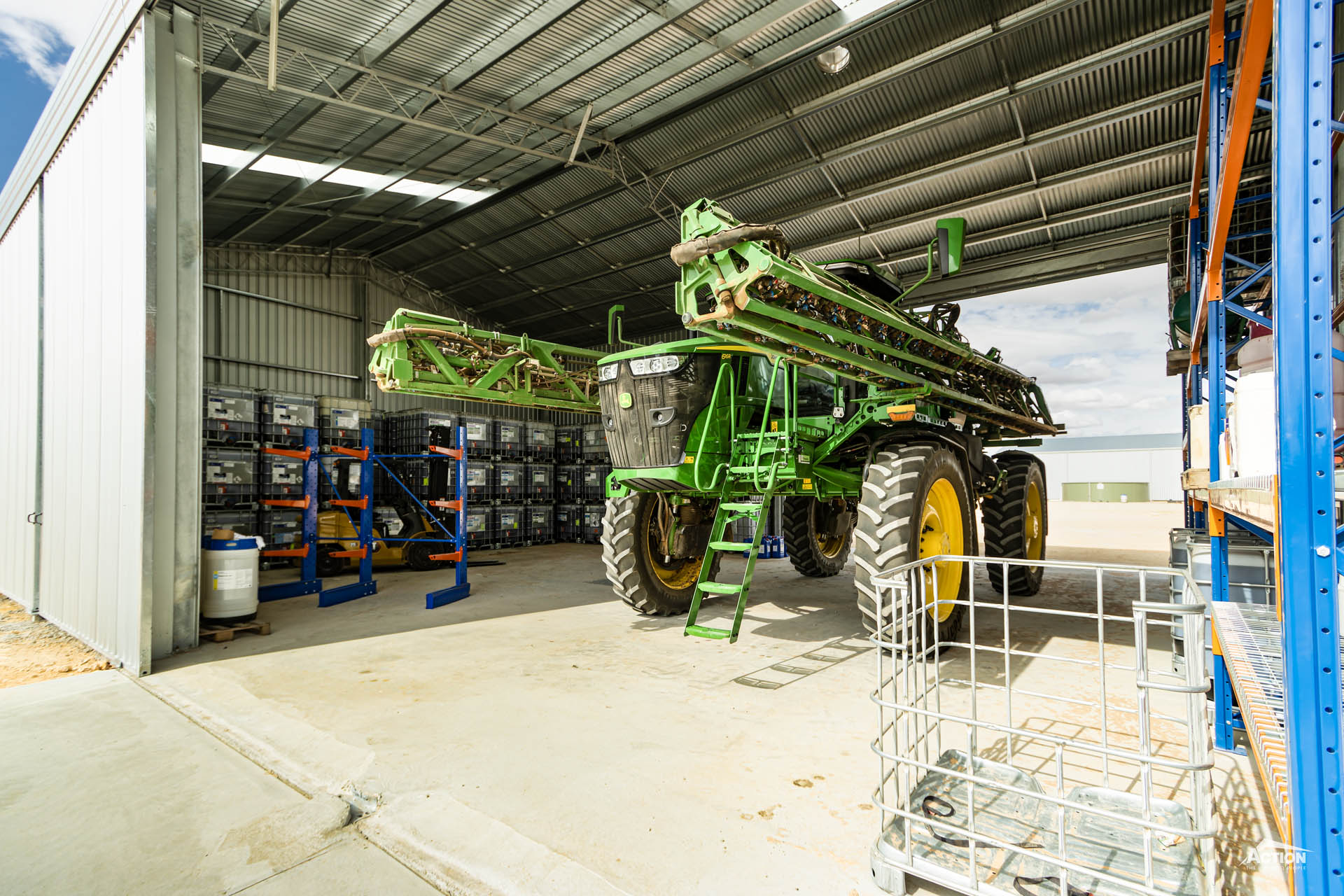
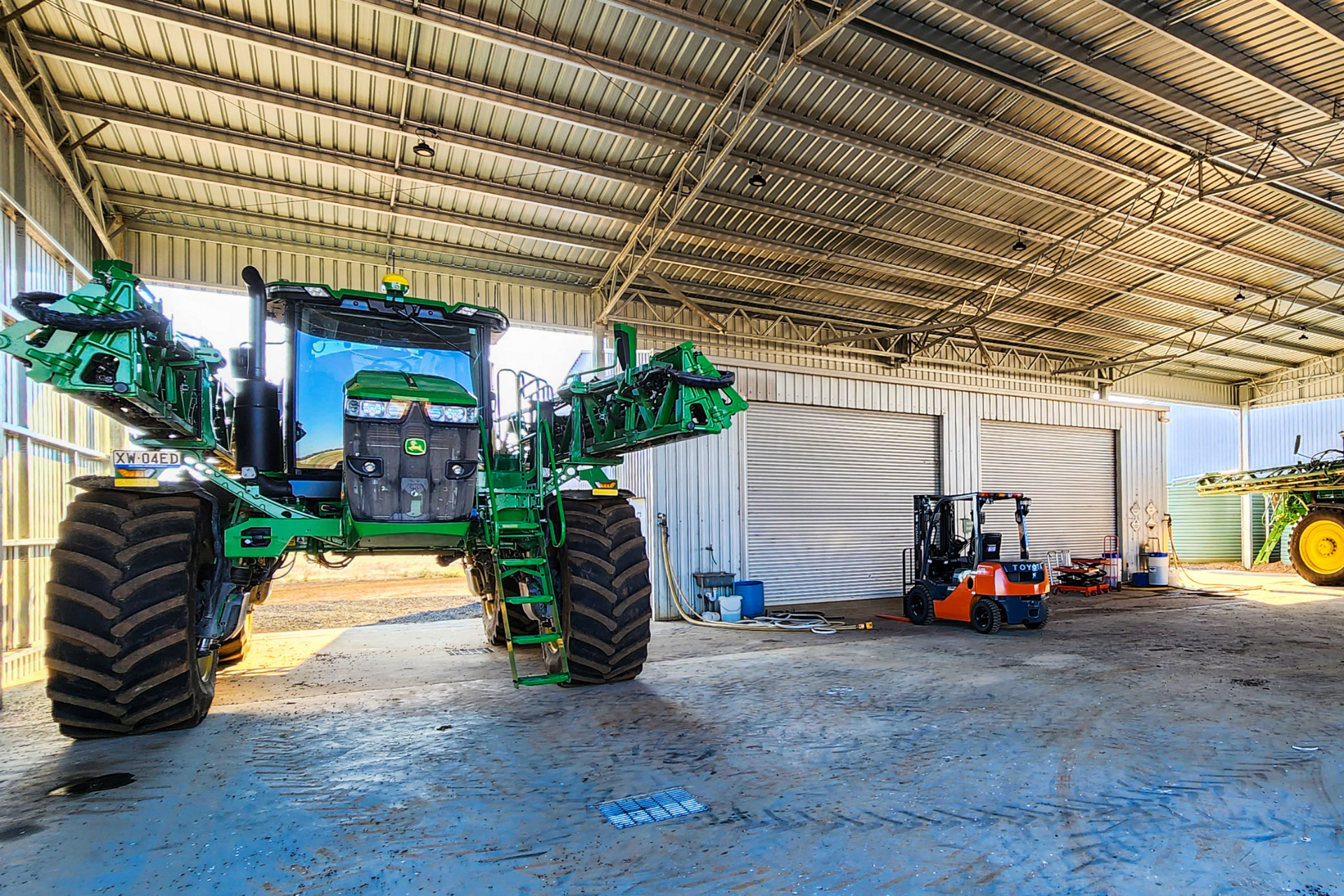
Designate a storage area. A covered, secure spot away from any water sources, a fenced cage or dedicated shed section works well. Keeping containers out of the weather means they stay dry and acceptable for drop-off.
Rinse at the tank, every time. Build triple rinsing into your spray preparation routine so it happens automatically.
Know your collection calendar. Check the drumMUSTER schedule at the start of each season. Don’t let containers stack up over multiple seasons.
Keep records where required. If you’re using restricted-use chemicals, maintain records of product names, quantities, application dates and paddock locations. It’s a legal requirement in most states.
The Bottom Line On Farm Chemical Container Disposal
Farm chemical container disposal in Australia is a legal obligation, but one that’s been made genuinely straightforward through drumMUSTER and ChemClear.. Triple rinse your containers, store them properly between collection events, and drop them off at the next collection.
For upcoming collection events in your area, visit drummuster.com.au or speak to your local rural merchandise store.
Storing chemicals safely on-farm starts before the containers are empty. Read our guide:
What are the requirements for farm chemical storage for practical advice on how to store chemical safely.