What is an igloo shelter? How does it compare to an Action dairy barn?
When planning a new dairy barn, many farmers – especially those without existing barn infrastructure – consider a mix of structure types.
These include structural steel barns such as Action dairy barns, and lighter, fabric-covered shelters such as igloo shelters.
Igloo shelters have various names and monikers, from DomeShelters™, container domes and calf igloos to fabric barns.
Because they look simple, it is not uncommon for customers to approach us with pricing for igloo shelters already in hand, expecting them to be the low-cost option.
However, in many cases, the cost is comparable to, or even higher than, an Action dairy barn, despite igloo shelters having shorter lifespans and offering limited customisation and fewer uses.
That said, there are applications where fabric shelters work well, and there are genuine success stories for both types of structure – protecting paddocks, increasing efficiency and production and improving cow comfort.
So, which one is best for you?
How do they compare? What other options are on the market?
This article breaks down the key differences to help you make a confident, informed decision – including supplier options, pricing guides and barn ideas.
Frequently Asked Questions
Article too long, didn’t read? Short on time?
Here are short answers to the top 3 questions we are asked about igloo shelters and Action dairy barns.
Sometimes. Smaller igloo shelters can cost less than an Action dairy barn but larger shelters are typically on par with a barn of the same size.
As a rule of thumb, the larger the Action dairy barn the lower the cost per cow.
Igloo shelters can often be quickly and easily installed for loafing, calving and calf rearing.
However, disadvantages include:
- Small widths meaning you need multiple shelters in a row
- Curved roof design causes poor airflow, impacting cow comfort and bedding management
- Ongoing maintenance requirements and shorter lifetime than a structural barn
There can also be engineering limitations, meaning solar panels cannot be installed, or the shelter cannot be converted to a freestall setup
Yes, Action dairy barns are engineered to suit the wind region of your site.
If you plan to install solar panels and/or fans to your barn, notify our building consultants and this will also be factored into the design.
What Are Igloo Shelters For Dairies?
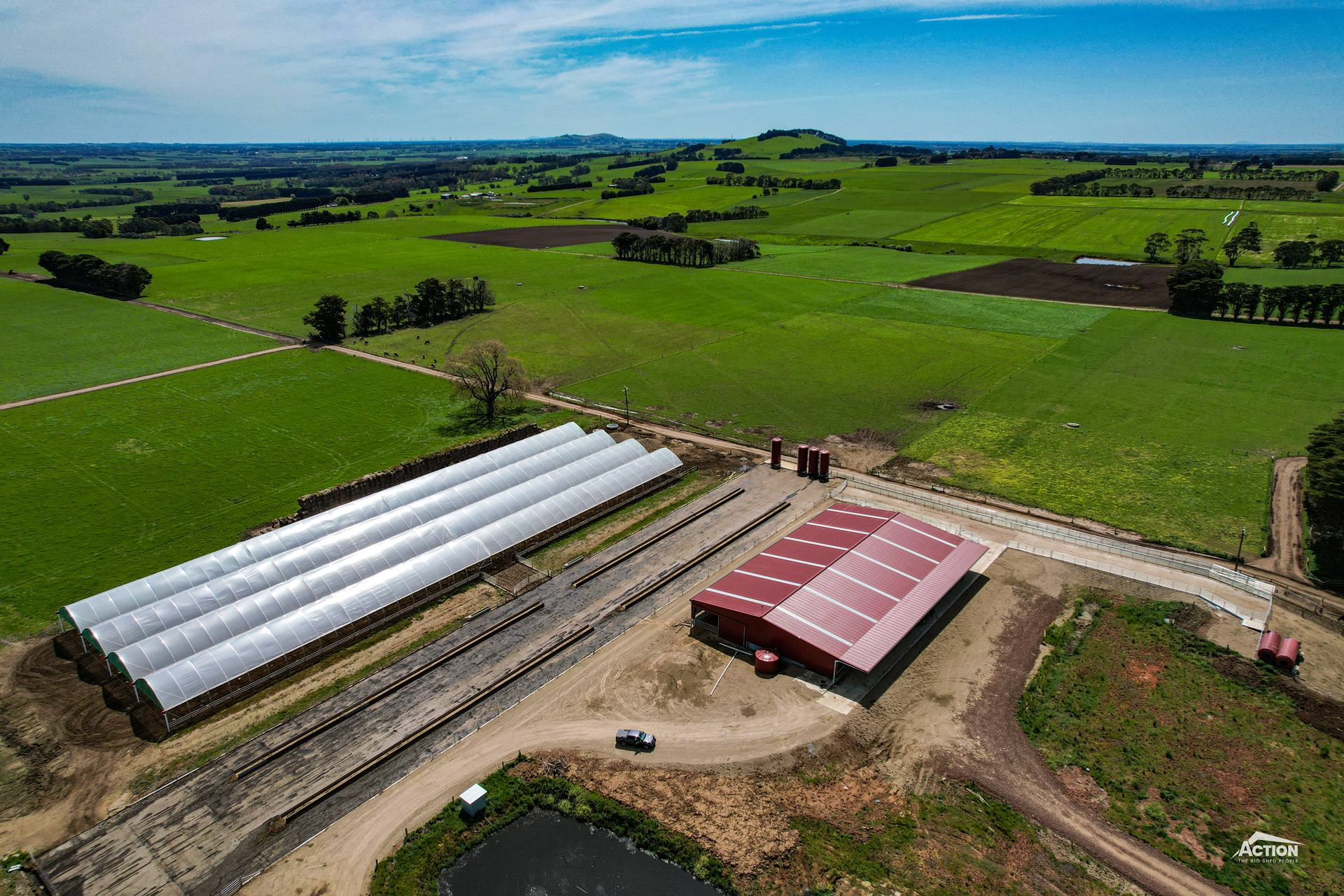
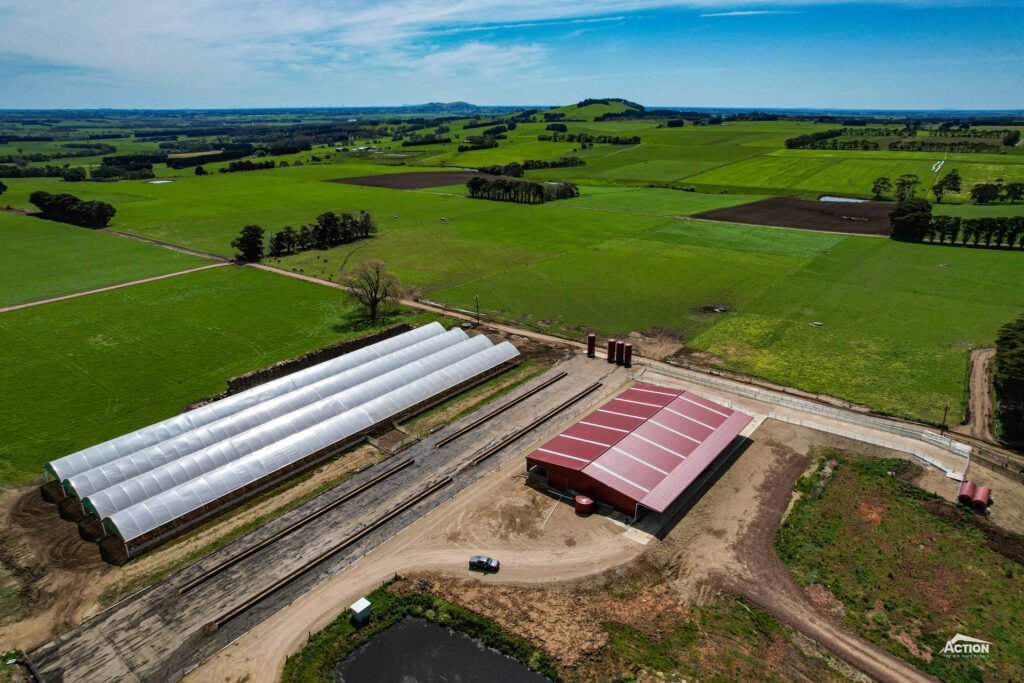
Igloo shelters for dairies are typically a lighter-weight frame with a curved, fabric-covered roof.
They are also referred to as domed shelters, dairy shelters, fabric barns, and temporary livestock covers.
Advantages Of Igloo Shelters
Like barns, igloo shelters can play a valuable role in protecting paddocks and reducing stress (for you and your cows!)
Other advantages include:
- Can be dismantled and relocated
- Faster installation than traditional shed builds
- Provides good natural light
However, igloo shelters have downsides too.
Disadvantages Of Igloo Shelters
- Short lifetime – usually 8 to 10 years – with ongoing maintenance required during this time.
- Most are not engineered to suit solar panels or fan systems
- Concave roof profile results in poor airflow, heat stress and bedding management issues
- Natural light is not always a good thing; it can cause cows to bunch and become heat stressed
- Limited width sizes available, means multiple shelters may be required – increasing project cost and impacting cross ventilation.
How Much Do Igloo Shelters Cost?
The cost for a fabric, domed dairy shelter varies between suppliers, and depends on:
- Size
- Site location
- Add-ons and extra protection
- How it is set up, e.g. with posts or mounted off containers
- How long you want the asset to last (factor in replacement fabrics and anchoring)
Based on AllShelter’s handy price guides, the cost for a 12m x 12m igloo shelter starts at approx. $180/square metre.
Larger dairy shelters usually cost more than a structural steel barn. As AllShelter points out, “shelters aren’t necessarily a ‘cheaper alternative’.” Instead, the advantage is usually in the quicker installation and ability to relocate the shelter.
Who Supplies Igloo Shelters? What Options Are There?
Researching dairy shelter suppliers? Check out the options below.
Please note, Action is not affiliated with any of these companies; we are simply listing options to keep this an honest and open discussion – and help you with your project research.
These suppliers all offer options such as different fabrics, retractable shade systems and end walls.
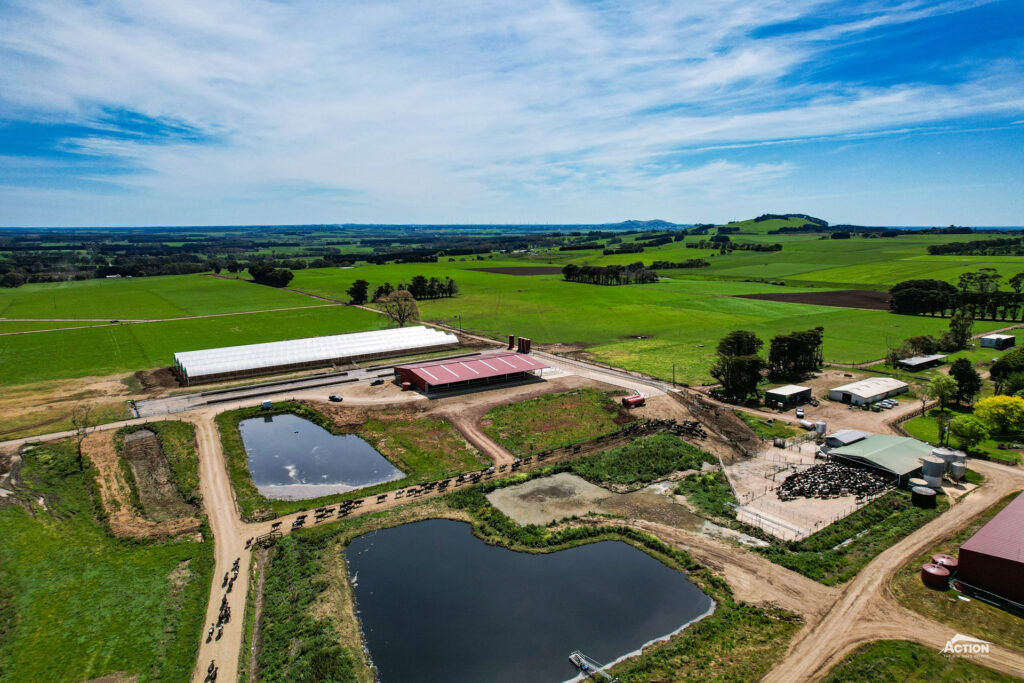
For example, Dairy Shelters Australia are known for their clear fabric covers.
When Are They A Good Fit? & When They Aren’t
Igloo shelters are a good fit if you:
- Need shelter installed quickly
- Want the ability to relocate the shelter
- Are not ready to commit to a dairy barn system
- Are running smaller cow numbers where airflow is not an issue
They may not be the right choice for your dairy if you:
- Need a 15+ year asset
- Plan to install solar panels on the roof
- Want to increase your property value
- Are prioritising cow comfort and performance
Where igloo dairy shelters offer quick, flexible cover, an Action dairy barn is designed as a long-term, future-proofed asset.
And that’s what we cover in the next section.
What Are Action Dairy Barns?
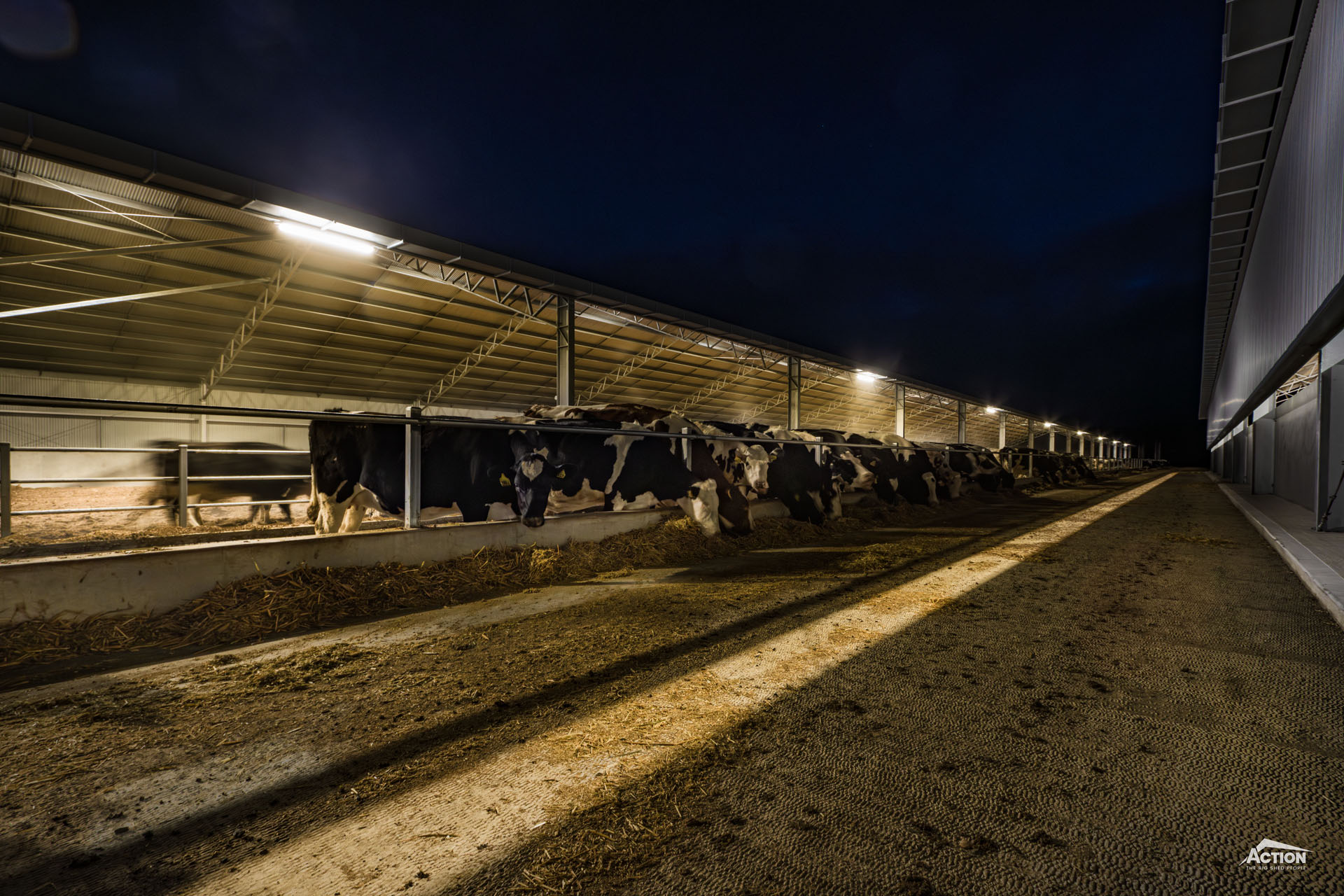
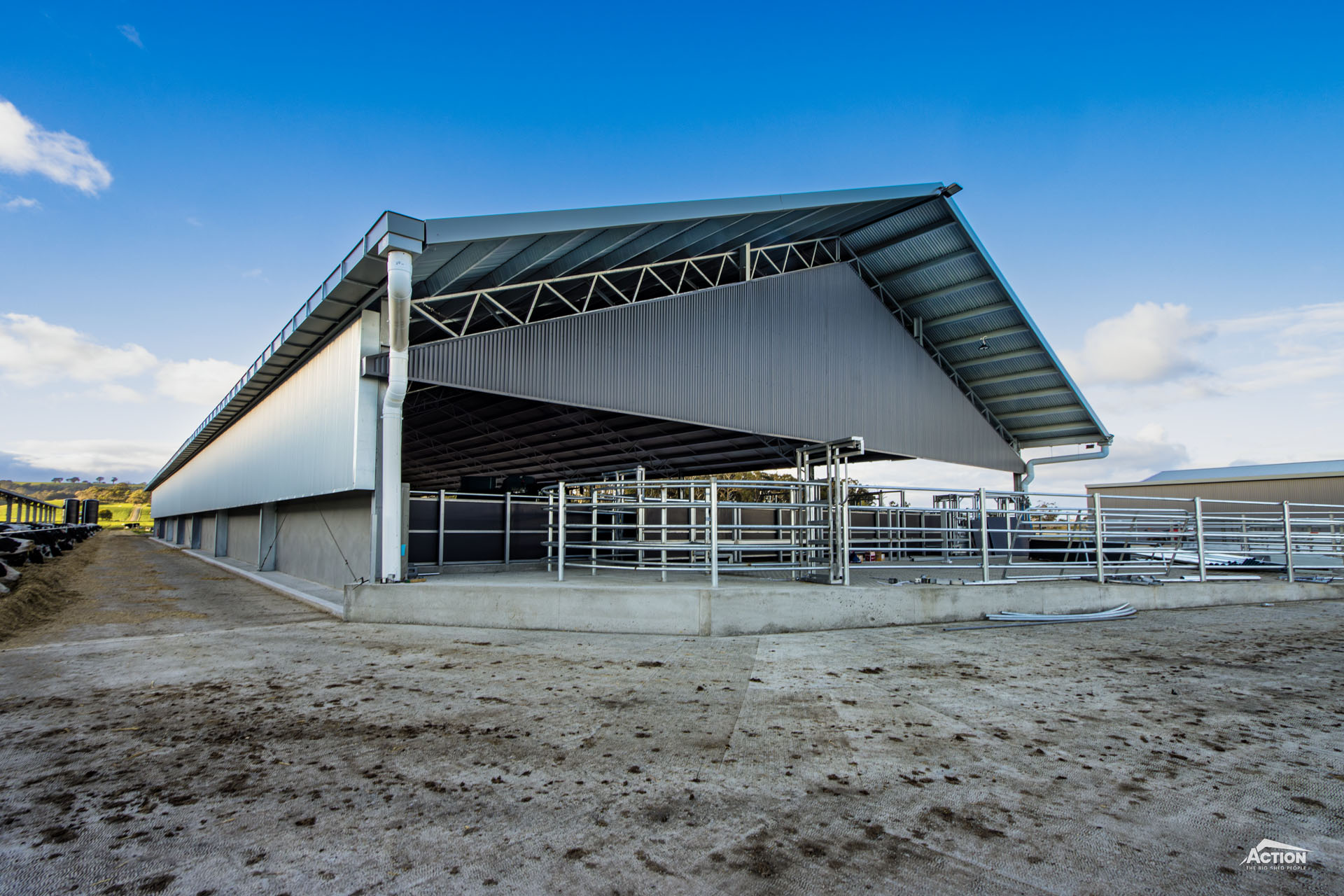
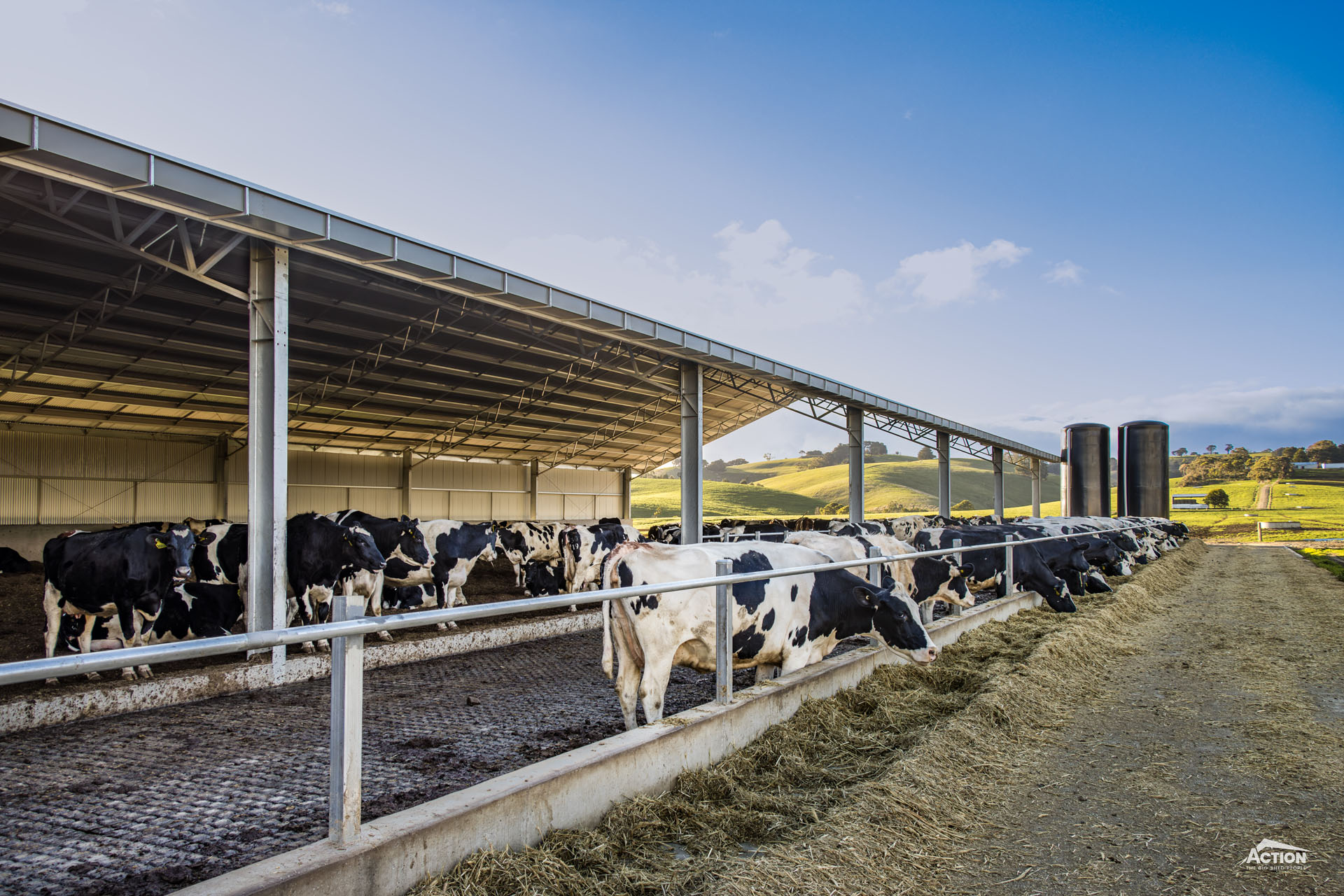
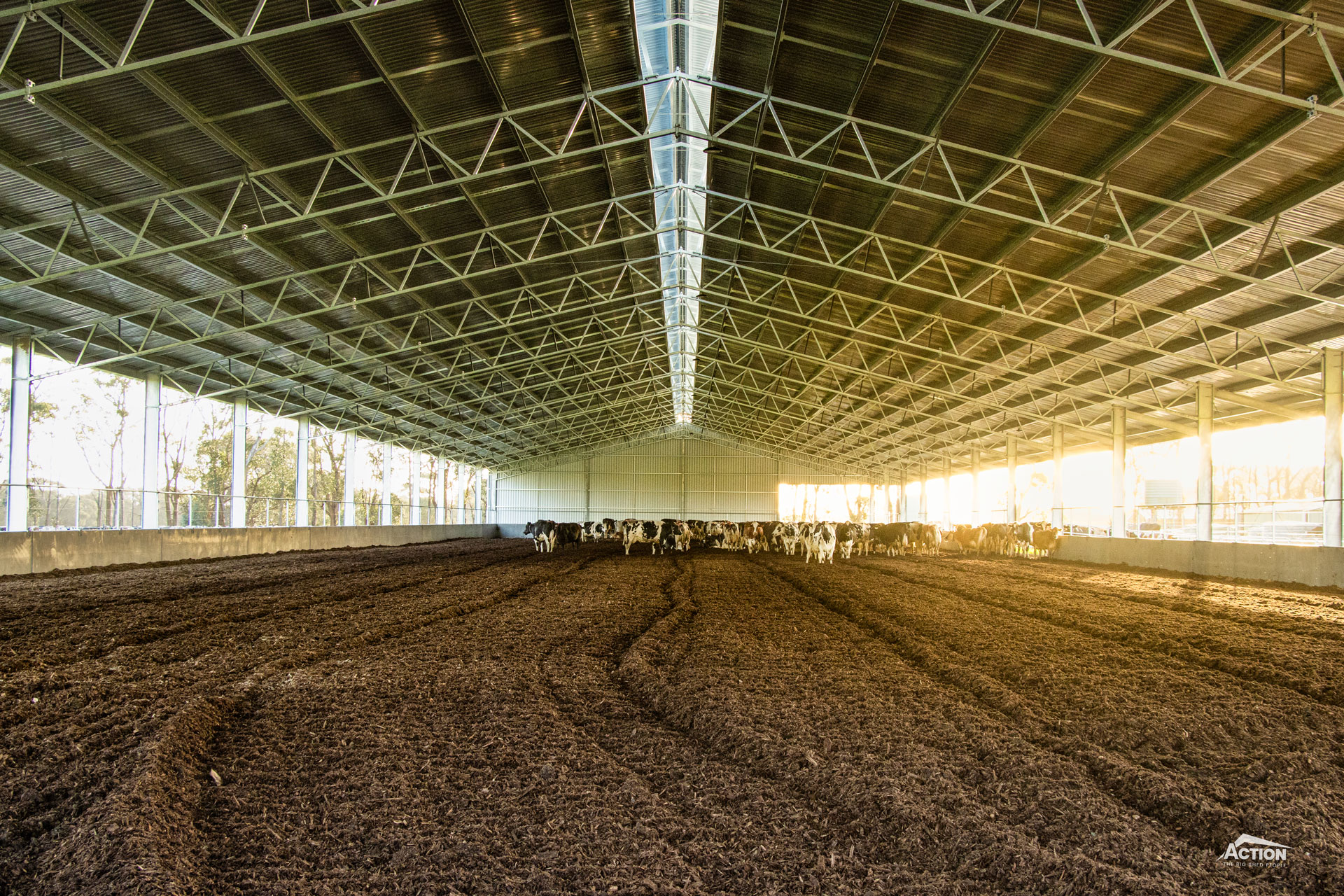
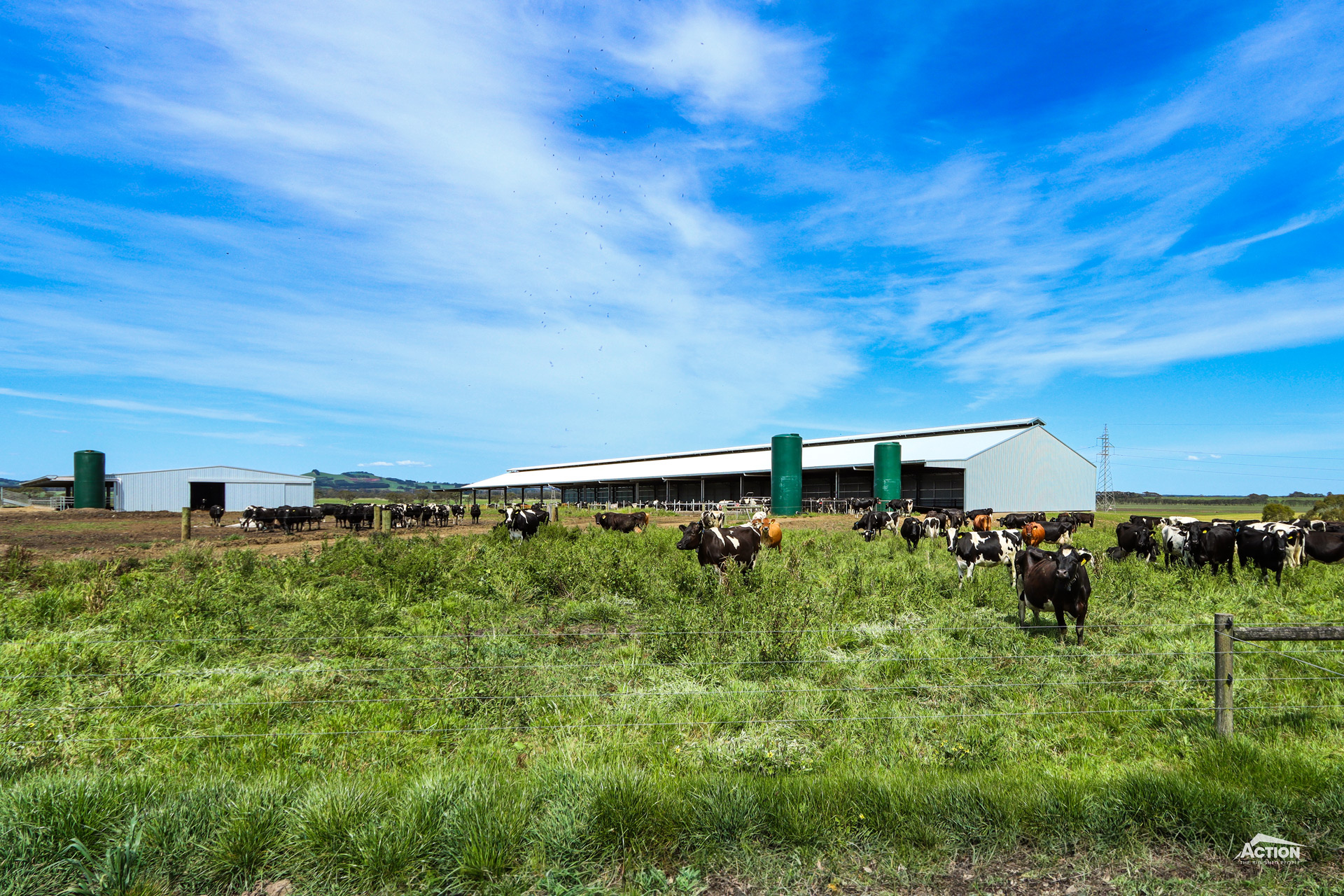
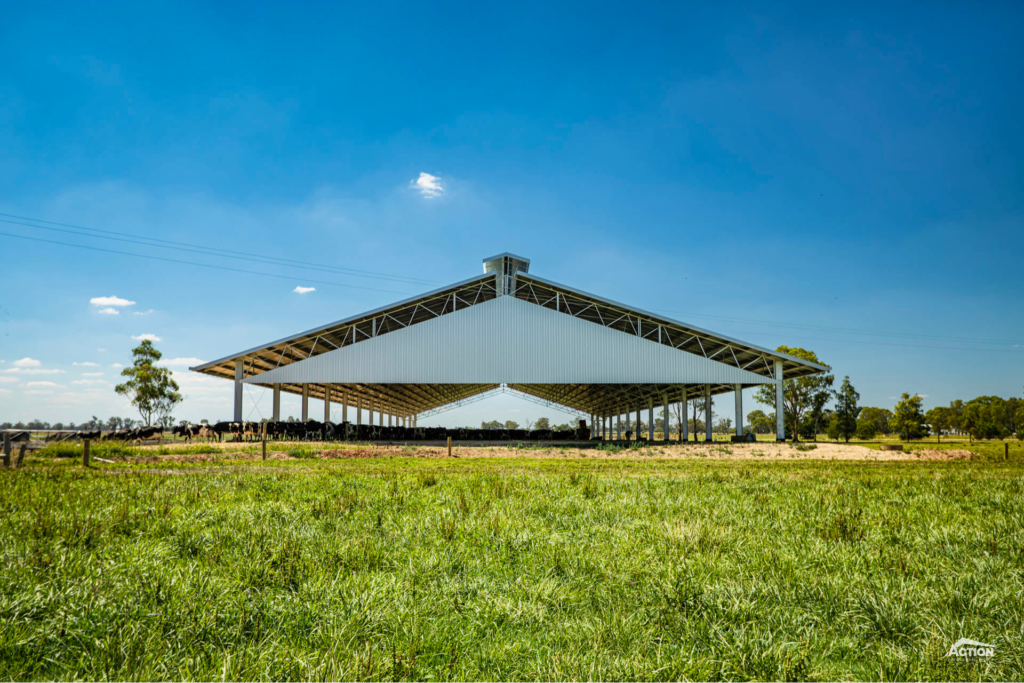
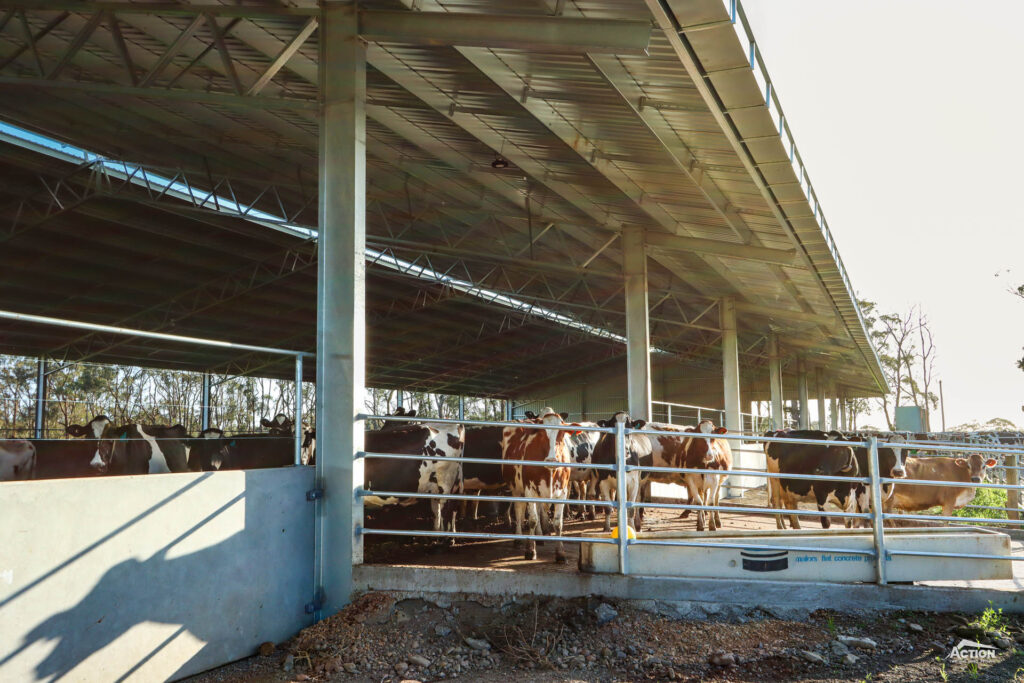
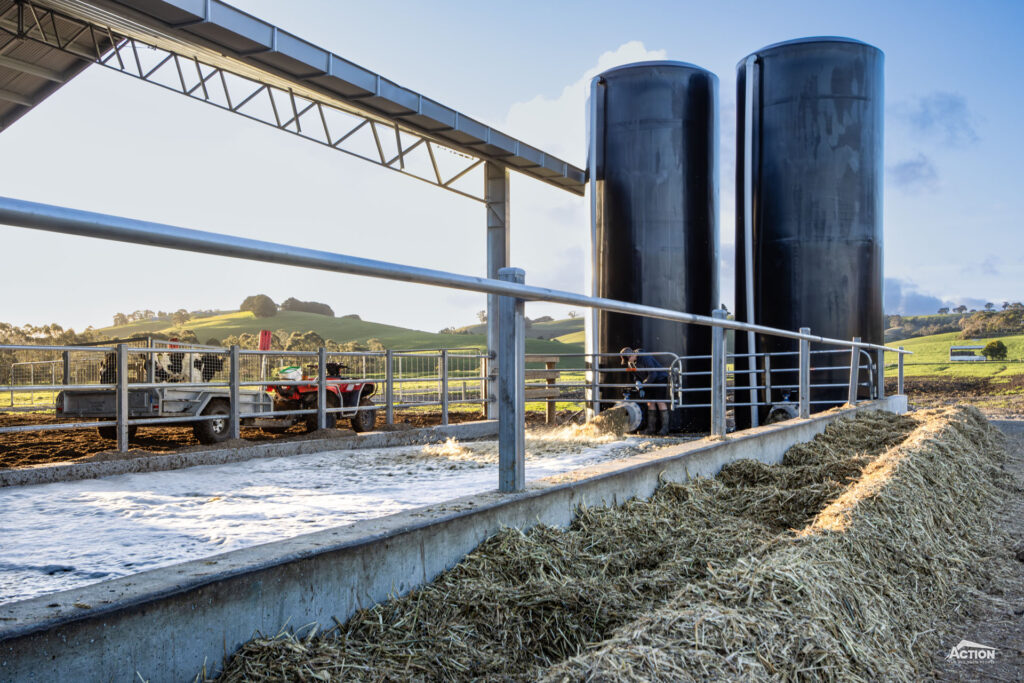
Action dairy barns have a hot dip galvanised, structural steel frame with heavy-duty UB columns and an open web truss. The design typically includes a steep roof pitch and ridge vent opening for airflow.
Common applications include:
- Calving barns
- Feedpad covers
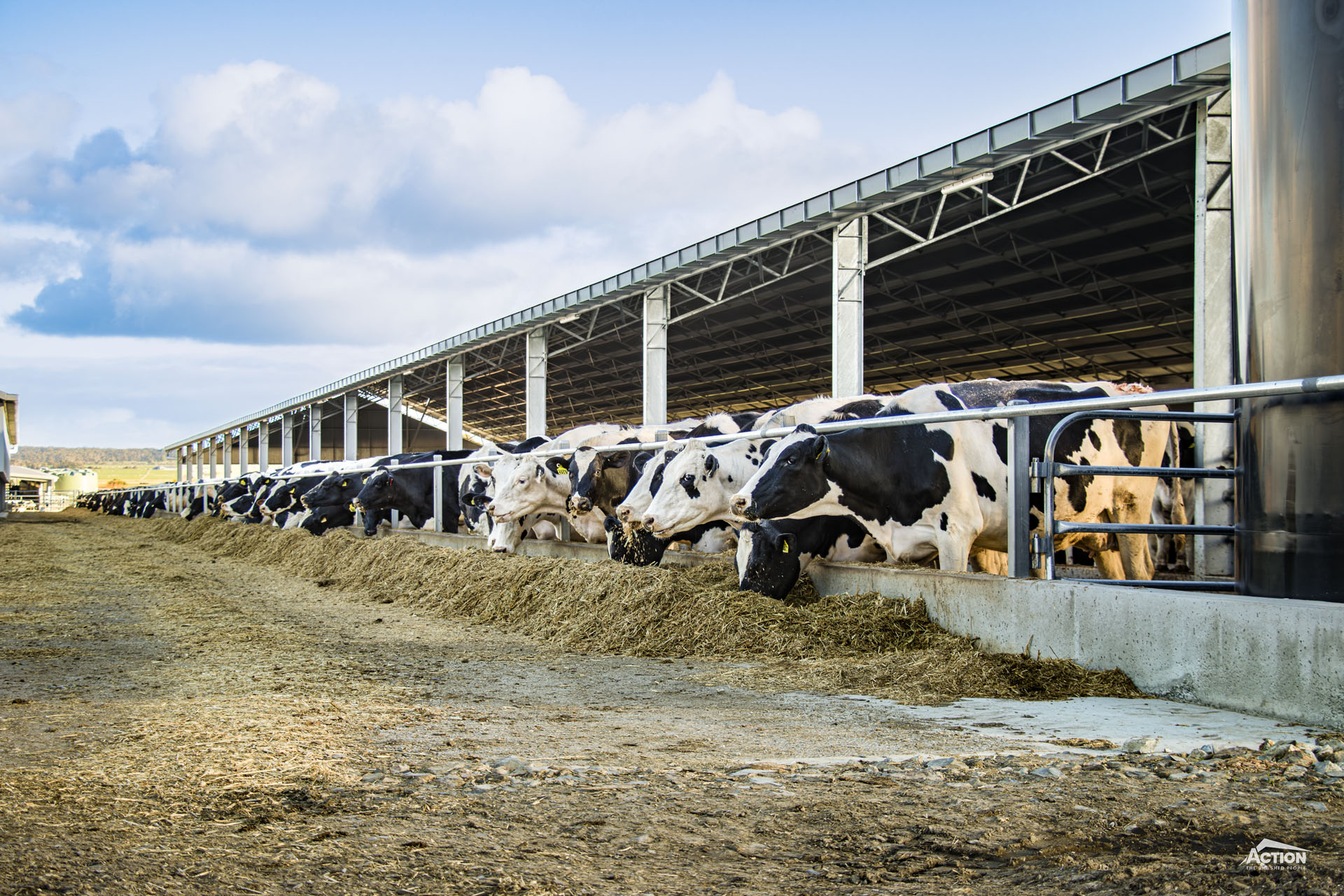
- Freestall barns
- Loafing barns
Advantages of Action Dairy Barns
Action dairy barns consistently deliver benefits for dairies by:
- Protecting paddocks
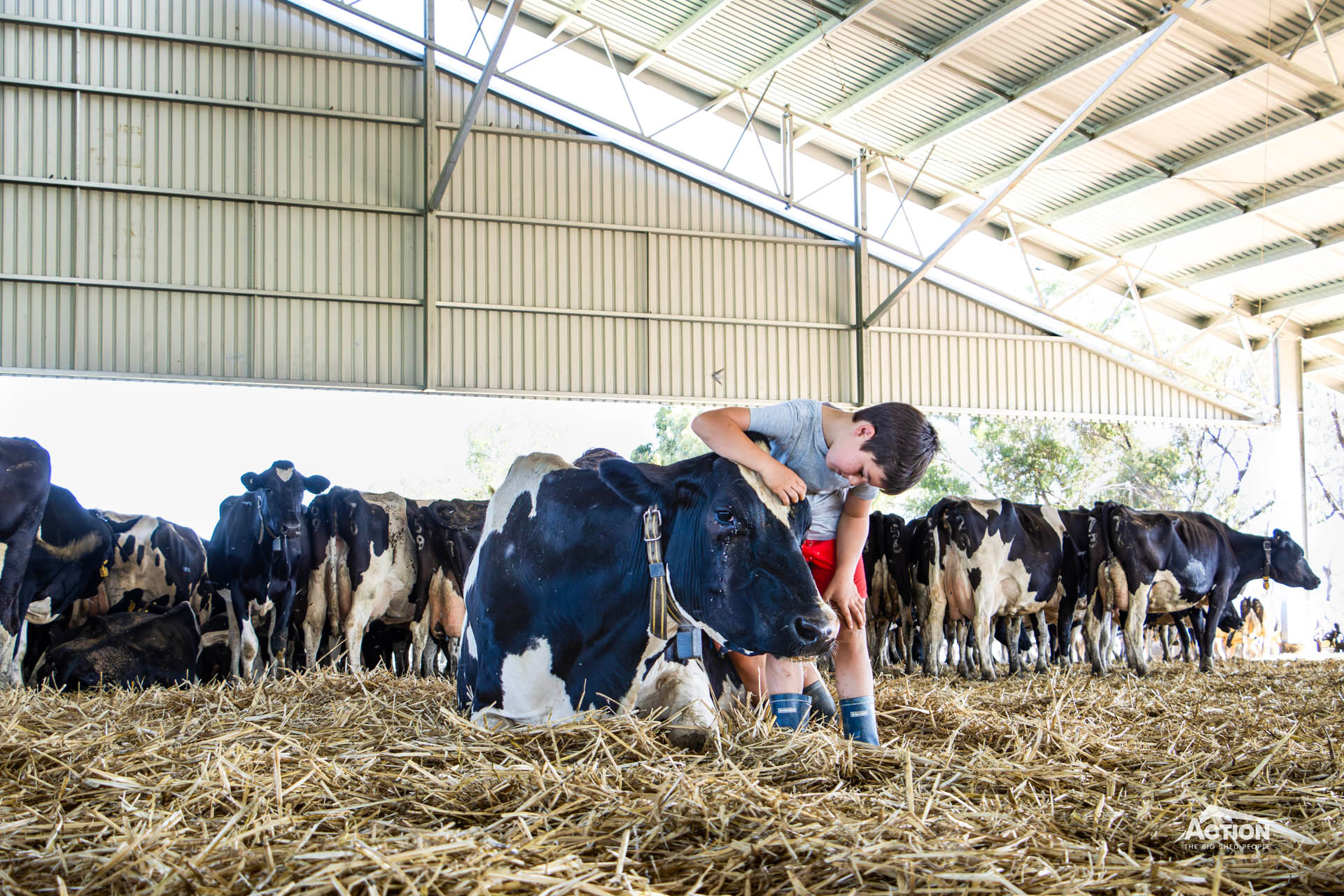
- Improving cow comfort, health and performance
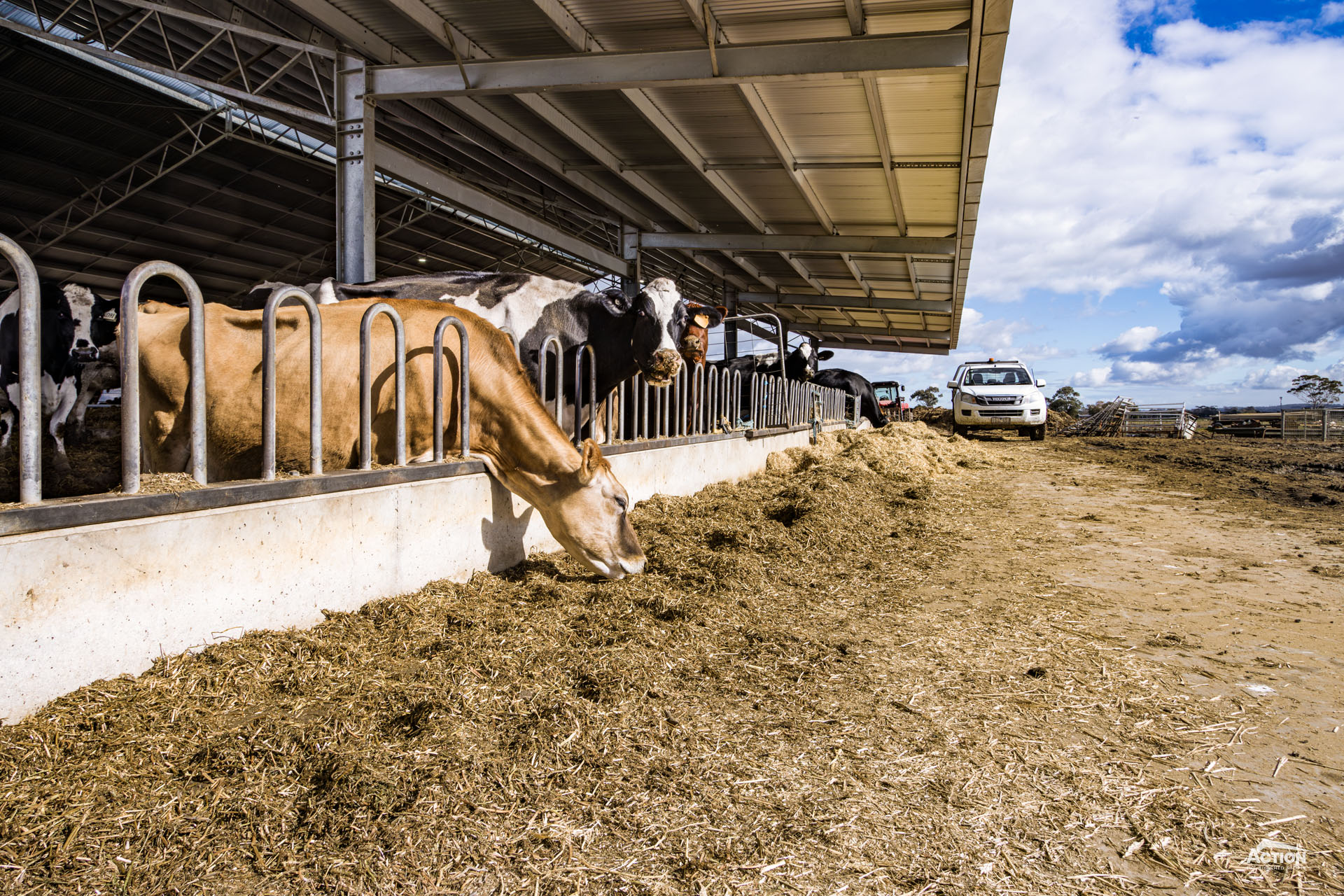
- Reducing feed wastage
- Increasing labour efficiency

Other advantages include:
- Heavy-duty and fully hot-dip galv frame for a low-maintenance asset that will last a lifetime
- Designs specifically for the dairy industry, based on industry recommendations and Action airflow studies
- Highly customisable with features such as gable infills, formed footings and canopies (popular to reduce feed wastage)
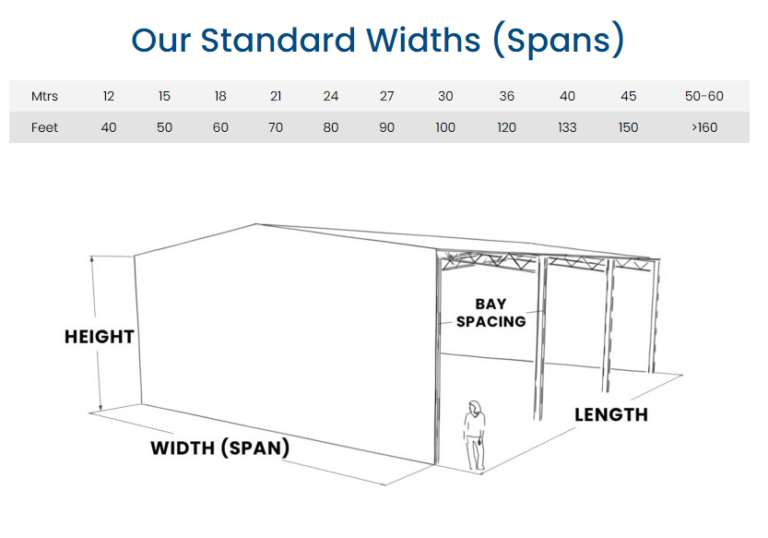
- Cost-effective configurations using best-practice spans and bay spacings
- Options for repurposing barns in the future
- Sustainability opportunities, such as solar panels and stormwater capture
Check out these Action dairy barn success stories!
Disadvantages of Action Dairy barns
An Action Dairy Barn is not without its potential drawbacks for your operation.
For example, it is not a movable structure, and lead times can range from 4 to 6 months for a completed project.
How Much Does An Action Dairy Barn Cost?
The cost of an Action dairy barn depends on:
- Size
- Barn type (for example, a free stall barn is usually more involved than a calving or loafing barn)
- Location
- How you choose to customise the design
As a result, the cost can range from $200,000 for a smaller-scale barn to more than $1,000,000 for a complex project
Remember, the bigger the barn, the more cost-effective it becomes per cow and per square metre.
Action building consultants are also available to advise on best-practice configurations that are cost-effective while still delivering functionality.
When Are Action Dairy Barns A Good Fit?
An Action dairy barn may not suit if you only require temporary, movable shelter, or need immediate installation with minimal planning.
However, an Action dairy barn makes sense if you want:
- A cost-effective, long-term and low-maintenance asset
- A structure that improves cow comfort and performance, and labour efficiency
- Opportunities for solar power and stormwater harvesting
- Flexibility to expand, repurpose, or convert to a freestall system in the future
What Design Options Are There?
While we have best-practice dairy barn spans, bay spacings and roof designs that we recommend using, there are also lots of ways to customise your Action barn.
Popular design options for Action dairy barns include:
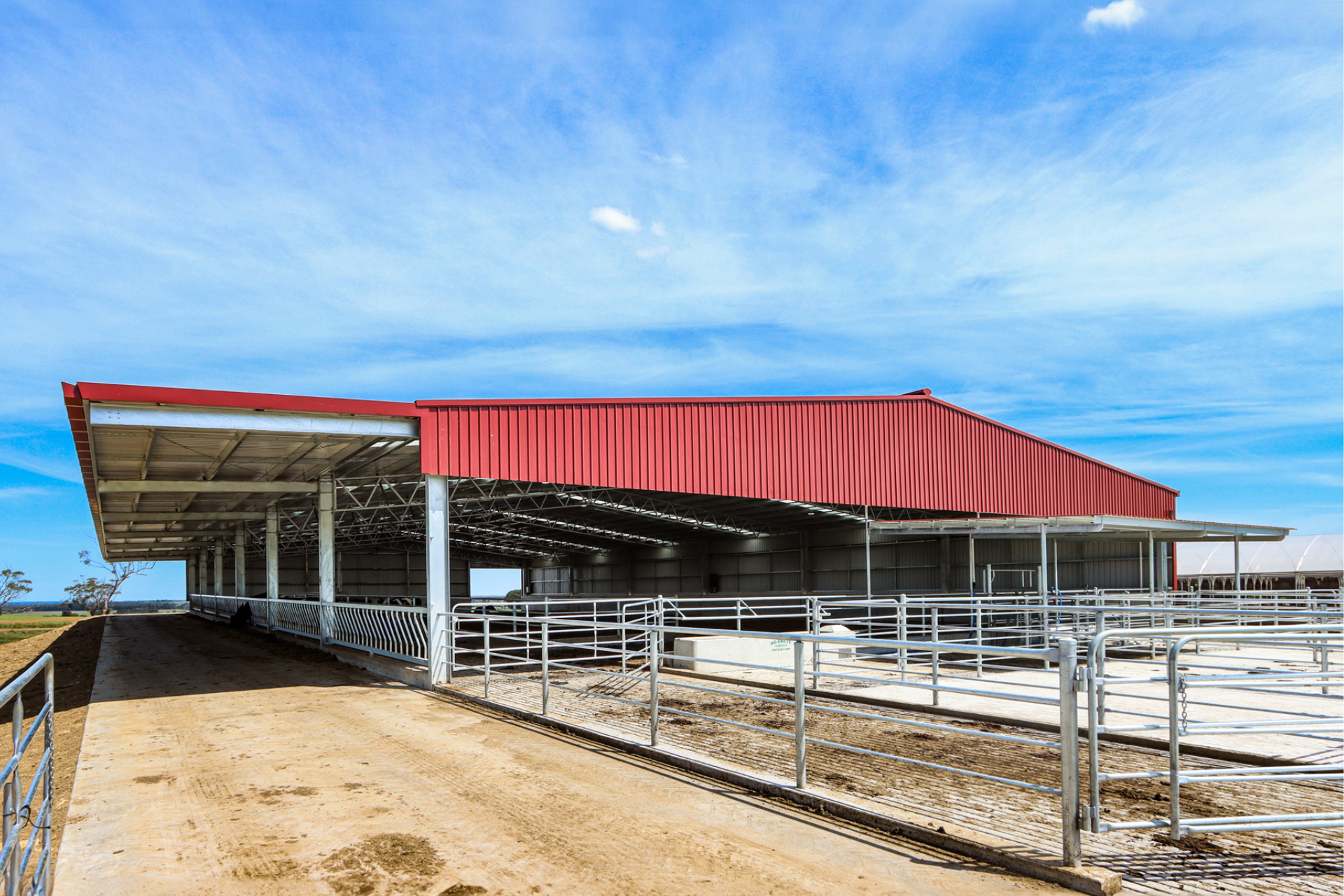
- Cantilevered canopies (popular over side feedlanes)
- Colorbond cladding
- Concrete panels (recommended to protect cladding from rust and machinery damage)
- Eave overhangs
- Extra-wide bay spacings
- Formed up footings (to reduce injury at cow level and protect the column)
- Gable infills
- Open gable trusses (take advantage of the prevailing weather for airflow while still providing protection)
Check out the gallery below to see some of these features in action!
The Verdict – Action Dairy Barns Versus Igloo Shelters
The best option for your dairy depends on your operational goals, long-term plans, and appetite for ongoing maintenance.
Need a shelter now? Check out the lead times of a fabric barn.
Looking to increase cow numbers and production? Talk to an Action building consultant about barn sizes and designs that maximise cow comfort and performance.
And check out the resources below.
Useful Resources
- 2026 Loafing Barn Guide (Flipbook & PDF Download)
- Is This The Best- Practice Calving Shed Design?
- How To Use Barn Design To Maximise Cow Comfort
Book your Action dairy barn project consultation today on 1800 687 888!