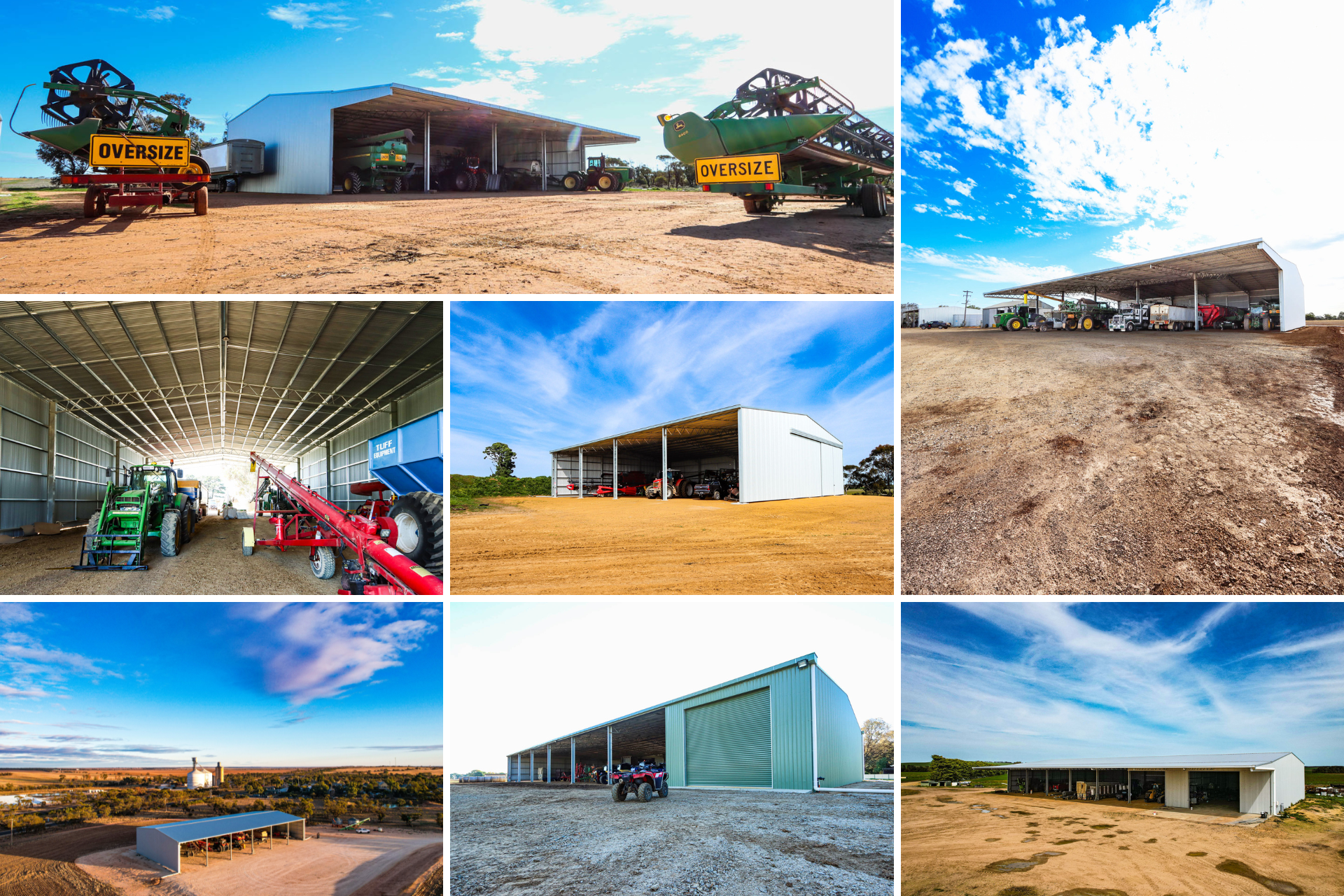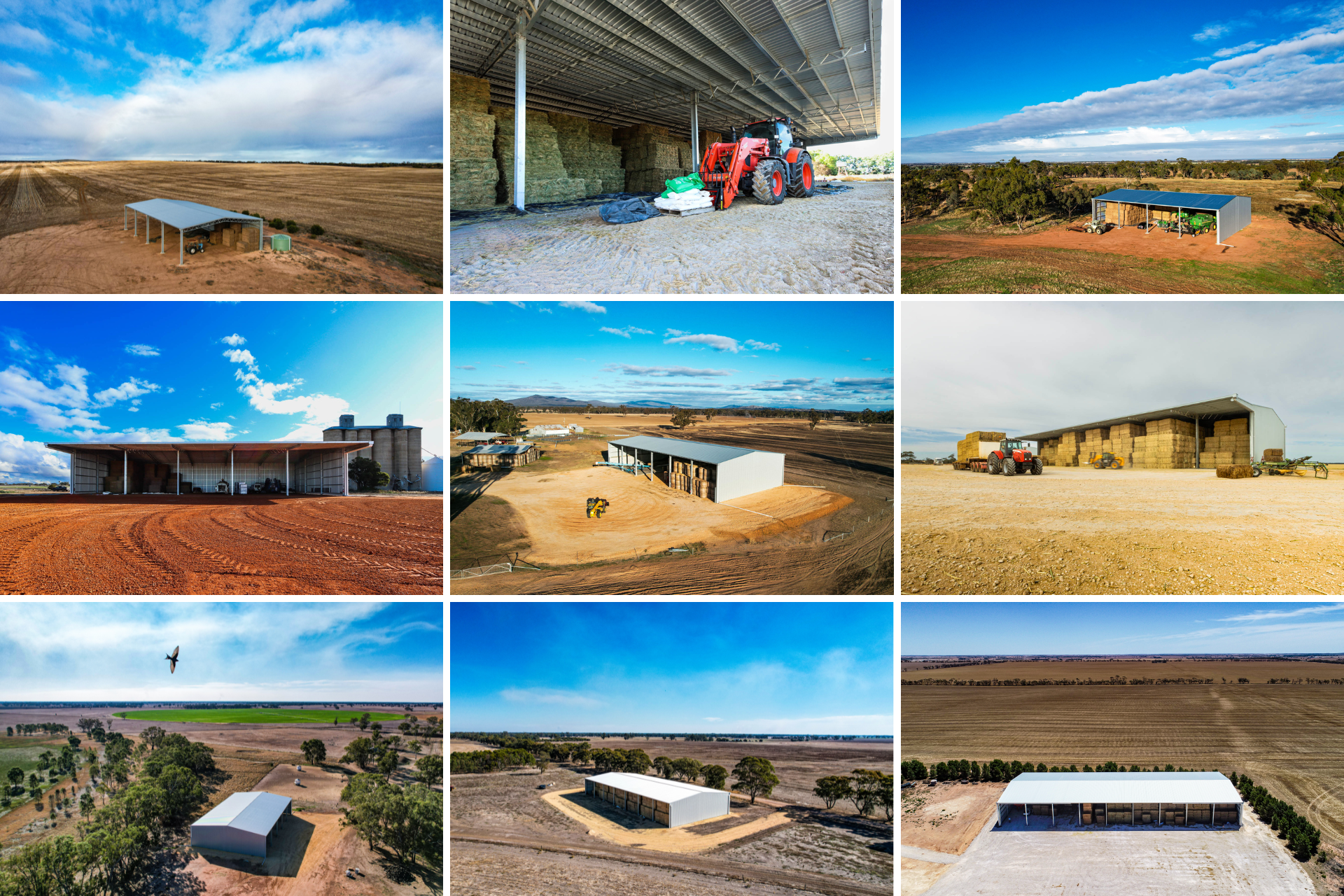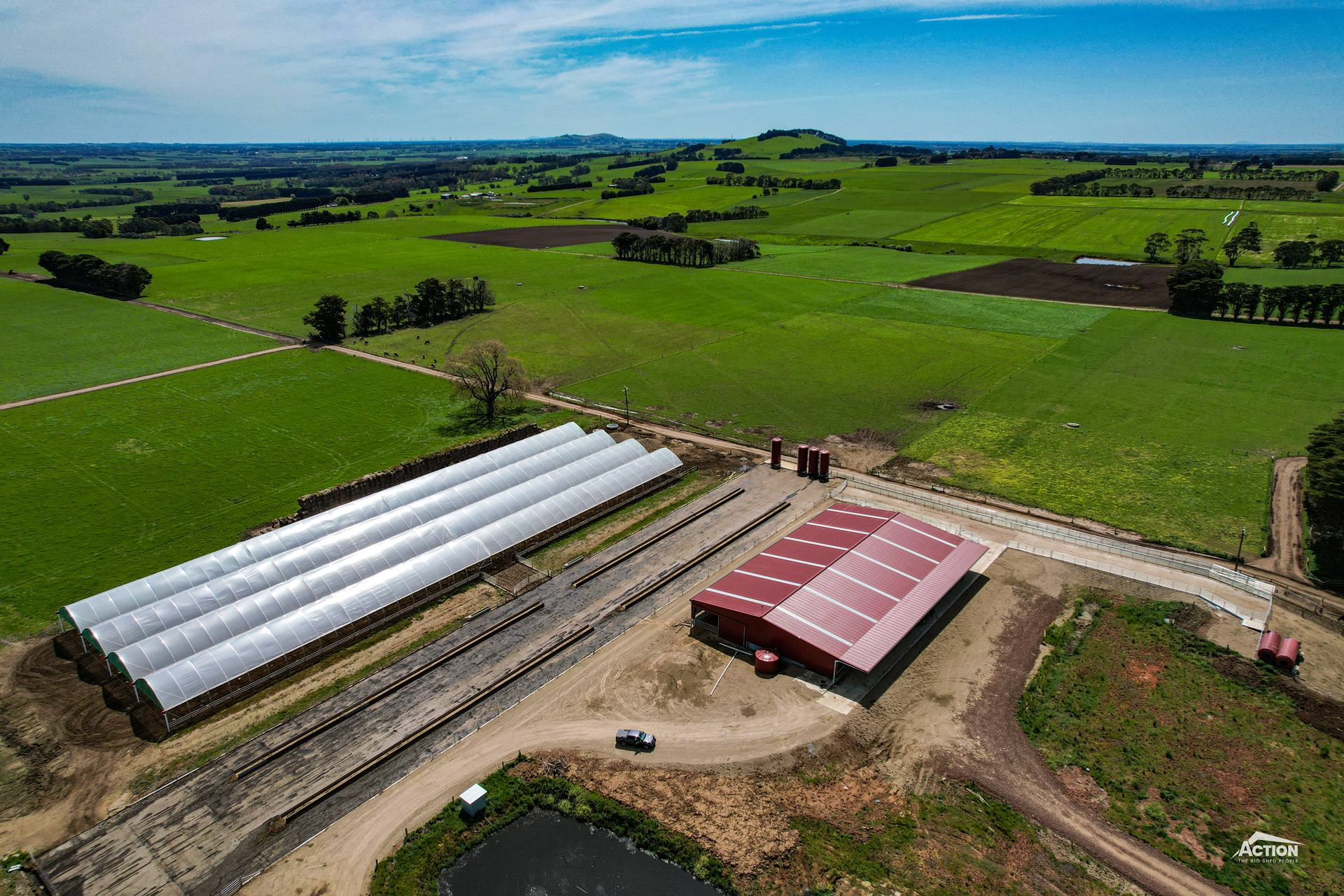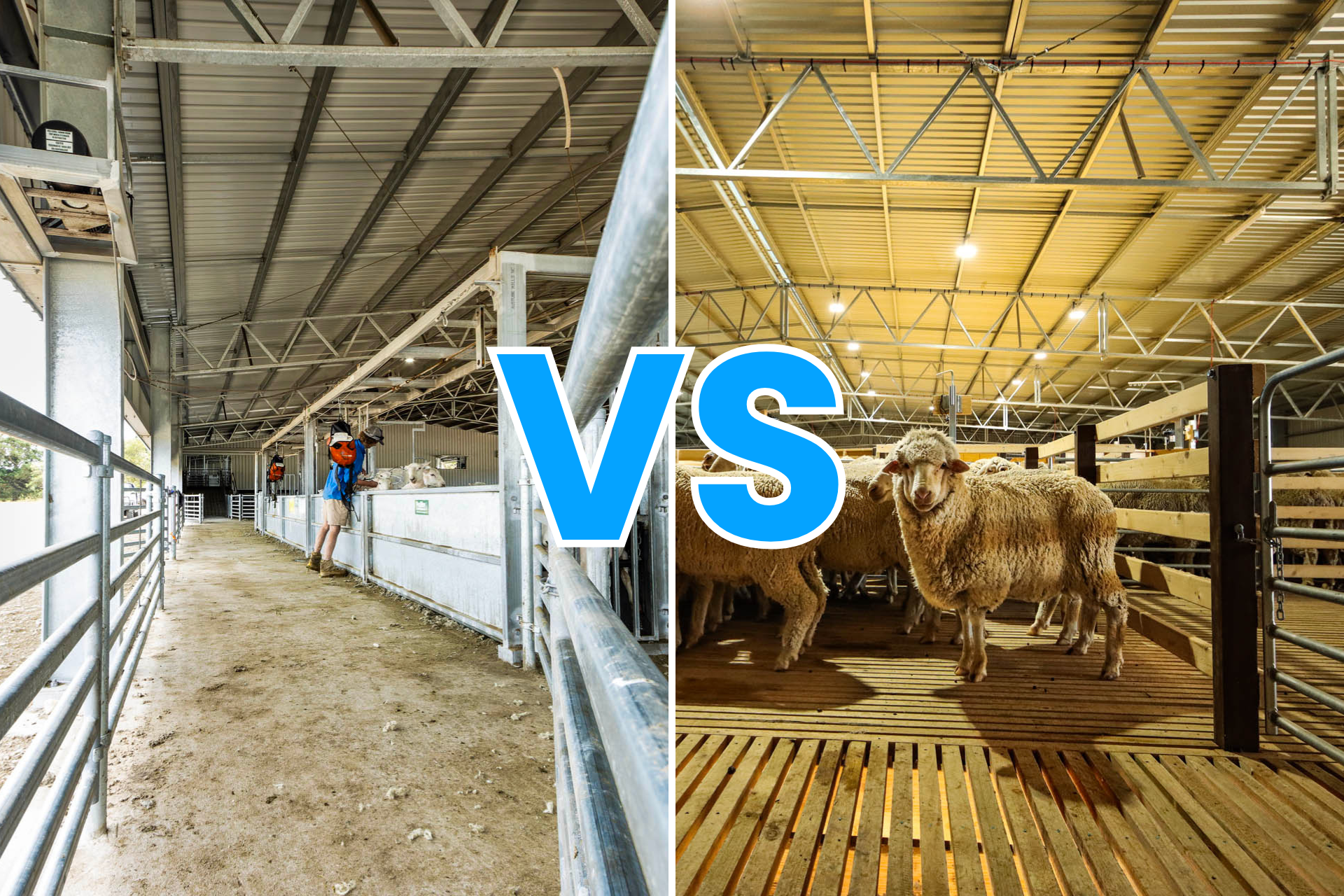
Analysing your farm shed costs? This article will help you get more shed for your money.
So, what do we mean by that?
Getting more shed for your money means getting better value from every dollar you spend — whether that’s through extra capacity, improved functionality, higher quality, or a stronger return on investment.
What it doesn’t mean is cutting corners. Taking shortcuts or sacrificing quality under the guise of “value engineering” can compromise functionality and ultimately cost you more in the long run.

In this article, we’ll share nine smart ways to make the most of your farm shed investment — and get more shed for your money.
Let’s get into it
9 Ways To Get More Farm Shed For Your Money
Too long, didn’t read? Short on time?
Here’s a summary of what we discuss:
- Get the Height Right
- Add a Canopy
- Use Best-Practice Bay Spacings
- Finish With Zinc
- Choose a Standard Span
- Make It Multi-Use
- Choose Cost-Effective Configurations
- Do It Once, Do It Right
- Avoid Third-Party Costs
1
1. Get The Height Right
You’ve probably heard us say this before: don’t skimp on height!
Height isn’t a major driver of farm shed costs, and getting it wrong can be frustrating.
For example, if your cattle yard cover is too low, there won’t be enough clearance to lift cattle out of crushes.
And once the shed is installed, there’s little you can do to fix it.
In many cases, increasing height is a cost-effective way to get more shed for your money.
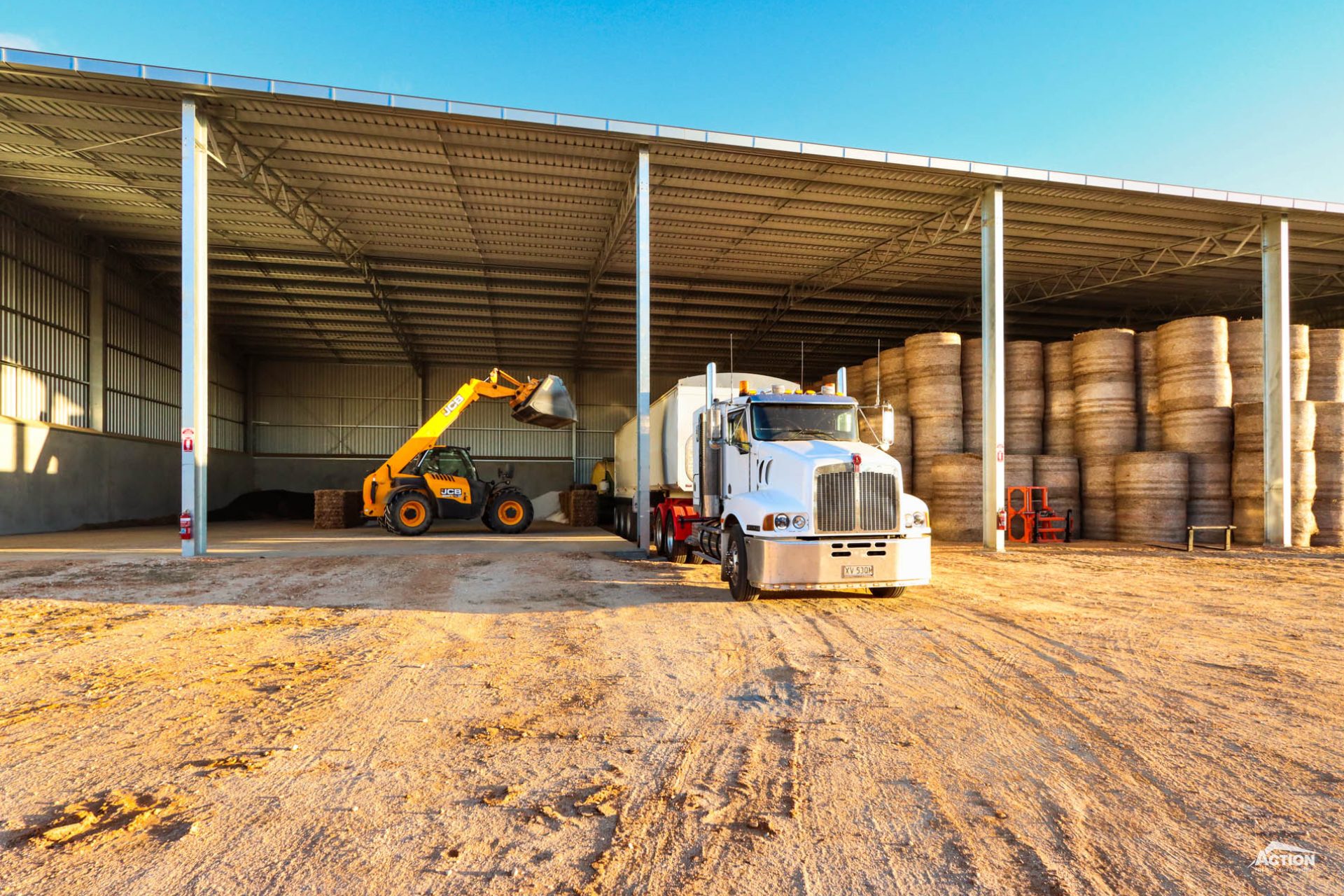
For example, with a hay shed, extra height is the most economical way to increase bale capacity (compared to adding width or length).
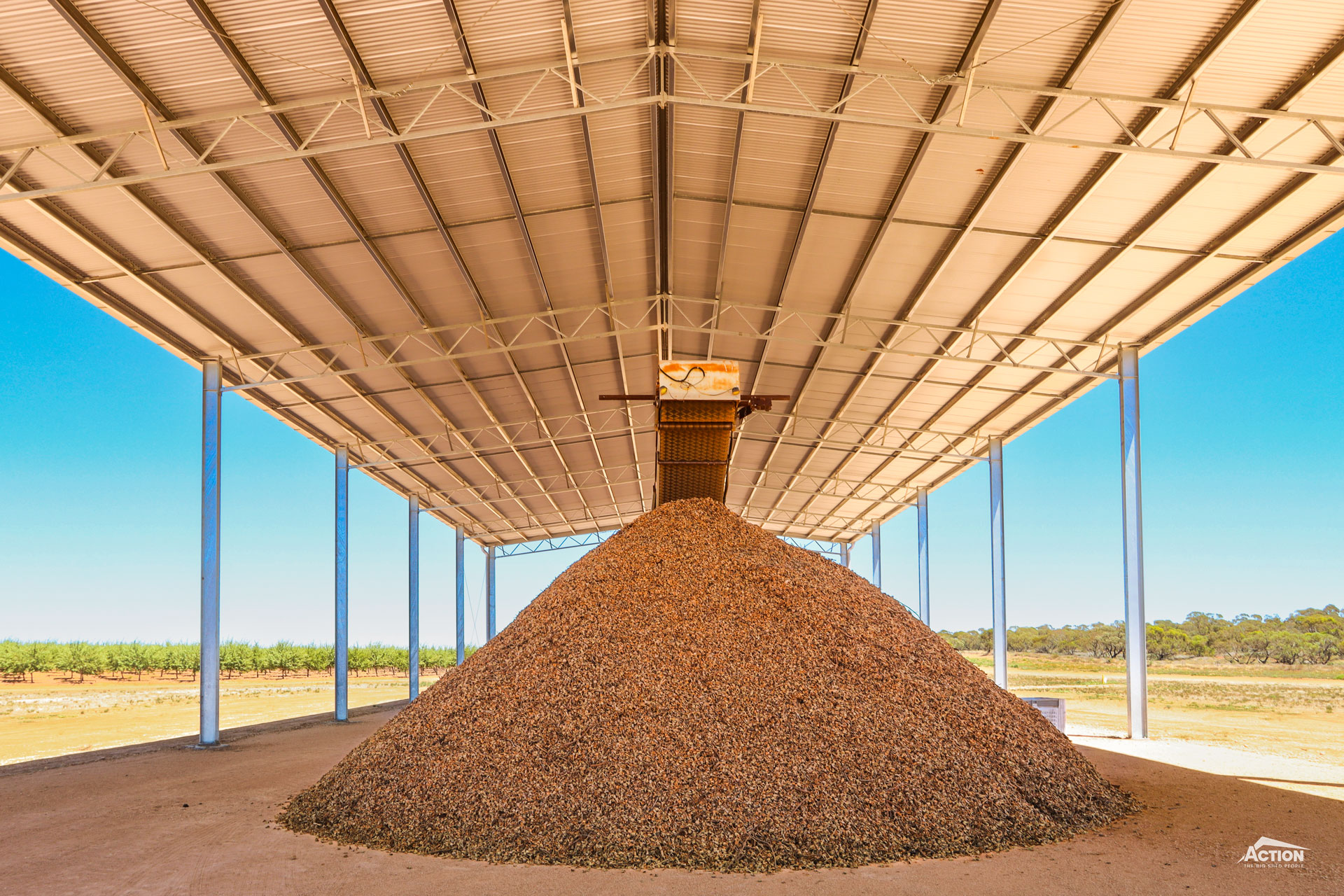
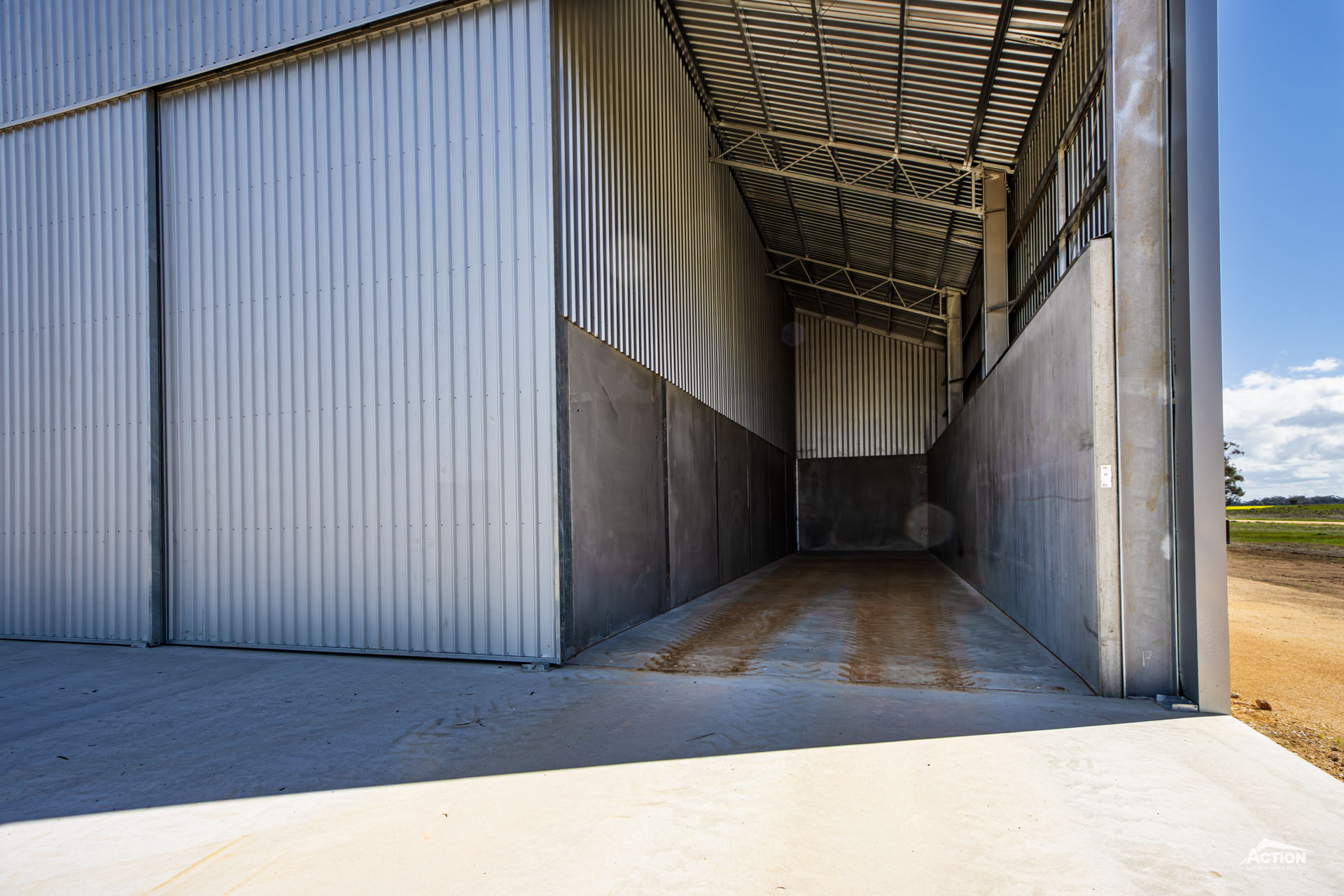
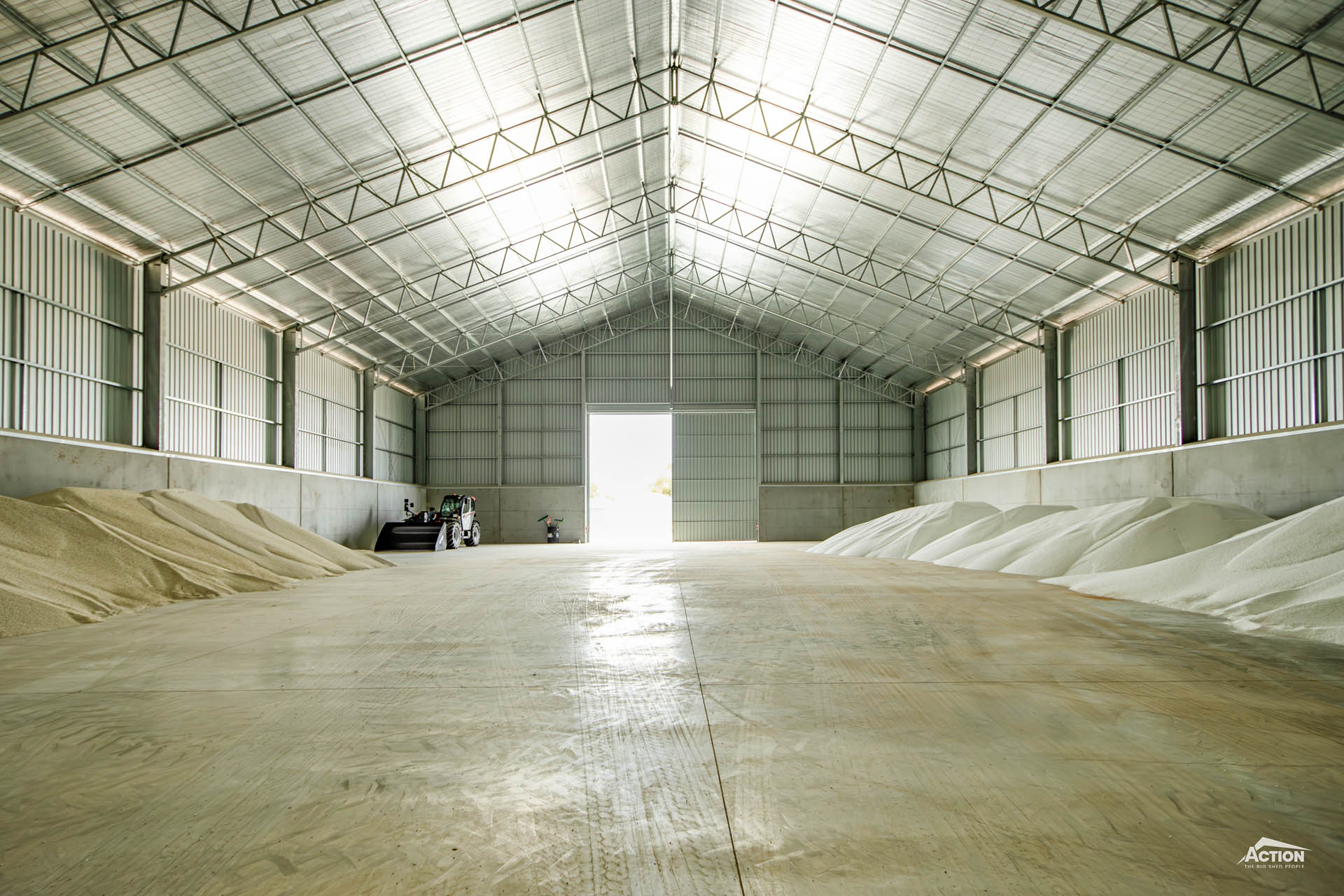
The same principle applies to grain and fertiliser sheds. Increasing concrete panel height increases capacity, giving you more storage with the same footprint and extra cladding protection. Win-win!
That’s why many cropping enterprises are now upsizing panels from 3 metres to 3.5 metres.
(While 4 metres is an option, 3.5 metres is considered the sweet spot. You can learn why here.)
2
2. Canopy For Coverage
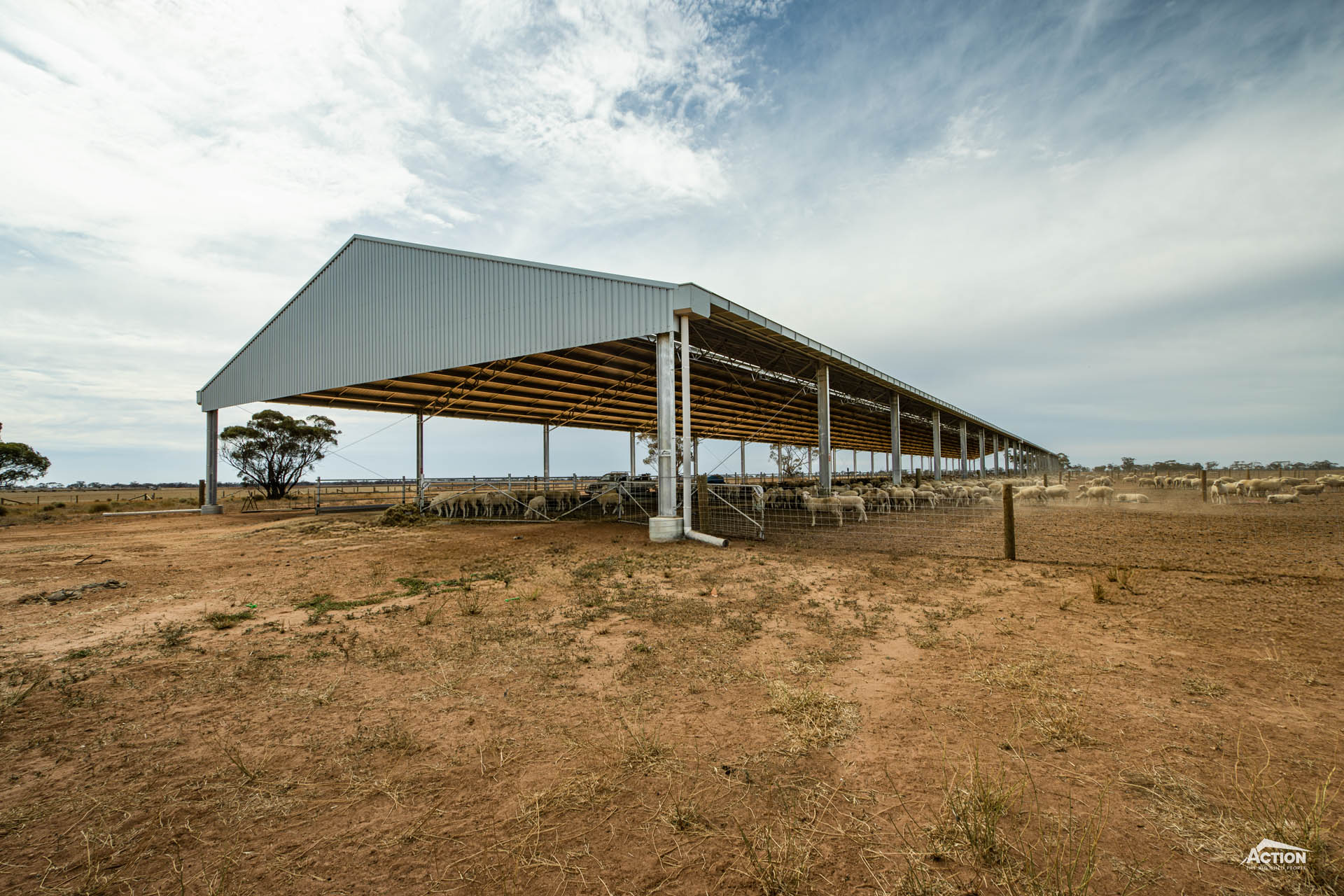
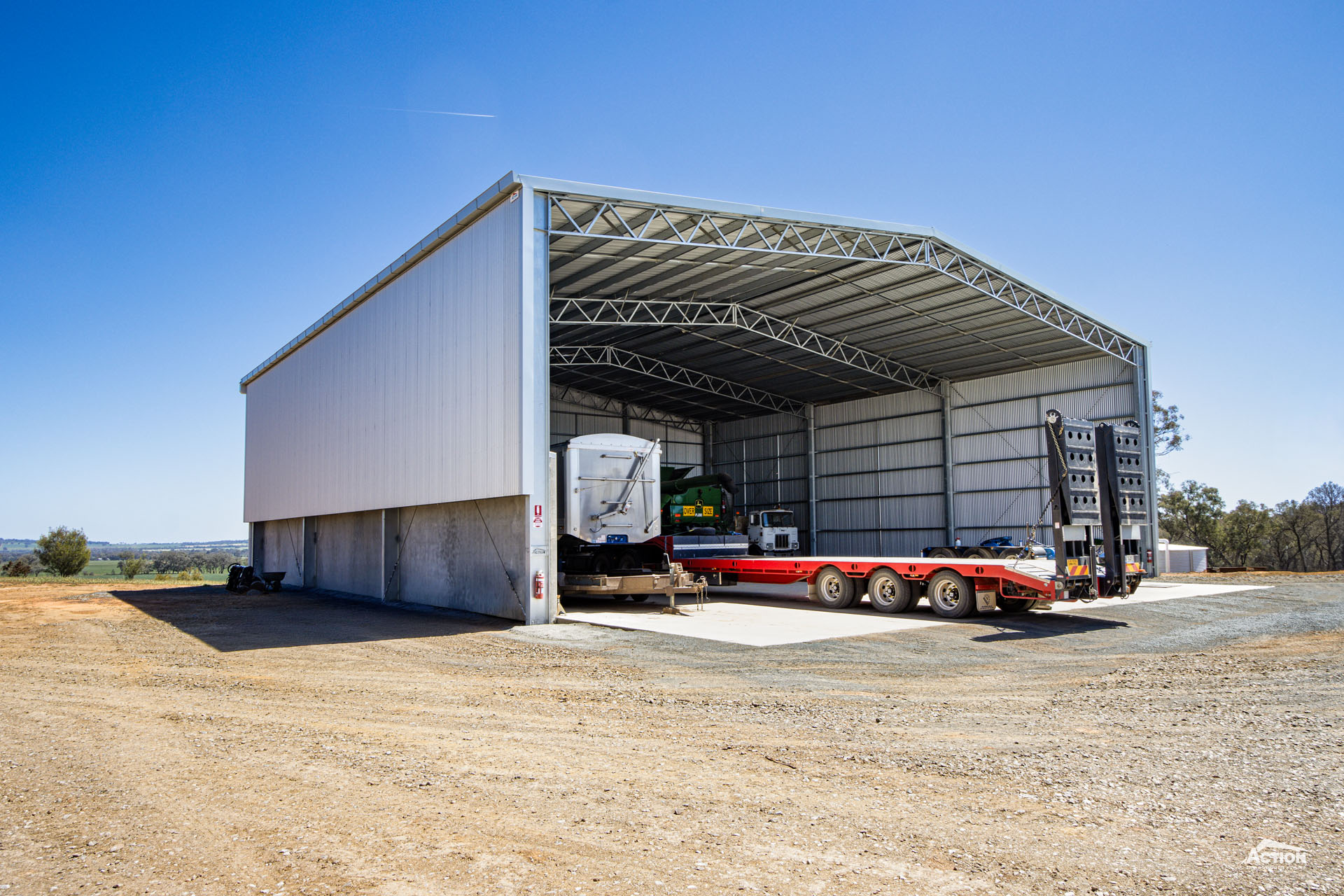
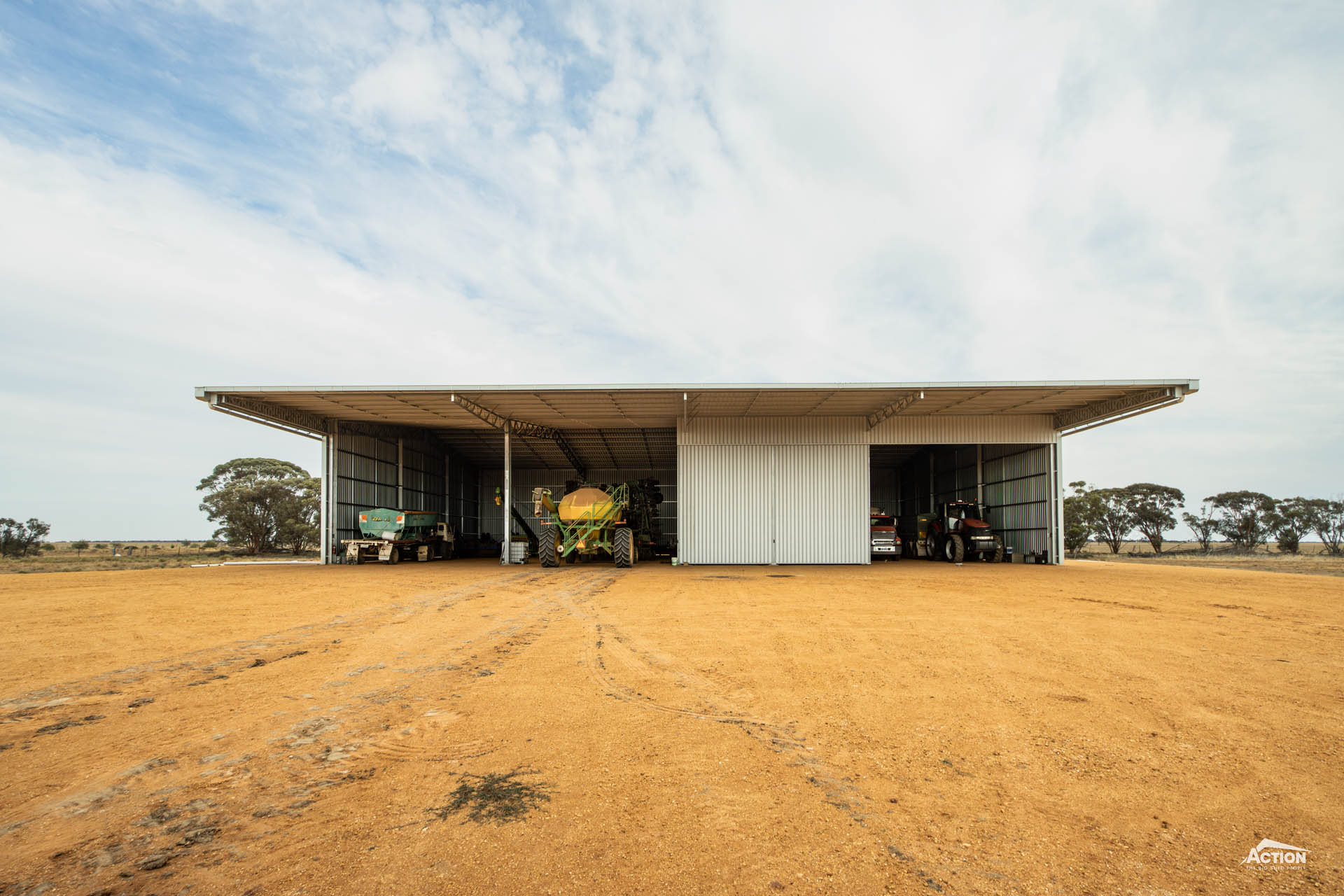
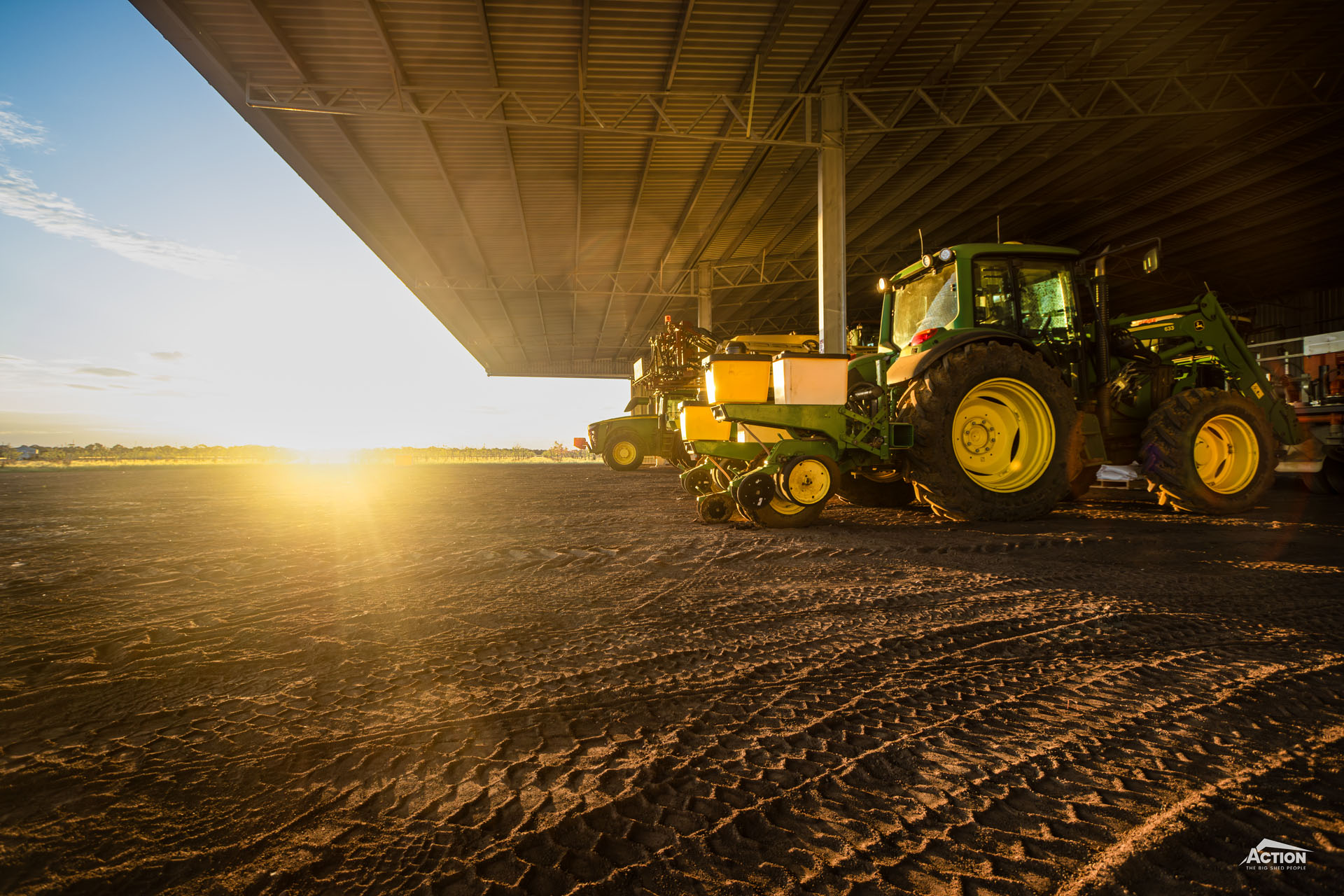
Cantilevered canopies – which you can learn all about here – are the most popular farm shed design feature.
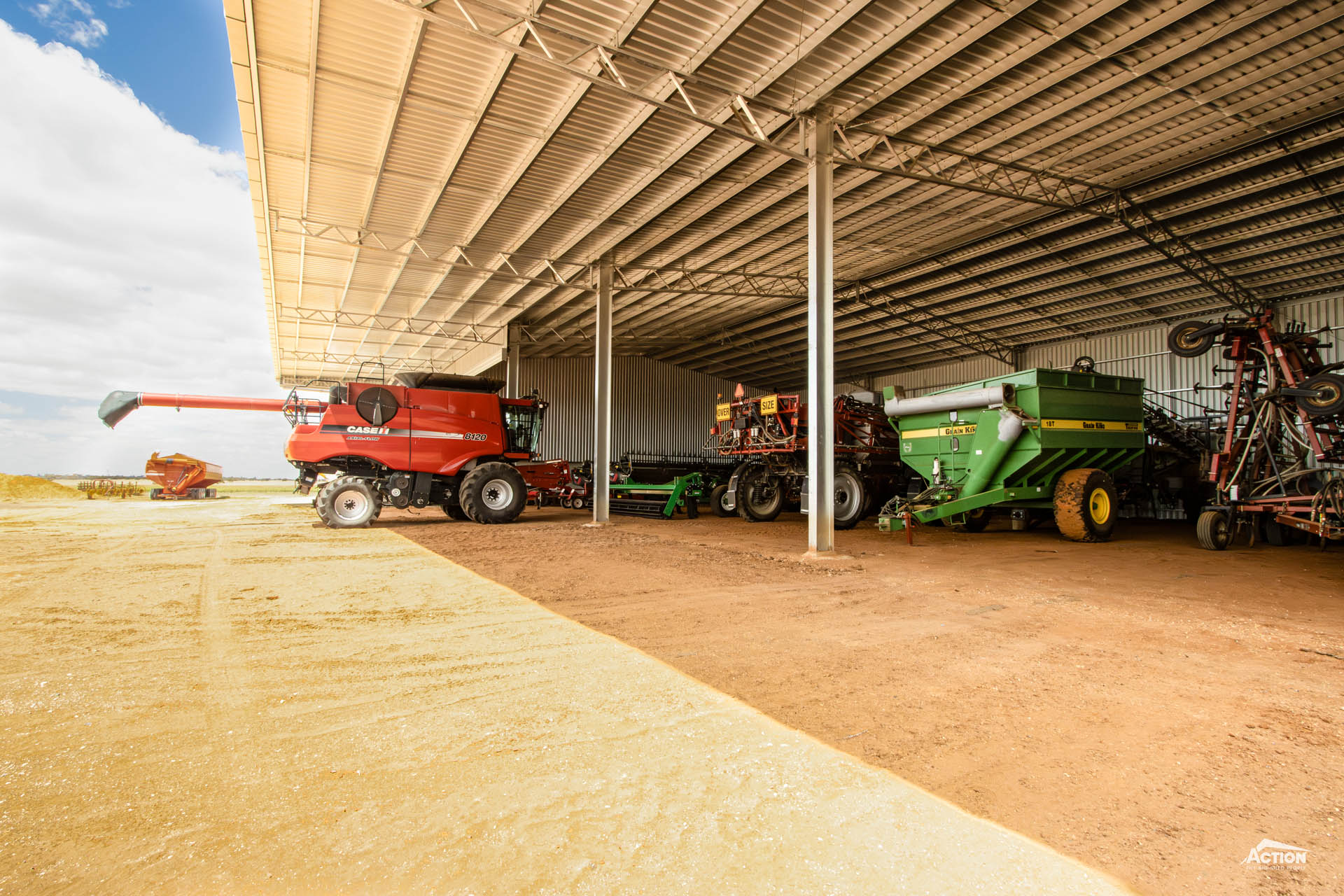
This is because a canopy can be used to increase coverage and weather protection, without the cost of upsizing the span or changing column placement.
Not to mention that it also provides a handy temporary storage area or sheltered loading zone – with no columns in the way!

3
3. Best-Practice Bay Spacings
Each shed type has best-practice bay spacings that balance functionality and cost-effectiveness.
For example, Action grain sheds typically use 6.5 metre bays – any wider, and stub columns are needed to support the panels, which increases project costs.
Our building consultants can provide costing on different options and help you determine which spacing will provide the most value.
For example, they may recommend upsizing hay shed bays from 8 metres to 8.5 metres as they typically use the same number of roof purlins – but provide extra wriggle room.
Alternatively, you could increase the bay spacing to 9 metres so your hay shed can be used for large machinery storage, creating a versatile asset.
(We discuss other ways to get more value with a versatile shed design further on in this article.)
4
4. Finish With Zinc
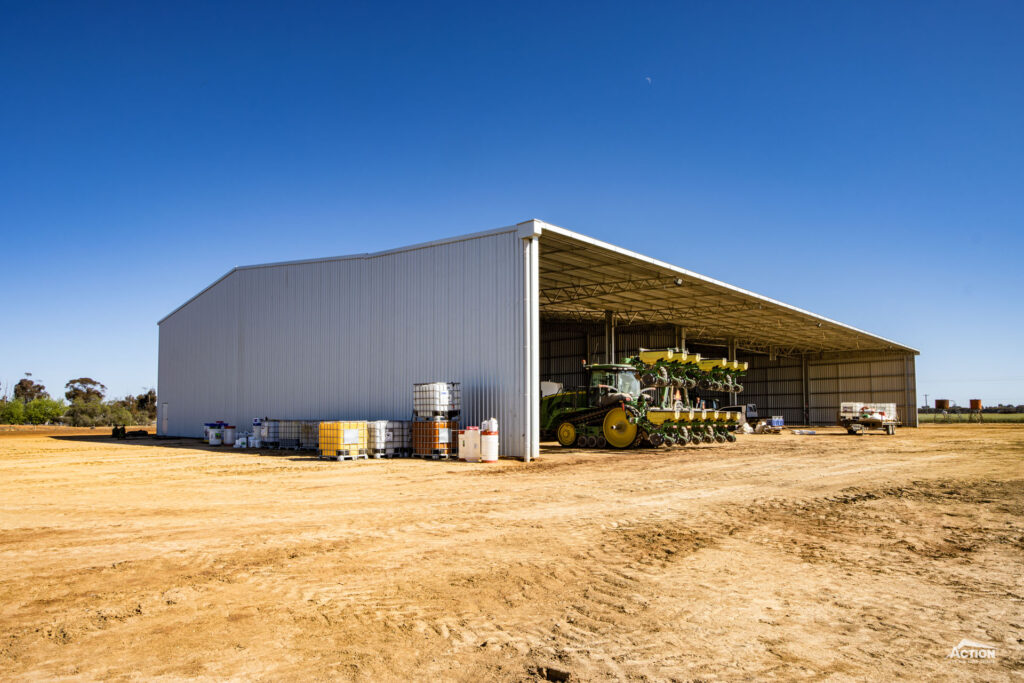
About 90% of farm sheds are finished with zinc cladding.
The 10% that don’t use zinc are usually dairy projects requiring extra corrosion protection, sites with specific council overlays, or personal preference (for example, matching existing sheds).
Colorbond cladding will add to farm shed costs without increasing space or functionality.
So, zinc cladding generally provides the best balance of protection and cost.
Learn about your farm shed cladding options and prices here – Colorbond Versus Zinc Versus Galvanised Cladding (Pros, Cons & Prices)
5
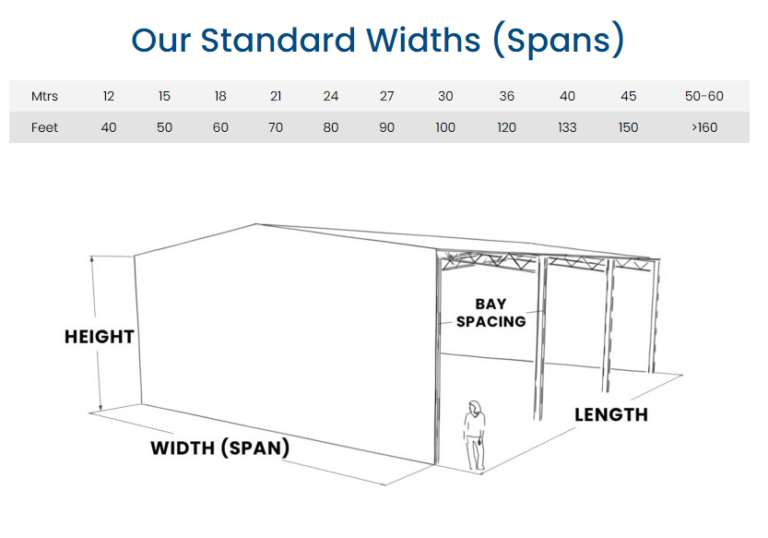
5. Start With A Standard Span
Action’s standard span range has been designed specifically for farm sheds – making them functional and cost-effective.
Choosing one of these also saves you time and money in both the manufacturing and installation stages – without impacting practicality.
If you aren’t sure what span size to use, here are the ones that provide the best value
- 18 metres (Works well for small-scale hay sheds and drive-through machinery sheds)
- 24 metres (Most popular! For both hay and machinery sheds. Commonly used with a 6 metre canopy for cost-effective 30 metre coverage)
- 27 metres (Recommended for grain shed designs where trucks will be turning inside)
You can learn about the range here: What Are The Standard Spans For Farm Sheds?
6
6. Make It Multi-Use
As we mentioned earlier, designing your shed for versatility is a great way to get better value for money.
And it doesn’t have to be complex!
Sometimes it can be as simple as increasing the height, width, or length.
Here are some popular ways to create a multi-use shed that don’t disproportionally increase farm shed costs. i.e. cost more than the benefit they provide.
- Increasing your hay shed bay spacing to accommodate your machinery
- Including a workshop area in your machinery shed
- Covering your sheep yards rather than having sheep on grating
- Setting your loafing barn up to be converted to a freestall barn
- Designing your fertiliser shed to also be used for grain storage (or vice versa!)
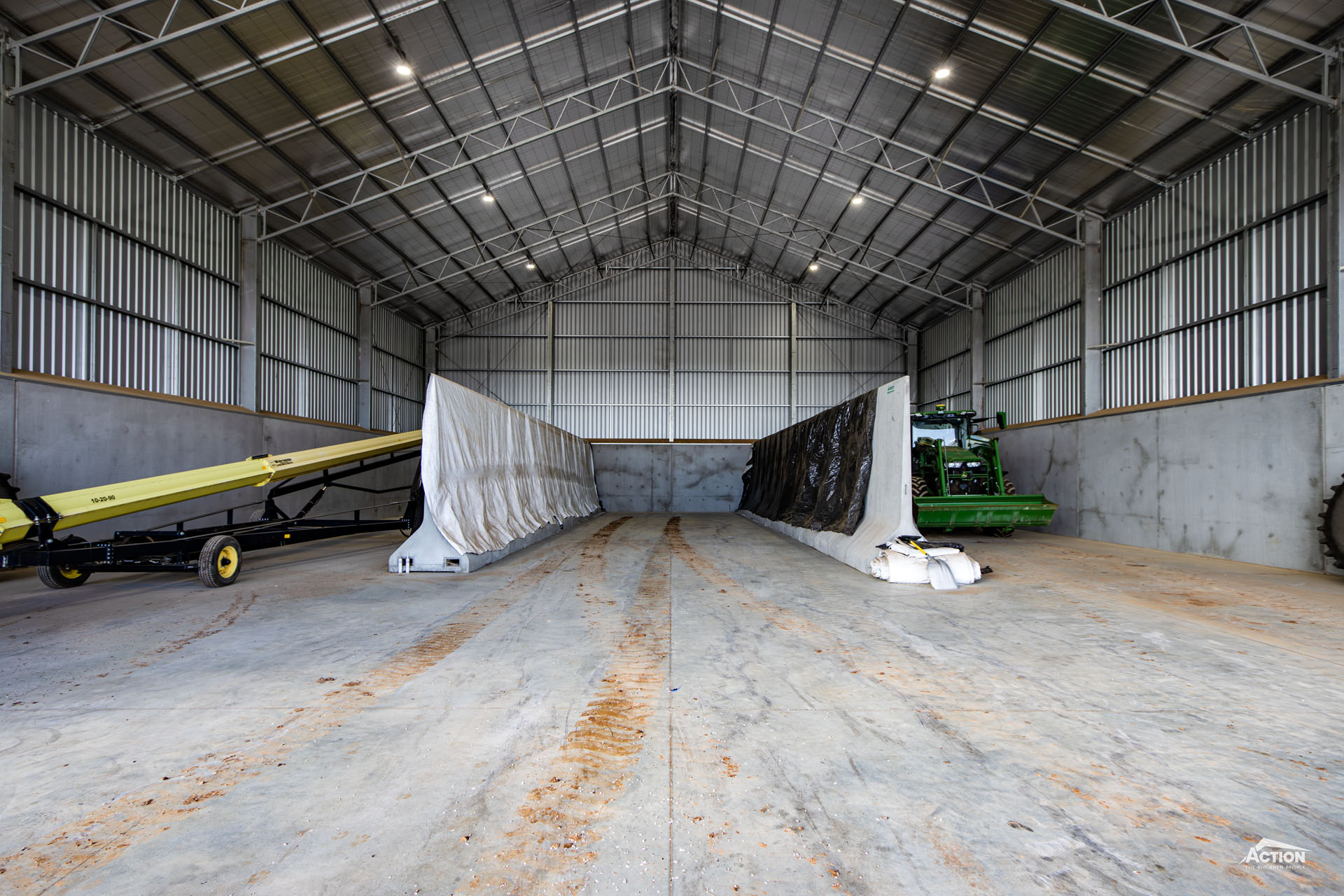
- Segregating a storage shed with movable L-walls.
Remember to ensure your insurance covers co-storing and multi-use sheds.
And check out the gallery below for multi-use shed ideas
7
7. Cost-Effective Confgurations
Not all configurations are equal!
In fact, some are more cost-effective per square metre and more functional than others.
For example, as a general rule, a longer shed costs less than a wider shed.
But to get the best value for money, it is important that you choose the configuration that suits your requirements. And this will vary from shed to shed and operation to operation.
For example:
- A 24 metre span open front shed is best for hay storage (the more bays, the lower the cost per bale)
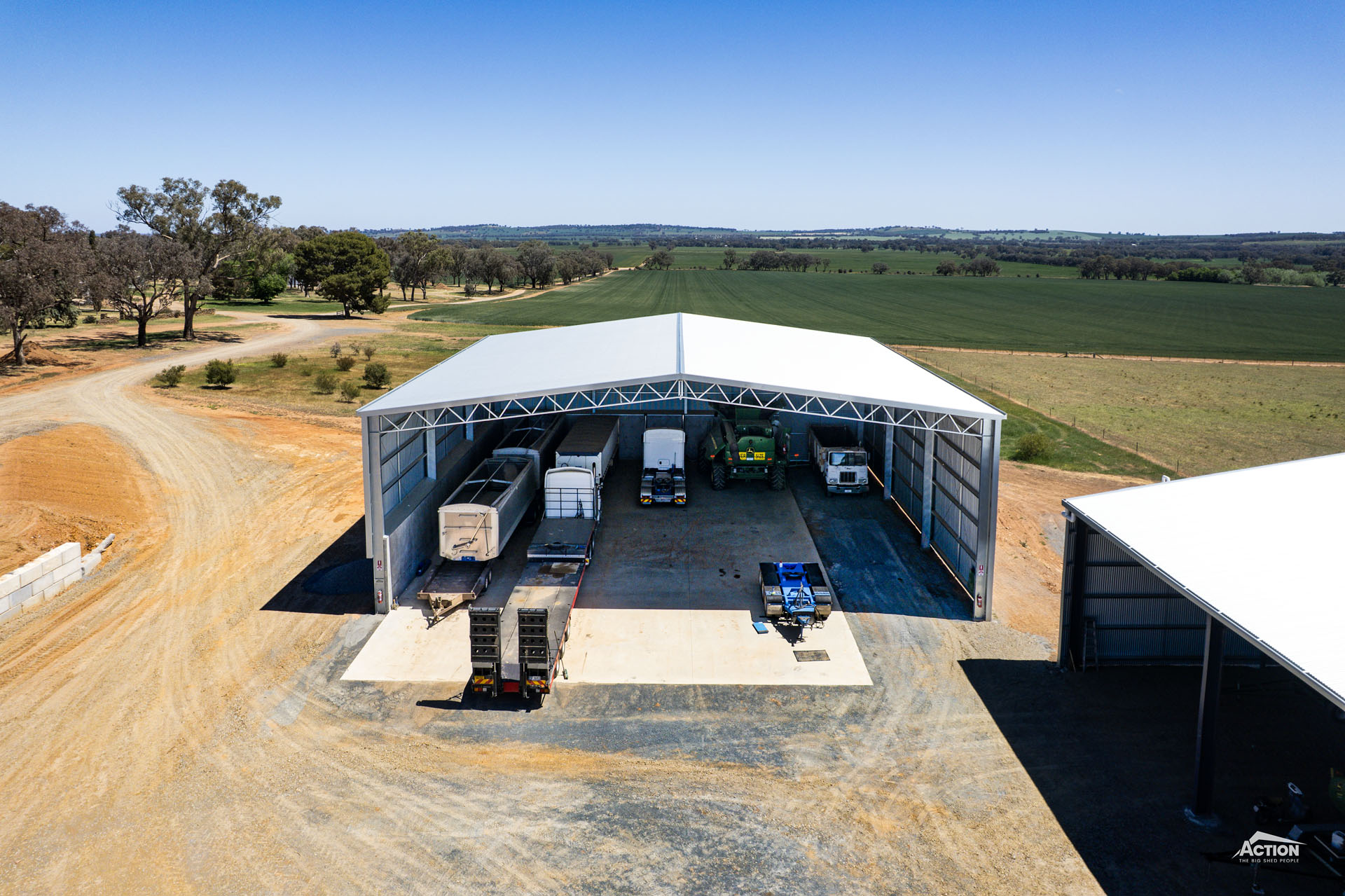
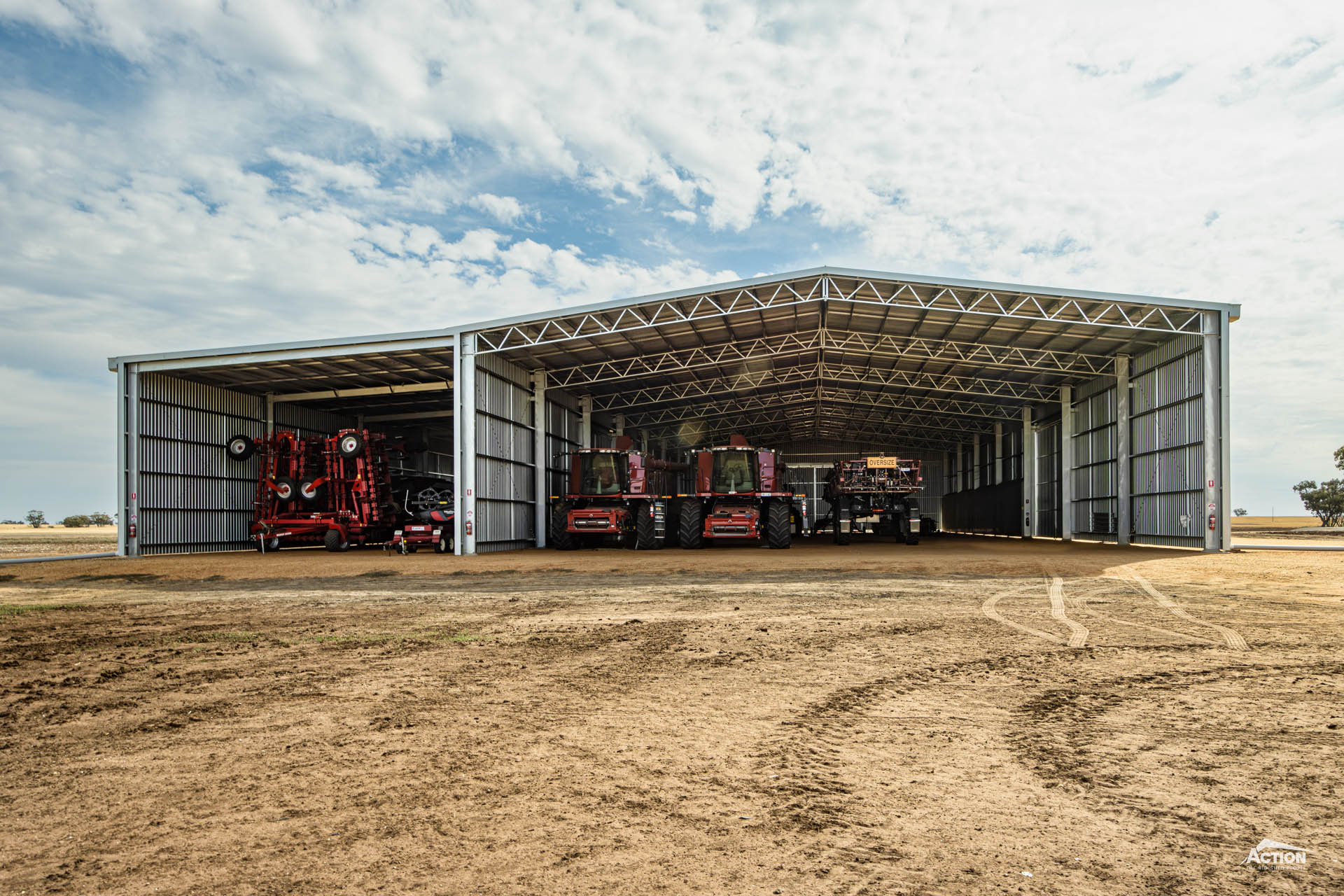
- An open gable shed is the most cost-effective way to store long machinery (rather than increasing the width)
- An open gable shed is the most cost-effective way to store wide machinery (compared to double-bay openings)
Action’s building consultants can help you choose the right configuration that maximises functionality and reduces unnecessary costs, giving you more shed for your money.
8
8. Do It Once, Do It Right
This one is pretty simple – factor your future storage requirements into your design now to save extra costs in the long run.
Thinking about that canopy? Add it now
Expanding your hay program? Choose the extra bays.
While a staged project can be beneficial for managing cash flow, it is usually not a cost-saving measure in the long run.
Over time, you may face steel price increases or higher installation costs if the project is split into phases.
To reduce farm shed costs in the long run, consider:
- Allowing for tipping and turning in your grain shed (even if it isn’t a requirement now)
- Adding on the canopy now rather than later
- Opting for a wide opening and extra clearance for new machinery purchases
Remember, waiting rarely makes anything “cheaper”, and is a shed ever too big?
9
9. Avoid Third Party Costs
At Action, we provide end-to-end project management.
The Action team:
- Applies for permits
- Manufactures your shed (and concrete panels)
- Arranges delivery
- Coordinates installation and concrete slabs
A one-stop shop, as John Bennett explains in the video below.
Choosing a builder who manages the entire process helps avoid unnecessary third-party markups and delays.
It also frees up your time to focus on what matters most. Remember, your time is money.

So that’s a wrap. Still have questions about farm shed costs? Here are some of the most common ones we are asked.
Top Questions About Farm Shed Costs – Answered!
Quick answers to the top question around farm shed pricing and quotes
You can find more information in our Pricing Guide Library here.
A general farm storage shed usually costs around $150 and $200 per square metre while more complex projects such as grain sheds or shearing sheds can range between $250 and $550 per square metre.
These ranges depend on factors such as:
- Configuration
- Design features
- Location
- Size
The cost to build a farm shed in 2026 will largely be dictated by what happens to steel prices.
At this stage, steel prices have plateaued and remained relatively stable. We have not been notified of an upcoming price rise.
We will keep you updated on any steel price rises to help you avoid these impacting your project.
In the meantime, you can learn about 2025 steel prices here.
It is a good idea to understand what is included in your farm shed quote to avoid any surprises – especially if you are comparing quotes.
Your Action Farm Shed Quote will include:
- Fully hot dip galv frame (columns and trusses)
- GST
- Delivery (unless you request otherwise)
- Footing Concrete (unless you request otherwise)
- Installation (unless you request otherwise)
Not every farm shed builder will include these in their quotes – so it pays to check!
So, what doesn’t your Action quote include?
- Council permits (these will be oncharged once permits are received)
- Site preparation
- Unloading
Preparing a farm shed pad? You might find this article helpful – Farm Shed Pad Guide (Ideas, Sizes & Prices)
By understanding what’s included you’ll be better equipped to compare quotes fairly and choose the best value design.
Useful Resources
We’ve collated a list of popular tools, articles and brochures to help you with your project planning.
Check it out below!
- Storage Calculators For Grain, Fertiliser & Hay
- Standard Fertiliser Shed Range (Sizes & Prices)
- 5 Smart Concrete Slab Ideas For Farm Sheds
- Segregated Grain Shed Providing Storage At Harvest And Cropping
- Sheep Yard Cover Versus Shearing Shed Grating (Pros, Cons & Prices)
- Purpose Built, Retrofitted, Or Multi-Use Fertiliser Shed?
- How To Maximise Grain Shed ROI
- Converting Your Loafing Barn To A Freestall Set Up
At Action, we’re here to help you get more shed for your money – by optimising design, maximising storage, and reducing long-term farm shed costs.
Ready to start your shed project? Submit a quote request or call 1800 687 888 – we’d love to help you!