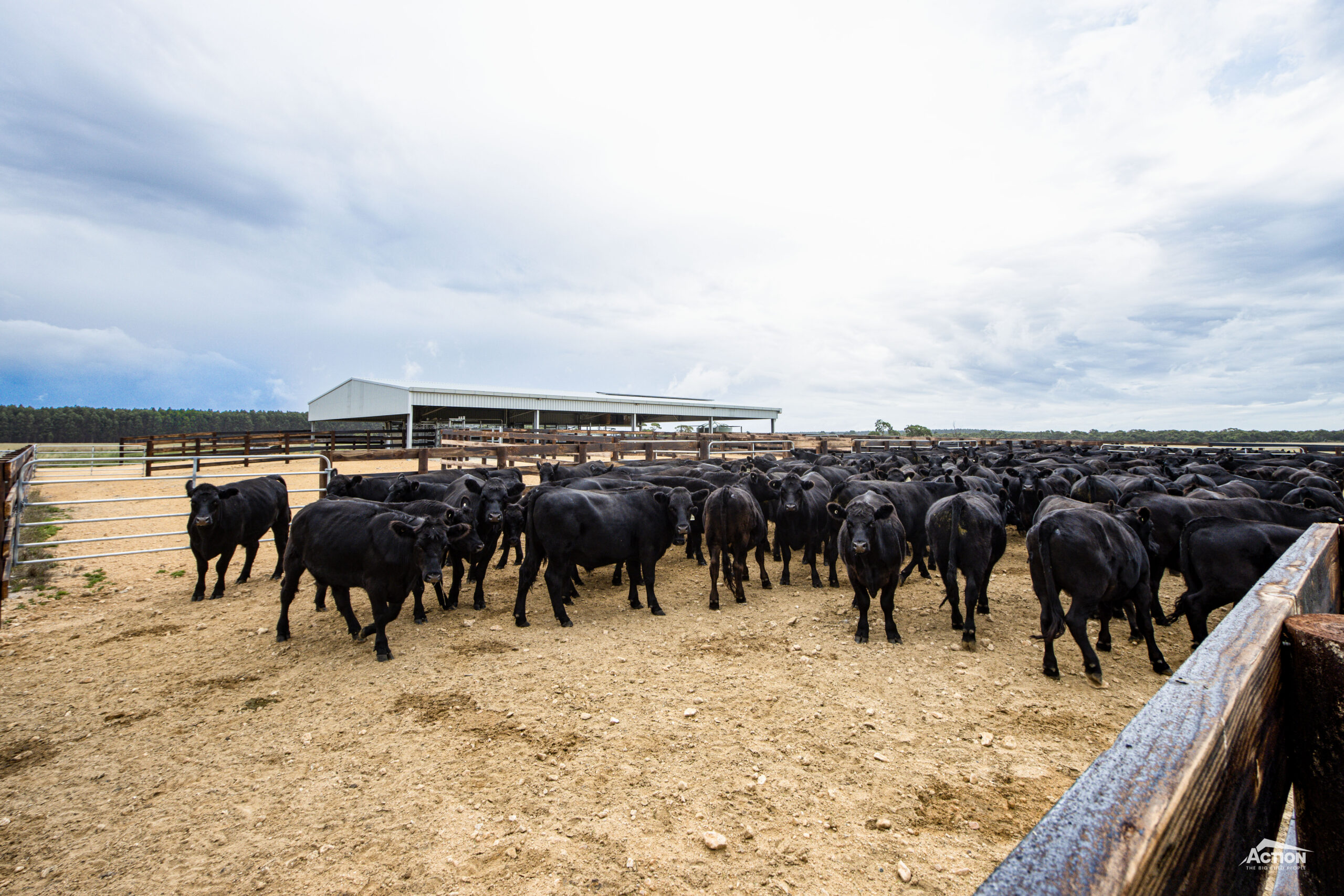
More than 75 percent of cattle in Australian feedlots now have access to shade, as reported in ‘ALFA’s Shade Initiative – Our Journey Towards Having All Feedlot Cattle with Access to Shade’.
Feedlot shade projects are showing no sign of slowing down, as the industry commits to creating a stronger and more sustainable future.
Anthony Allen’s of Rockalea Pastoral is an example of this, and he shares his feedlot shade journey in the video below.
Anthony Allen’s Feedlot Shade Journey
Committing to implementing shade?
Weighing up partial hard shade or contained housing for your feedlot?
Regardless of the shade system you choose, feedlot shade implementation is a project that takes time and resources.
The decisions you make now will impact the future of your feedlot.
Partial hard shade versus a fully contained housing system is one of those decisions.
So, in this article, we cover partial hard shade, contained housing – and how you could design partial hard shade to convert to contained housing.
What Is Partial Hard Shade For Feedlots?
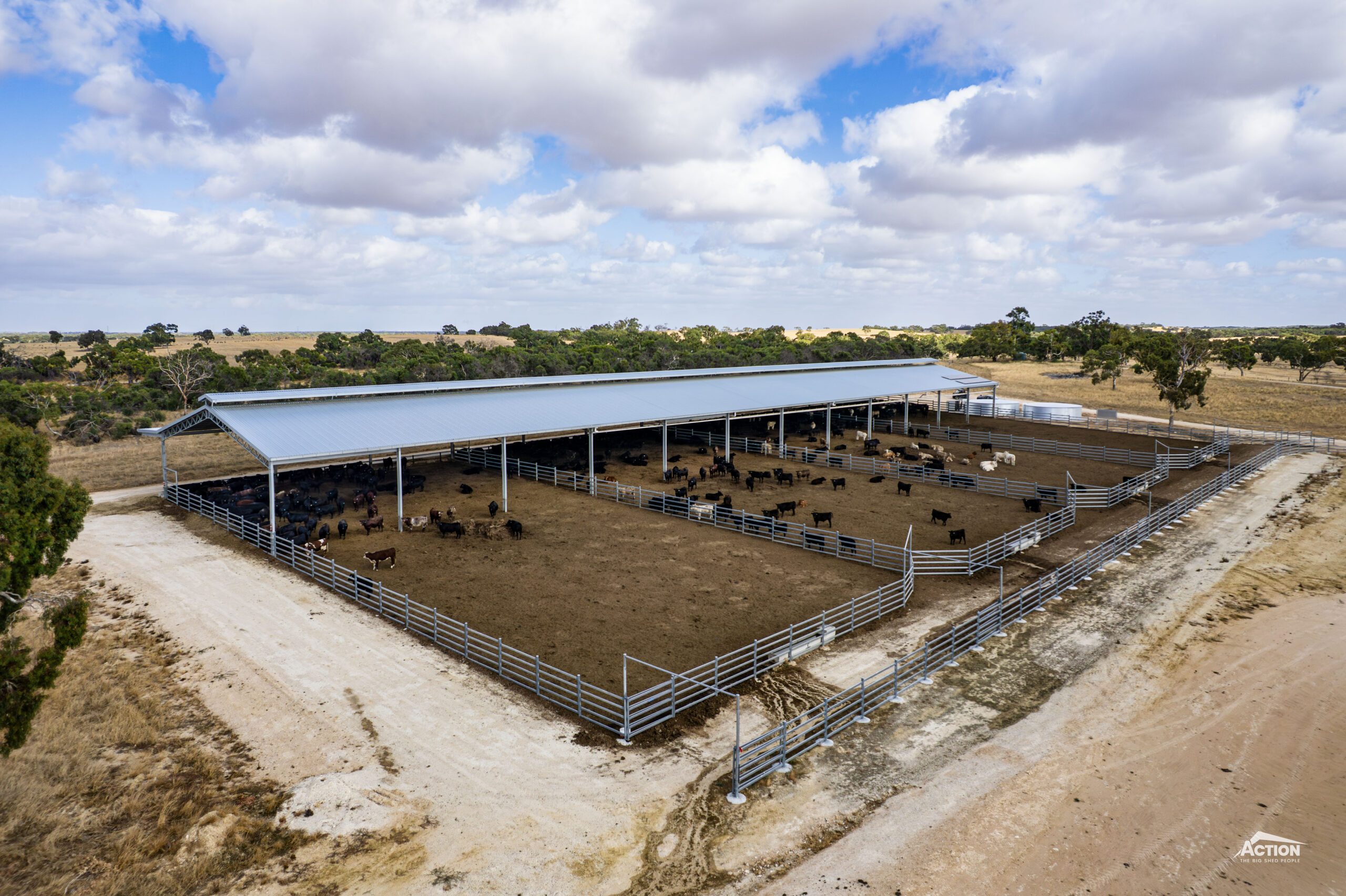
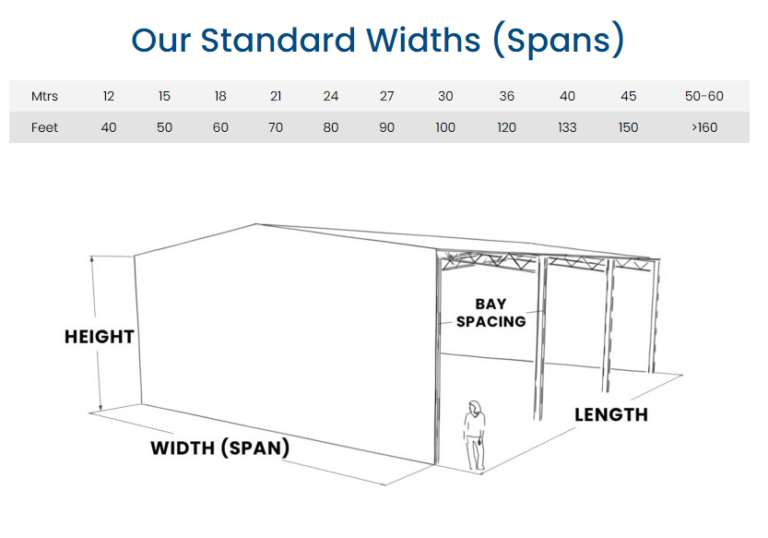
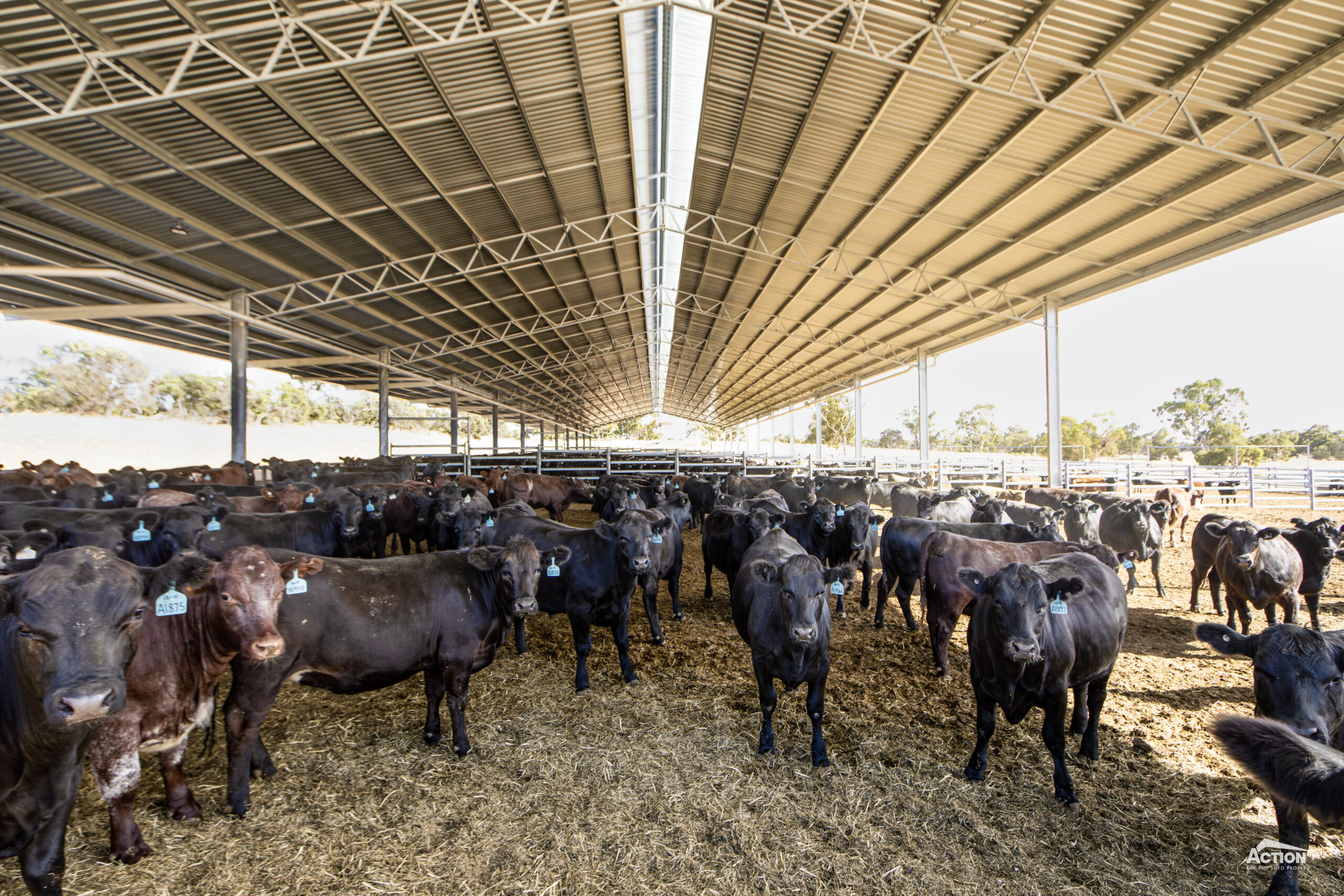
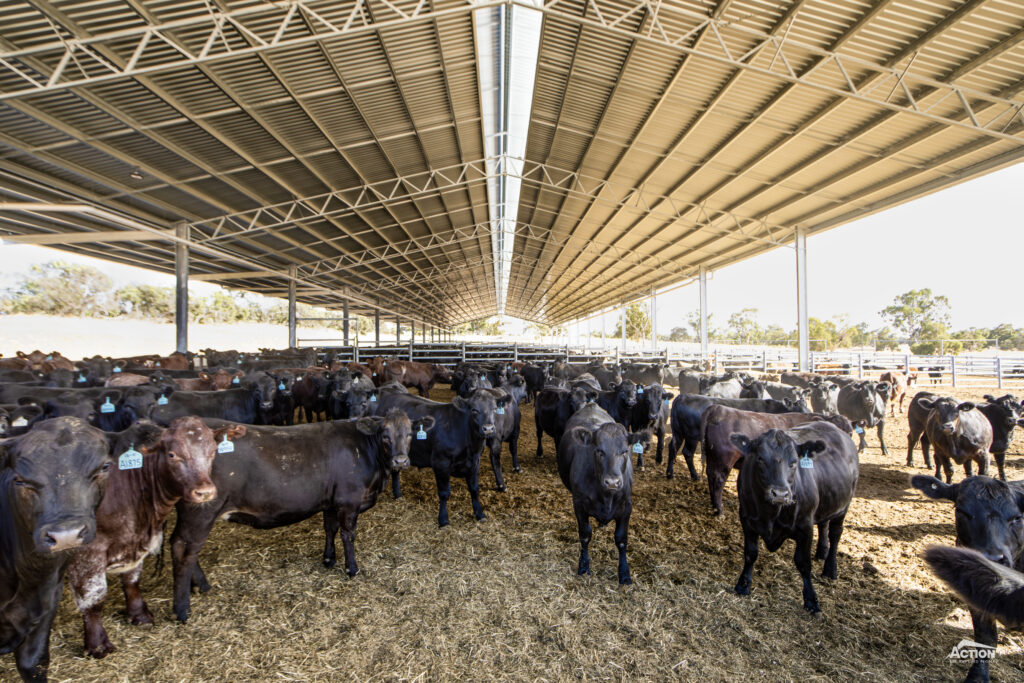
Partial hard shade is usually a steel shed structure designed to partially cover a feedlot pen. It is an alternative option to traditional feedlot shade such as shade cloth, heavy-duty and waterproof without the cost of a fully house system.
Action partial hard shade consists of heavy-duty UB columns and an open web truss structure, that is fully hot dip galvanised after manufacture.
Advantages Of Partial Hard Shade
Partial hard shade is much more durable than traditional feedlot shade, with less maintenance required and a longer lifespan – saving time and money.
It also helps keep pens dry during rain events and can be set up to capture stormwater runoff.
And one of the main reasons why feedlots can choose partial hard shade over contained housing is the lower initial cost – more on this later.
Disadvantages Of Partial Hard Shade
As with anything, there are some potential drawbacks to covering your feedlot with partial hard shade.
For example,
- Higher cost than traditional shade
- May have more posts in pens (depending on the design)
- Low stocking density (in comparison to contained housing)
Orientation For Partial Hard Shade
Orientation is an important consideration for feedlot covers – whether that’s traditional, partial or fully covered – for effective shade and airflow.
When it comes to partial hard shade, some recommendations include:
- If only covering the feed bunk portion of the pen, this will work best if the pens run East-West
- If the pens run North-south, position cover to ensure the shade is most effective at critical times of the day
Details like local climate, existing infrastructure and site exposure should all be factored in when planning shade and shade orientation. And these details are taken into consideration as part of Action’s feedlot-specific approach.

How Much Does Partial Hard Shade Cost?
Cost is an important consideration for feedlot shade implementation, from initial budgeting to understanding the potential ROI.
As a guide, heavy-duty, fully hot dip galvanised partial hard shade can cost between ~ $450 and $580 per SCU, depending on details like size, design, location and site complexity.
In comparison, a contained housing system can cost between ~$900 and $1100 per SCU.
Please note that these are approximate price guides only.
How Does Partial Hard Shade Compare To Contained Housing?
So, apart from the lower initial cost – how does partial hard shade compare to contained housing?
Contained housing is a more intensive feeding system that does require changes to how the feedlot is managed – for example, bedding management.
The potential drawbacks to contained housing can include:
- The higher initial cost
- Some areas may have limited access to ideal bedding materials.
- Some climates may see less performance gains than others
- Some post obstructions in pens (depending on the design)
- Cooler, Southern climates may have additional bedding management challenges to workaround
However, there is a serious business case for implementing contained housing – and you may find the benefits soon pay for the initial cost.
For example:
- Higher stocking density increases feedlot capacity without increasing overall footprint
- Better odour management, which can mean a more favourable approval process
- Improved pen conditions and animal comfort, reducing dirty hide penalties and dark cutters
- Low stress environment improves feed intake, feed efficiency and increases weight gains
- Reduces feed wastage
- Provides greater opportunity for stormwater catchment and solar installation
So, if you are still planning what your feedlot shade journey looks like or managing cash flow, designing your partial hard shade to convert to contained housing could be a smart option. It’s forward thinking and may provide the best of both worlds.
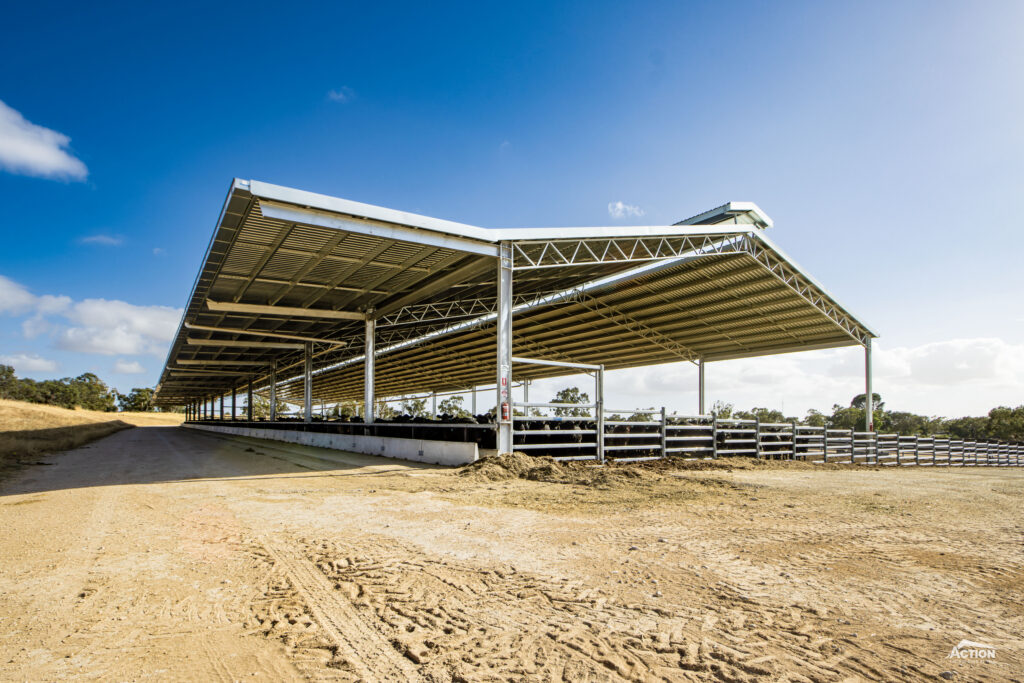
Converting Partial Hard Shade To Contained Housing Systems
If you are planning to install partial hard shade, it is important to make sure the design isn’t limiting the future of your feedlot.
This is why the Action approach to partial hard shade, is to design your shade so that you can effectively implement partial hard shade now – and the realise the full benefits of a covered housing system in the future.
These future-ready partial hard shade designs take into consideration details such as future bunk space and stocking density requirements – and can be as straightforward as installing your shade in stages.
How this can be achieved often depends on factors such as whether it is a greenfield site or you are covering existing pens.
For example, on a greenfield site, it is possible to cover half the pen now and cover the full pen in the future with an increased stocking rate.
However, pen sizes need to be considered to maintain adequate bunk space per head with an increased stocking density, such as 30 metres deep.
Installing partial hard shade to existing, traditional feedlot pens can require more planning.
This is because if a full pen is covered in the future, it will likely be too deep (~40m) to increase the stocking rate (from 13m2 to 8m2) as the bunk space will be inadequate.
A project consultation with the Action team can help you determine what is the best approach for your feedlot shade – committing to a contained housing system or starting with a partial hard shade set up.
Call 1800 687 888 or submit an enquiry via the REQUEST A QUOTE form for project specific advice – we would love to hear from you.
You may also find the resources and FAQ section below helpful.
Useful Resources
- Implementing Covered Housing? Make Sure You Get These Details Right
- Beef Feedlot Calculators
- MLA Feedlot Covered Housing Systems Manual (PDF Download)
Feedlot Shade FAQ
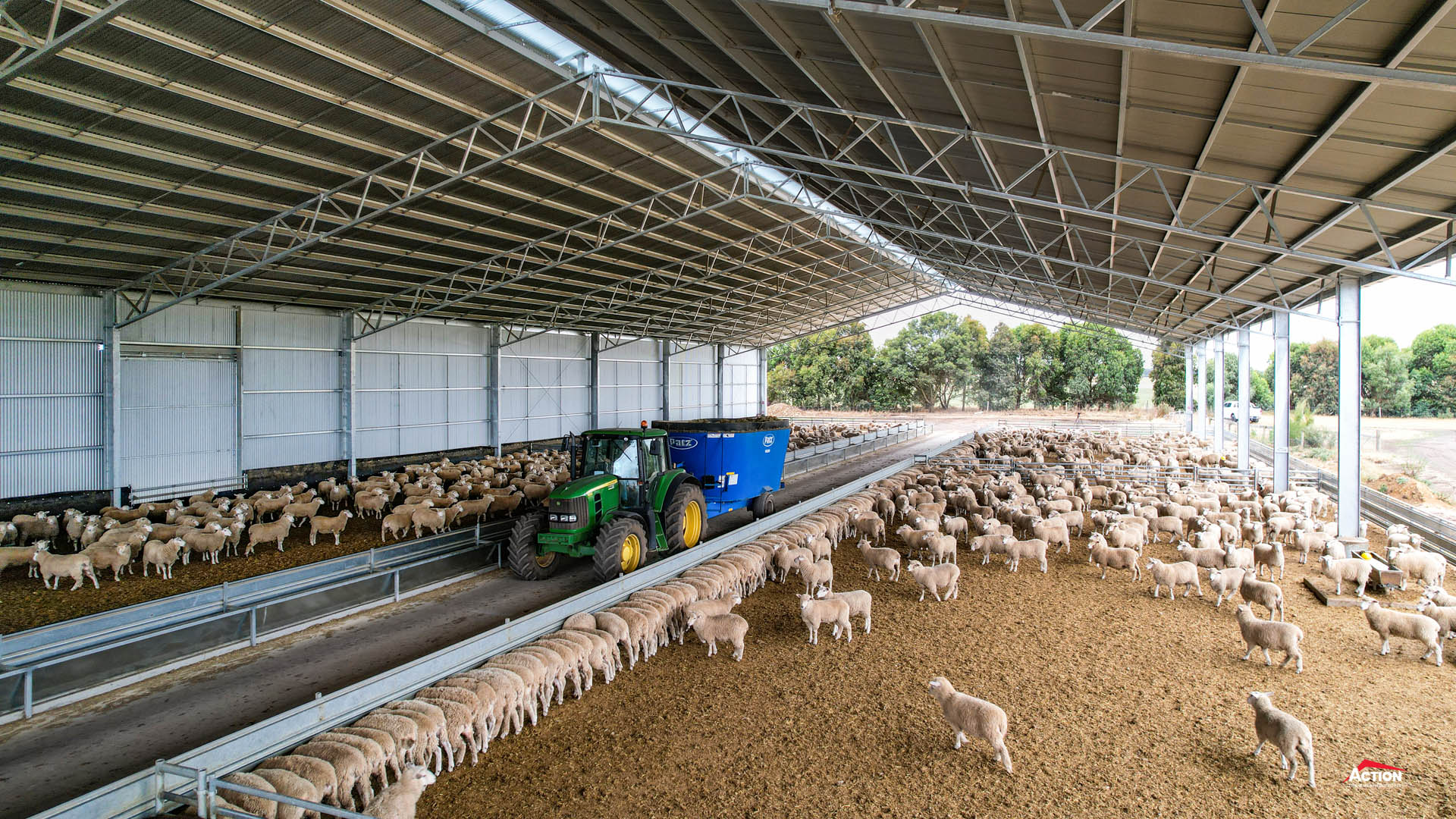
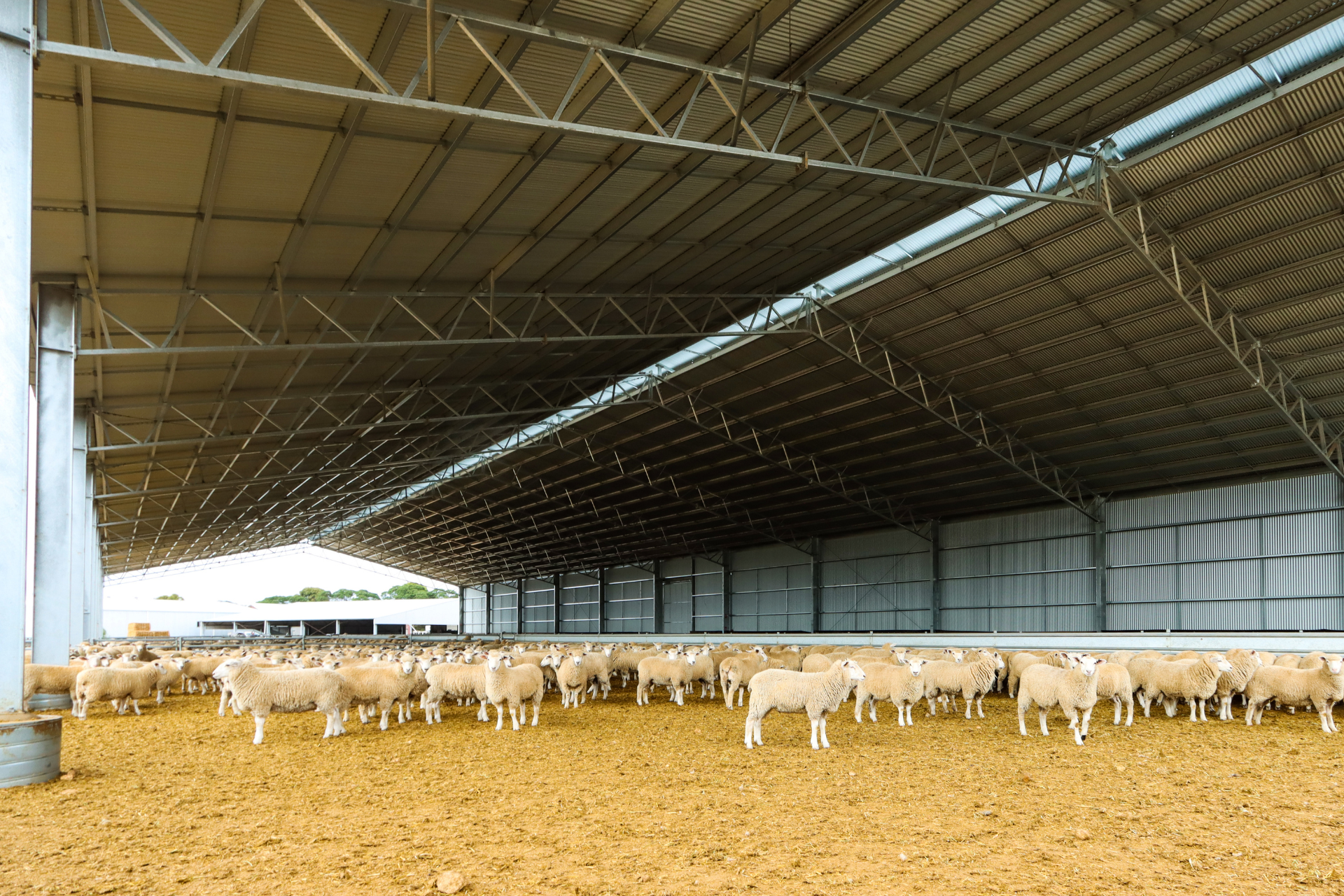
Covered housing for beef feedlots refers to cattle being managed under a permanent roof structure (often called a “feedlot cover”) rather than relying on open pens or shade cloth. These systems use purpose-built sheds designed to protect pens and provide consistent shade and effective ventilation.
Covered housing does not mean cattle are fully enclosed. The sides remain open to allow airflow, with the roof doing most of the work in reducing heat load and keeping bedding drier.
The best design for covered housing for beef feedlots is a “roof only configuration” with an 18-degree roof, open ridge vent and an Action pop-top ridge vent cover.
Using the MLA Feedlot Covered Housing Systems Guide examples, the cost per SCU equates to ~$1,230/SCU for an uncovered feedlot and ~$2,060/SCU for a covered housing system.
These examples include the complete costs of works such as feed bunks and aprons, drainage and solid waste storage.
It is important to remember that costs are very site and design-specific and material and labour costs vary considerably between regions and over time.
Our cost estimate for the feedlot shed construction is around $1400/SCU when stocked at 9m2 (supplied and erected).
Shade cloth is typically a lower-cost option and can be quicker to install. Covered housing provides a longer lasting asset and more opportunity for ROI.
Computational fluid dynamics have shown that there is minimal distinction between a curved and straight roof profiles at cow level.
A straight roof is considered best-practice because it more cost-effective, easier to construct and allows solar panels to be installed.