You already know fertiliser prices in Australia move. What’s worth understanding right now is exactly why they’re moving the way they are, and what levers you actually have on your end to manage the impact on your operation.
What’s Driving Fertiliser Prices In Australia
Fertiliser pricing has never been simple, but the current environment has stacked several layers of pressure on at once. Understanding what’s behind the movements helps you make better decisions about when to buy, how much to carry, and how to position your operation ahead of the next season.
Energy costs
This is the biggest single driver for nitrogen fertilisers like urea and UAN. Ammonia production runs on natural gas, which means gas prices and urea prices have always moved closely together. When energy costs spike, fertiliser plant operating costs follow suit, output gets curtailed as manufacturers pull back, and prices climb fast in response.
It’s also worth remembering that Australian importers are competing for the same product as buyers everywhere else in the world. The global price sets your floor, regardless of where you’re sourcing from or which supplier you’re dealing with.
Global supply concentration
A surprisingly small number of countries control the bulk of global fertiliser production, which makes the market vulnerable to disruption at any point in the supply chain:
- Nitrogen: China, Russia and the Middle East
- Phosphate: Morocco and China
- Potash: Canada, Russia and Belarus
When any of these key suppliers restricts exports, whether through domestic policy decisions, international sanctions or geopolitical disruption, the market tightens quickly and prices respond. China periodically restricts urea exports to protect its own domestic food production, and every time it happens, the impact ripples across the global market almost immediately.
Exchange rates
The majority of global fertiliser trade is priced in US dollars, which means currency movements play a real role in what Australian growers pay. A weaker Australian dollar pushes up landed costs in AUD terms, even when the underlying commodity price on the global market hasn’t actually shifted. It’s a layer of exposure that’s easy to overlook when you’re focused on the commodity price itself.
Freight and logistics
The cost of getting bulk fertiliser from production facility to farm gate is more significant than many growers realise. Fertiliser moves in large bulk vessels, and freight rates are volatile at the best of times, driven by fuel costs, vessel availability, port congestion and any disruption to major trade routes. All of these factors feed directly into what you pay, and they can shift quickly.
Seasonal demand
Closer to home, the Australian cropping calendar creates predictable demand peaks that push domestic prices higher at exactly the times growers need product most. Autumn for winter crops, spring for summer crops. Buying during those windows means buying in direct competition with every other grower in the country, at the point in the year when suppliers have the least incentive to move on price.
The Iran Conflict and the Strait of Hormuz
Fertiliser Prices in Australia current as at May 2026.
Of all the factors shaping the fertiliser market in 2026, this is the one that has had the most immediate and severe impact, and it’s the reason the current situation feels different from the normal seasonal volatility growers are used to managing.
Approximately one-third of the world’s seaborne fertiliser trade passes through the Strait of Hormuz. The onset of conflict between the United States and Iran in early 2026 caused immediate and severe disruption to urea shipping routes through the strait, with the result being a 53.7% spike in urea prices between February and March 2026 alone. That kind of movement in a single month is extraordinary by any measure.
Argus recently assessed granular urea at A$1,430-1,440/t ($1,029–1,037/t) free carrier (fca) Geelong on 7 May, up by 72pc from levels before the US-Iran war began. The Australian Government has responded by securing 90,000 tonnes of urea to support domestic supply, but concerns remain about securing enough product for the summer crop later in the year, with global supply still tight and no clear resolution in sight.
This isn’t background noise. It’s the single biggest driver of input costs for Australian cropping enterprises right now, and there’s no clear indication of when conditions will ease.
What You Can Actually Do About It
Plan purchases further ahead
Buying fertiliser at pre-planting peak, when the whole industry is in the market at the same time, means paying peak prices with limited room to negotiate. Where cash flow allows, purchasing outside of those demand windows can deliver meaningfully better pricing and stronger availability. It requires planning and capital, but for operations with predictable input requirements across seasons, forward purchasing is one of the most effective tools available for managing fertiliser cost exposure.
Invest in on-farm storage
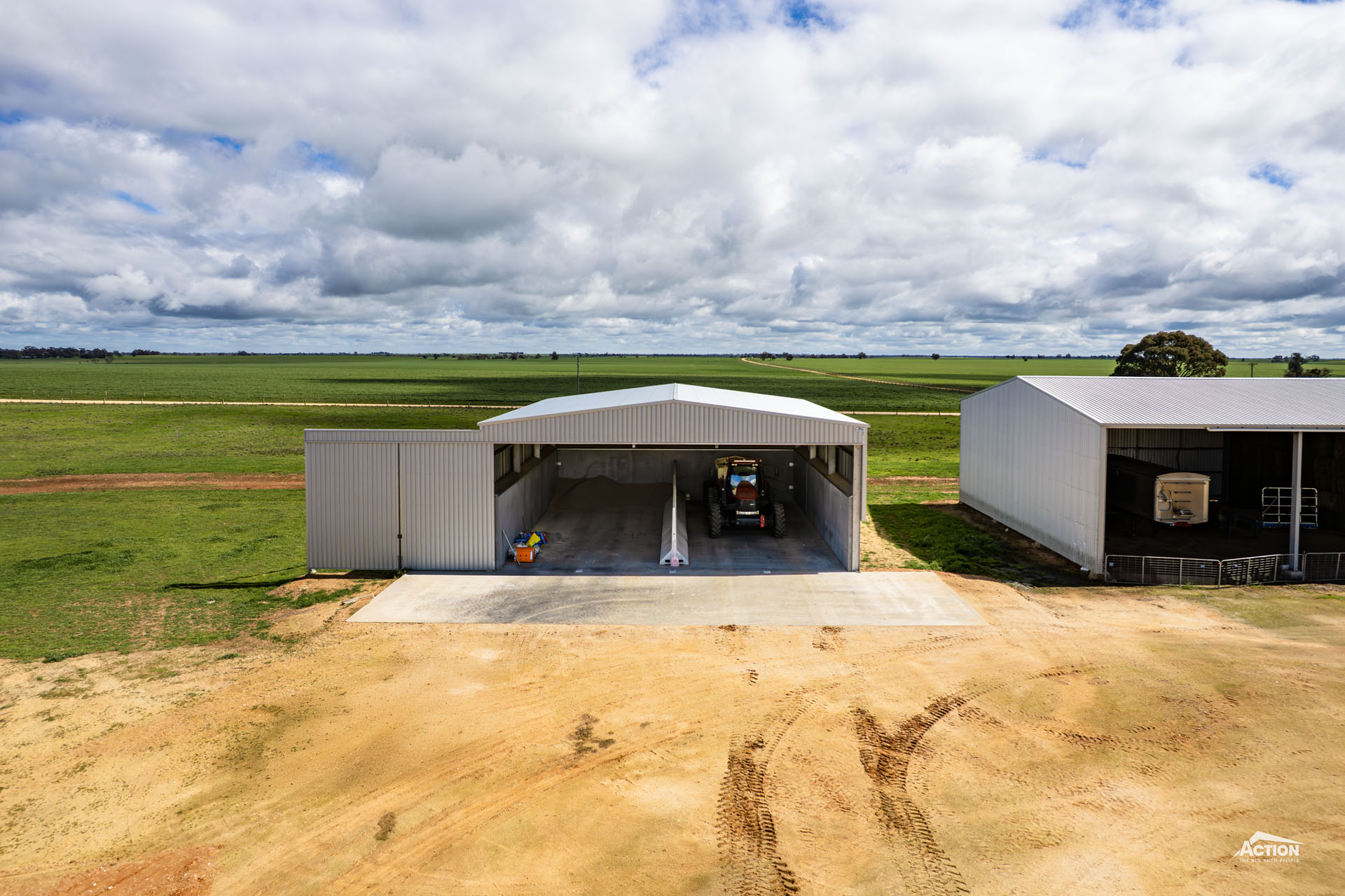
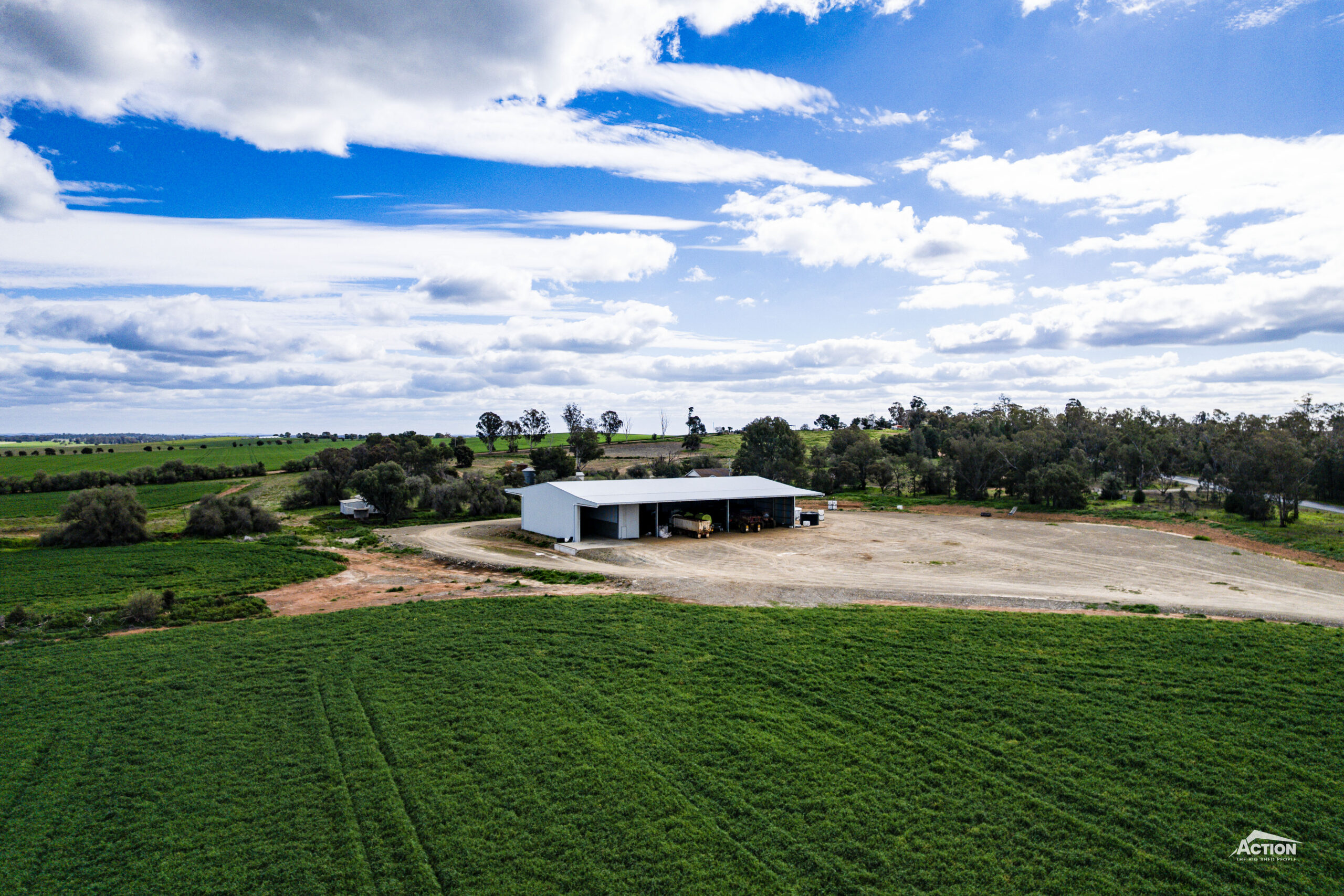
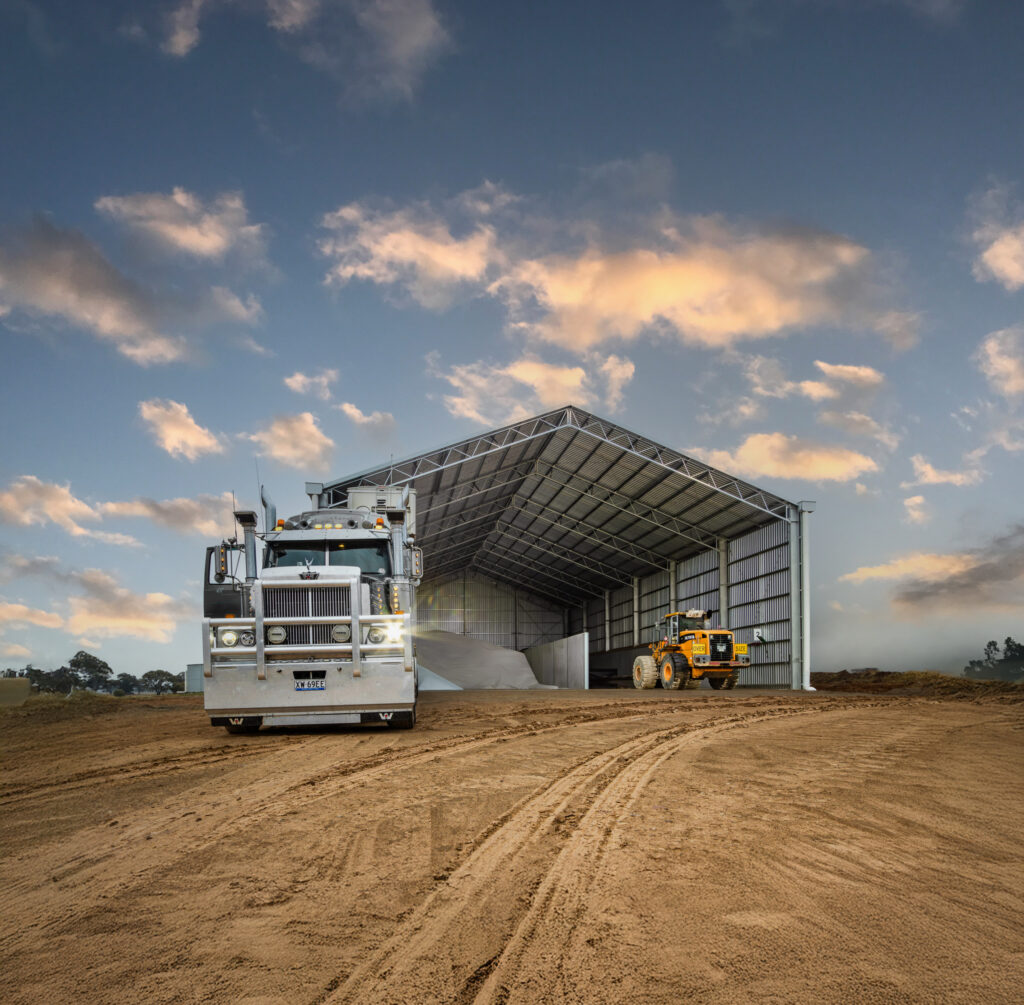
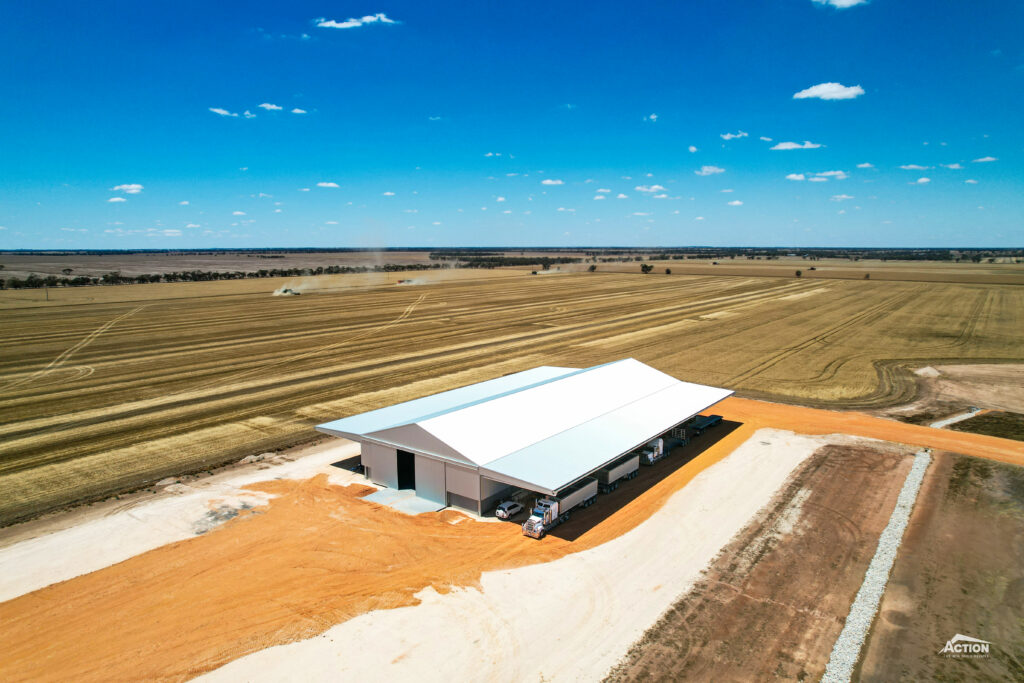
Forward purchasing only works if you have somewhere to put the product, and that’s where a well-designed fertiliser shed stops being a line item on the balance sheet and starts being a genuine strategic asset for your operation.
When global supply is disrupted and prices are moving fast, the cropping enterprises with on-farm storage capacity are the ones positioned to act quickly. They can buy when prices ease and hold product through peak demand periods, rather than being forced into the market at exactly the wrong time.

A few practical things worth knowing if you’re considering it:
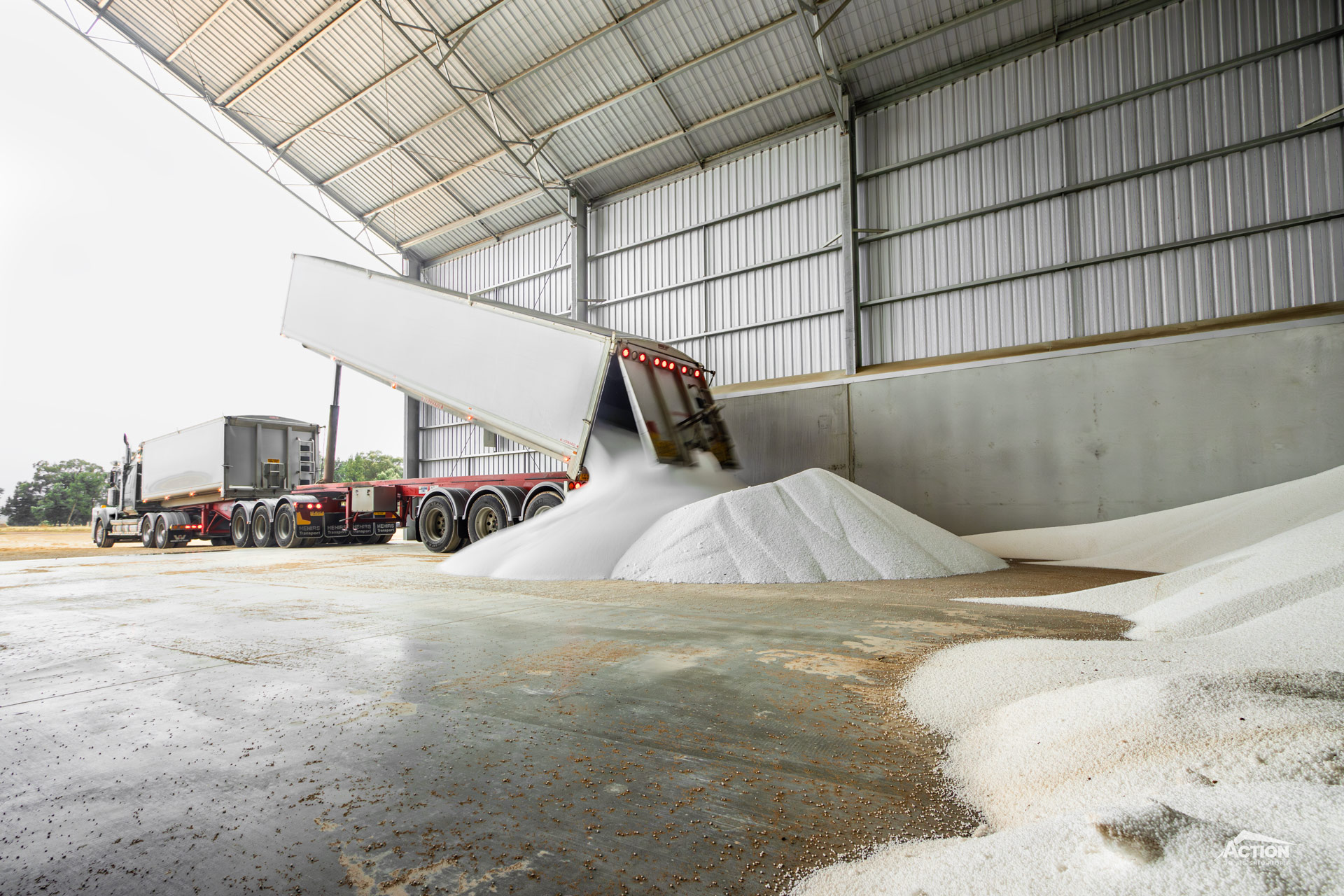
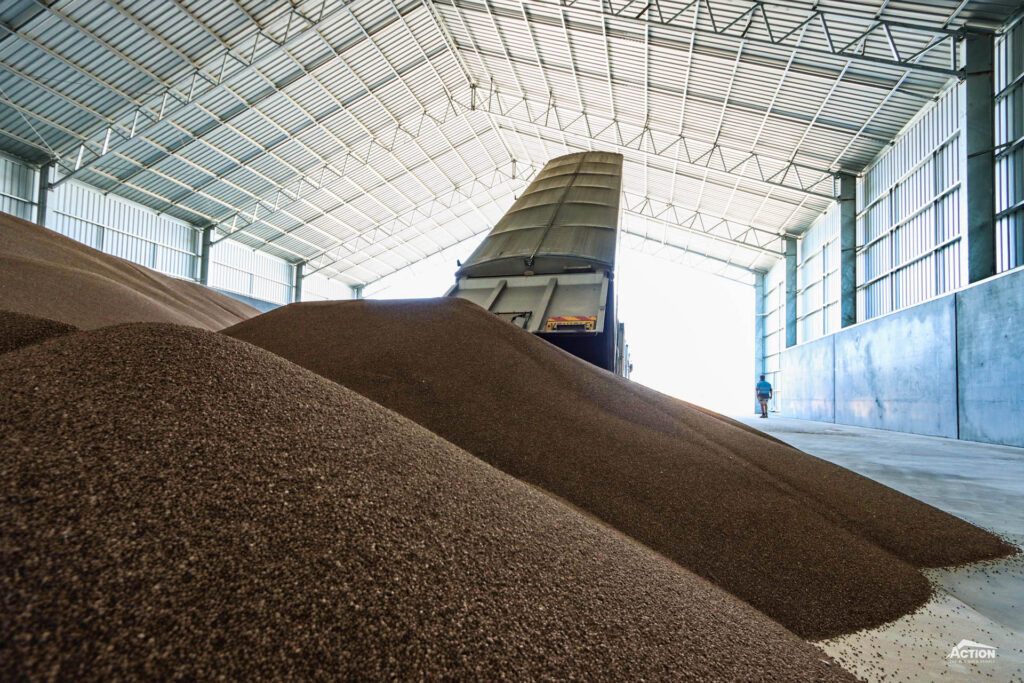
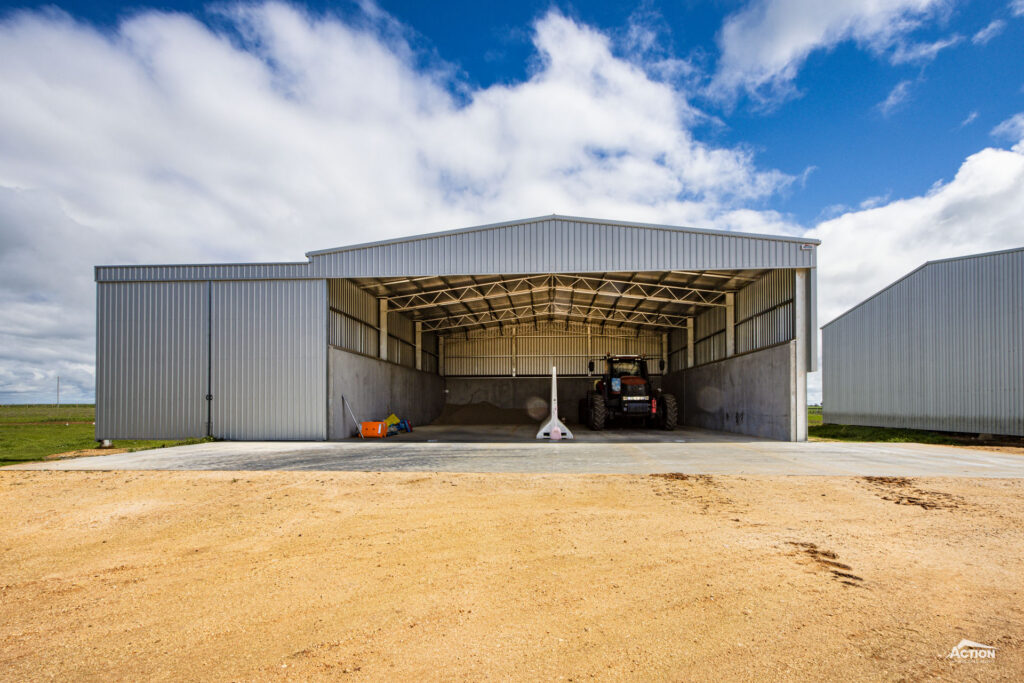
One thing worth considering early in your planning is storage type. For bulk fertiliser, sheds are the industry-recommended option. Products like DAP are hygroscopic and absorb moisture, so a purpose-built fertiliser shed will protect your investment and keep product in the best possible condition.
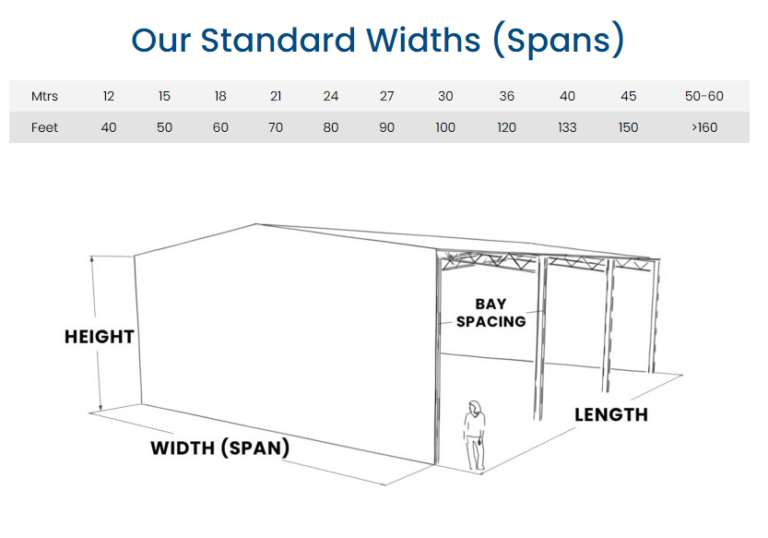
Scale to your operation. Standard fertiliser shed configurations are available from around 200 tonnes capacity right up to 1,500 tonnes and beyond. Whether you’re a mixed farming operation looking to dip your toe in or a large cropping enterprise needing serious volume, there’s a practical solution that fits.
Design details make a real difference. Concrete aprons for loader access, L-walls for product segregation, appropriate internal lining. A shed that’s been thoughtfully designed for fertiliser storage will protect product quality across seasons and make the day-to-day handling side of things noticeably smoother.
Lead time is worth planning for early. Council permits, concrete curing time and seasonal weather all factor into the timeline. Getting a project underway well ahead of when you need the shed operational means you’re ready when the opportunity to buy arises, rather than scrambling to catch up.
Lock in prices with contracts
Some suppliers offer forward contracts or price-fix arrangements that allow you to secure a price weeks or months ahead of delivery. These arrangements work both ways, you benefit if prices continue to rise, and you’ve paid above the spot price if they fall, but they provide real certainty for input budgeting and meaningful protection against sharp upward moves. For large-volume buyers, they’re worth understanding in detail and discussing with your supplier.
Revisit your soil testing
Applying more fertiliser than your soil and crop actually require is the most direct way to overspend on inputs, and it’s more common than most operations would like to admit. A current soil test, particularly for phosphorus and potassium where historical over-application tends to leave residual reserves in the soil, can identify where you have room to pull back application rates without any impact on yield outcomes.
Compare landed costs, not just product price
Freight to your property varies significantly depending on your location and the depot your supplier is shipping from. When comparing quotes, make sure you’re comparing total landed cost rather than just the product price, because the difference can be meaningful. Grower groups and co-operatives can also provide access to volume pricing arrangements that individual operations often can’t achieve on their own, and if you’re not already across what’s available in your region, it’s worth asking.
Keep an eye on the market
You don’t need to become a commodity trader to benefit from a basic understanding of what’s happening with urea and DAP prices at a global level. Following one or two Australian rural publications or agribusiness firms that publish regular fertiliser market commentary costs nothing, and having a sense of where prices are heading gives you a genuine advantage when it comes to timing your purchasing decisions.
The Bottom Line On Fertiliser Prices In Australia
The forces driving fertiliser prices in Australia right now, energy markets, geopolitics, currency movements and global supply chain disruption, are not going away in a hurry, and no one can predict exactly when conditions will ease. What you can control is your planning horizon, your purchasing approach, and how efficiently your operation is actually using the product you buy. Get those three things right and you take meaningful sting out of the volatility, regardless of what’s happening on the other side of the world.
To explore on-farm fertiliser storage options, talk to the Action team on 1800 68 78 88 or request a quote.