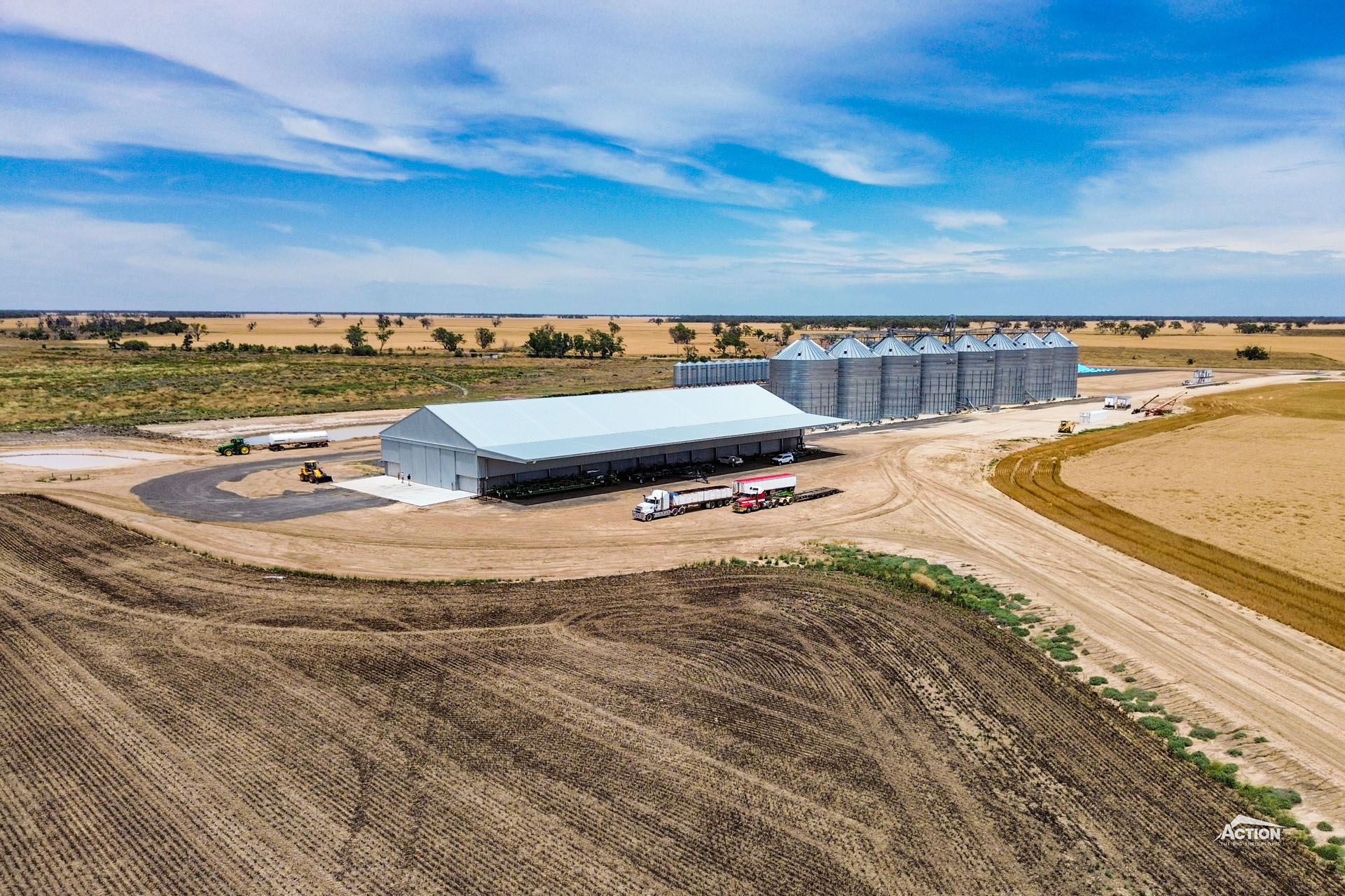
If you are growing grain at scale, how you store it matters almost as much as how you grow it. The wrong storage decision costs you at harvest and at the point of sale. There are three main on-farm options: silos, grain storage bags and purpose-built grain sheds. Each has its place. But for serious broadacre operations, more and more growers are making the move to sheds. Here is why.
Harvest Longer Every Day. Bring in More Grain.
This is the big one. When you are filling a silo, grain moisture is non-negotiable. Exceed the safe threshold, typically around 14 to 15 percent moisture content for wheat and most cereals, and you risk spoilage, heating and rejected loads. So when the dew lifts late or the conditions tighten in the afternoon, you stop. You park the header and wait.
Storing grain in a shed changes that equation significantly.
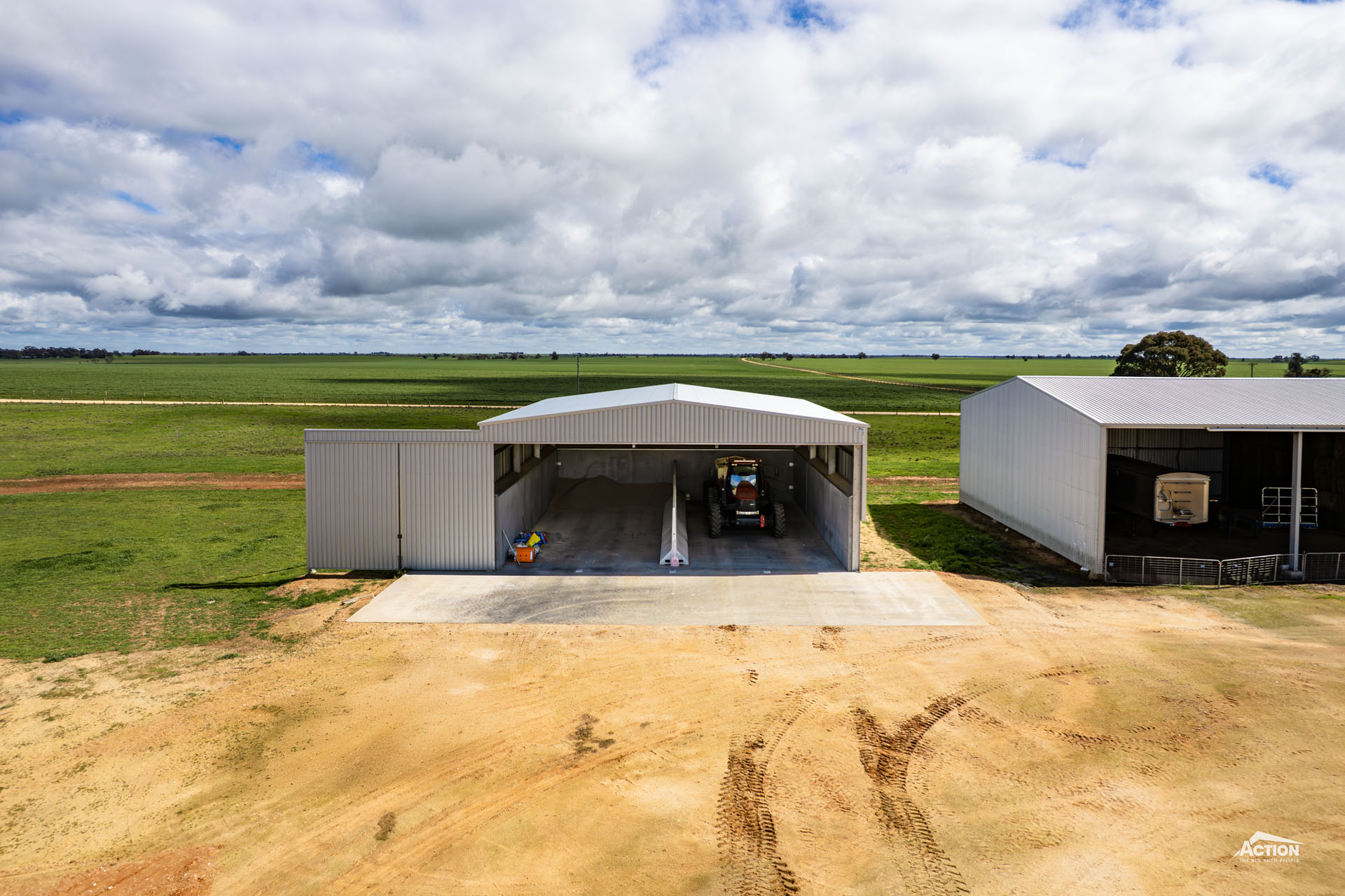
A well-designed grain shed stores grain in a flat, open pile rather than a sealed, confined cylinder. That means more airflow through the grain to continue drying it naturally after it comes off the header.
Growers using shed storage can harvest at slightly elevated moisture levels, then blend that grain through drier grain already in the shed. The mixed pile continues to dry down over time, reaching acceptable moisture levels without costly artificial drying.
In practice, this means growers are pushing additional hours of harvesting per day in conditions that would have previously shut them down. In a tight harvest window, three hours a day is a week’s worth of work. That is the difference between getting your crop off clean and leaving yield in the paddock.
Getting Harvest Timing Right Adds to the Bottom Line
Grain harvested at the right growth stage, not delayed by storage constraints, holds better test weight, protein and grade. That translates directly into price at delivery. The flexibility that shed storage gives you at harvest is not just operational. It is financial.
Grain Protection Built In: FumoFlow
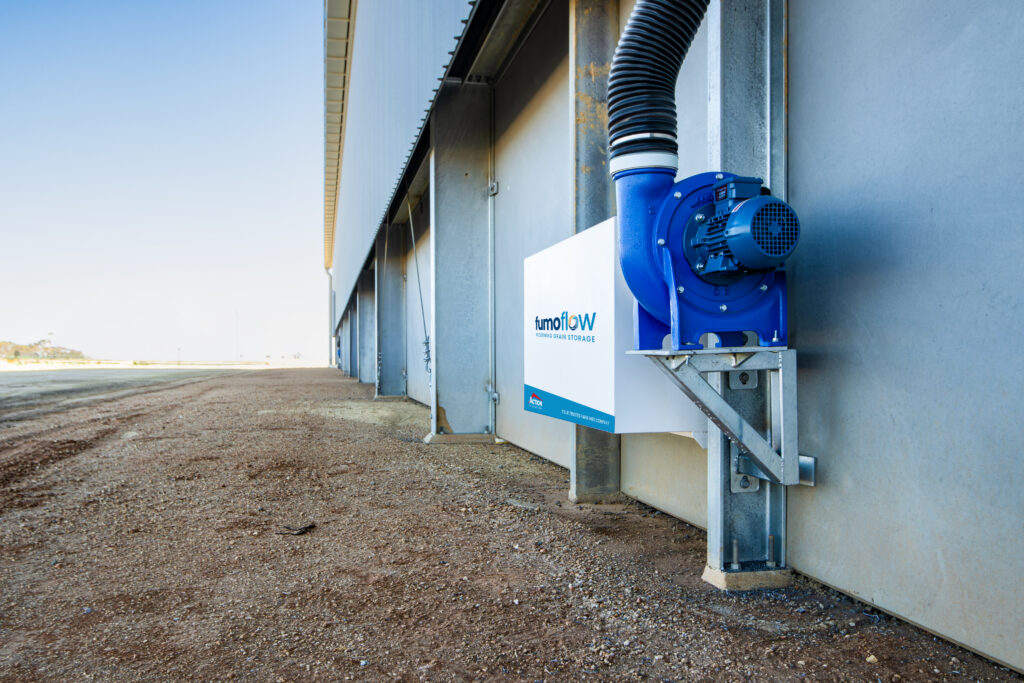
Grain shed storage is only as good as your pest and fumigation management. Action Steel has developed FumoFlow, a purpose-built fumigation system with recirculation and ventilation, all integrated directly into the grain shed structure.
FumoFlow delivers gas evenly across the full grain mass, ensuring thorough coverage without the handling risks associated with being in direct contact with fumigants or relying on portable systems.
It is a system designed specifically for Australian broadacre conditions by the team who build the sheds. Grain protection that is part of the building, not an afterthought.
Check out FumoFlow here.
How Grain Sheds Compare to Silos
Silos are a proven, widely used storage solution and for many operations they work well. One genuine advantage is outloading. A silo’s gravity-fed design makes emptying fast and largely hands-off. For growers weighing up their next infrastructure investment, though, there are some broader practical differences worth understanding.
A Safer Working Environment
Silos carry safety considerations that are worth planning around. Confined space entry for inspection or clean-out, silo gases from fermenting grain, and the risk of engulfment are all documented hazards with real WHS compliance obligations attached. A grain shed removes the confined space element entirely. You walk in, you walk out. For operations with employees or contractors, that simplicity has genuine value.
Scalable Capacity Without the Cost Per Tonne Penalty
Scaling silo storage means adding duplicate structures with no real economy of scale. Each new silo is a standalone capital commitment. A grain shed can be designed from the outset with your full operation in mind. Whether you are storing 1,000 tonnes or 8,000 tonnes, the footprint scales efficiently and the cost per tonne of storage capacity is generally lower than an equivalent silo setup at volume.
One Structure. Multiple Uses. Full Segregation Control.
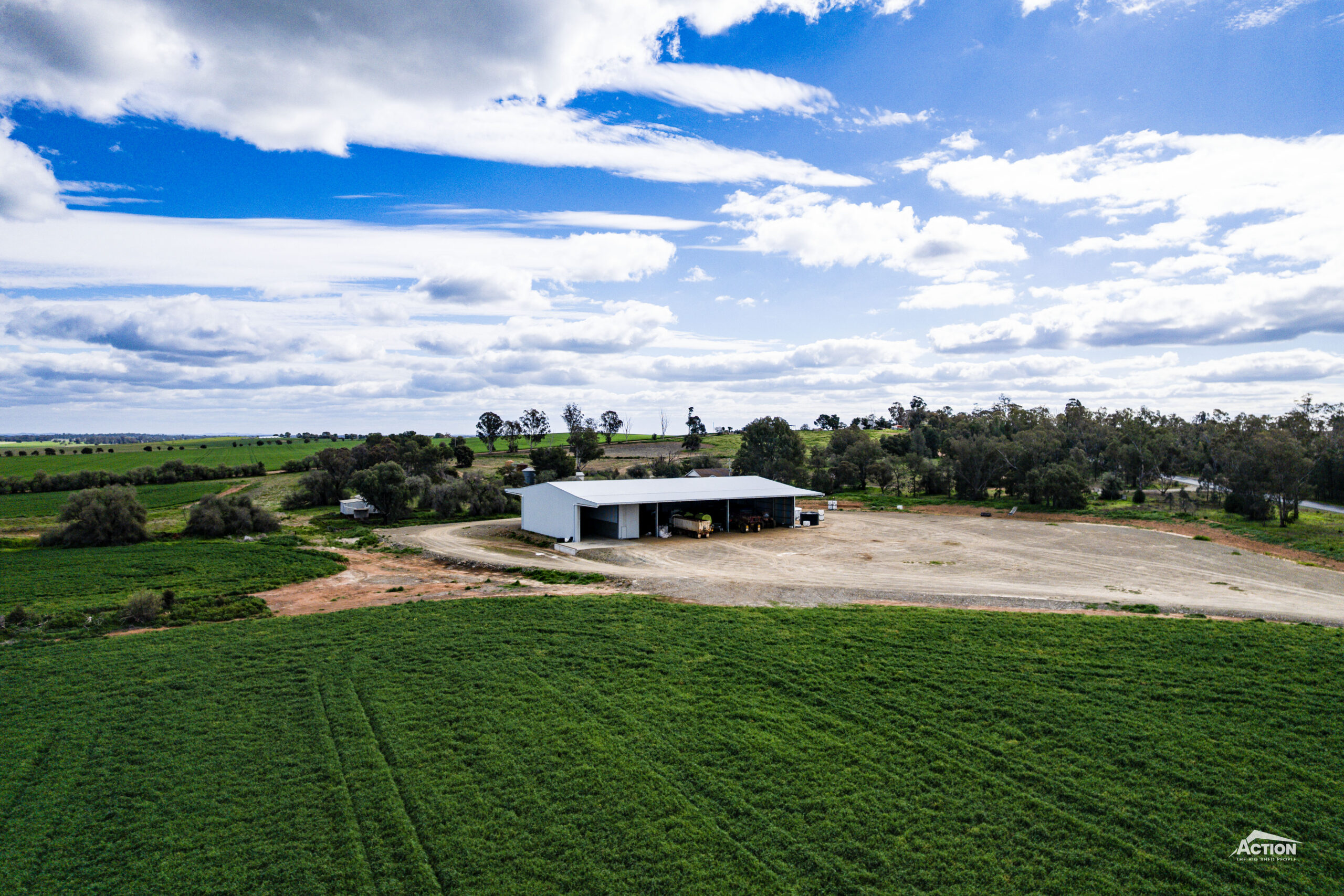
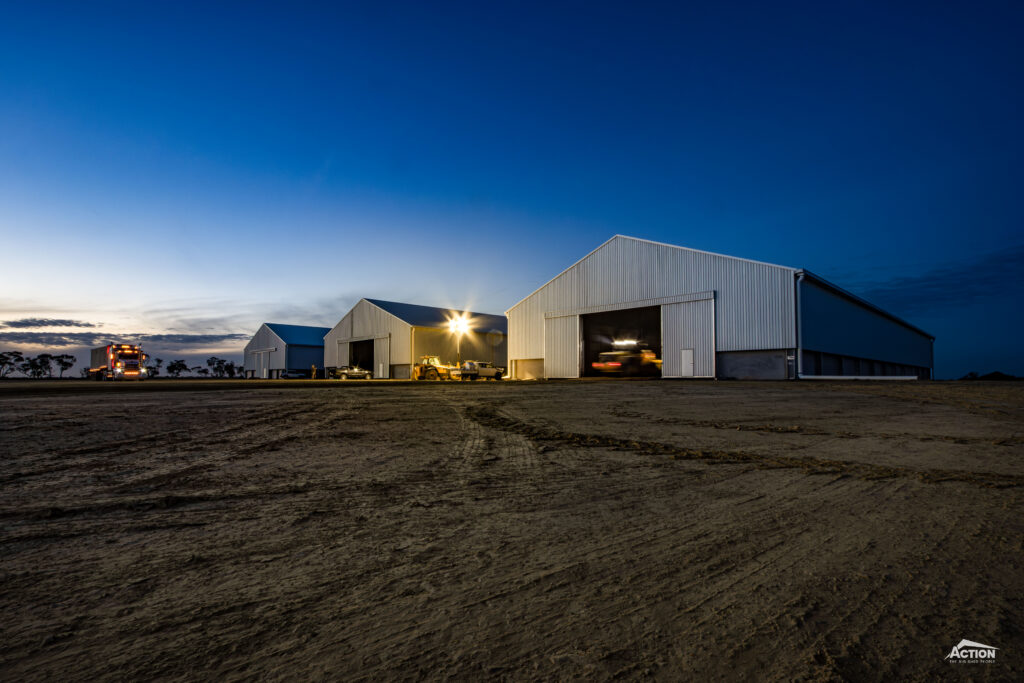
A grain shed is not locked into a single function. Outside of harvest and storage season, the same structure can house machinery, fertiliser or hay. For farming operations looking to maximise infrastructure investment, that multi-use capability is increasingly important.
A large-scale grain shed can also be designed for full grain segregation. Using removable concrete dividing walls, a single shed can store two or more grain types or grades side by side, keeping varieties separate without compromise. That level of flexibility is simply not possible in a single silo.
Faster Unloading. Less Handling.
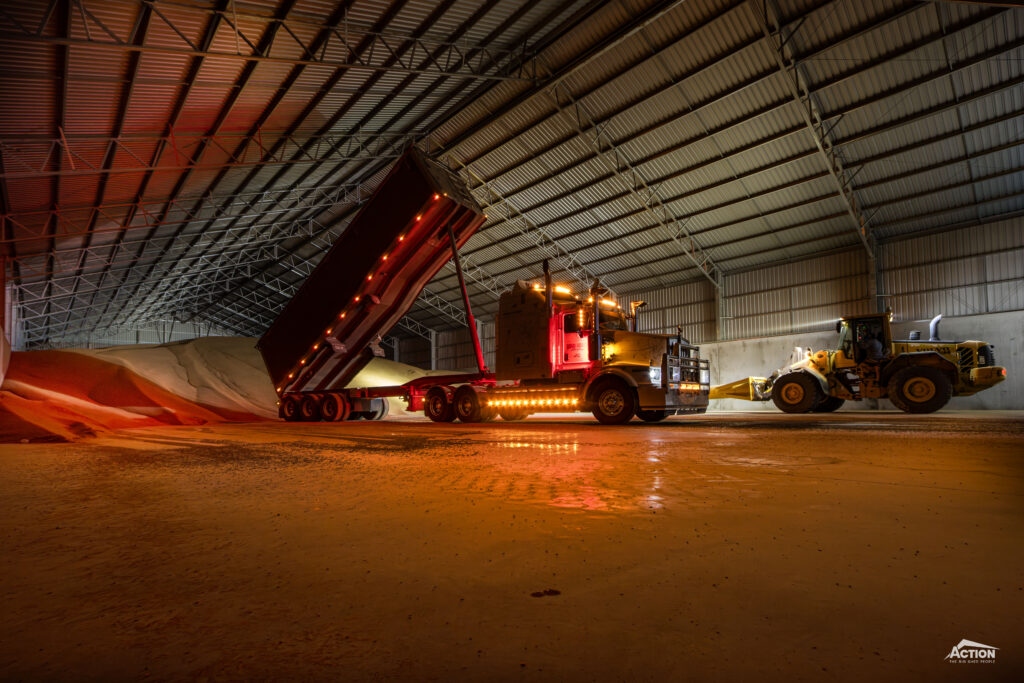
A well-designed grain shed enables truck tipping directly inside the structure, bringing a semi-trailer in and unloading under cover without additional handling steps. There are no fixed augers or conveyors to work around, and no weather exposure during unloading. At harvest pace, that operational efficiency adds up fast.
You Can See Your Grain
Monitoring a silo means relying on temperature cables, probes and indicators. With shed storage, you can walk in and physically inspect your grain at any time. Hot spots, pest activity, moisture issues. You see them early. Early detection is the difference between a management issue and a written-off load.
Permanent Infrastructure That Adds Property Value
A well-built steel grain shed is a permanent asset on your title, with a service life of 30 years or more. That compares favourably to a typical silo lifespan of around 25 years. A grain shed adds tangible value to your property and signals that it is a serious, well-equipped farming operation. Silos are functional. A purpose-built grain storage shed is infrastructure.
How Grain Sheds Compare to Storage Bags
Grain bags have a genuine role in Australian grain growing, and it is worth being clear about what that role is. They are a practical, low-cost option, well suited to overflow storage at harvest or seasons where yield has outpaced permanent capacity. Initial cost is low, placement is flexible, and they allow grain segregation by variety or grade.
Like any storage method, bags come with management requirements. They are single-use, require careful site preparation to avoid tears, and pest and moisture monitoring takes more hands-on effort. They are generally best suited to short-term storage of up to three months, and wet conditions can make access difficult during that window.
For operations with consistent annual volumes, a permanent grain shed can offer the same segregation flexibility as bags, with longer-term cost efficiency and easier pest management over time. For many growers, both play a role depending on the season.
What to Consider When Designing a Grain Shed
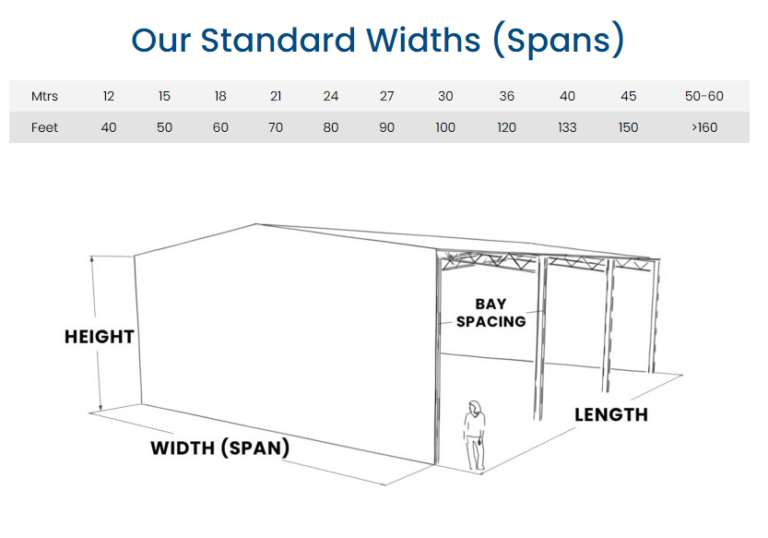
Not all grain sheds are equal. When you are planning your build, consider:
- Internal clearance height to accommodate truck tipping, chaser bin access and front-end loader operation.
- Concrete flooring specification to handle grain mass load and enable clean-out.
- Ventilation and airflow design for natural drying of mixed moisture grain.
- Fumigation capability, and whether an integrated system like FumoFlow is part of the design.
- Partition and segregation options, including removable concrete dividing walls for separating grain varieties or grades.
- Dual use potential. Machinery, hay or fertiliser storage in the off-season.
- Council and planning requirements for your region.
Talk to Action Steel About Your Grain Storage
Action Steel has been designing and building farm sheds for three generations. We work exclusively with livestock and cropping enterprises across Victoria, NSW, QLD, Tasmania and South Australia. Grain storage is one of our specialities.
If you are reviewing your on-farm grain storage options ahead of the next harvest, talk to our team. We will work through your site, your volumes and your operation to design a shed that fits the way you farm.
Call us on 1800 68 78 88 or if you’re ready to go, request a quote.