Setting up a lamb feedlot is something more Australian producers are doing year-round, not just in tough seasons. What began as a drought tool has grown into a year-round production system, and the variety of setups out there reflects just how many ways there are to make it work.
Whether you are setting up a lamb feedlot for the first time or expanding what you already have, the planning stage is where the important decisions get made. Site, design, approvals and effluent management all have a say in how your feedlot performs. This guide walks through the key considerations so you can build something that suits your operation.
Covered or uncovered: what suits your operation?
There is no single right answer here. Both setups have genuine merit, and the best choice depends on how you plan to use the feedlot, your climate, your mob size and your budget.
Uncovered feedlots
An uncovered containment area or drought lot is a practical, cost-effective way to manage lambs when pasture is short or conditions are tough. Lower upfront investment, simpler to set up and straightforward to manage. For producers who use the feedlot reactively, or who run smaller mobs for shorter periods, an uncovered setup can do the job well. Good site selection, drainage and pen management go a long way in an open lot.
Covered feedlots
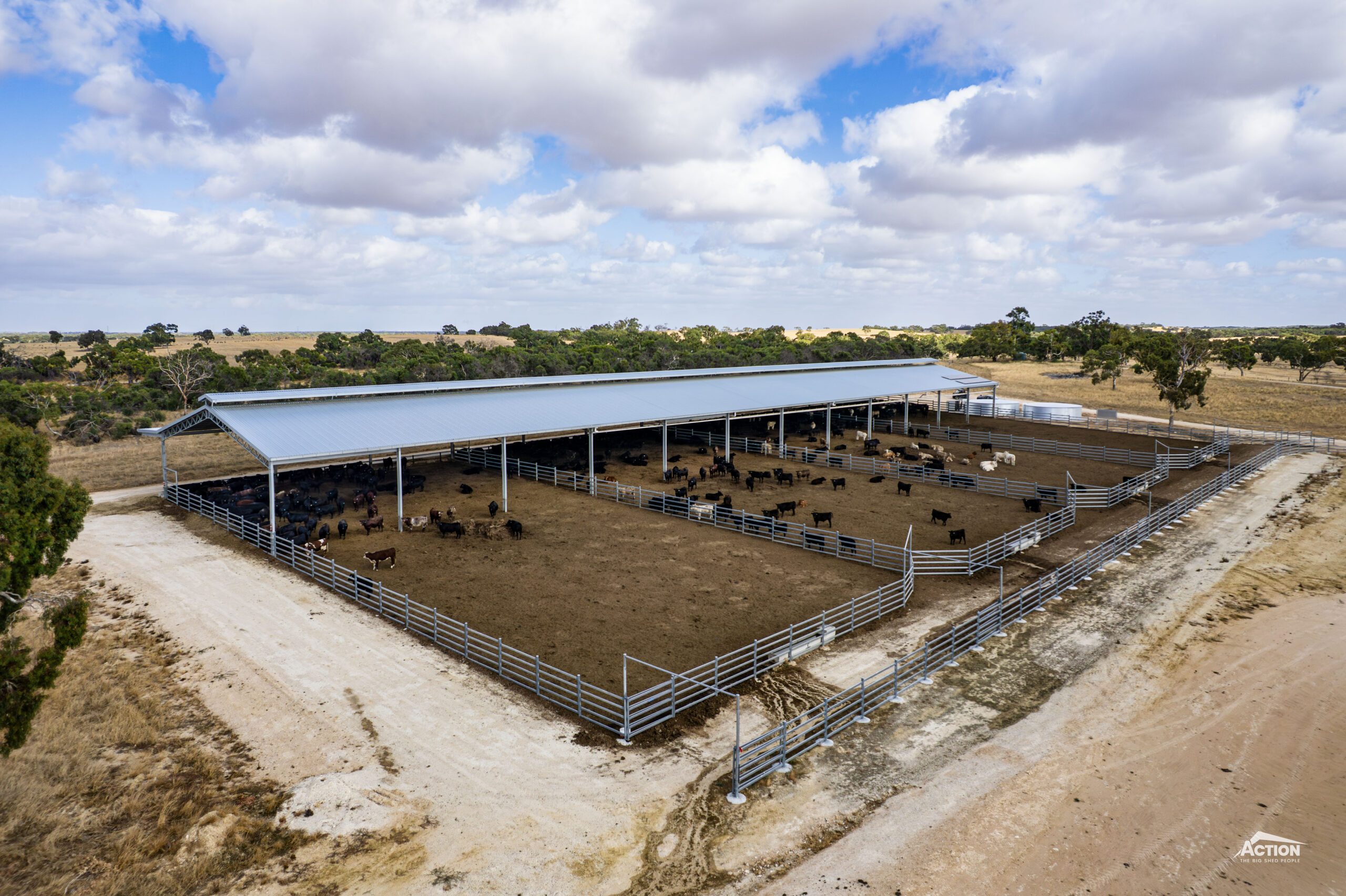
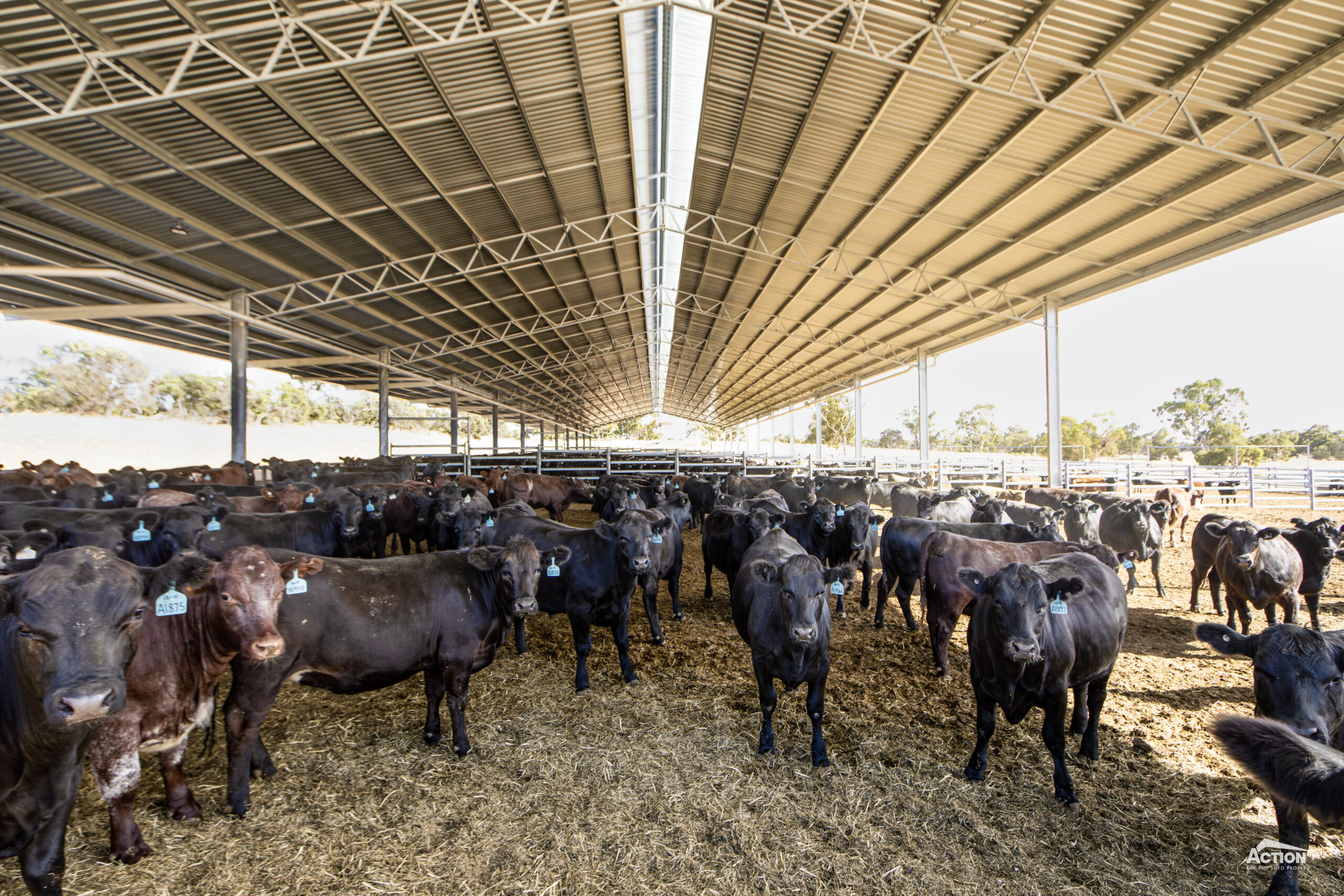
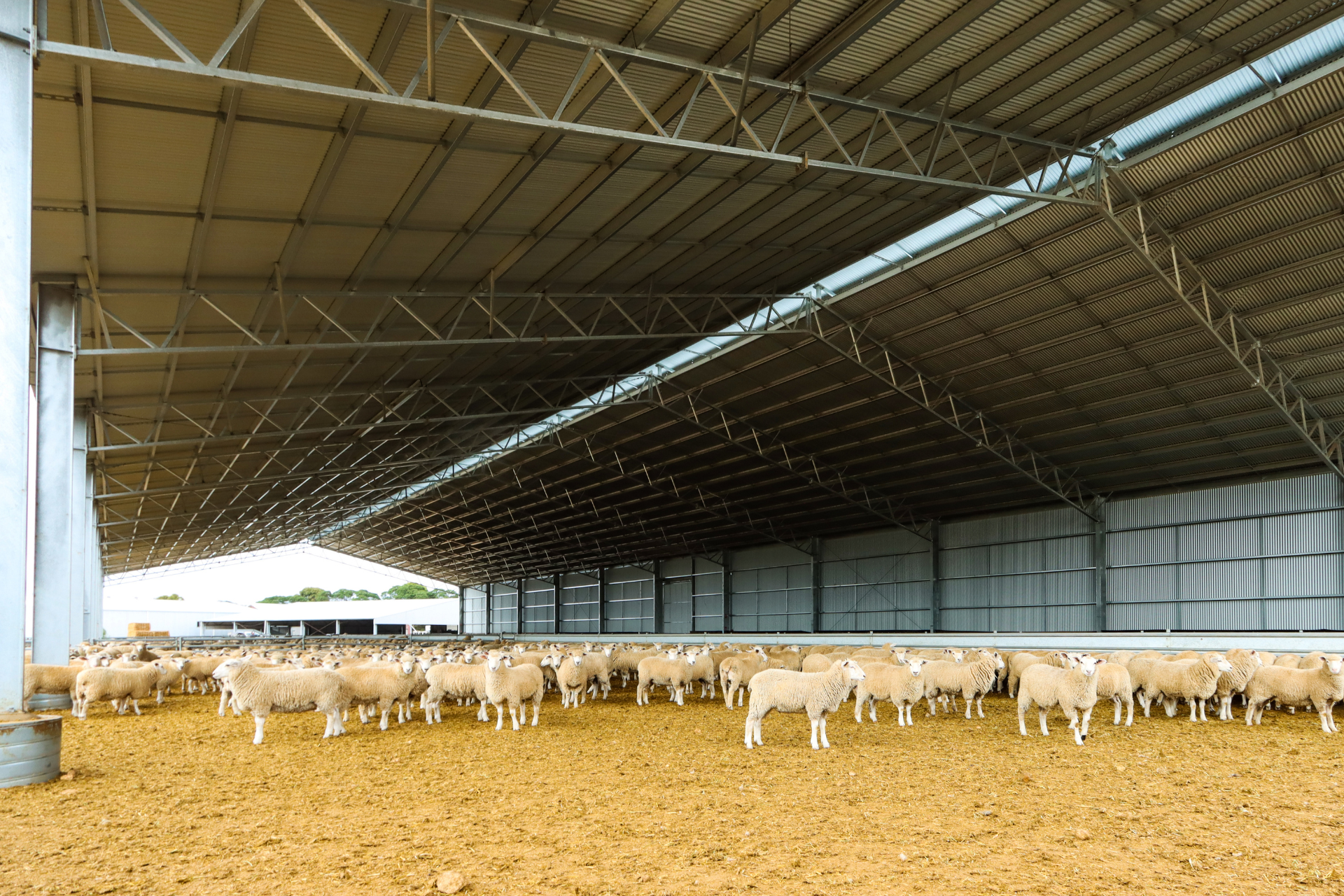
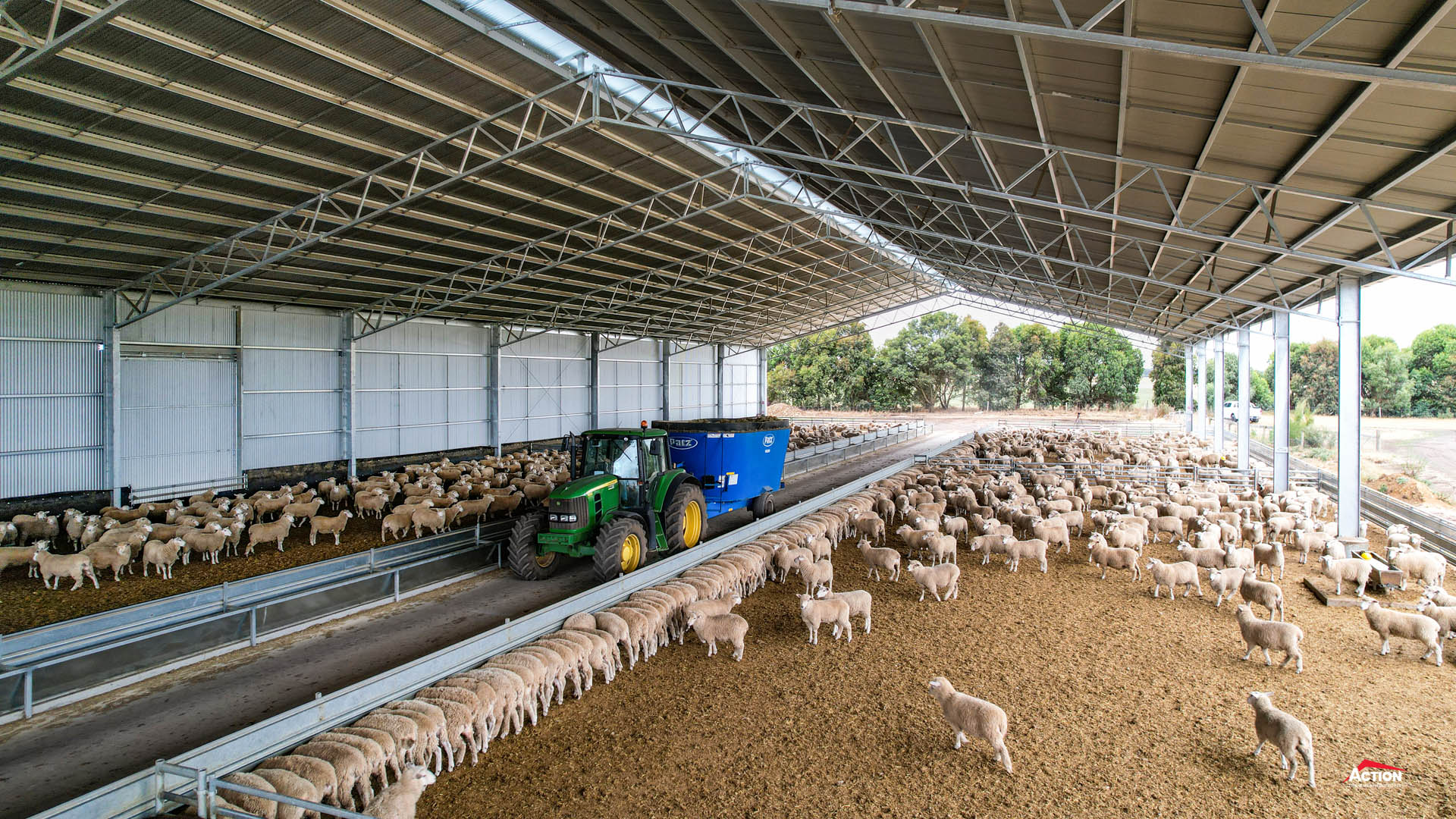
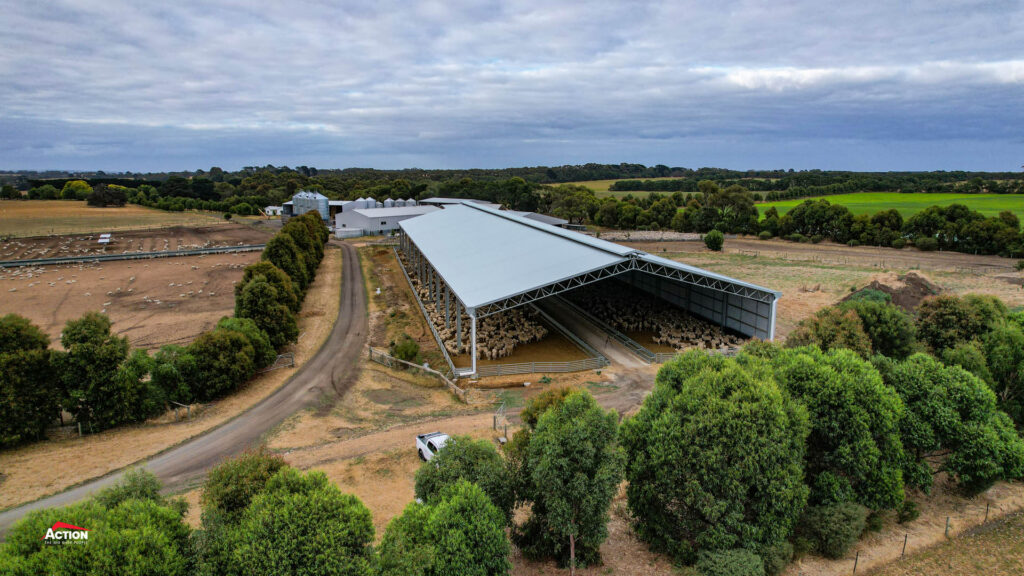
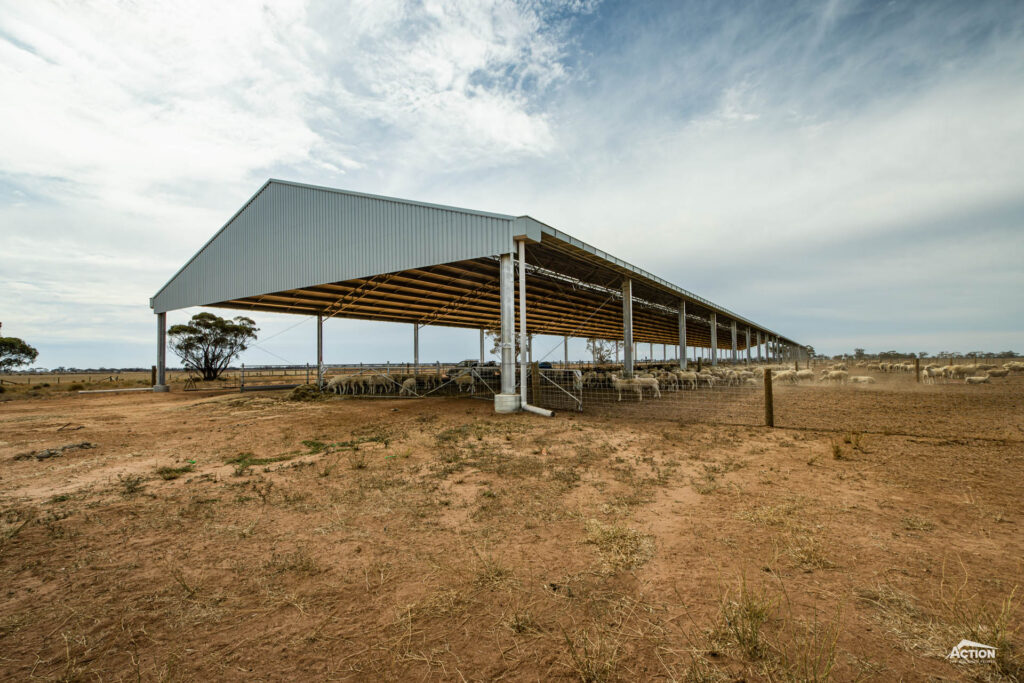
A covered setup adds more control over the pen environment. Shade reduces heat stress in summer. A roof keeps bedding drier in winter. Dusty conditions that can contribute to respiratory issues in dry periods are reduced. For producers running lambs through on a more regular basis, or finishing to tight processor specifications, that consistency in environment tends to translate into more consistent results.
Covered feedlots also offer the option to capture stormwater from the roof, which can be a useful water asset on the right property. The tradeoff is higher upfront cost and more involved design requirements, particularly around ventilation.
Many producers start uncovered and cover later as the enterprise grows. Others build covered from the outset knowing they want a year-round production system. Both paths work.
If you are leaning toward a covered setup and want to understand what that looks like for your site and operation, the Action Steel team is happy to talk it through before any decisions are made.
Call 1800 68 78 88 or check out our Feed Lot Covers page for more information
Choosing your lamb feedlot site
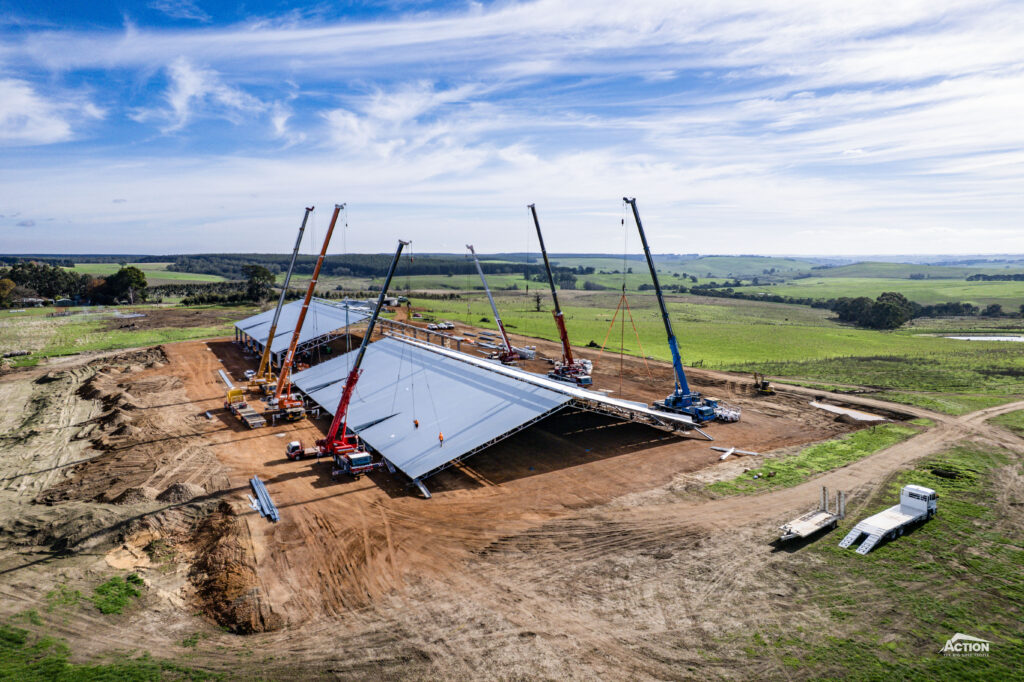
Wherever you land on the covered question, site selection is the foundation of a well-functioning feedlot. A few things worth working through before committing to a location:
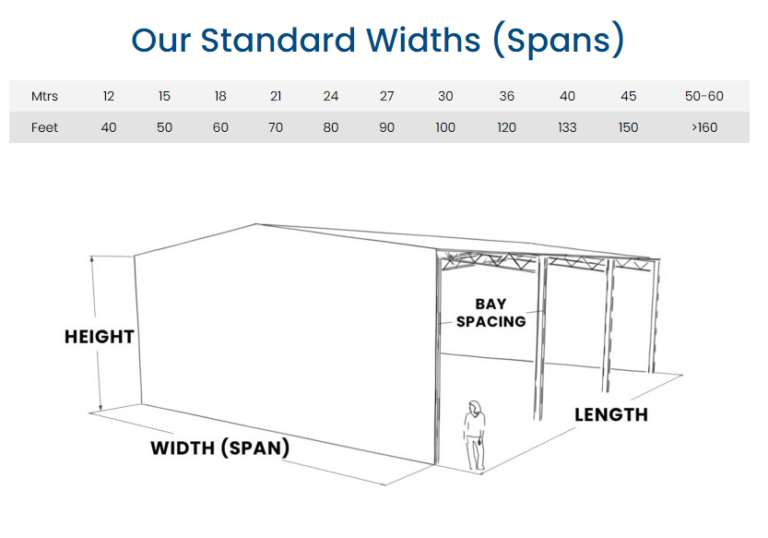
- Size: Enough room for pens, access lanes, livestock movement and any future expansion you can foresee. It is much easier to allow for growth at the planning stage than to try and retrofit it later. For specific sizing guidance including stocking density and span options, see our Lamb Feedlot Shed Sizes guide.
- Slope and drainage: A gentle slope helps stormwater move away from the pen area. The aim is to keep pen floors as dry as practical. A broader site slope of 2 to 6 percent across the property helps with this.
- Access: Feed delivery, machinery and livestock movement all need to flow without bottlenecks. Think through how trucks and tractors will move around the setup in a busy period.
- Water catchment: If you are building covered, the roof becomes a significant catchment surface. It is worth planning how that water will be directed and stored from the start.
Orientation for covered setups
If you are building a cover, orientation deserves careful thought early. East-west is the standard recommendation for most Australian sites, maximising shade across the day and helping keep pens and bedding in better condition.
That said, every site is different. Prevailing weather, existing infrastructure and local exposure all influence the best orientation for your block. In some situations, partial walls or gable infills can help manage weather without changing orientation. Worth working through with your designer before anything is locked in.
Lamb feedlot approvals and planning requirements
Feedlot approvals vary by state and by scale. It is worth understanding what applies to your setup early in the planning process, before a site is committed to or a design is finalised.
The key thing to be aware of is Dry Sheep Equivalents, or DSEs. This is the standard measure used for sheep in Australia, based on the feed requirements of a two-year-old 50kg Merino wether.
Once a feedlot reaches certain DSE thresholds, planning approval is required before construction begins. Those thresholds differ across Victoria, New South Wales, Queensland, South Australia and Tasmania.
The best starting point for your state is your local council, but the relevant state authority pages are listed below. These will point you to the planning frameworks and contacts that apply to intensive livestock setups in your region.
- Victoria: Agriculture Victoria planning and advisory service. Visit agriculture.vic.gov.au or email [email protected]
- New South Wales: NSW Department of Primary Industries. Visit nsw.gov.au and search stock containment areas and feedlot planning, or contact your Local Land Services office.
- Queensland: Business Queensland intensive livestock page. Visit business.qld.gov.au and search cattle and sheep feedlot environmental management, or contact the Department of Primary Industries.
- South Australia: EPA South Australia feedlot guidelines. Visit epa.sa.gov.au and search feedlot guidelines, alongside your local council for planning permit requirements.
- Tasmania: Department of Natural Resources and Environment Tasmania. Visit nre.tas.gov.au for animal welfare standards and intensive animal husbandry planning requirements.
Other things to look into depending on your setup and location:
- Council planning permits for the structure itself.
- EPA or environmental approvals for larger operations or those near waterways.
- Nutrient or effluent management plans, which some states require above certain scales.
Getting clarity on your approval pathway early means no surprises partway through the project. Your local council is a good first call.
Lamb feedlot effluent management
Effluent management is worth thinking through at the same time as everything else. Getting the system right from the start makes day-to-day management easier and keeps you on the right side of any regulatory requirements.
The main things to consider are how effluent will be collected and stored, how it will be applied or disposed of, and how clean stormwater will be kept separate from pen runoff. That last point is where a covered setup has a practical advantage, since roof water can be directed through a clean gutter system rather than mixing with pen runoff. Less contaminated water to manage means a simpler effluent system overall.
If you are scaling up or operating in a higher-rainfall region, it is worth a conversation with your local council or state EPA early.
Design considerations for covered setups
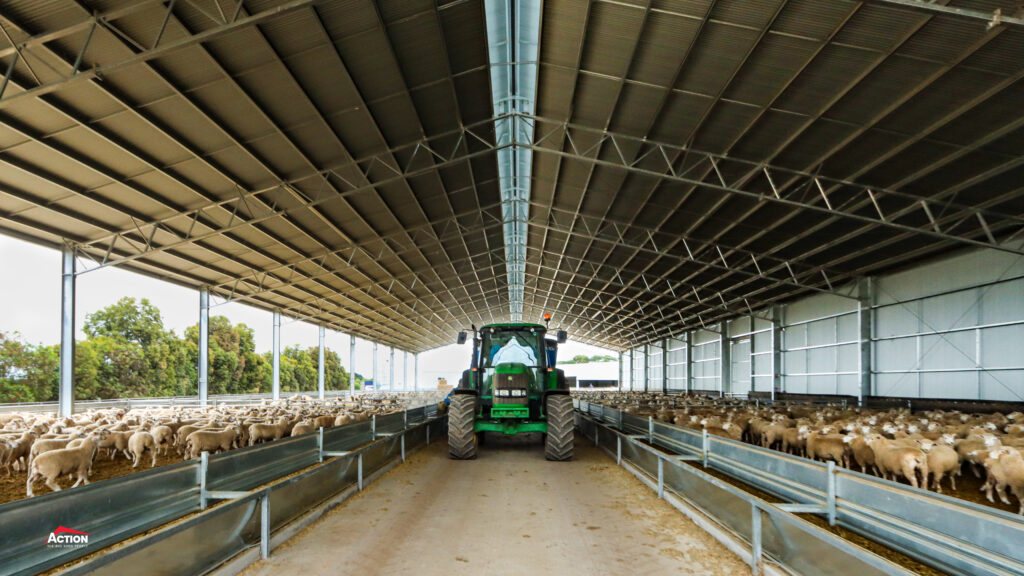
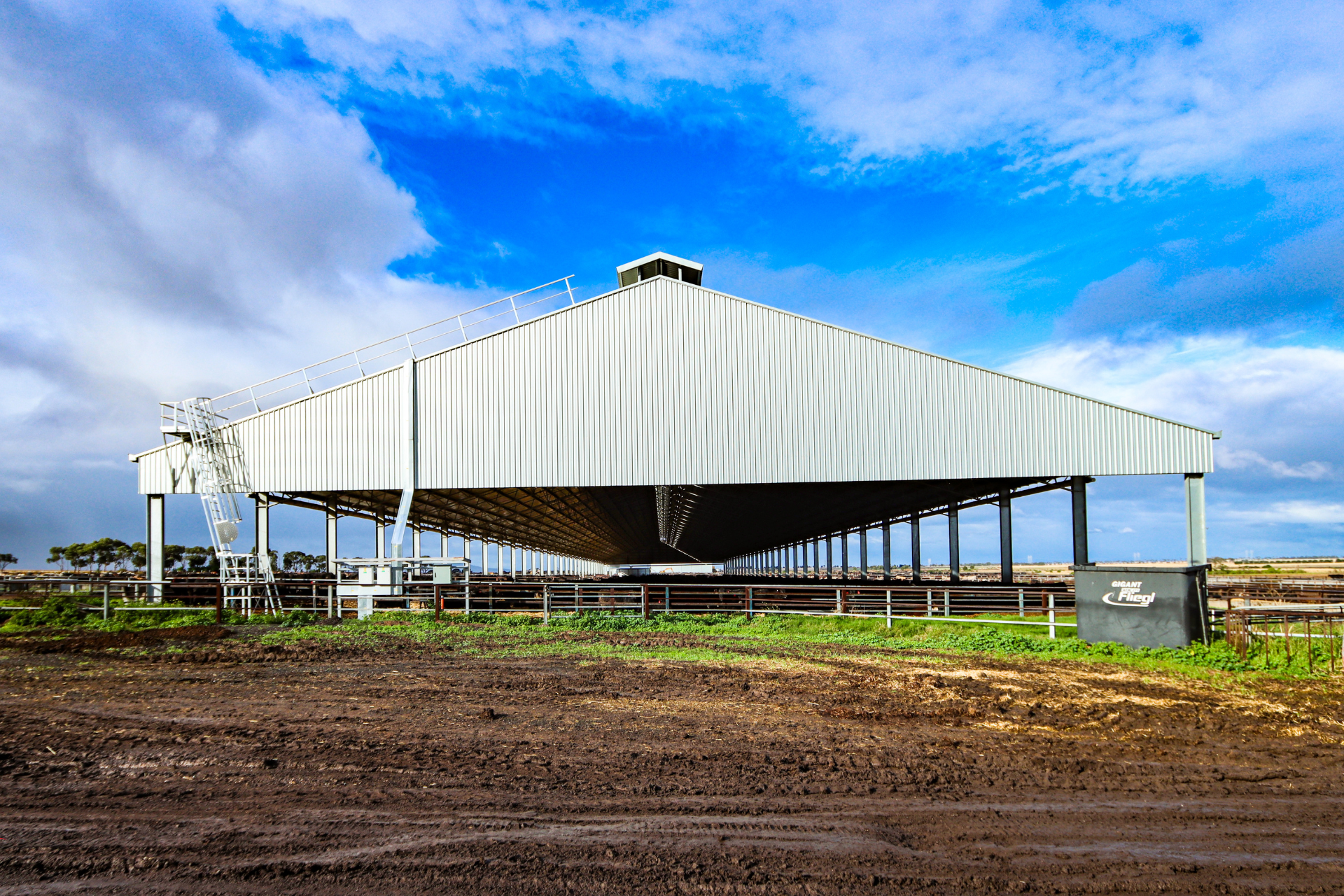
If you are heading down the covered path, ventilation is the design factor that matters most. A feedlot environment needs to move air effectively to stay healthy and productive. The combination that works is a steep roof pitch, typically between 14 and 22 degrees, paired with a ridge opening sized to match. This draws warm air and moisture up and out while drawing fresh air in through the sides.
A standard farm shed pitch is not designed for this. A feedlot-specific design is worth the investment.
A few other design details worth getting right:
- Eave height: Between 5 and 6 metres gives good clearance for machinery and supports airflow through the pen space.
- Column footings: Forming column bases up by around 300mm protects against corrosion, keeps the base clear of bedding material and eliminates sharp edges at sheep level, reducing the risk of injury to stock moving through the pen.
- Gutter system: Downpipes directed to the ends of the cover rather than down the columns protect against machinery damage and keep water out of the pen area.
- Feed lane layout: Whether a centre lane or side lane suits your setup depends on your span, mob size and feed system. It is worth thinking through before the design is finalised. Not sure which feeder system suits your setup? See our guide to the best sheep feeder options for feedlots.
Action Steel’s lamb feedlot covers are built specifically for these requirements. Features like the pop-top ridge vent, custom gutter system are standard inclusions on every cover, not extras. If you are working through design decisions, our team can help you understand what those details mean for your operation in practice.
Plan your lamb feedlot for where you want to be
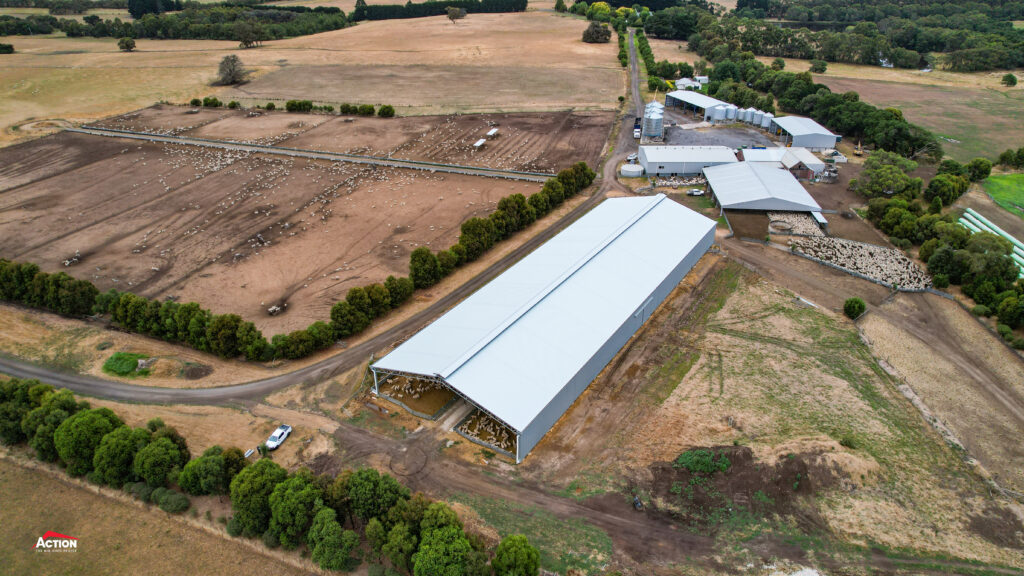
A feedlot is a long-term investment, whether covered or not. Selecting a site with room to expand, and designing pen layouts that can accommodate more animals without a full rebuild, gives you options as the enterprise grows.
Building with the next five to ten years in mind tends to pay off.
Ready to set up your lamb feedlot?
For guidance on sizing, stocking density and span options, see our Lamb Feedlot Shed Sizes article. For answers to common design and build questions, see our Lamb Feedlot Shed Questions article.
Want to chat with someone in the Action team about your lamb feedlot plans?
Call 1800 68 78 88 or check out our Feed Lot Covers page for more information.