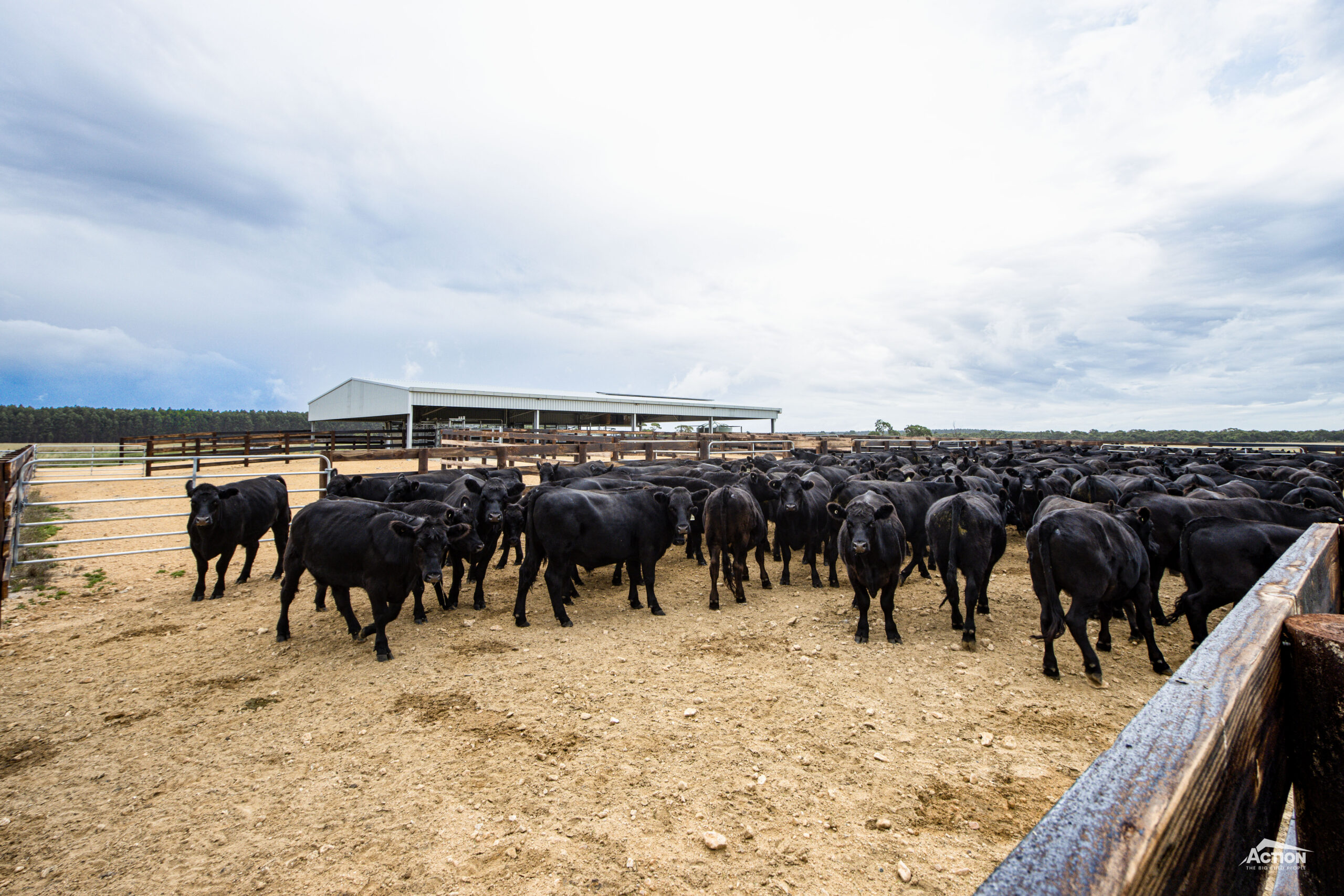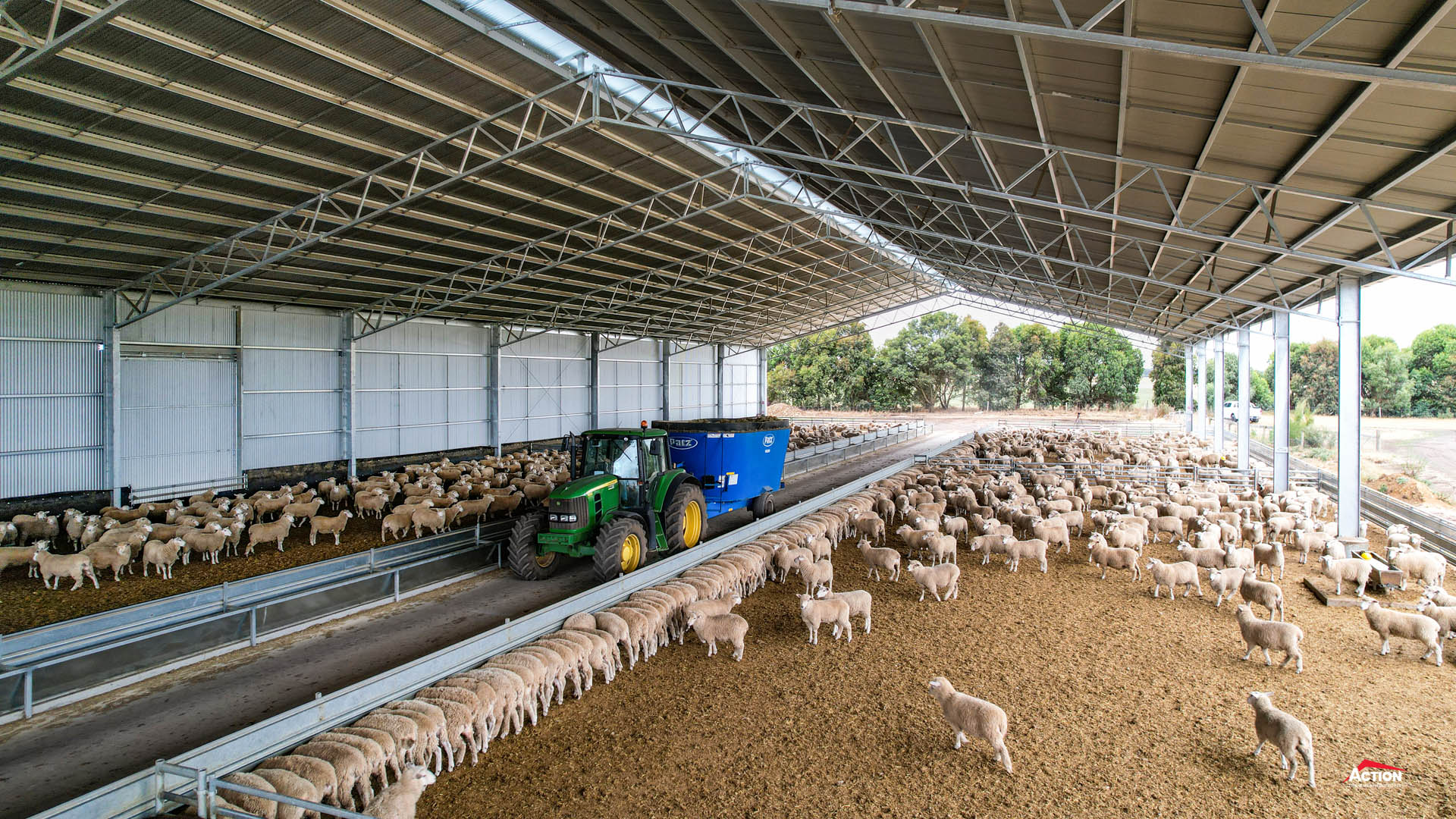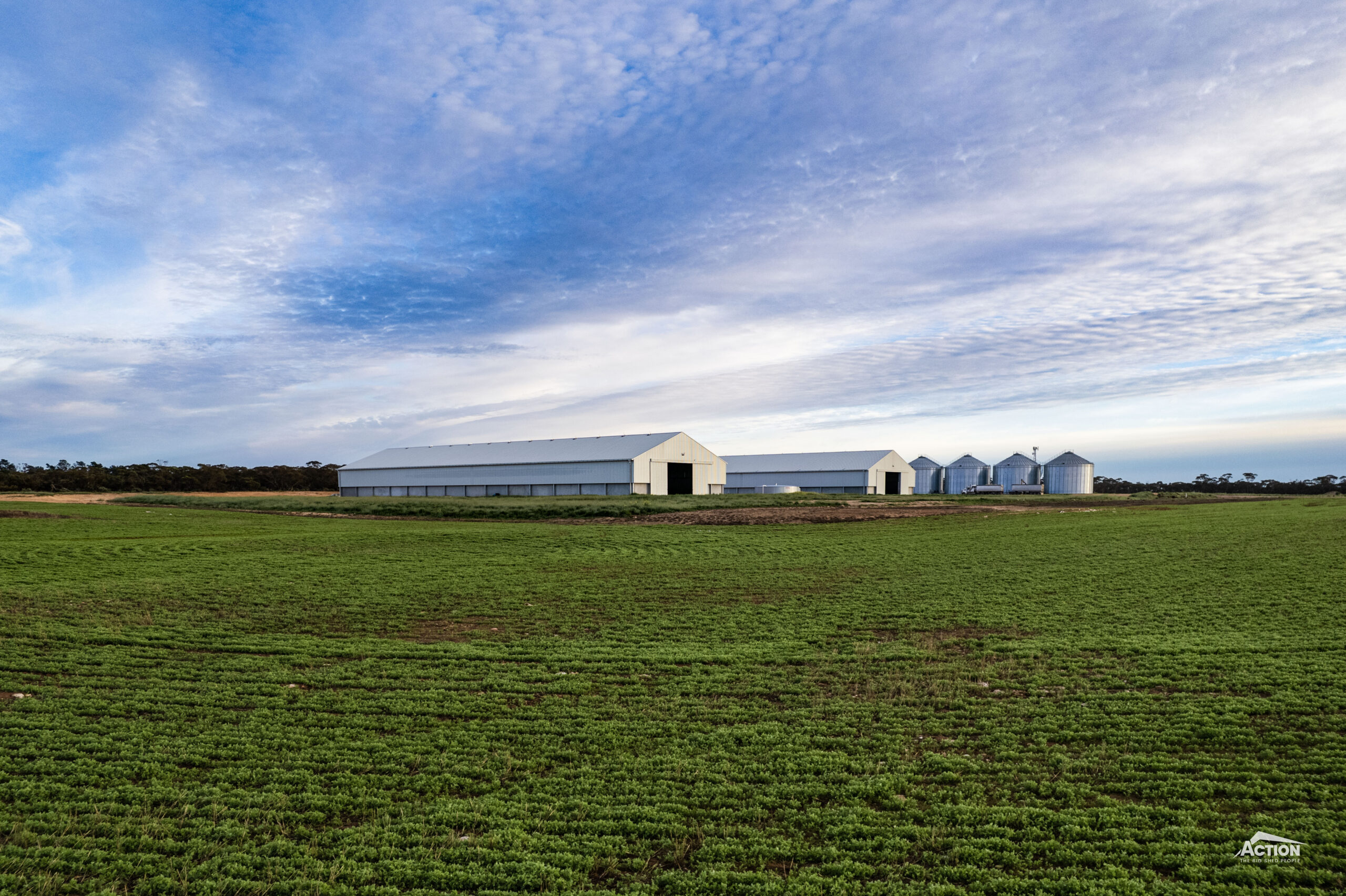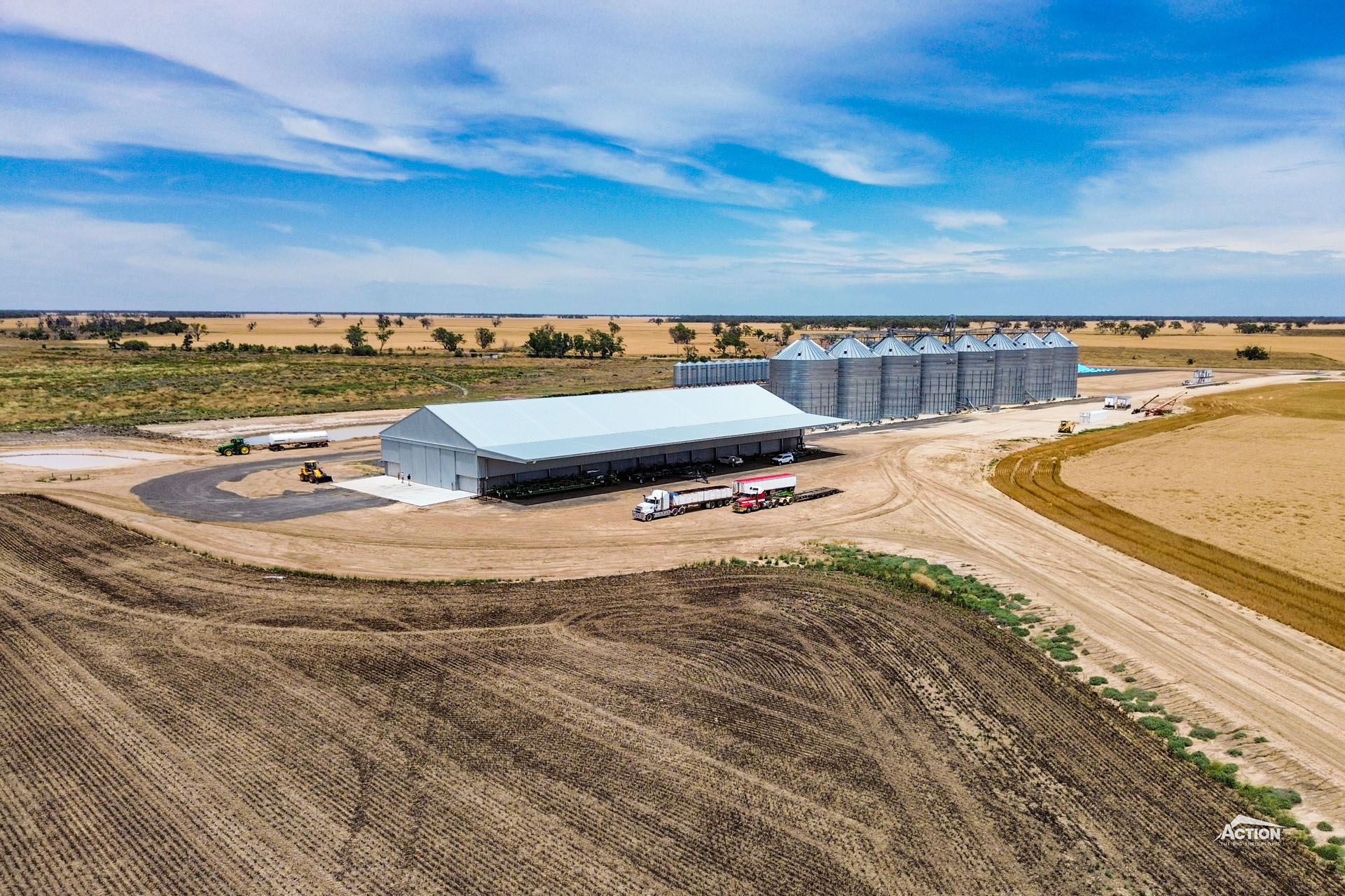
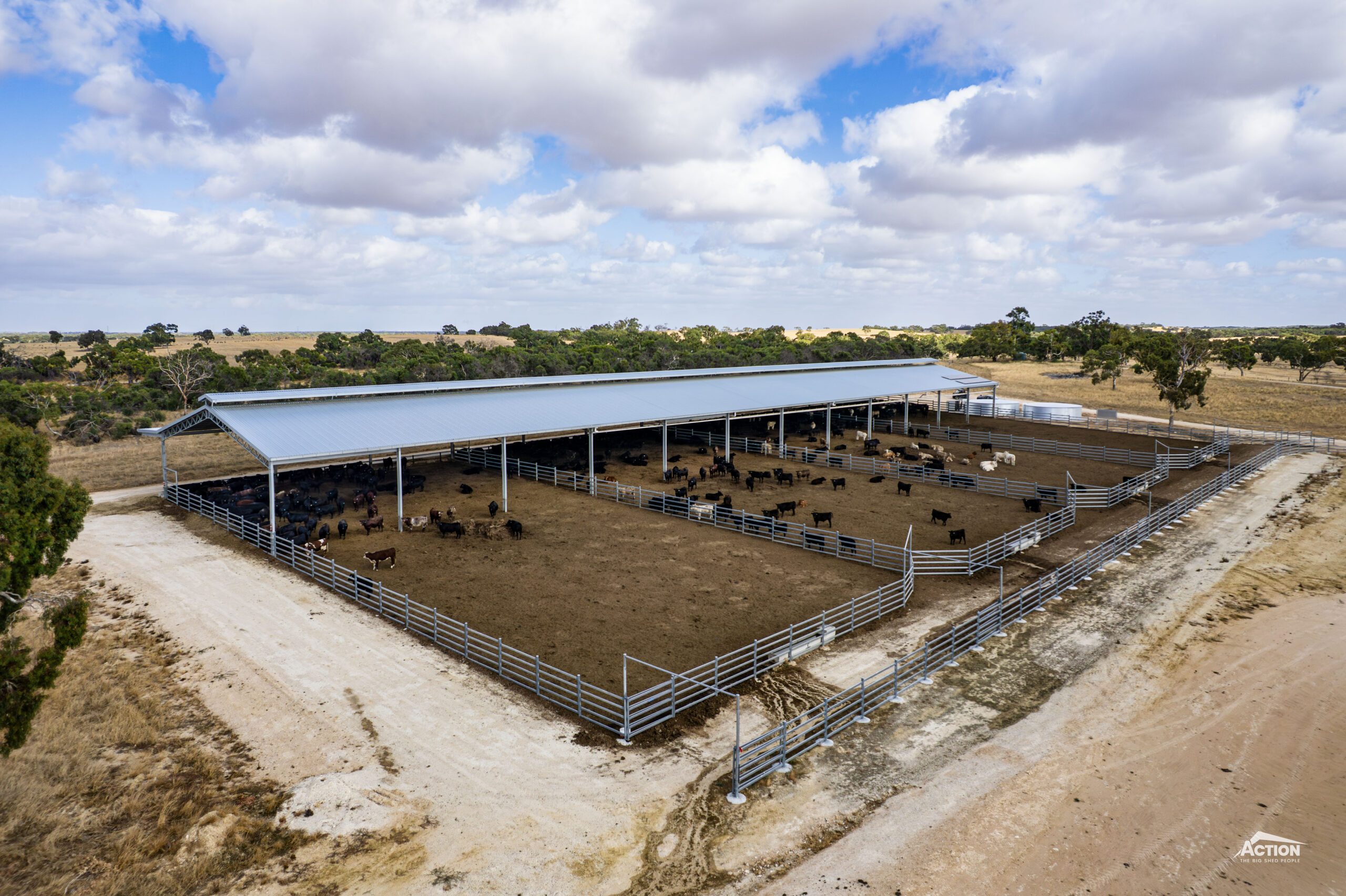
With shade now expected under the ALFA Shade Initiative and the National Feedlot Accreditation Scheme, most beef operations are looking at a purpose-built feedlot cover rather than shade cloth. A Feedlot Cover only earns its keep, though, if a few fundamentals of the feedlot cover design are thought through from the start. Here’s what’s worth considering.
Protection Without Trapping Heat
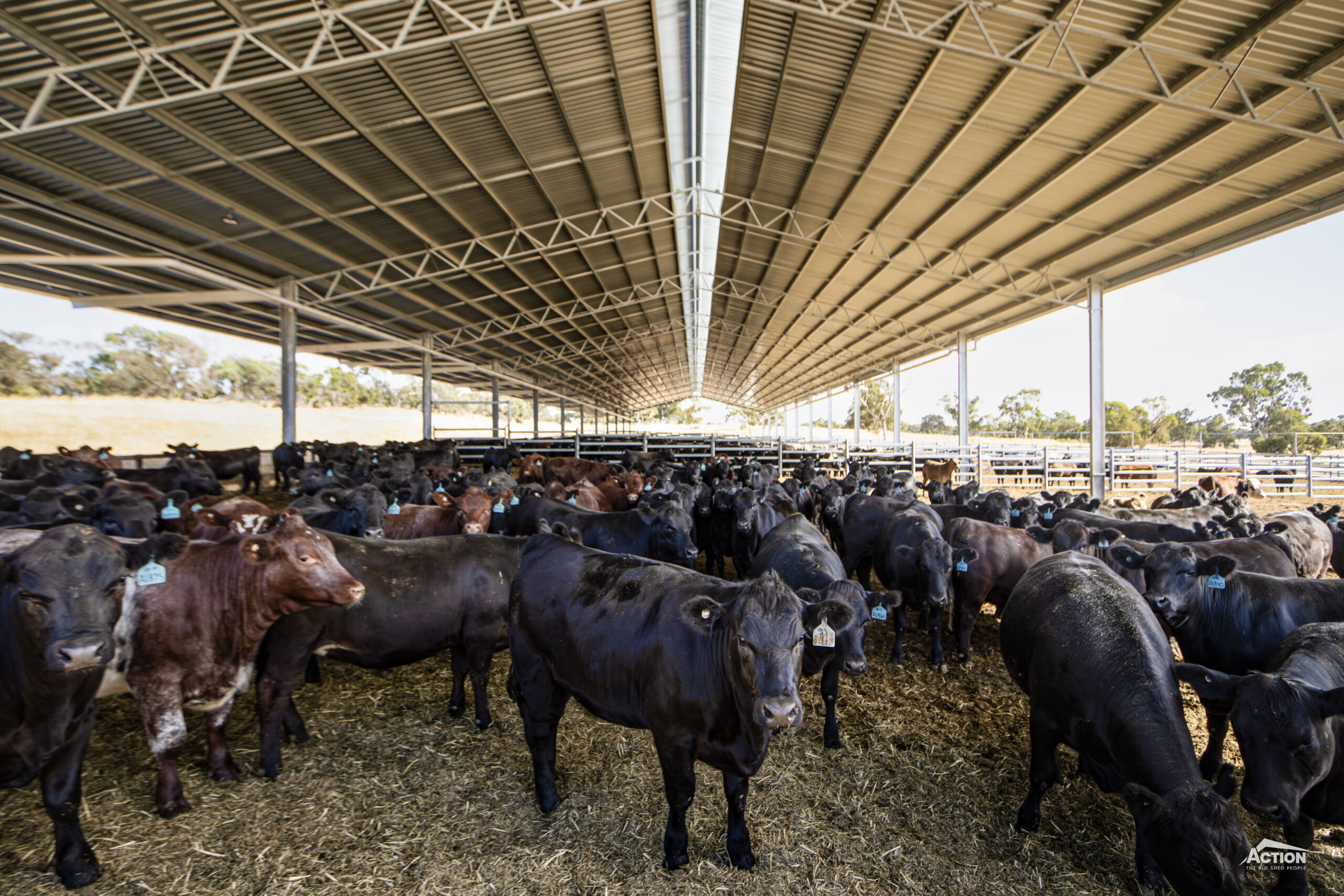
A feedlot cover needs a noticeably steeper roof pitch than a standard farm shed. Where a standard shed might get away with 7.5 degrees, a feedlot cover generally needs somewhere between 14 and 22 degrees, with 18 degrees a common landing point once site and CFD modelling are factored in. The steeper pitch is what lifts hot air, moisture and ammonia up and out rather than letting it sit over the cattle.
A pop-top ridge vent is standard on most feedlot covers now. It opens the ridge to let hot air escape while a cover over the opening keeps rain and direct sun out. Getting pitch and ridge opening right together is what separates a cover that just throws shade from one that genuinely reduces heat load.

Room to Move, Work and Grow
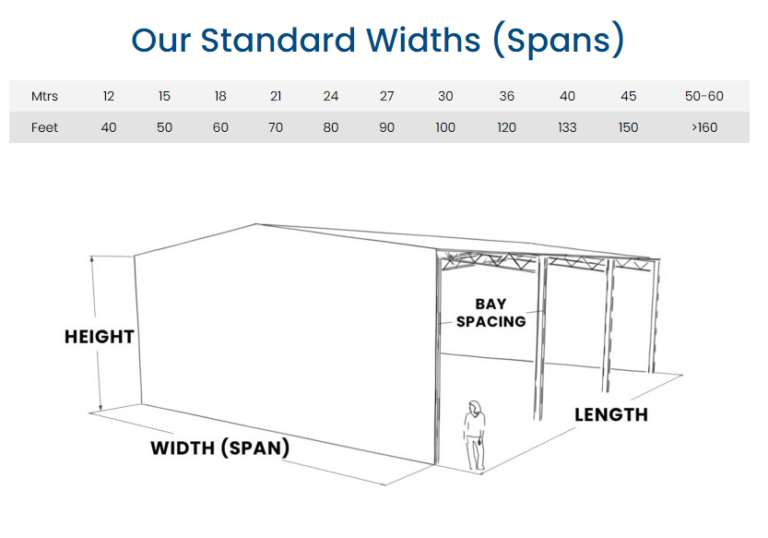
Beyond shade, a cover needs to give cattle room to express normal behaviour and give staff and machinery safe access without adding stress. A cantilevered canopy is a cost-effective way to add extra coverage over pens and feed bunks without impeding columns or increasing the size of the main cover, so long as it doesn’t obstruct airflow (the canopy height may need to be increased to account for this).
Column placement is worth getting right too. Adjusting column lengths and placement can accommodate fall across the site without affecting feed lanes or machinery access, and columns can be formed up at the base to reduce the risk of injury to cattle and keep them out of the mud.
The ratio of stocking density to bunk space is a big part of getting this right too, along with pen sizing as cattle finish. We’ve covered that operational detail in full in our Covered Housing For Beef Feedlots article, worth a read alongside this one.

Water: Access and Harvesting
Water is one of the three basics for any housed livestock, alongside feed and shelter, and demand climbs fast in hot weather. Water tanks and collection systems need to be planned at the design stage, factoring in the maximum number of cattle likely to be under roof at once.
A feedlot cover is also a genuine water harvesting opportunity. The roof area captures a significant volume of stormwater that can be collected and reused across the operation, improving water security and helping offset running costs over time.

Dry, Well-Drained Flooring
Drainage matters as much as roof design. Cattle standing on moist ground for extended periods are at greater risk of lameness, scouring and, in young stock, Johne’s disease, and poor drainage tends to bring odour problems with it too. A well-prepared site with effective drainage keeps water and run-off away from the pens and protects both animal health and the longevity of the cover itself.
Site selection more broadly is worth working through properly before committing: orientation, access, logistics, effluent management, council setbacks and site overlays, and water catchment and storage all play a part. Our building consultants can talk through drainage, EPA approvals and access requirements specific to your site.
Beyond Shade: The Long-Term Value
A well-designed feedlot cover pays off in more than just cooler cattle. Built from hot-dip galvanised steel, it’s a genuine capital asset rather than a consumable like shade cloth. A well-built cover typically lasts well over 25 years with minimal maintenance, adding lasting value to the property itself rather than an annual cost of doing business.
Timing matters too. With the ALFA Shade Initiative already in effect and shade expected to become a requirement under the National Feedlot Accreditation Scheme, having a cover in place ahead of time protects your accreditation status and market access, rather than playing catch-up once the requirement lands.
It’s also a visible, practical demonstration of animal welfare that matters for consumer sentiment and the industry’s long-term social license.

Talk to Our Team
Getting a feedlot cover design right means weighing up roof design, space, water, drainage and site all at once, not in isolation. As a member of the Australian Lot Feeders Association and a registered builder, our team can work through all of it with you, from initial design through to a single point of contact for the whole build.
Call 1800 687 888 or visit the Contact Us page to request a quote.
Or Download our Feedlot Cover Guide for more information.