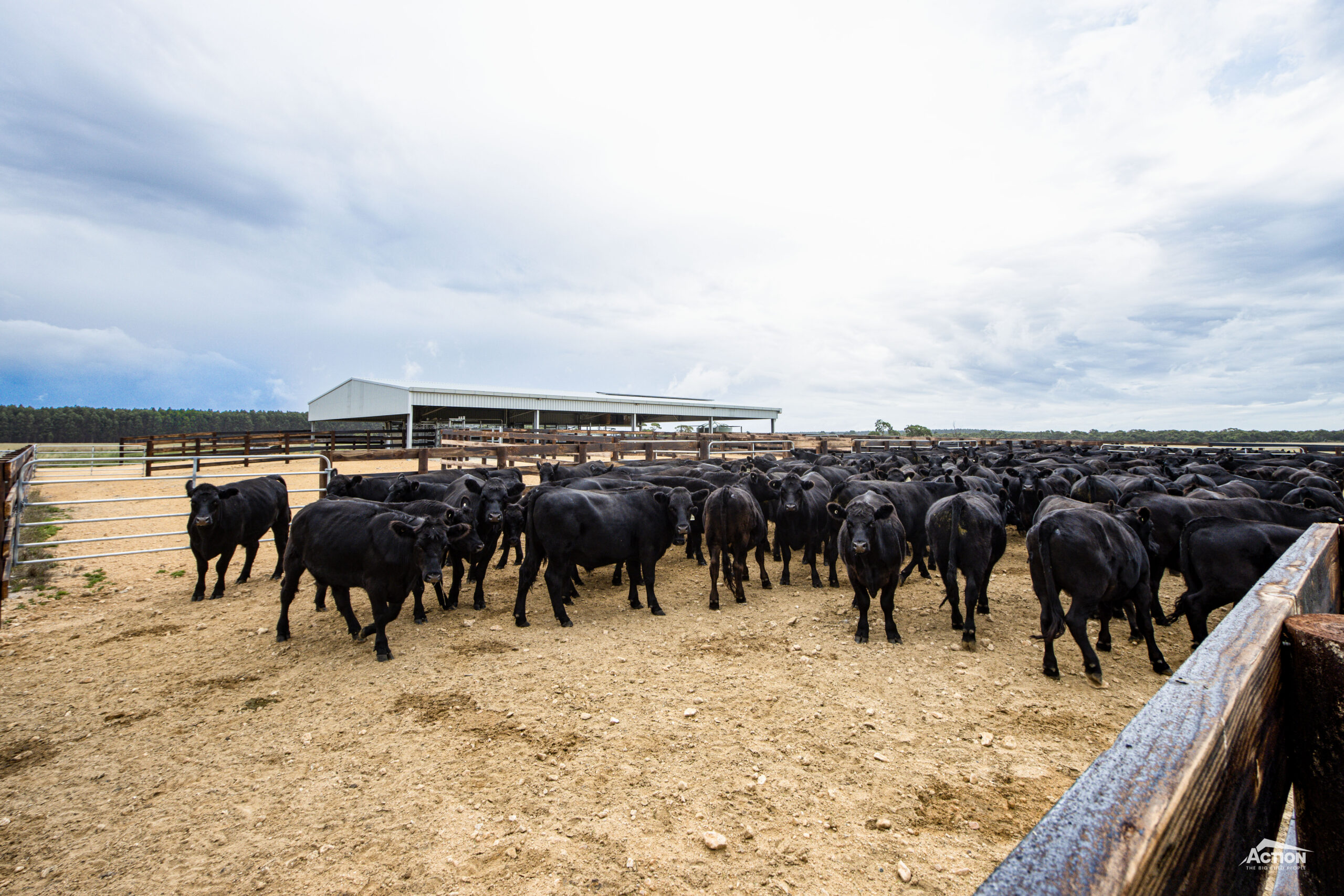
Anyone who’s sold cattle this spring knows the Australian cattle market’s been anything but simple. Young cattle were back above $10 a kilo carcase weight in early September. Feedlots are holding more cattle than ever. Meanwhile export beef is coming up against tariffs and fresh competition from Brazil.
The cattle market isn’t one market. It’s three, each with its own drivers: young and store cattle, feeder cattle, and finished and export cattle. Here’s where each one sits right now, and what it means for the decisions on your place. (If you missed it, catch up on our last Market Watch: Three sheep markets firing at once.)
What the Australian cattle market looks like right now
The national herd is sitting at around 30.8 million head, according to MLA’s September projections update. Adult slaughter is forecast at 9.6 million head this year, the most in decades, and beef production is set to pass 3 million tonnes for the first time.
The southern season has done most of the talking. Rain across large parts of southern Australia brought a spring feed surge, and restockers came out bidding. Southern and eastern Queensland are drying off, and some producers are selling ahead of a forecast dry season.
Young cattle: spring grass puts restockers in the driver’s seat
The Eastern Young Cattle Indicator (EYCI) was back above 1000c/kg carcase weight in the first week of September, then eased to 955c/kg by 18 September as drier weather set in and bigger yardings came forward. Nationally, young cattle prices have averaged about 27% higher so far this year than for the same period last year.
Restockers did the heavy lifting. Restocker steers jumped nearly 8% in a single week to 529c/kg liveweight in early September. That’s around $200 a head more than a month earlier and 20% above the five-year average. Restocker heifers climbed from August lows of 380c/kg to 470c/kg liveweight by mid-September, before easing back to 437c/kg in the week to 18 September.
Supply is the other half of the story in the Australian cattle market. August saleyard numbers were the lowest since September 2024 (January aside). MLA’s producer survey found first-half sales fell well short of what producers had planned, and 38% of those who sold fewer cattle said their stock simply didn’t make weight.
Analysts are watching one signal closely. The EYCI has reached parity with the imported beef price in the US (the 90CL indicator) for the first time in three and a half years. In the past, that has happened when supply is historically tight, which isn’t the case in 2026. Analysts suggest young cattle prices may find some resistance from here.
Feeder cattle: feedlots running at full tilt
Australian feedlots have never held more cattle. The June quarter survey from the Australian Lot Feeders’ Association (ALFA) counted a record 1.66 million head on feed, with feedlots at 92.5% capacity. Grainfed turnoff hit 1.05 million head for the quarter, up 17.5% on last year.
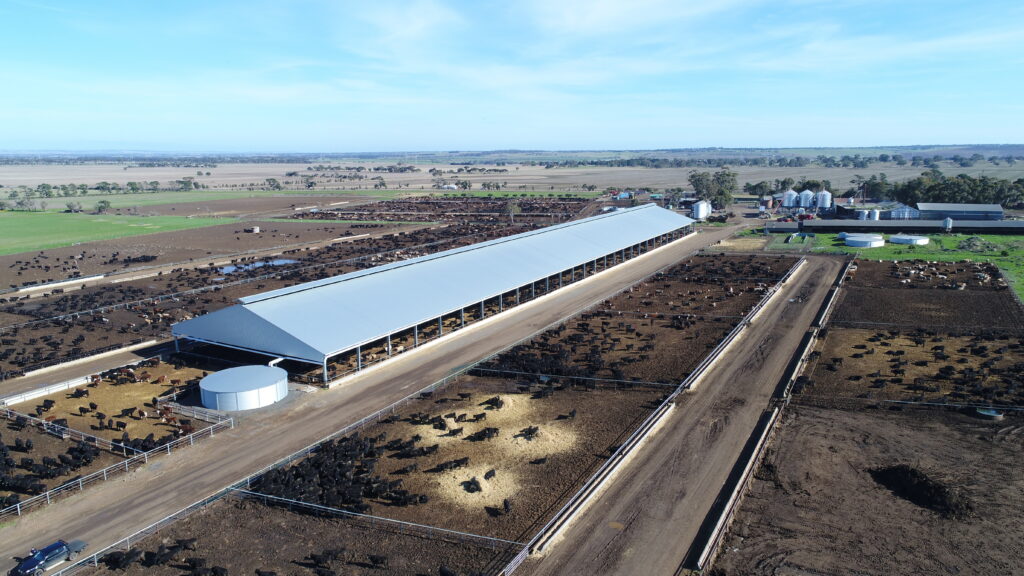
Demand from Japan and Korea for grainfed beef has driven that growth, and feedlots have kept expanding capacity to meet it. Feeder prices held fairly firm at 521c/kg in mid-September, and lotfeeders were also bidding strongly on lighter restocker cattle earlier in the month.
For grass-fattening and backgrounding operations, the takeaway is simple. With feedlots near full and restockers active, there’s solid competition for well-grown cattle.
Finished and export cattle: strong demand, some headwinds
Heavy steer values have been relatively stable for much of the year, moving between $4.00 and $4.50/kg liveweight depending on supply and export demand. Processor cows are expected to trade at the lower end of their recent range of $3.50 to $4.00/kg liveweight over the next few months, as more South American beef puts pressure on US manufacturing beef prices.
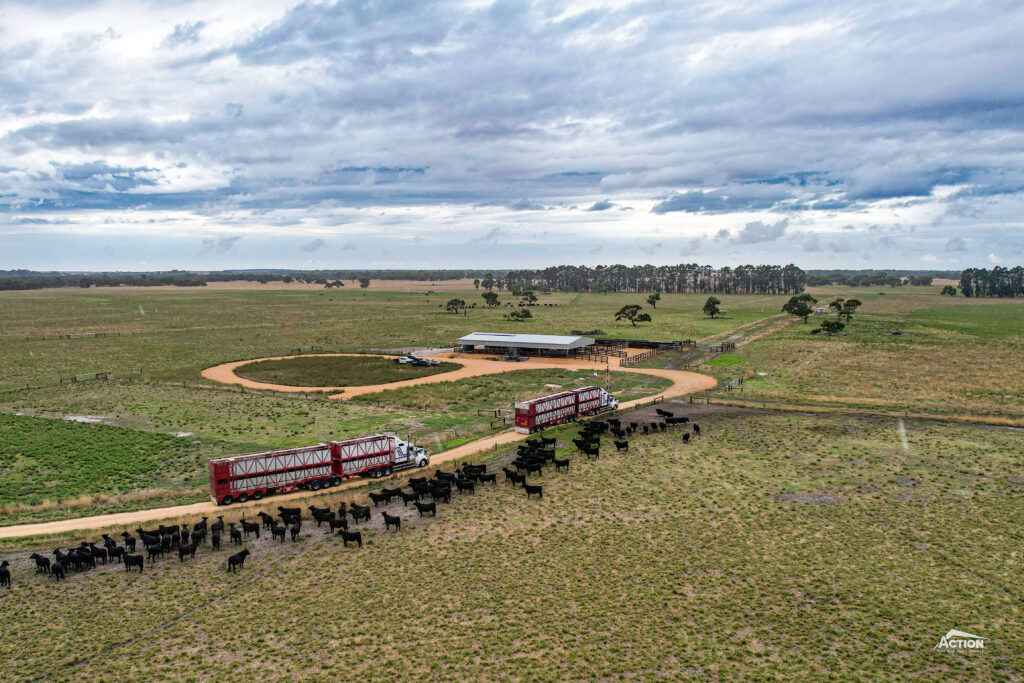
Beef exports tell a two-sided story. Australia shipped more than 1.07 million tonnes to the end of August, 9% more than the same period last year. The US took 335,000 tonnes of that, up 17%, and Japan is up 10%.
The headwinds are trade rules. Australia reached its China quota on 19 June, and the rest of this year’s shipments face a 55% tariff. Korea’s quota filled on 23 July, bringing a 24% tariff. In the US, a 90-day window from 1 September allowing 300,000 tonnes of beef trimmings in duty free mostly helps Brazil, adding competition for Australian lean beef.
Looking ahead for the Australian cattle market, MLA expects the national herd to ease to around 30.1 million head in 2027, with adult slaughter falling to about 9.2 million head.
What the current Australian cattle market means on farm
Put the three Australian cattle markets together and a clear picture emerges. Prices are at historically high levels, feed is plentiful across much of southern Australia, and many producers have found their cattle simply didn’t make weight. With fewer cattle expected to come through from 2027, well-grown stock should remain in demand.
That’s where infrastructure earns its keep. Many producers are using the good season to:
- Lock in fodder. A big spring is the time to bale and store every tonne you can, so next autumn’s feed gap doesn’t force cattle onto the market underweight. Our hay shed kit sizes and price list is a good place to start.
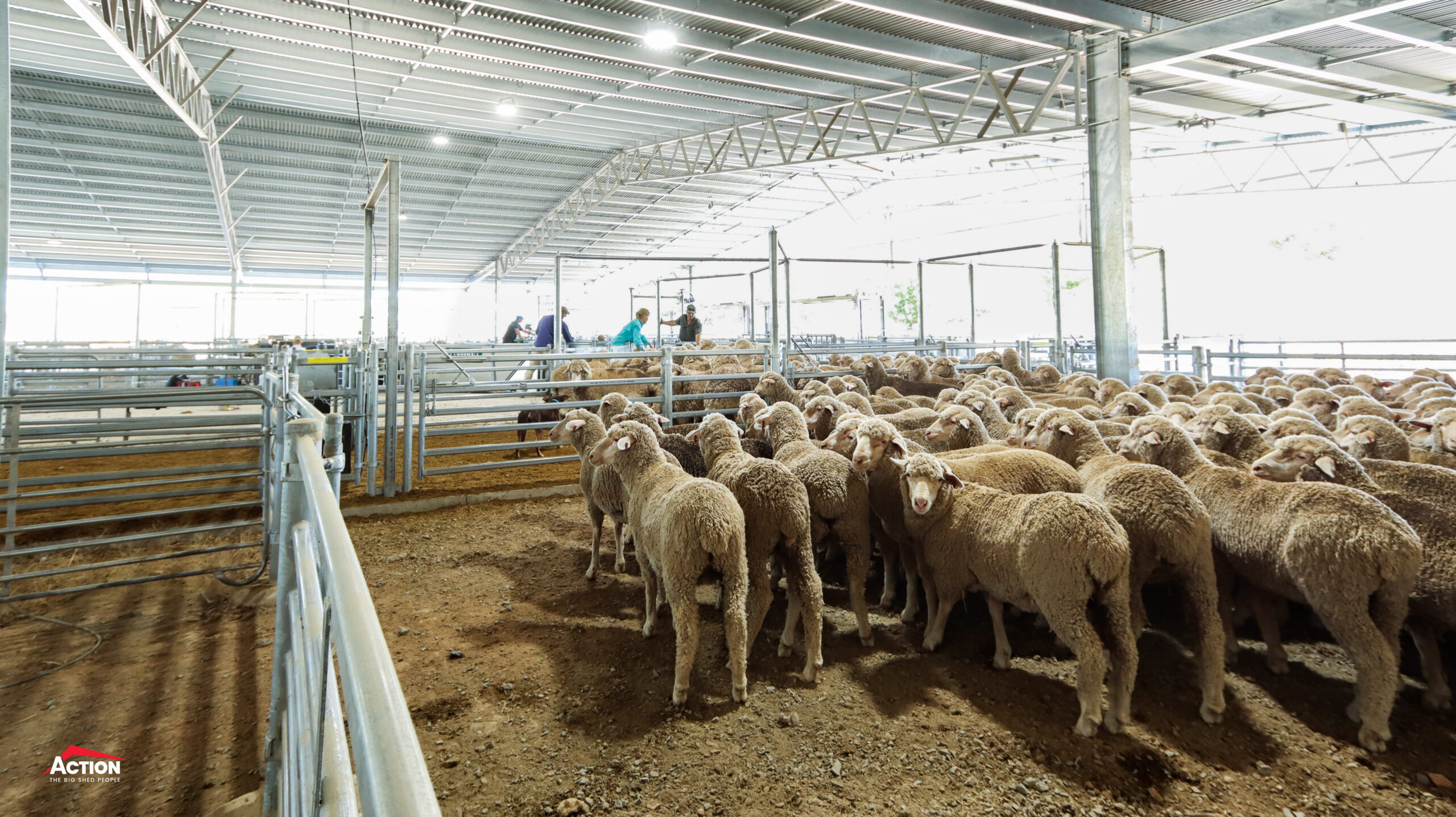
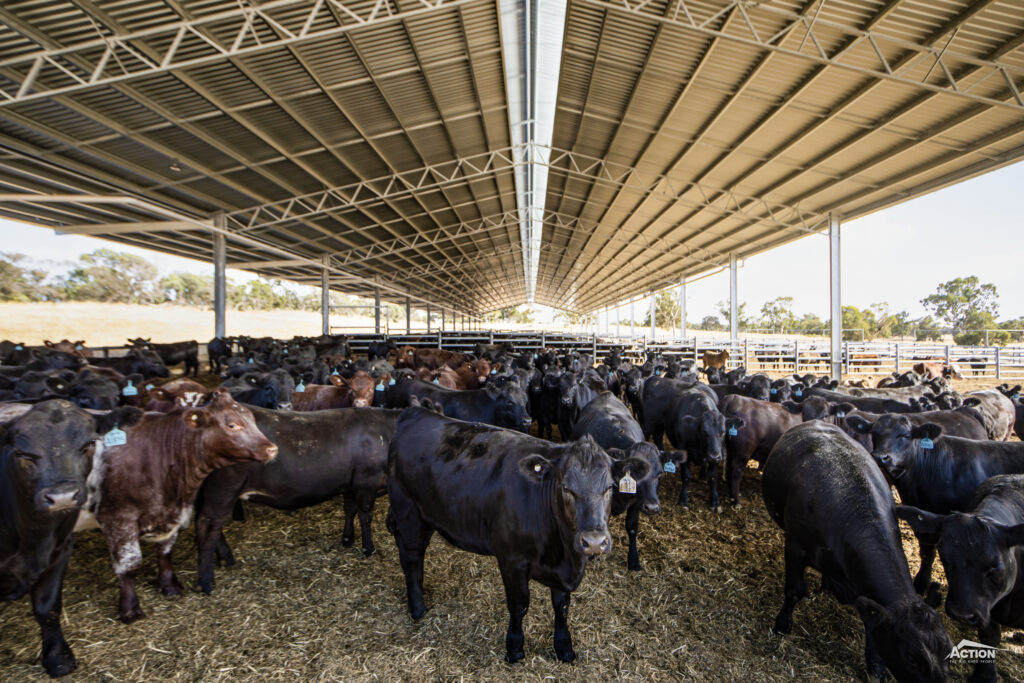
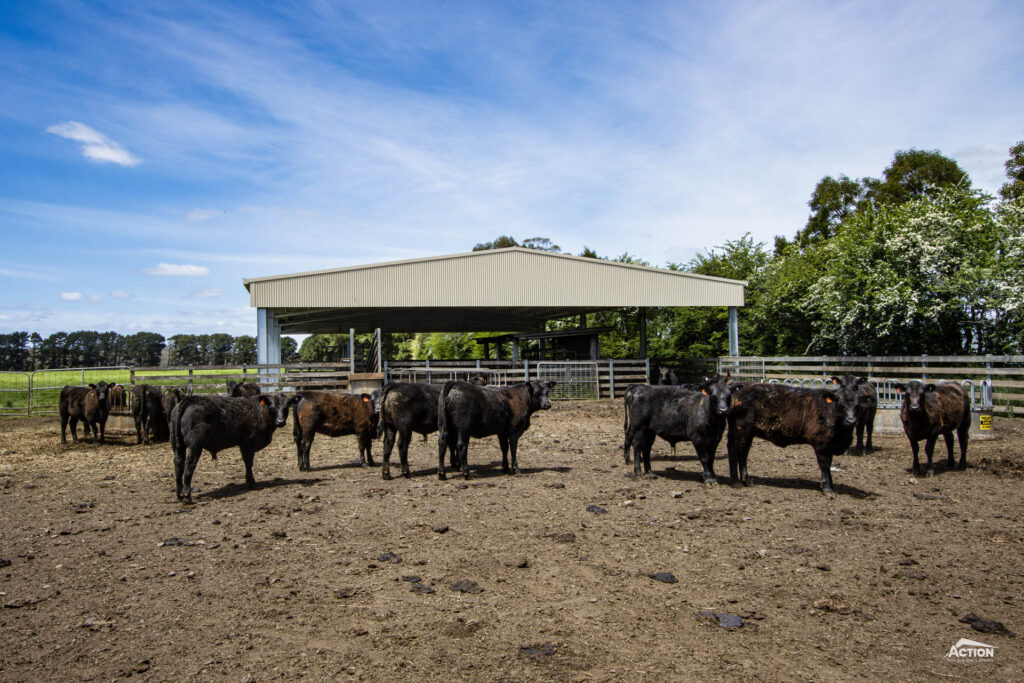
- Look after condition in the yards. Covered cattle yards take the heat and mud out of handling, keeping stock calmer and working conditions safer for your team. See where a yard cover really pays off, and what it costs to cover cattle yards.
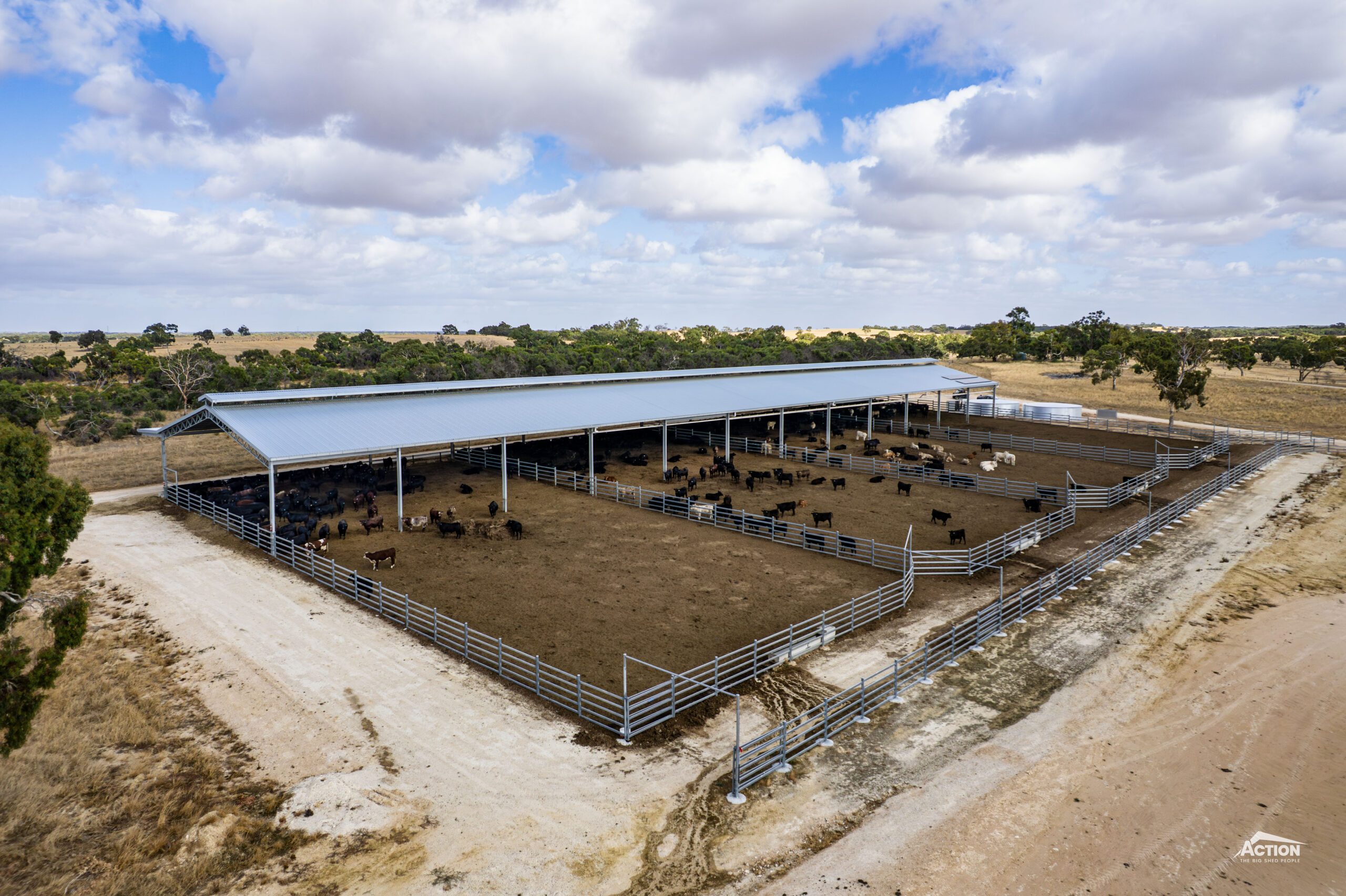
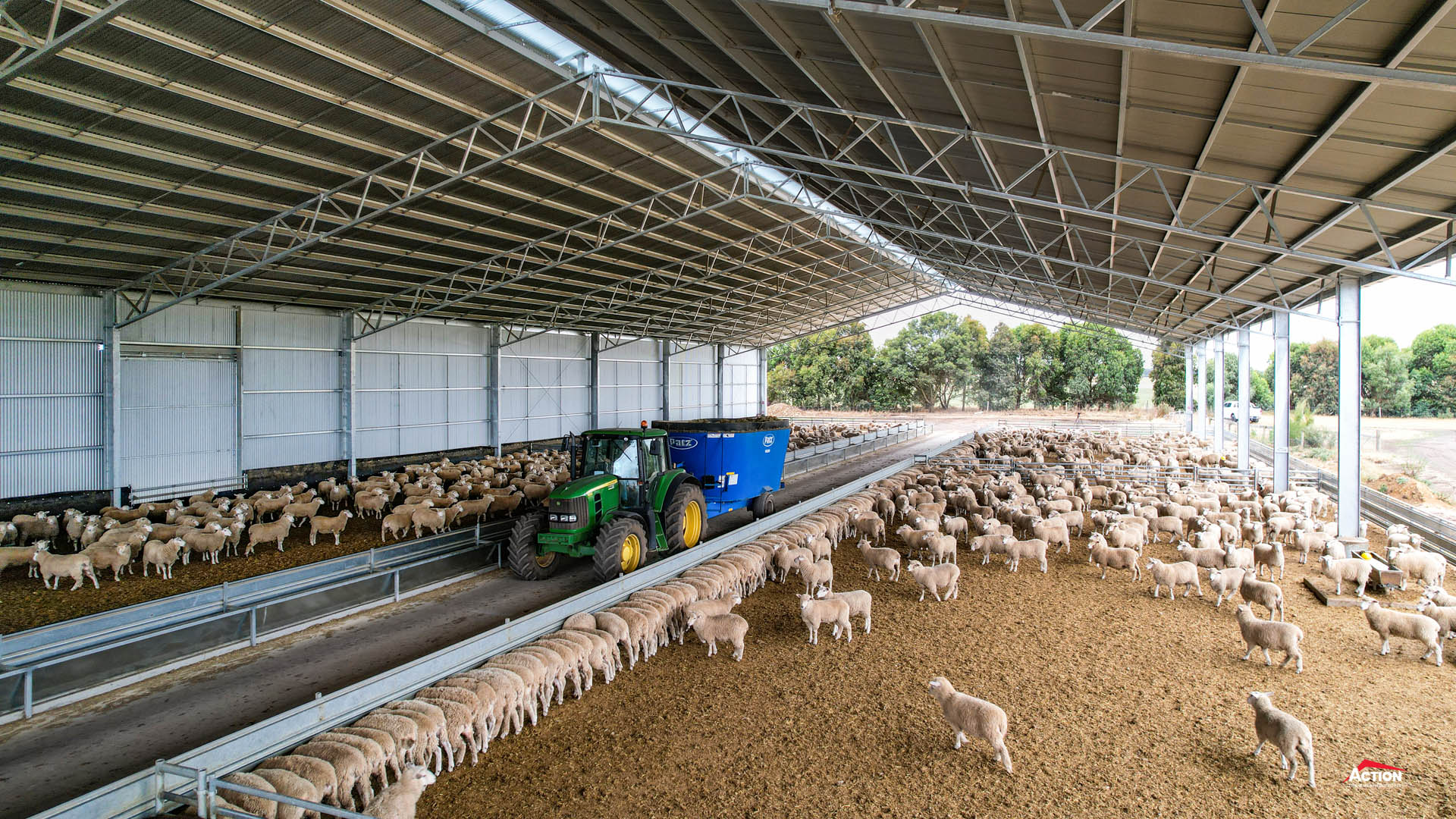
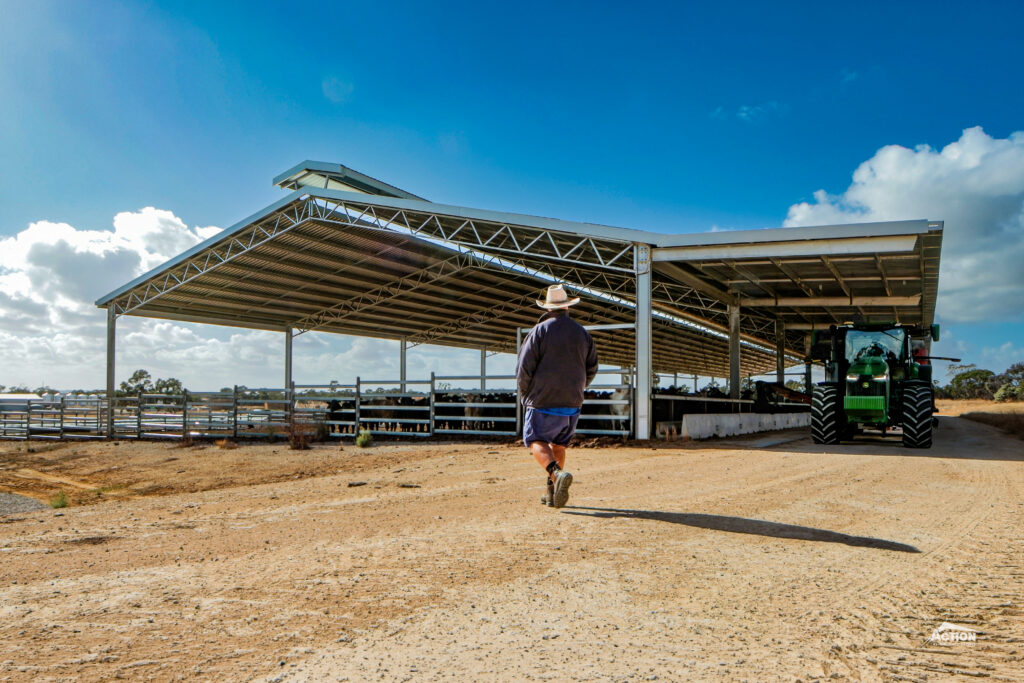
- Finish on your own terms. A covered feedlot or feedpad gives more control over growth rates and turnoff timing, whatever the season does. Read what to consider when designing a beef feedlot cover.
Building for the next phase
Good seasons don’t last forever. Producers who come through them in the best shape are usually the ones who invested in the basics while the cash flow was there.
If a hay shed, yard cover or feedlot cover has been on the list for a few years, now is a good time to start the conversation. With a typical lead time of four to six months from order to completion, a shed ordered this spring can be ready before next winter’s feed gap or next summer’s heat.
Talk to us
Talk to our building consultants about hay sheds, yard covers and feedlot covers built for Australian cattle operations. Call 1800 68 78 88 or request a quote at actionsteel.com.au.
Market data sourced from Meat & Livestock Australia (MLA), the Australian Lot Feeders’ Association (ALFA), Mecardo, Beef Central and Elders, September 2026. Prices are indicative and change weekly.