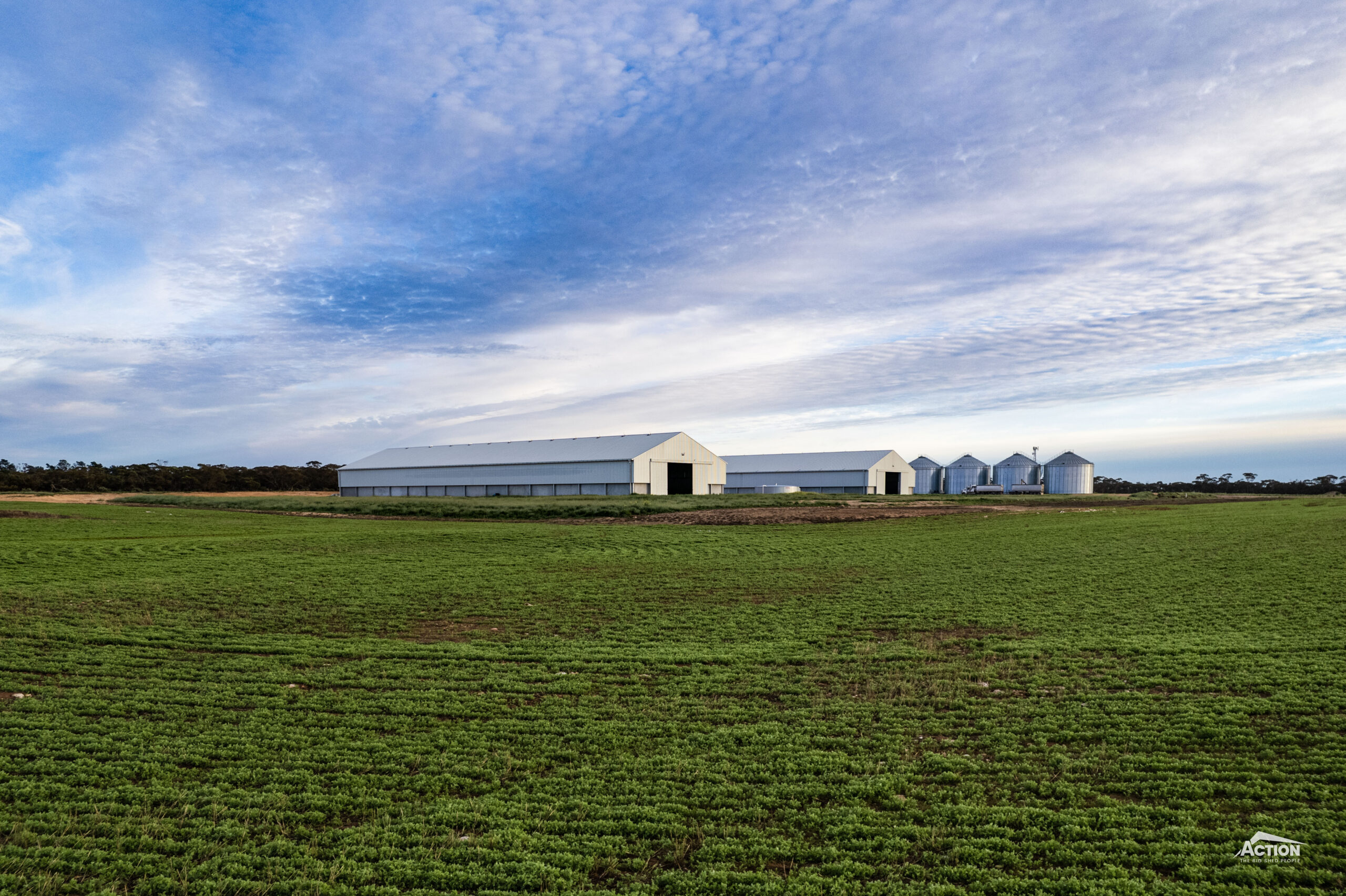
On-farm grain storage investment is one of the most commercially impactful decisions a cropping farmer can make. A shed built with clear intent, the right size, the right design and the right site, performs differently to one built in a rush.
More producers are making that move. Here is what is driving it and what is worth thinking through before you start.
What the market is telling us
Australian grain markets move. Seasonal conditions, global supply shifts, currency movements and domestic feed demand all influence what grain is worth and when the best time to sell falls. In most years, there is a meaningful price difference between what a grower can achieve delivering straight off the header and what is available in the months that follow, once the harvest glut has cleared and demand from domestic feeders, maltsters or exporters picks up.
Growers who can hold grain and choose their timing have a genuine commercial advantage. Those who have to deliver at harvest, because they have nowhere to put it, are price takers. On-farm storage changes that dynamic.
Why on-farm grain storage investment is growing
The trend toward on-farm storage has been building for years. Following large east coast harvests in recent seasons, a clear swing away from bulk handlers has been recorded, with more growers choosing to cart shorter distances to their own storage rather than deliver into the bulk handling network.
The cost of storing grain with a bulk handler is also a factor more producers are weighing up. Receival fees, monthly time-based storage charges and outturn fees all accumulate when grain sits in the system. GrainCorp and GrainFlow both publish their fee schedules publicly, and the total cost of holding grain through the season can be significant. For a sense of what on-farm grain shed storage costs per tonne by comparison, see our grain shed pricing guide. The GRDC also offers a Grain Storage Cost Benefit tool for growers who want to run the numbers for their own operation.
The reasons are straightforward. On-farm storage gives growers control over logistics at harvest, flexibility on timing of sale, and the ability to respond to domestic market opportunities that bulk handling arrangements do not always accommodate. Growers who have invested in permanent storage consistently report that the flexibility it gives them at the point of sale is where a significant part of the return is generated.
For a full overview of the on-farm grain storage options available, including bags, silos and sheds, see our grain storage options guide.
Why now is the right time to plan
A grain shed is not something you build in a hurry. Design, approvals, site preparation and construction all take time, and lead times on shed projects vary depending on the time of year and the complexity of the build. Producers who start their on-farm grain storage investment planning now are well positioned to have infrastructure in place before the 2027 harvest season.
Equally, starting the conversation now means making design decisions with a clear head, not under harvest pressure. Getting the shed size, wall configuration, height clearance and fumigation setup right from the start is far easier when there is time to work through the details properly.
Our guide to grain shed project timeframes walks through what to expect at each stage of the process.
The case for on-farm grain storage investment
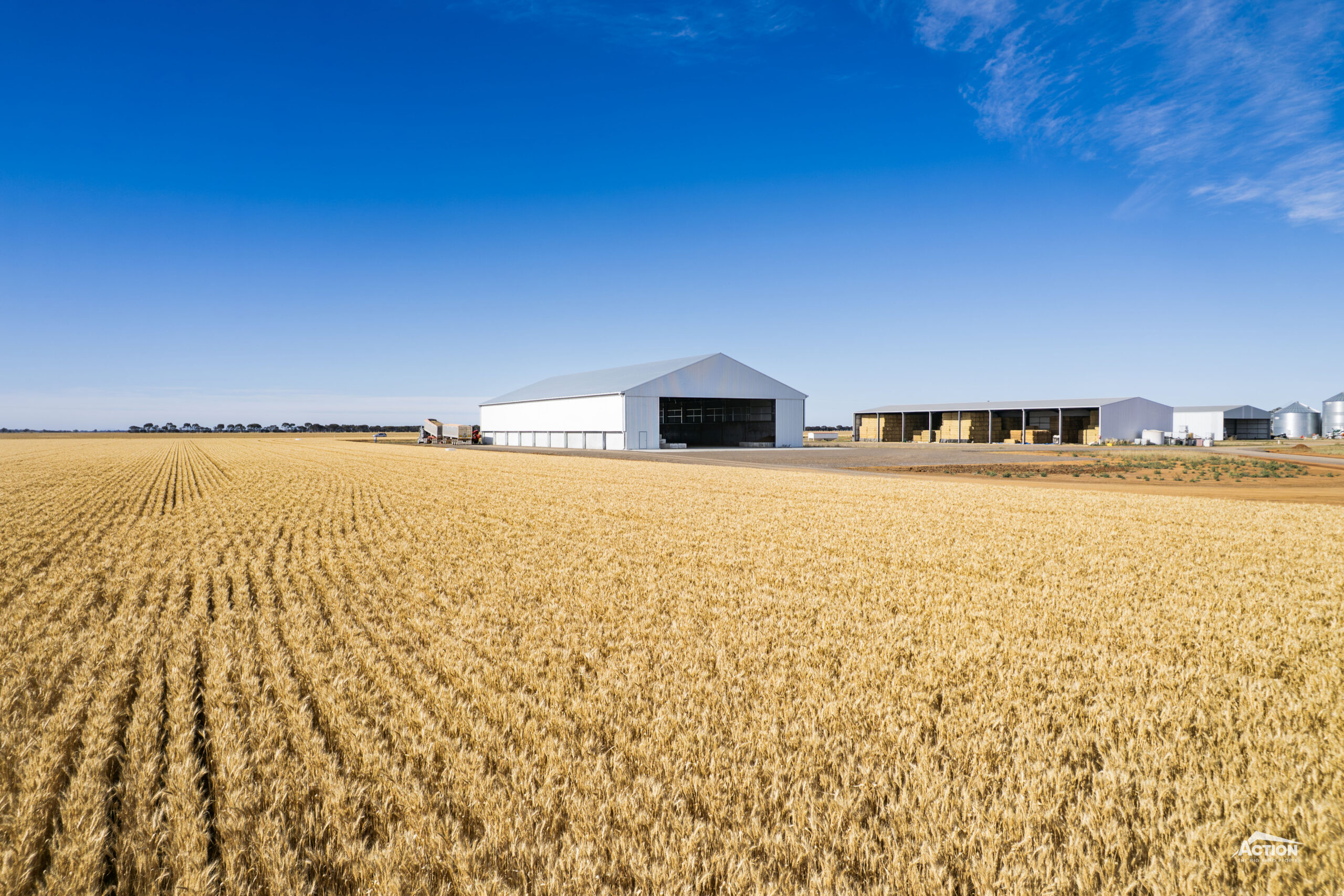
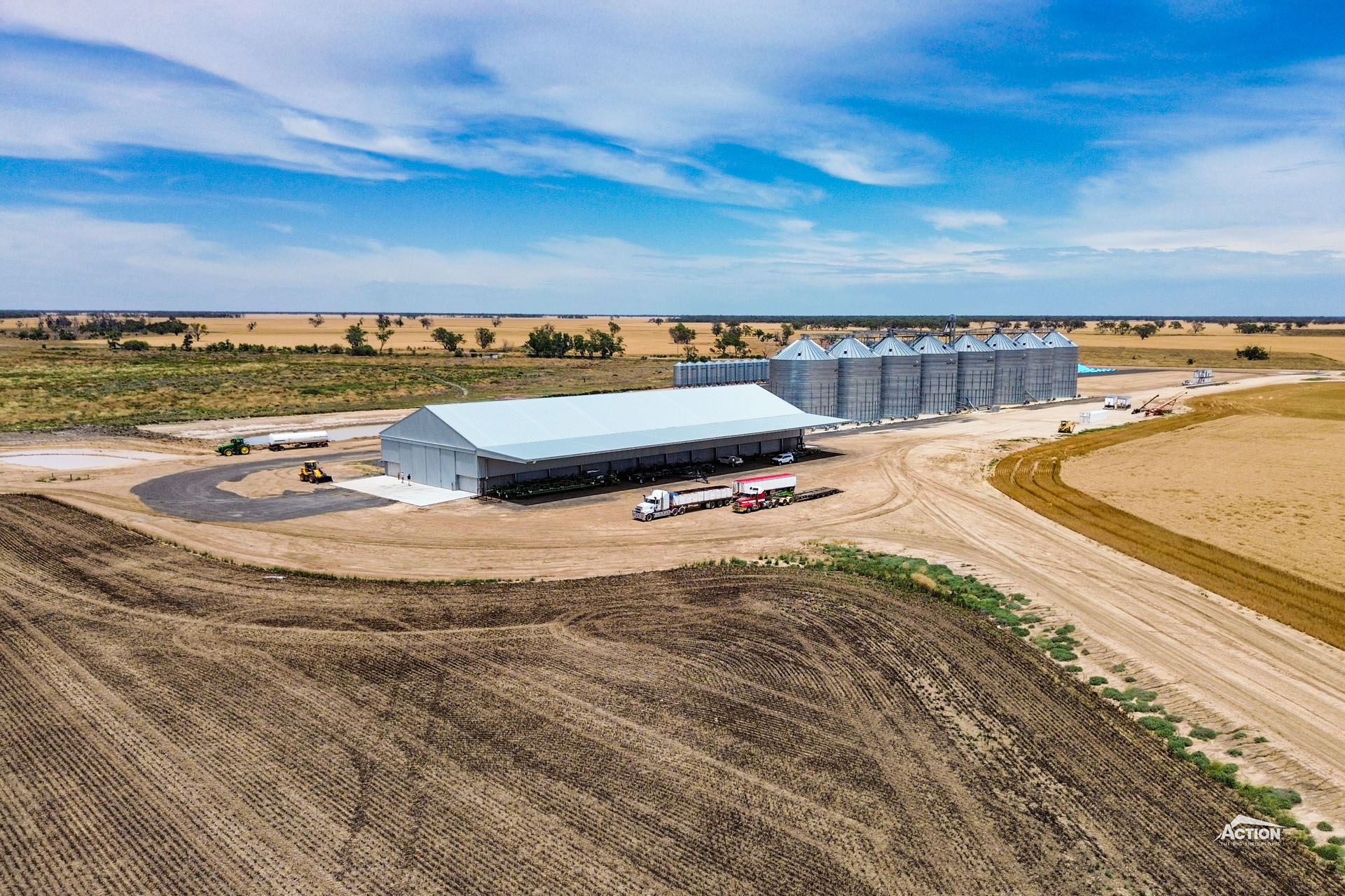
Not all grain storage is equal. A purpose-built grain shed designed for Australian broadacre conditions does several things that temporary or makeshift storage cannot.
Market flexibility
Grain stored on-farm can be held until market conditions are right. That flexibility has real dollar value, particularly in years where prices move significantly between harvest and the months that follow. It also allows growers to respond to domestic feed grain demand, milling premiums or export opportunities as they arise, rather than being locked into harvest-time pricing.
Quality protection
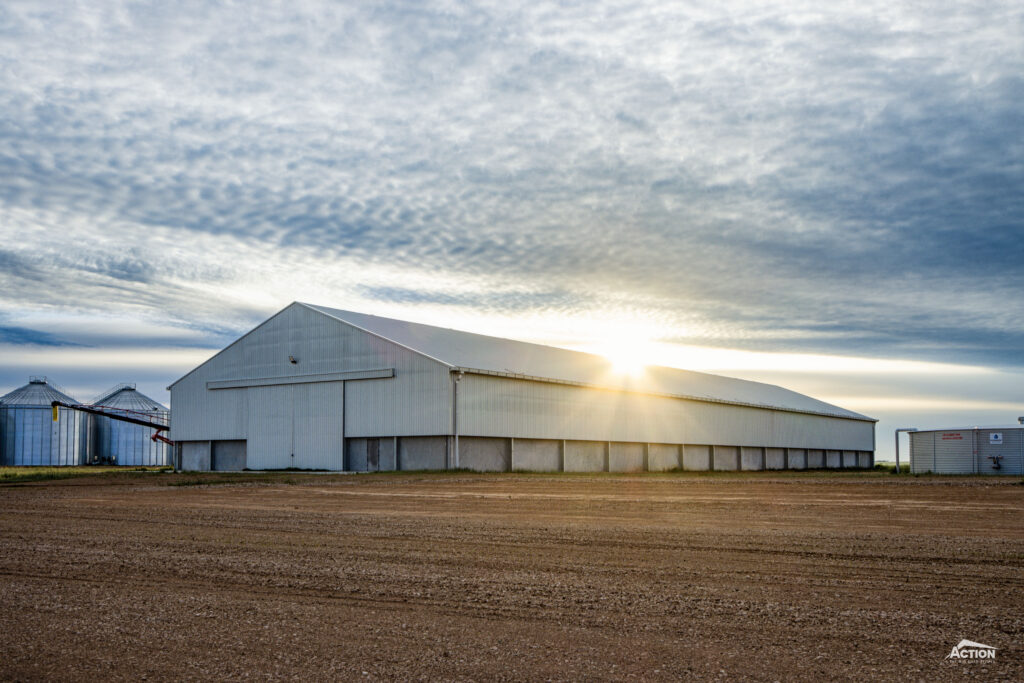
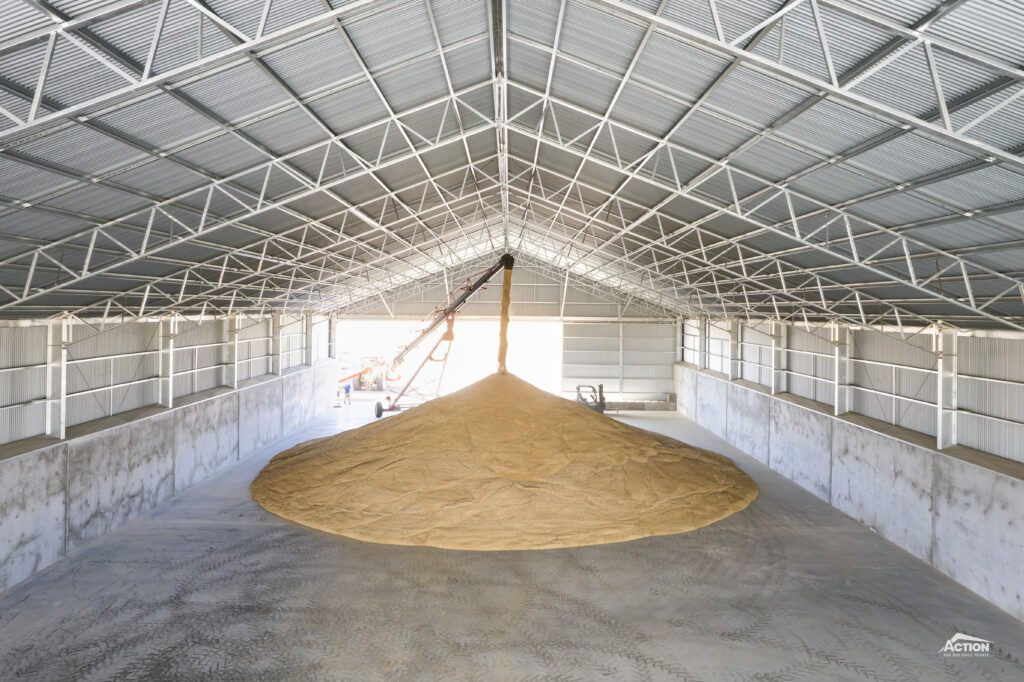
A well-designed grain shed protects grain from moisture, temperature fluctuation and pest pressure over the long term. Concrete wall construction, adequate ventilation and appropriate pest management are the key design elements that determine how well grain holds its grade in storage.
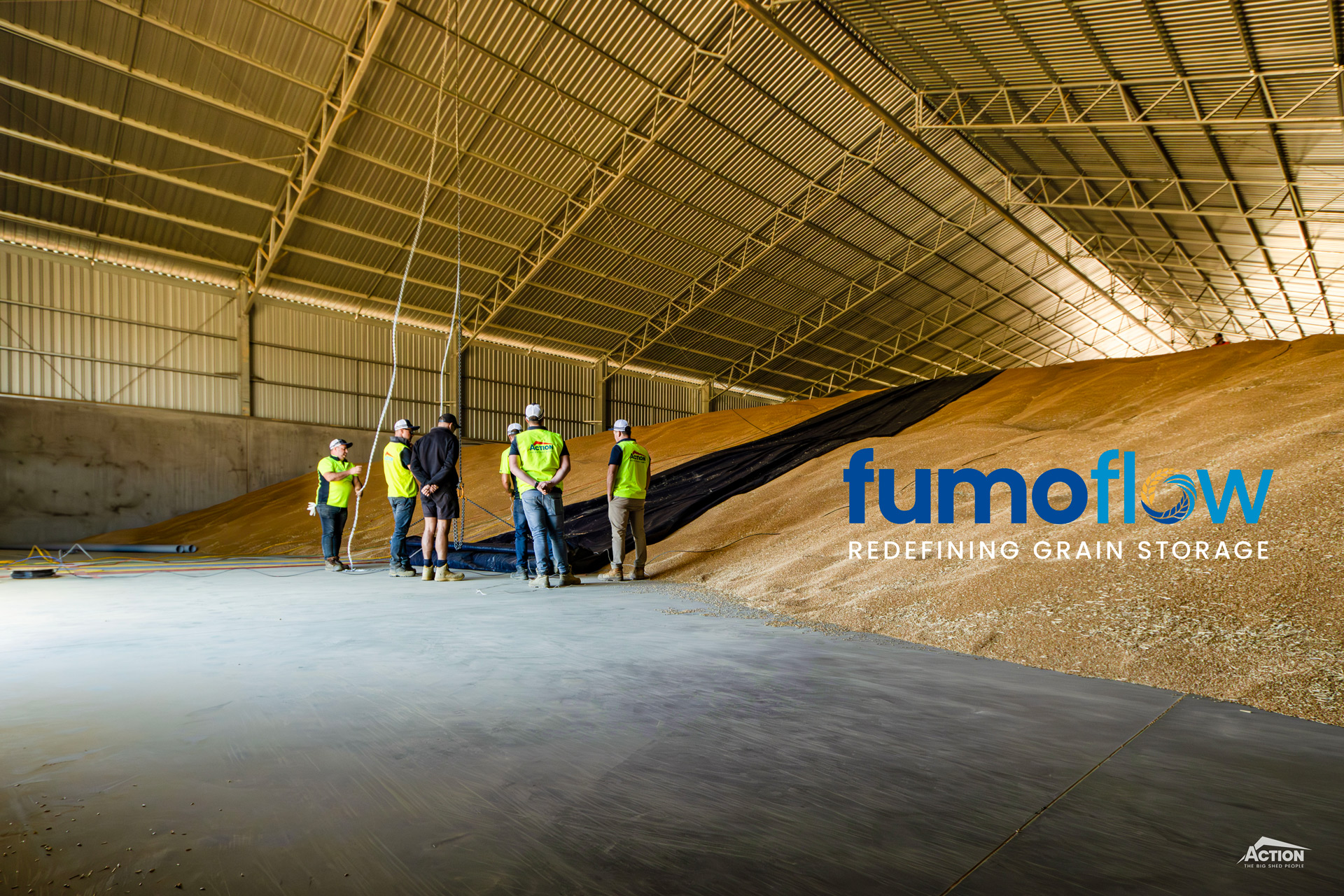
For growers producing milling wheat, malting barley, food-grade pulses or other high-value cereals destined for human consumption or malt markets, fumigation is an important part of maintaining grain quality and certification. Action Steel’s FumoFlow system integrates fumigation directly into the grain shed structure, delivering gas evenly across the full grain mass without the handling risks or coverage limitations of portable methods. If you are storing high-grade grain and quality certification matters to your market, it is worth considering from the design stage.
Harvest efficiency
On-farm storage speeds up harvest logistics. Grain can move off the header quickly and without relying on the availability of receival sites or road transport capacity. In a season where weather windows are tight, that operational flexibility can mean more tonnes off in better condition.
Asset value
A permanent grain shed adds to the capital value of the property and, unlike temporary storage options, is a long-life asset. Action Steel grain sheds carry a 30-plus year service life. The cost per tonne of storage over that period is typically lower than alternatives when the full picture is considered.
Versatility across the operation
A well-designed grain shed is not locked into a single use. The same structure can store multiple grain varieties or pulses in segregated bays, and in the off-season it can house machinery, fertiliser or other commodities. For mixed cropping and livestock operations, that flexibility across seasons adds genuine value beyond the core grain storage function.
Design decisions worth thinking through now
For growers who are seriously considering building in the next 12 months, the design stage is where the most important decisions get made. A few things worth having clear before you start:
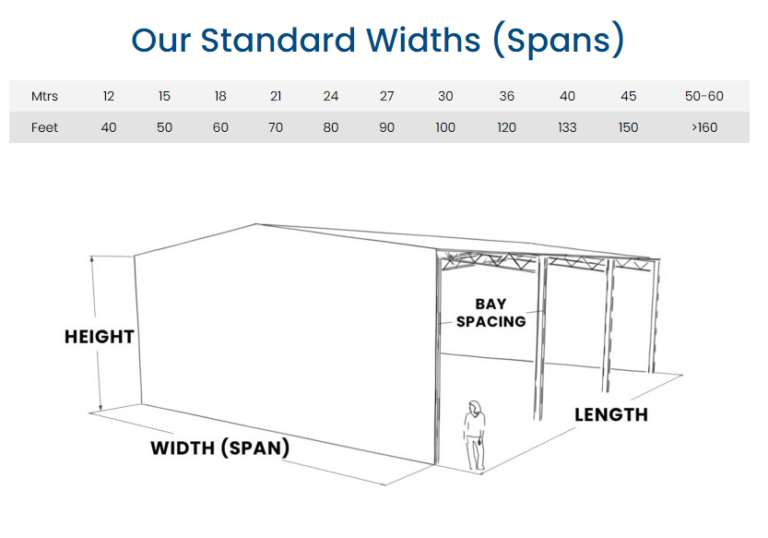
- Capacity: How many tonnes do you need to store, and is there room to expand the shed as the operation grows? Use the Action Steel grain storage calculator to work through your numbers.
- Wall configuration: Concrete panels, L-walls and steel cladding each suit different grain types and storage durations. See our guide to grain shed wall options.
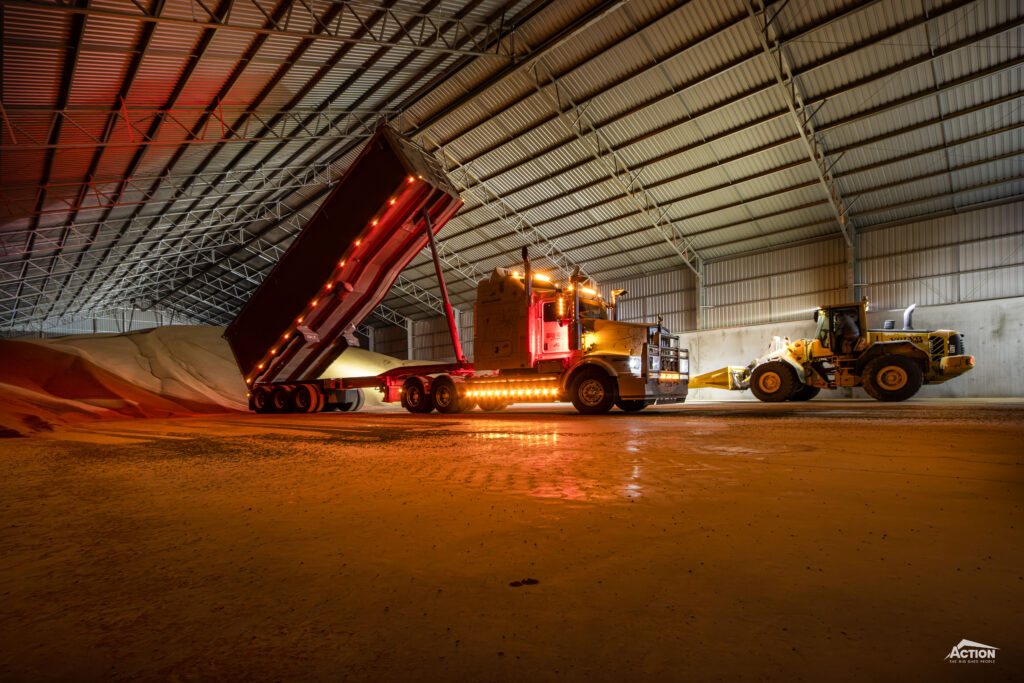
- Height and clearance: Does the shed need to accommodate truck tipping, front-end loader operation or grain auger access?
- Fumigation: If you are storing grain that needs treating, an integrated fumigation system like FumoFlow is worth factoring into the design. For feed grain, standard pest management practices are generally sufficient.
- Segregation: Do you need the ability to store multiple grain varieties or grades separately within the one structure?
For a deeper look at how to approach grain shed design, see our custom grain shed design guide.
Talking to Action Steel
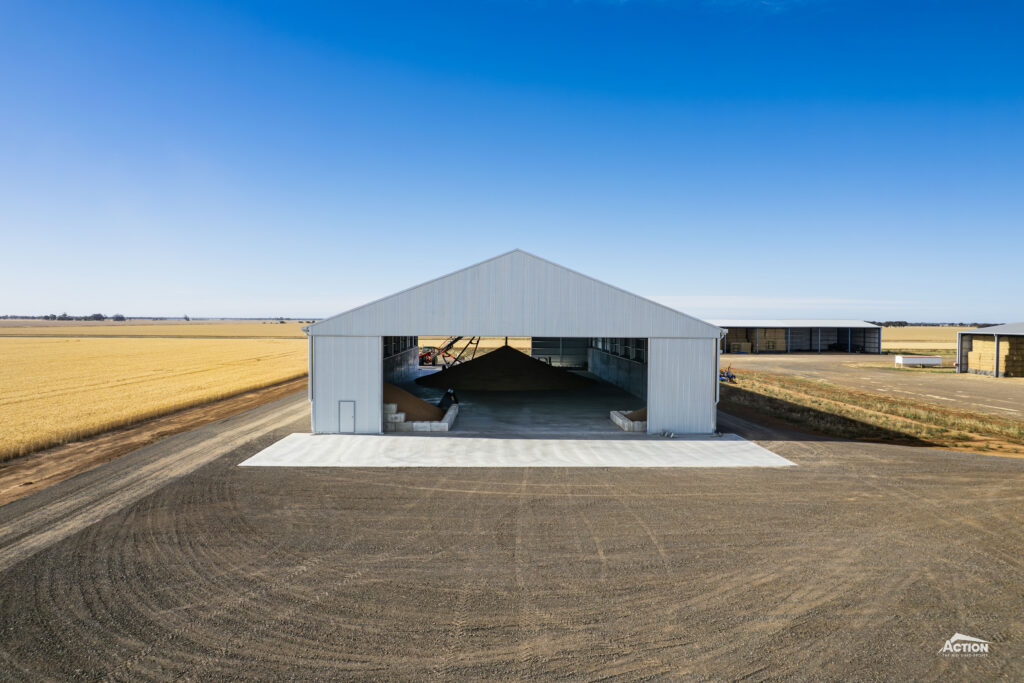
Action Steel designs and builds grain sheds across Victoria, New South Wales, Queensland, South Australia and Tasmania. We work exclusively with agricultural enterprises, and grain storage is one of our specialities.
If you are thinking about on-farm grain storage investment ahead of next season, now is a good time to start the conversation.
Call us on 1800 68 78 88 or check out our Grain Sheds page to find out more.