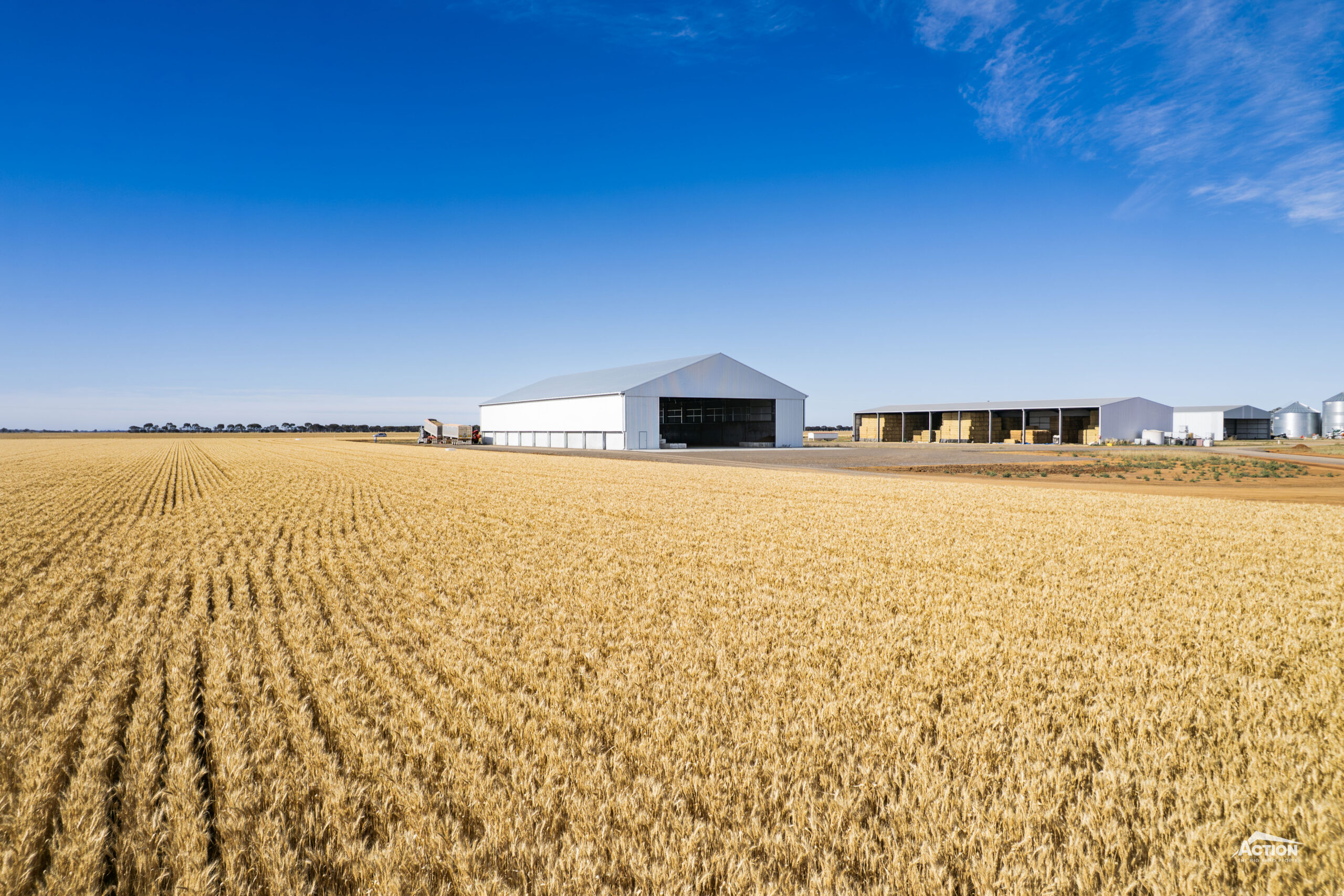
Once you’ve decided a grain shed is the right fit for your storage mix, the next question is which shed type suits your operation, and how it should be configured. From fully enclosed sheds through to open-front designs built for flexibility, here’s a rundown of the grain shed options worth weighing up before you lock in a design.
The Main Grain Shed Types to Consider
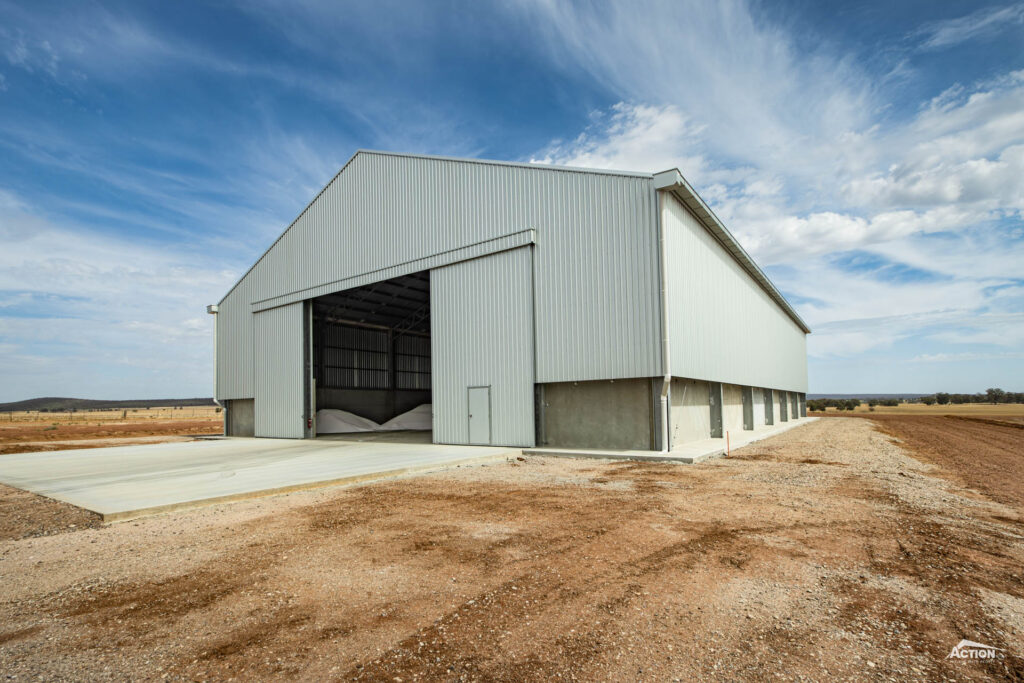
Fully enclosed shed:
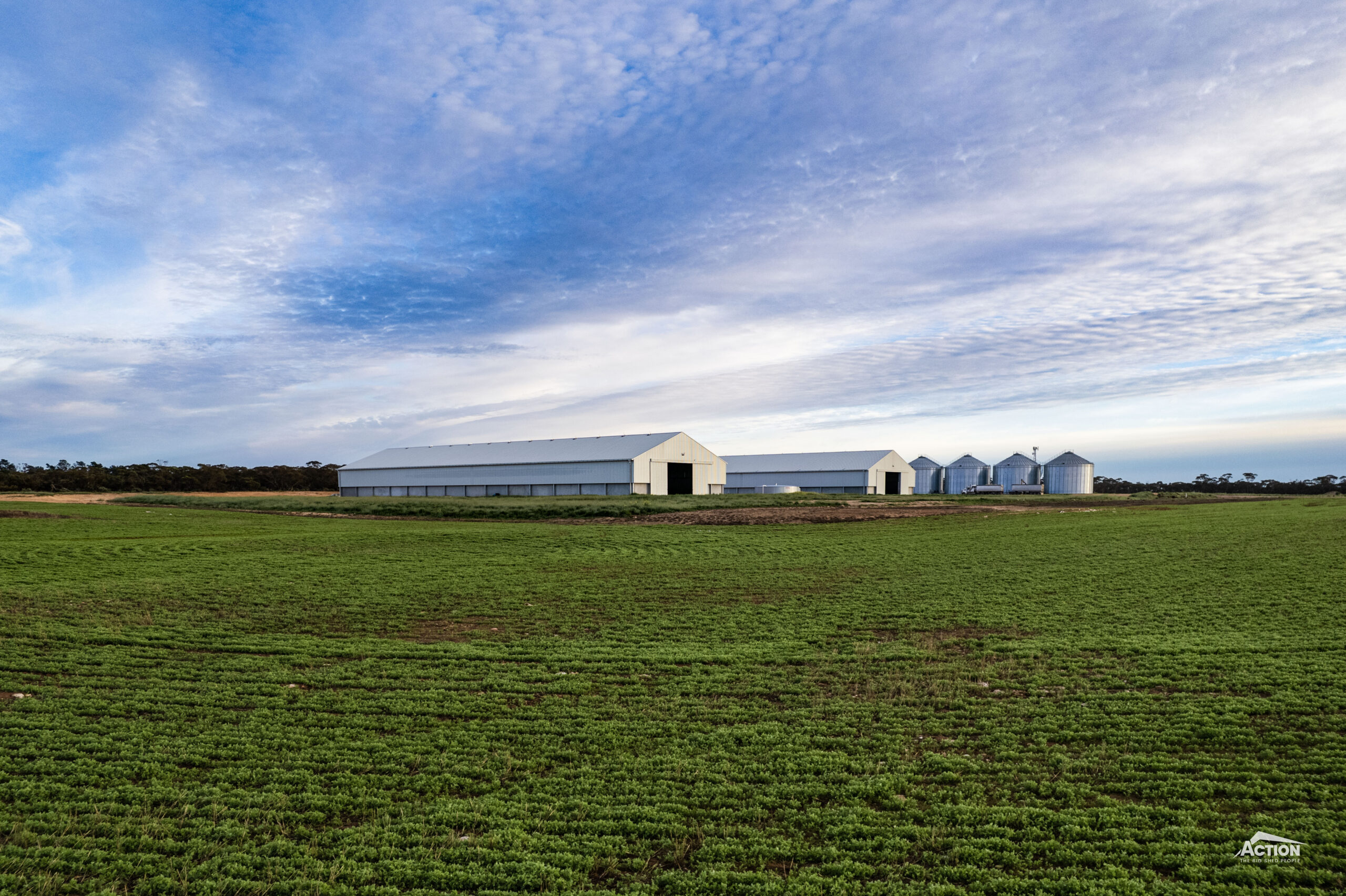
Built with concrete panels on all sides and a combination of sliding doors and a personal access door, this is the best-practice option for weather protection. It’s the right call if keeping grain fully sealed off from the elements is the priority.
Open-front, three-sided shed:
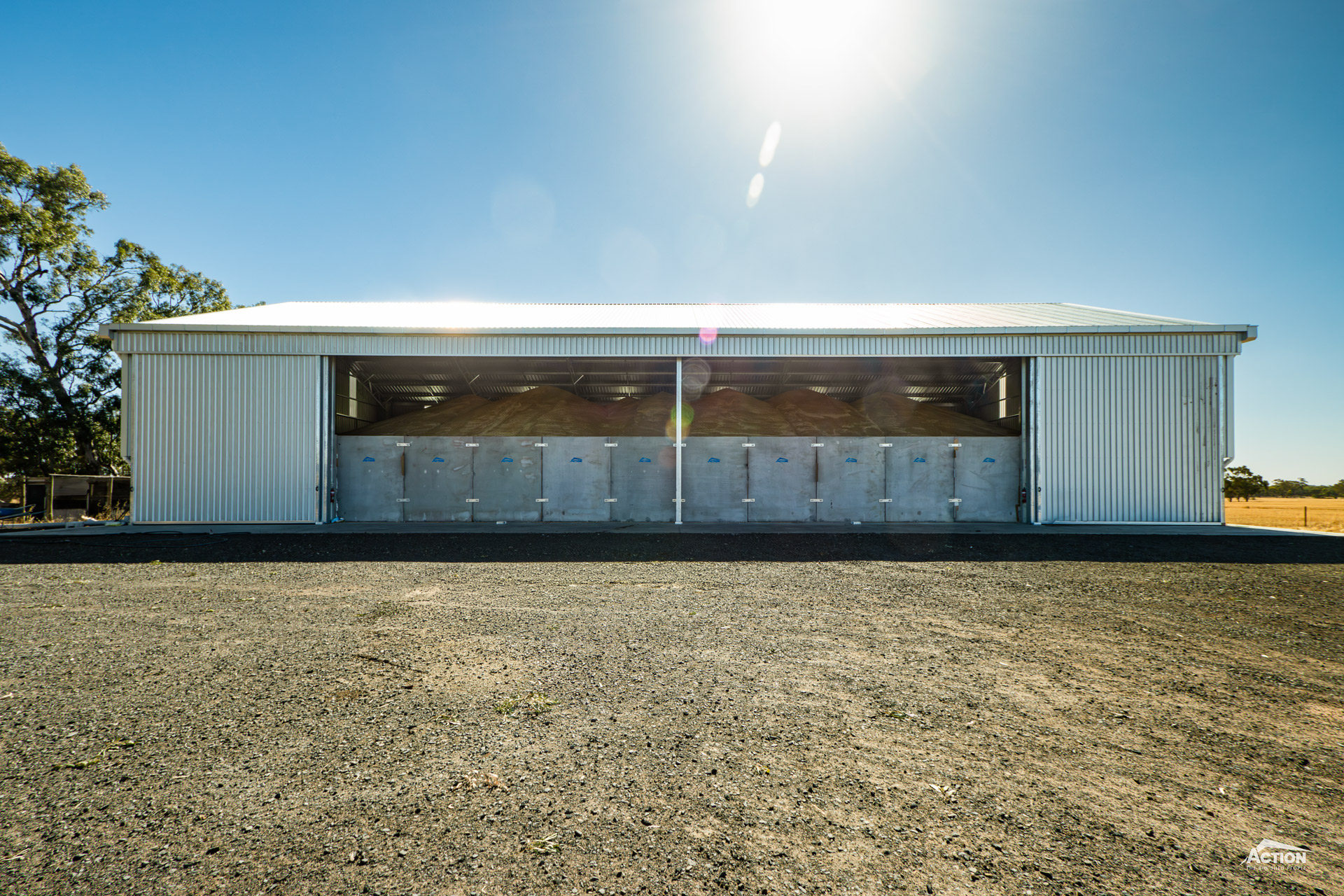
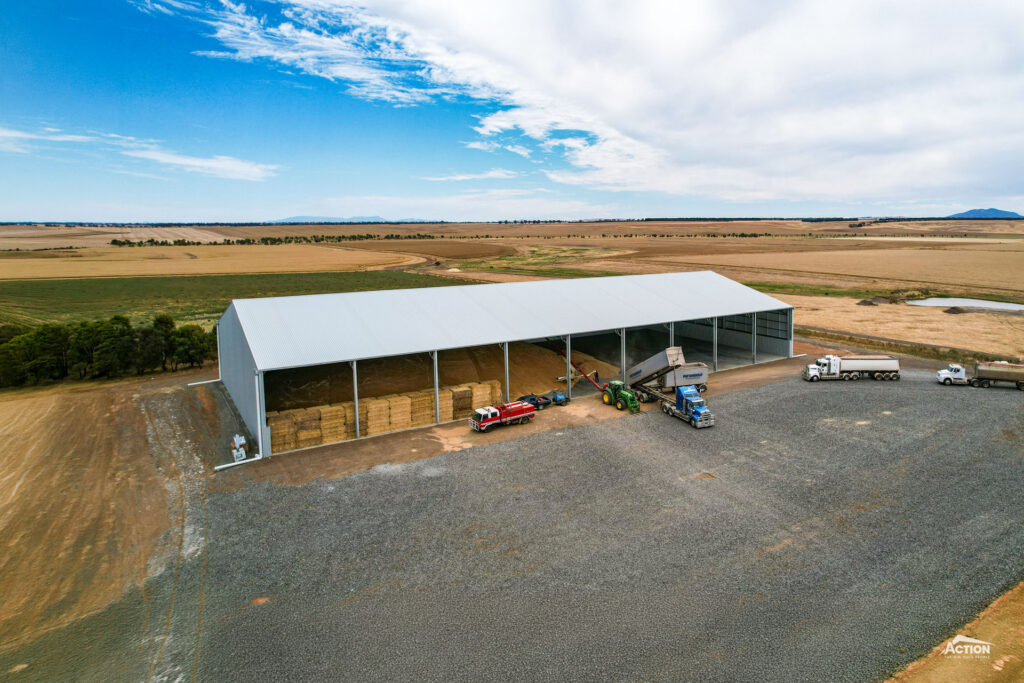
Also built with concrete panels but with one open gable end or open side, this is a genuinely popular option for farmers after extra flexibility.
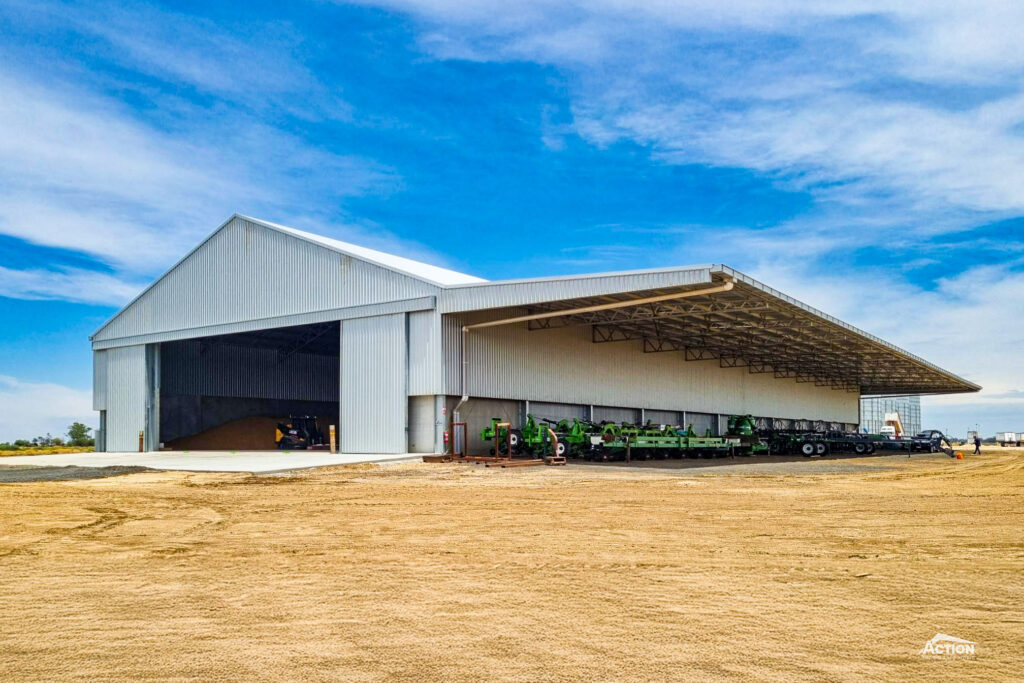
Built with three walls instead of being fully enclosed, this is also a cost-effective way to store grain. Many farmers are a fan of the versatility this shed also offers, using it for grain at harvest and machinery or fertiliser storage the rest of the year. If opting for an open side (instead of at the gable end), hay can also be stored in it, in the off season. See the image to the right >
Shed with a cantilevered canopy:
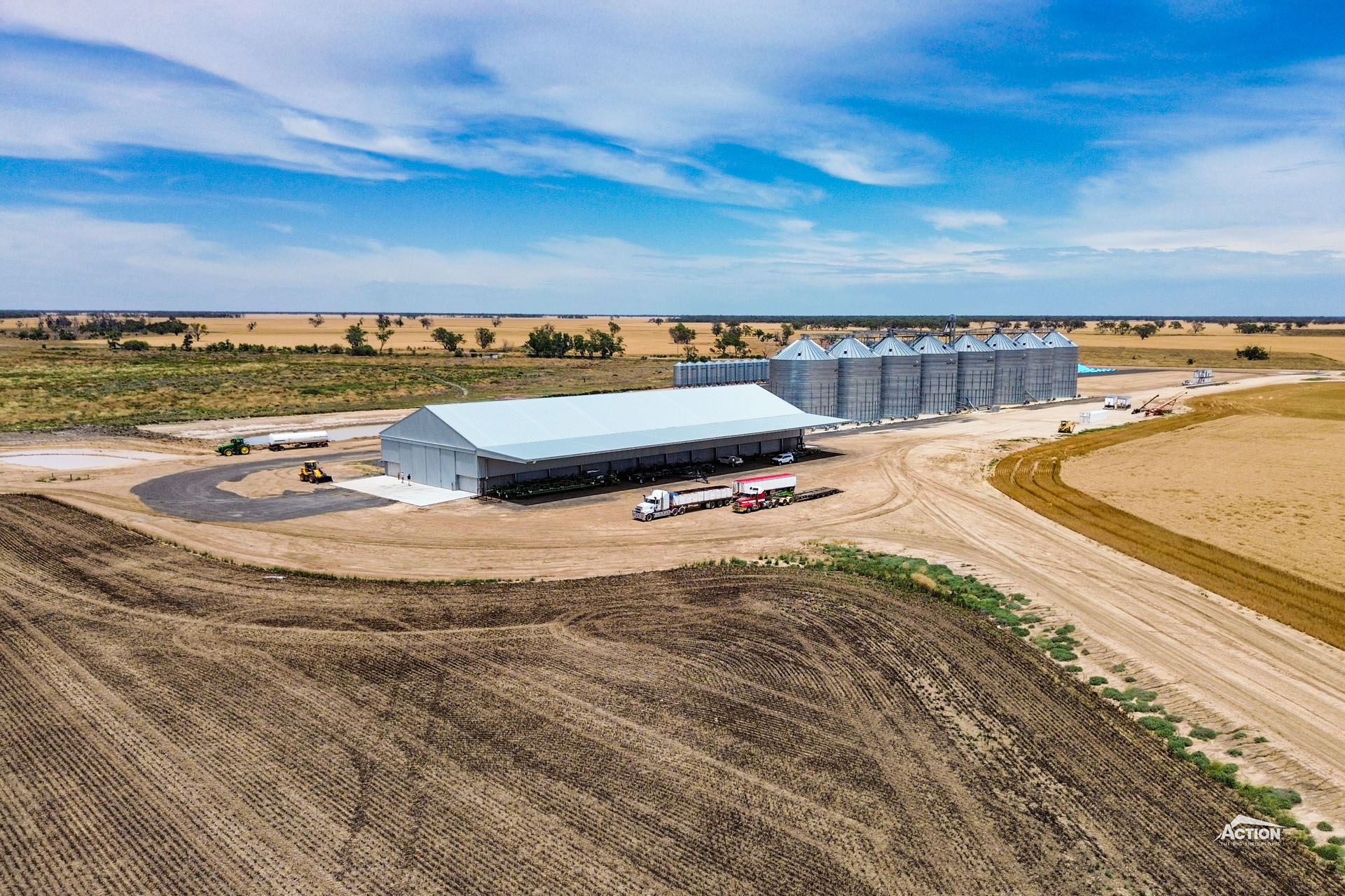
This adds an undercover area beyond the shed’s footprint, ideal for headers and b-doubles at harvest, and useful as extra machinery storage for the rest of the year.
FumoFlow:
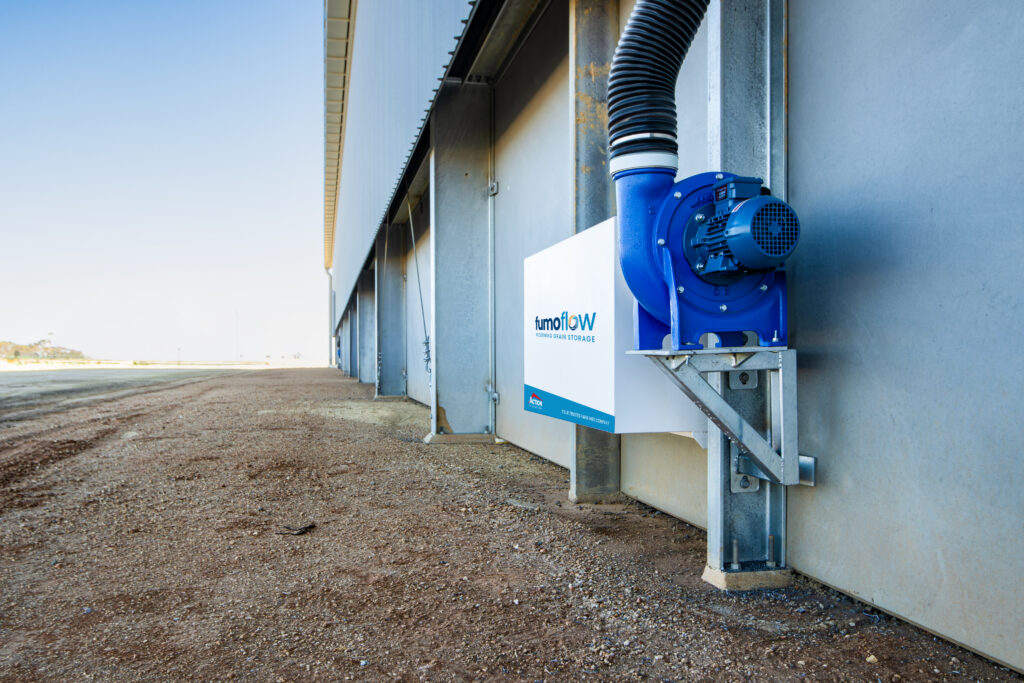
A purpose-built grain shed with active fumigation built in from the ground up, rather than retrofitted. We’ve covered this in more detail further down, as it’s worth a proper look if fumigation is a routine part of your operation.
Narrow and Long, or Wide and Short?
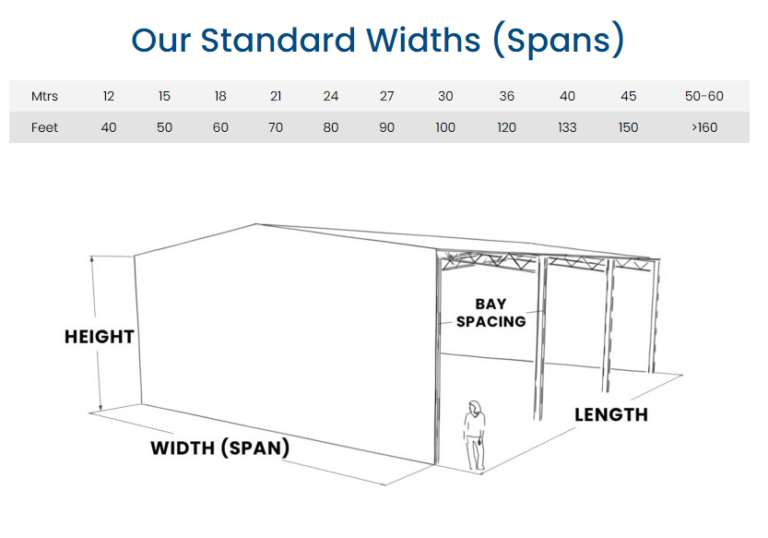
Narrower, longer sheds usually work out more cost-effective than wider, shorter ones. Increasing the length of a shed rather than the width is the most reliable way to add capacity and bring down the cost per tonne.
Standard span widths that work well for grain sheds include:
- 18 metres, suited to smaller scale storage
- 24 metres and 27 metres, suited to larger bulk storage facilities
A 27-metre span is a popular choice for large-scale sheds because it allows a truck to turn inside the shed. Standard, best-practice bay spacing is 6.5 metres, and adding bays is a straightforward way to bring the cost per tonne down further.
Height, Roof Pitch and Truck Access
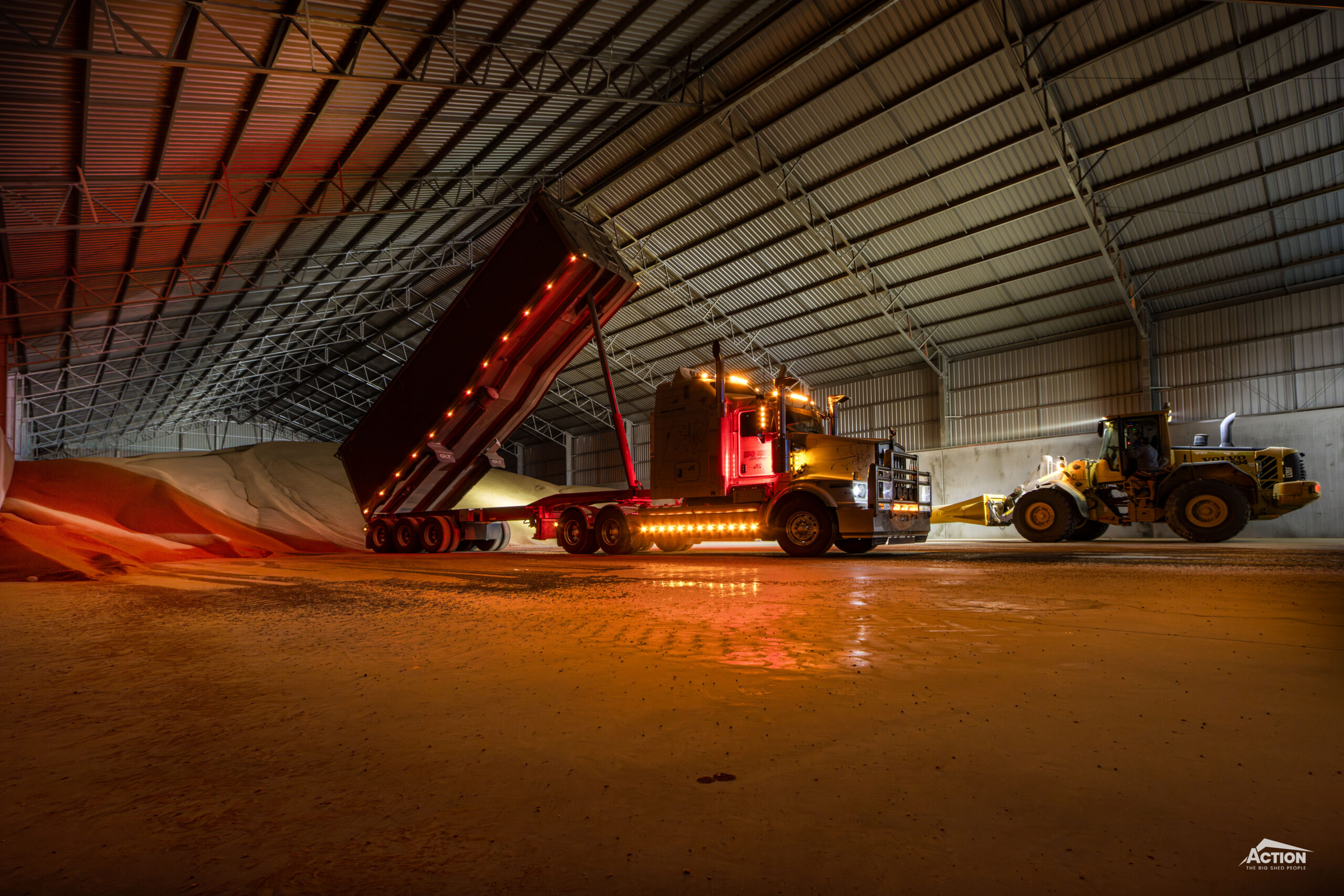
Height and roof pitch need to be considered together, since both affect truck access. A 21-degree roof pitch is generally recommended, as it accommodates the angle of repose of the grain and allows a truck to tip inside the shed. Popular grain shed heights are 7.5m, 8m and 9m, depending on your access requirements.
How you plan to load and unload the shed will shape a lot of these decisions. Doors on each gable end allow you to drive through and unload at both ends, which is efficient, but means paying close attention to turning circles, concrete aprons, shed height and roof pitch for tipping. Overhead loading systems are another option for making the most of your storage space, though this depends on the type of grain being handled and isn’t suited to pulses.
Concrete Panels, Slabs and Segregation
The best-practice grain shed design is fully enclosed with concrete panels. Common panel heights are 3m and 3.5m, with 3.5m usually the most cost-effective and functional option. For segregating different grain types within the one shed, movable L-walls are a popular option, typically 2.4m or 3m high. They add flexibility without reducing the shed’s overall capacity.
An 180mm to 200mm concrete slab is recommended for grain sheds to handle tipping, and an additional layer of reinforcing mesh may also be required depending on the project.
FumoFlow: The Grain Shed Option Built Around Fumigation
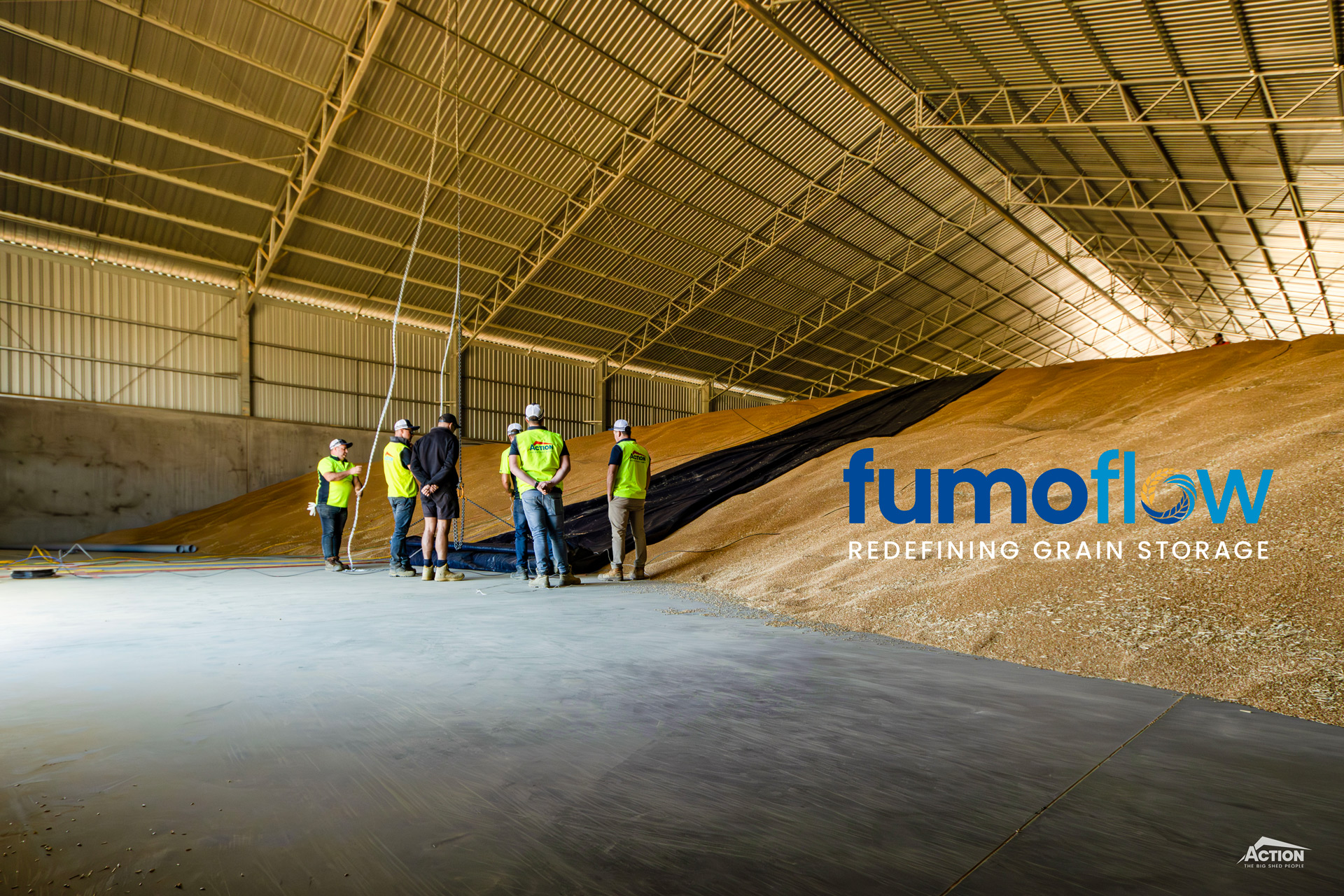
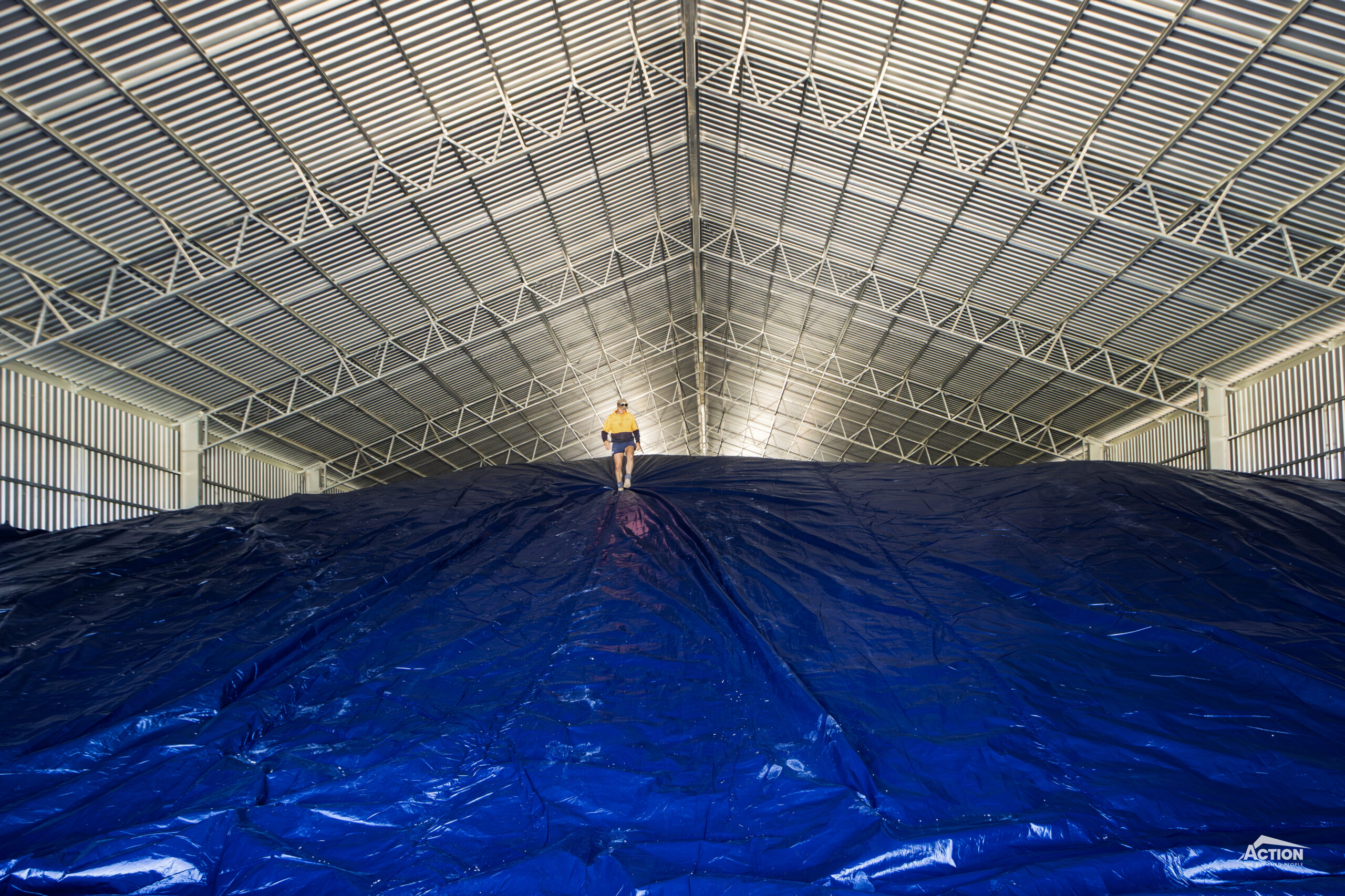
For growers who need to fumigate, FumoFlow is worth a proper look. It’s Action Steel’s patent-pending grain shed option with active fumigation built in from the ground up, not retrofitted onto a standard shed afterwards. A purpose-built tarp pulley system converts the shed into a fumigation cell, while built-in recirculation and ventilation move the fumigant evenly through the stack.
In practice, that means FumoFlow reaches the required concentration levels in around half the time of passive storage, with fewer dead spots where fumigant doesn’t reach. It also helps growers stay ahead of the new Workplace Exposure Limits (WEL) for phosphine, while still delivering everything you’d expect from a standard Action grain shed.
FumoFlow is best suited to growers storing higher-grade cereals and pulses, such as milling wheat, malting barley and food-grade pulses, where fumigation is a routine part of protecting grain quality. If that’s part of your operation, it’s a new and effective way to approach fumigation.
You can find out more, or download the FumoFlow brochure, at fumoflow.au.
Standard Inclusions Across the Range
Whichever configuration you land on, every Action grain shed is built on the same foundations: a heavy-duty, fully hot-dip galvanised frame that won’t need touch-ups down the track, a custom gutter system sized to the shed, and complete project management from initial design through to permits, manufacturing, installation and final sign-off.
Talk to Our Team
Every farm’s storage needs are different, and the right grain shed option for your operation depends on your grain type, volumes, machinery and site. Our building consultants can help you work through the options and land on a design that’s functional and cost-effective for your setup.
Call 1800 687 888 or visit the Contact Us page to request a quote.