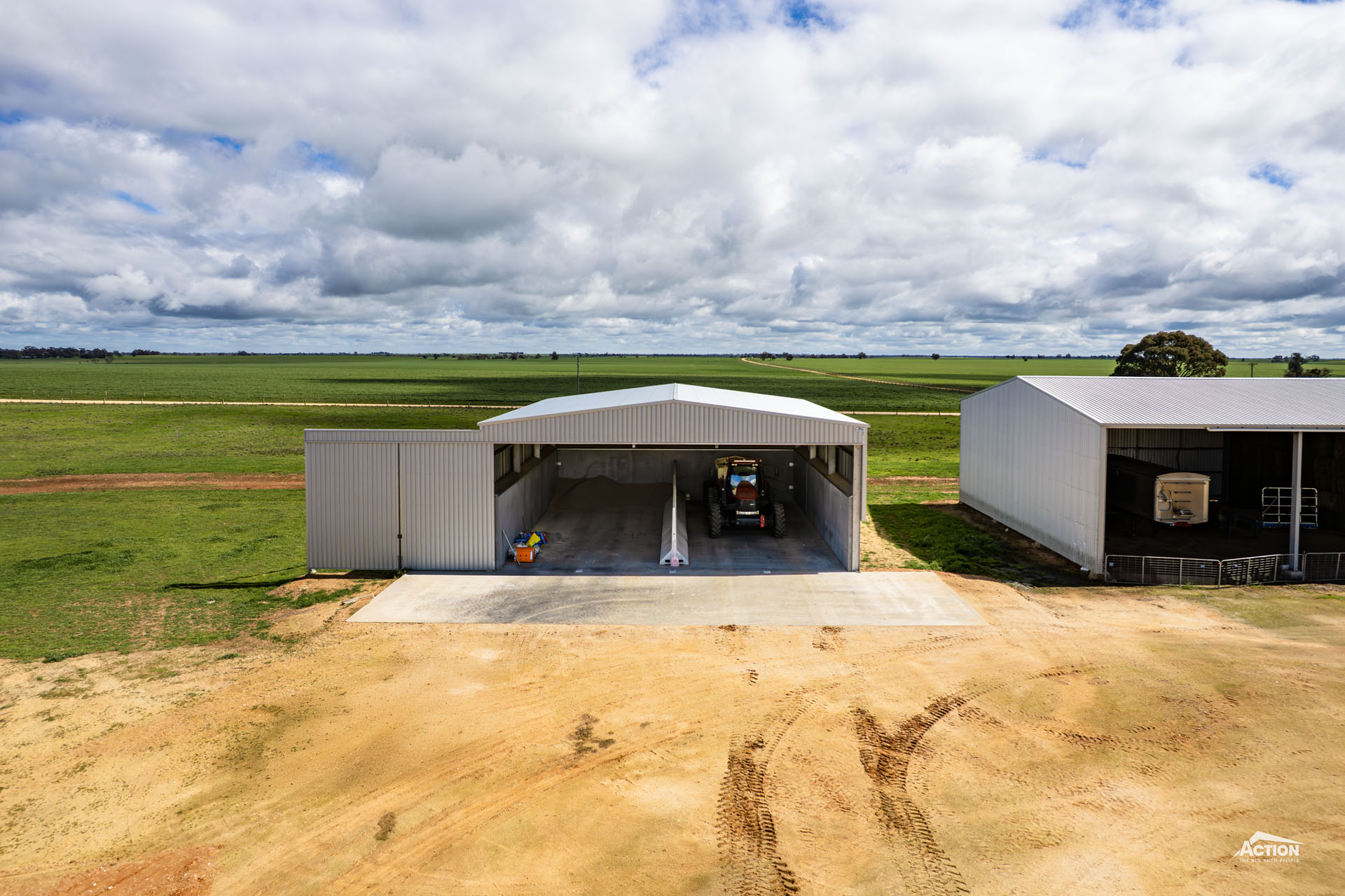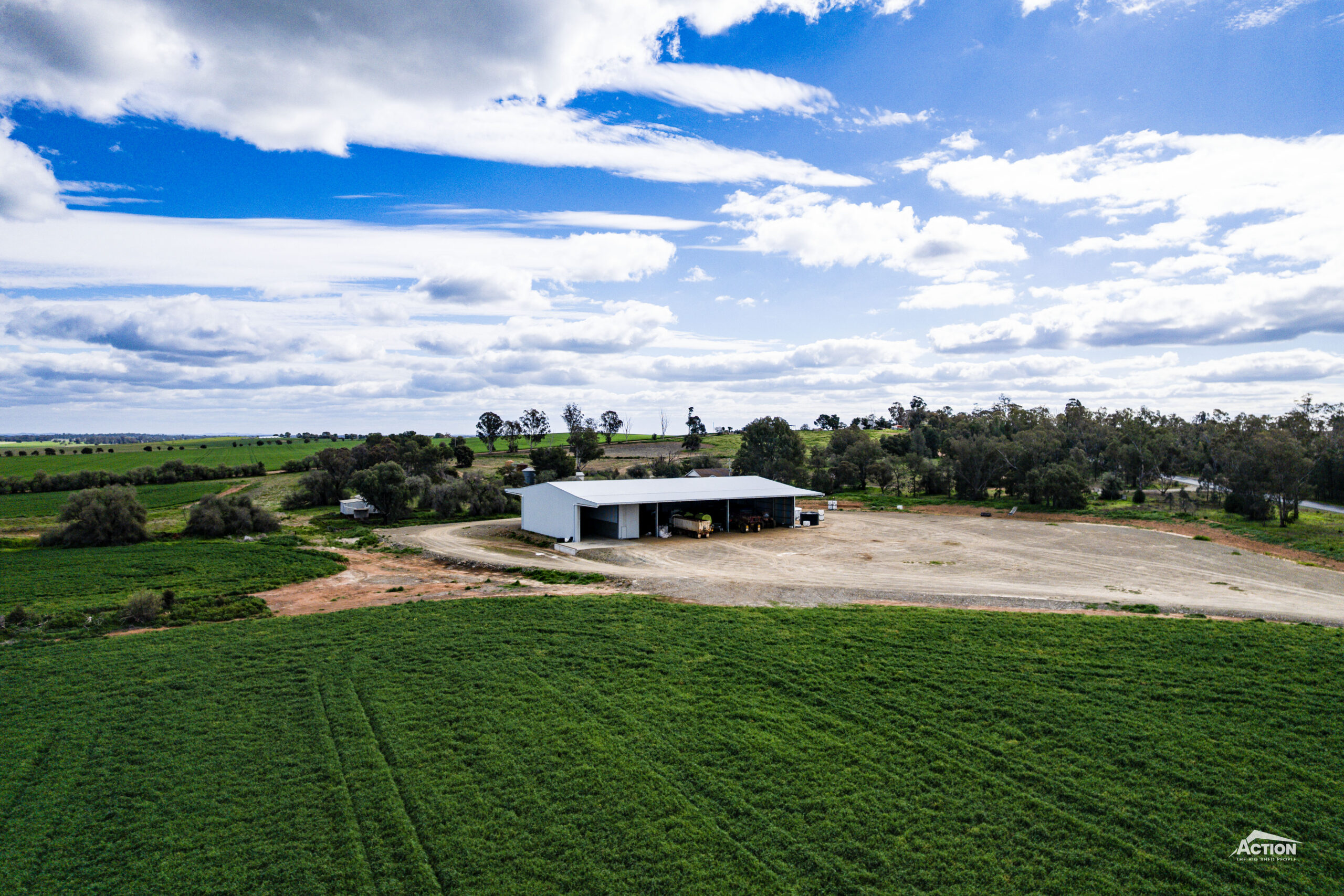
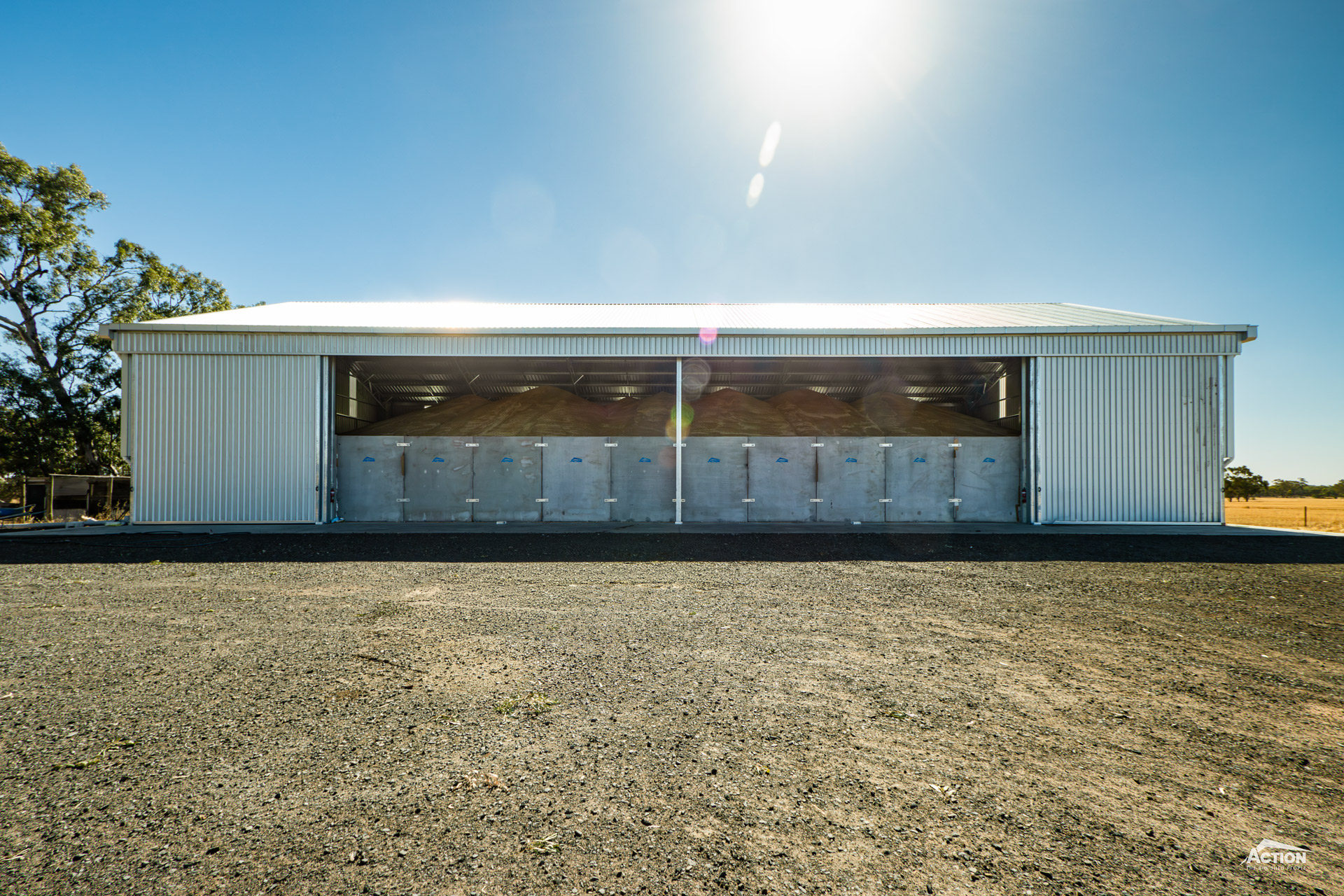
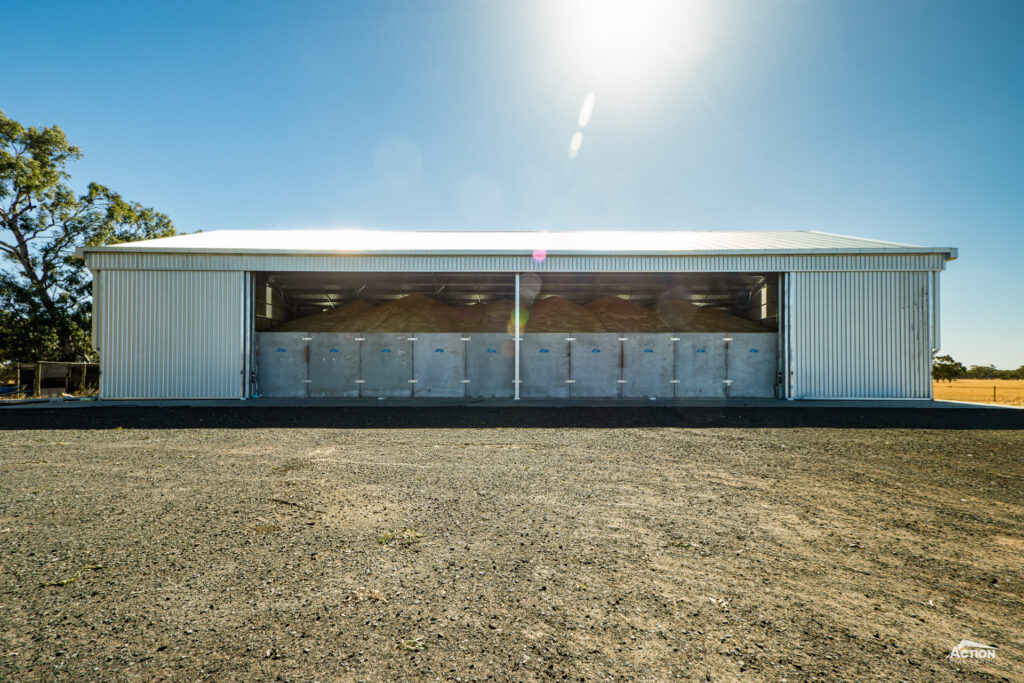
18m span grain shed with concrete L-Walls

Using Concrete L-Walls For Farm Storage – What You Need To Know

What are concrete L-walls? Can I use L-walls to segregate my shed? Are L-wall panels practical to install and move?

The growth of on-farm storage in recent years has been well documented, and investment in this area remains strong as growers reap the benefits of increased efficiency and profitability.

Value-for-money, return on investment, future-proofing, and flexibility are all topical when it comes to on-farm storage discussions, particularly as requirements change from season to season.

One way growers are achieving functional, cost-effective and versatile storage is starting with a bulk storage area and then using movable L-walls for segregation as required.

If you are considering a similar approach, this guide covers what you need to know, including:

  • What L-Walls are
  • How they work
  • Where they can be used
  • What’s involved in setting them up
  • How much they cost
  • And whether they’re right for your operation
18m span grain shed with concrete L-Walls

What You Need To Know About Using Concrete L-Walls For Farm Storage

We cover the finer details on Action L-wall panels, from sizing and pricing to inclusions and installation.

First up – what are L-Walls? 

What Are L-Walls?

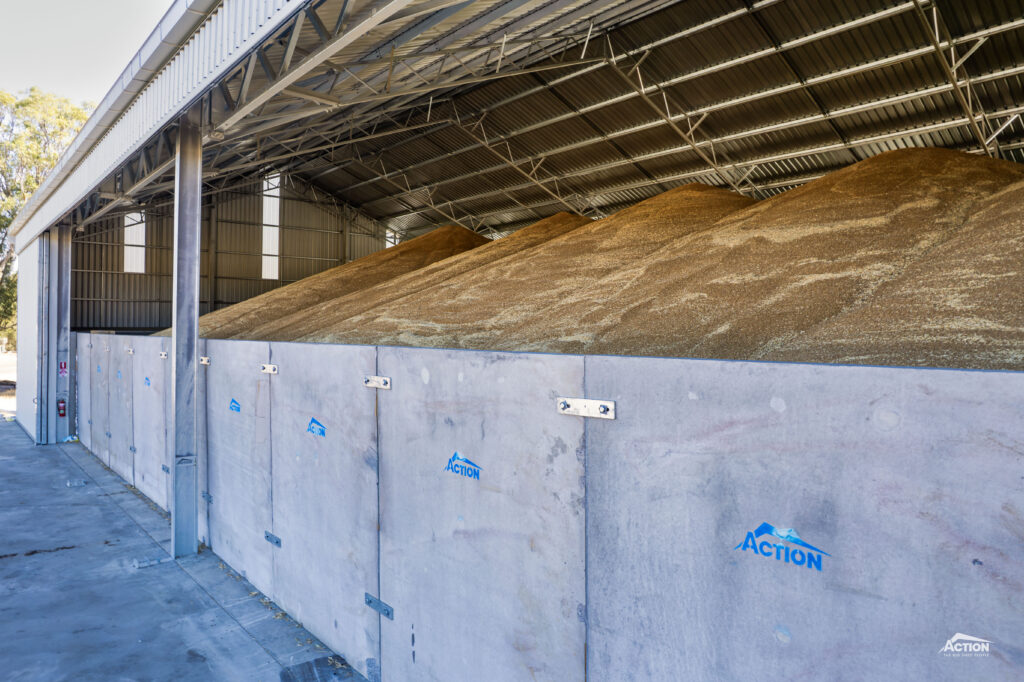
Concrete L-walls are precast reinforced concrete panels shaped like an “L”. 

The vertical section forms the wall face and the horizontal base, or foot, sits on a compact, stable pad or slab. 

L-walls can be placed side by side, bolted together and used as walls in sheds for fertiliser or grain storage. 

Does Action Manufacture L-Walls?

Yes, the Action concrete panel plant manufactures concrete L-walls from reinforced, durable 40 Mpa vibrated concrete. 

The walls are fully engineered, allowing them to be used for multiple purposes, such as grain storage or fertiliser segregation.

All sizing, inclusions and specifications outlined in this guide relate to Action L-walls.

“We had nothing to do with it (the shed build and panel install), which made the process very easy. The whole process was excellent.”

What Are Action L-Walls Made From?

Action L-walls are fully engineered and manufactured using reinforced 40 Mpa vibrated concrete. 

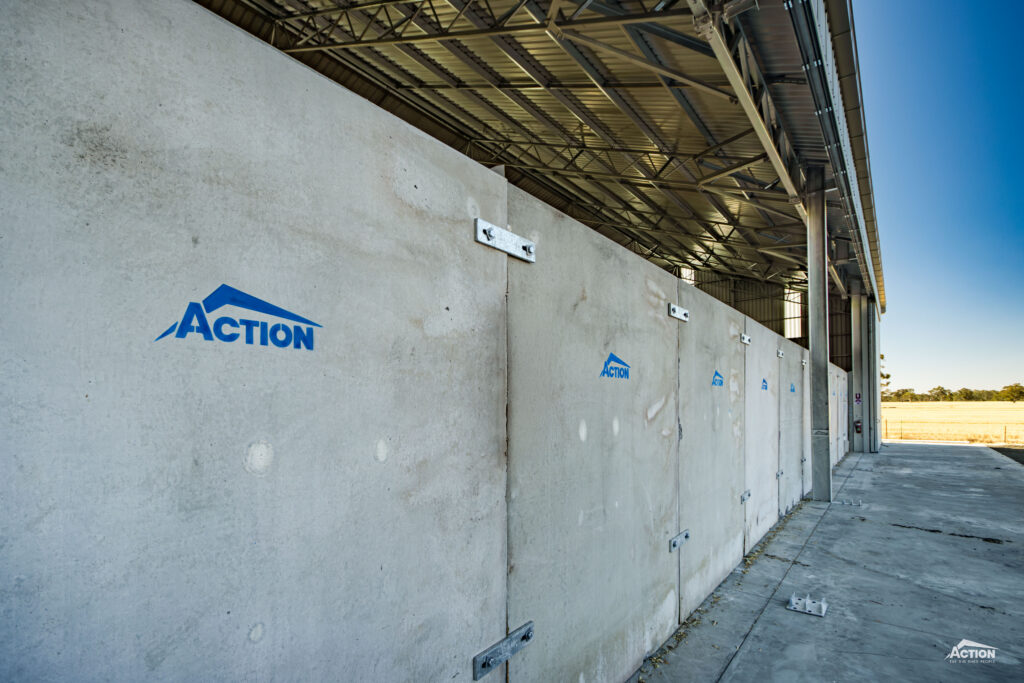
Each panel includes M20 cast in ferrules at four points – two on either side at the top of the panel, and two on either side at the base. 

These ferrules run all the way through the panel, allowing galvanised joining plates to be bolted together at either the front or back of the wall.

Action Concrete L-walls
Action Steel Concrete panels

What Is Included In An Action L-Wall?

Each Action L-wall includes:

  • Two mushroom pin lifting points positioned ~ 500mm from the top of the panel
  • Lifting clutches (Two lifting clutches are supplied on loan with every L-wall delivery and are available for purchase for future L-wall relocating and positioning )
  • Four M20 cast-in ferrules
  • Galvanized joining plates and bolts 

Corner brackets are also available if you are using the L-walls in a corner position.

Slings, hooks and other accessories are also available for purchase if required.

“The things we wanted in the shed were able to be incorporated as part of the build, not as an add on later ... the concrete slab and the panels. That's a one stop shop."

John-Bennett
John Bennett
Tulkara VIC

 How Do L-Walls Work?

Concrete L-walls are designed to be self-supporting.

As the product or material is loaded against the wall face, the retained weight bears down onto the base.

So, the higher up the face the product sits, the more the load is transferred onto the foot, supporting the weight against the face and increasing stability.

The walls sit on a compact level base with no footings or concreting required. 

Once panels are positioned, bolted and sealed, they can be backfilled immediately. 

What Are The Benefits Of L-Walls?

Concrete L-walls are popular for grain and fertiliser sheds because they allow you to segregate storage space without permanently reducing capacity.

Other benefits of L-walls include:

  • Flexible layouts such as side walls, corners or segregated bays
  • Multiple uses such as grain, fertiliser, cottonseed or almond hulls
  • Quick and easy installation with no permanent footings 
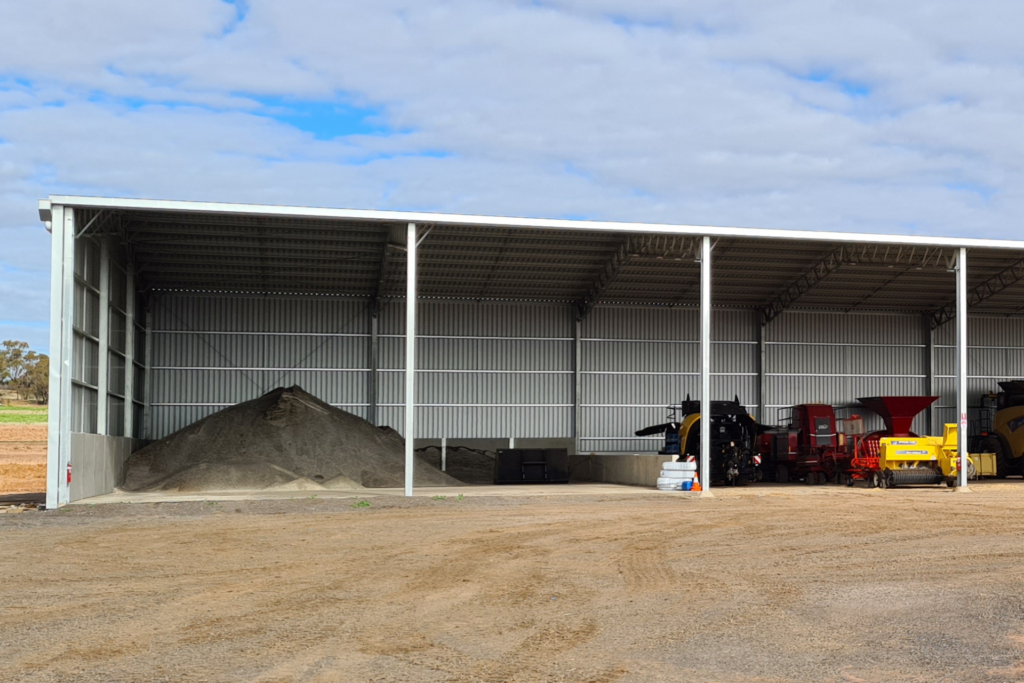
  • Make use of existing shed infrastructure, such as a machinery shed. 

What Can I Use My L-Walls For?

For cropping enterprises, L-walls are most commonly used as movable segregation in fertiliser sheds or grain sheds. 

For example, segregate fertiliser without permanently reducing the shed capacity. You can also adjust the layout from season to season. 

However, they are not limited to that; they can also be used for:

  • Retaining walls
  • Silage Pits
  • Bunkers for silage and fodder
  • Storage walls for almond hulls, gravel, sand or wood chips
  • Waste recycling
concrete panel prices projects gallery

What Size L-Walls Are Available?

The most popular Action concrete L-wall size is 3m (H) x 2.4m (L) x 1.5m (base/foot) , which weigh ~ 4,000 kg/each. 

There are other sizes available for Action L-walls, such as :

  • Height: 1000mm – 3000mm
  • Foot: 1000mm – 1500mm
  • Width: 1000mm – 2400mm

The best size for your operation will depend on factors like product type and shed space. 

How Do I Set Up My L-Walls?

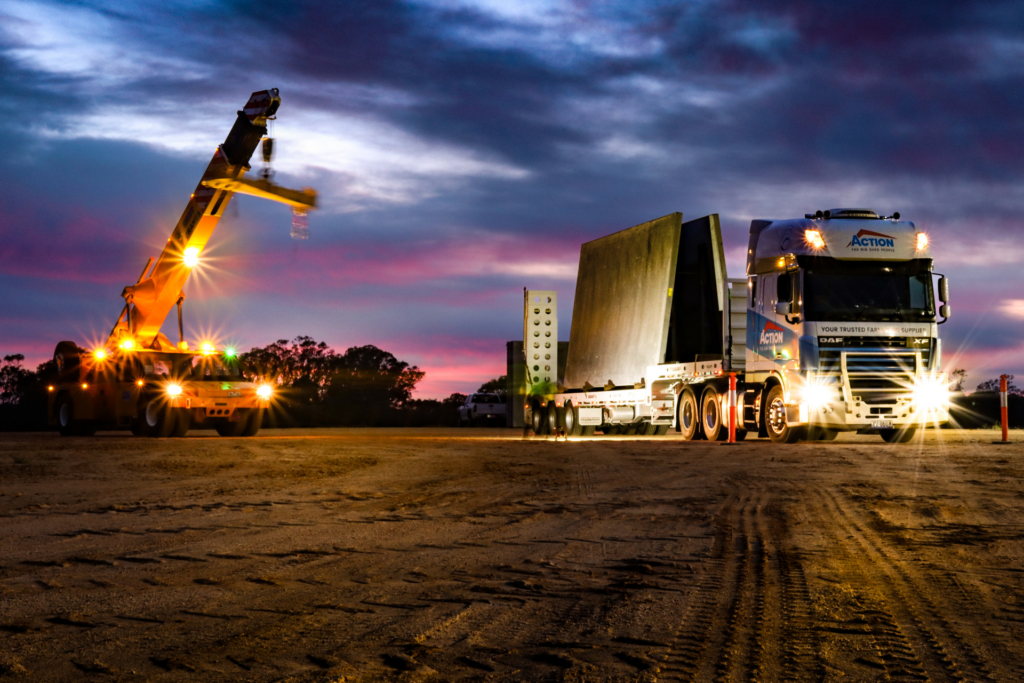
Panels are delivered upright on a truck, and with panels weighing up to 4,000 kg each, suitable lifting equipment is required.

You will need either a forklift or a telehandler capable of lifting from tray height, or a crane or suitable excavator

Keep in mind that the telehandler’s lifting capacity reduces if the boom is extended.

Each wall includes two lifting points positioned approximately 500 mm from the top, mushroom pin type anchors, and supplied lifting clutches

Soft slings or chain slings will be required to attach to the clutches, and the length must be more than the distance to the wall (a minimum of two metres).

Before lifting:

  • Ensure knuckles sit under the pin head

  • The open side faces away from the pin

  • The latch is secure

Then, lift gently and reverse slowly into position.

To protect edges, place panels onto loose sand, timber blocks or rubber during positioning.

Panels should be butted tightly together before bolting.

What If There Is A Gap Between Panels?

Butt the walls together as closely as possible before bolting. 

If there is still a notable gap between the walls, they can be sealed with either builders’ plastic or a polyurethane sealant to avoid spillage. Here’s how: 

  • Lay a sheet of builders’ plastic film on the inside face down the full length of the gap.  Ensure the plastic is firmly secured at the top and overlaps the join.

Or,

  • Seal the join with a polyurethane sealant down the full length of the join.

For corners, use corner brackets and either sealing method to remove gaps. 

Do I Need To Prepare A Site?

Yes, a level, properly compacted base is recommended for the panels to join together with minimal gaps. 

How Soon Can I Use My L-Walls?

Concrete L-walls can be used immediately after being placed into position, bolted and sealed. 

How Do I Move My L-Walls?

One of the advantages of concrete L-walls is that they can be moved around depending on your requirements.

Simply unbolt, lift, reposition and seal. 

This makes them ideal for operations where storage needs may change over time.

L-Walls Versus Permanent Walls

Which should I choose?

L-walls are a smart way to segregate because they don’t permanently reduce the shed capacity, providing much more flexibility in how you use the shed. 

Permanent segregation often works well in dedicated fertiliser sheds for large cropping enterprises.

However, it is important to have a clear understanding of how your fertiliser usage may evolve over the years before committing to this design. 

And while permanent segregation still has its place, particularly if you need strict segregation between products, it is becoming less common in grain shed designs – a trend we expect to continue. 

Segregated Fertiliser storage shed

How Much Do L-Walls Cost?

Price is always an important consideration. 

As a guide, the 3m x 2.4m x 1.5m L-walls generally cost approx. $2,400 including GST – however, this does depend on factors like location and inclusions. 

Please note that this is a price guide and is intended only for budgeting; it does not take the place of a formal quote. 

That’s a wrap on concrete L-walls! Talk to the team about your storage requirements on 1800 687 888. 

Share this article!

Like this article?

Here’s a few more that might interest you.