A Standard 1500 tonne fertiliser shed is becoming a popular size, providing cost-effective and flexible storage. But what design is best? This recently completed project is worth taking a look at.
Fertiliser sheds continue to be popular projects and smart investments for cropping enterprises of all sizes, from large corporate set-ups to mixed farming operations.
The Action Standard Fertiliser Shed Range has proved to be a strong starting point for cost-effective and practical fertiliser storage. (The range has been recently expanded to include 200-tonne and 400-tonne designs for smaller-scale storage.)
These standard designs are easily customised, and tweaking them to accommodate your storage requirements is proving to be a smart move.
In this article, we look at one of the 1500 tonne designs from the standard range – why the design works, whether it’s the right choice for you and other options you could consider.
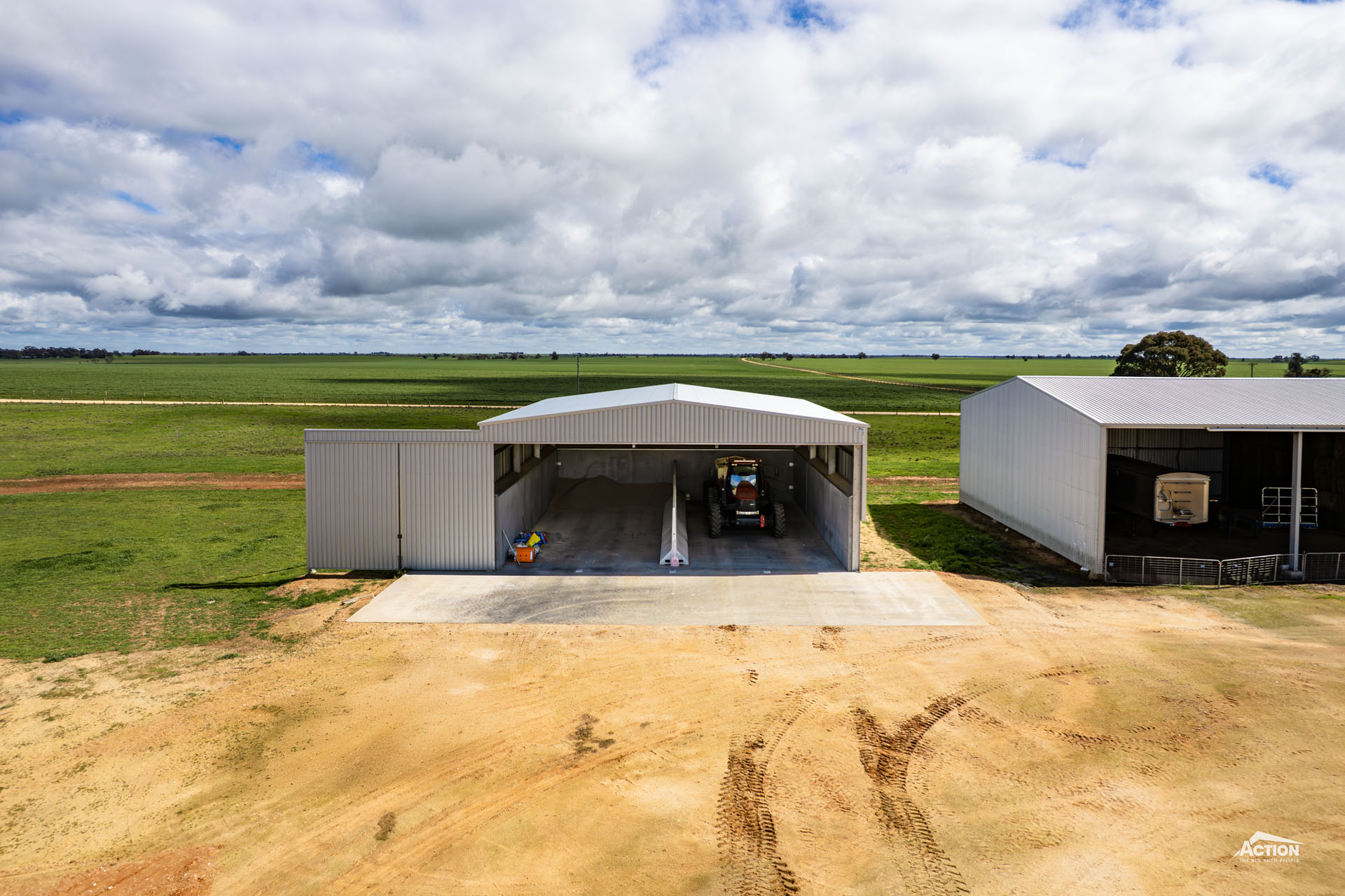
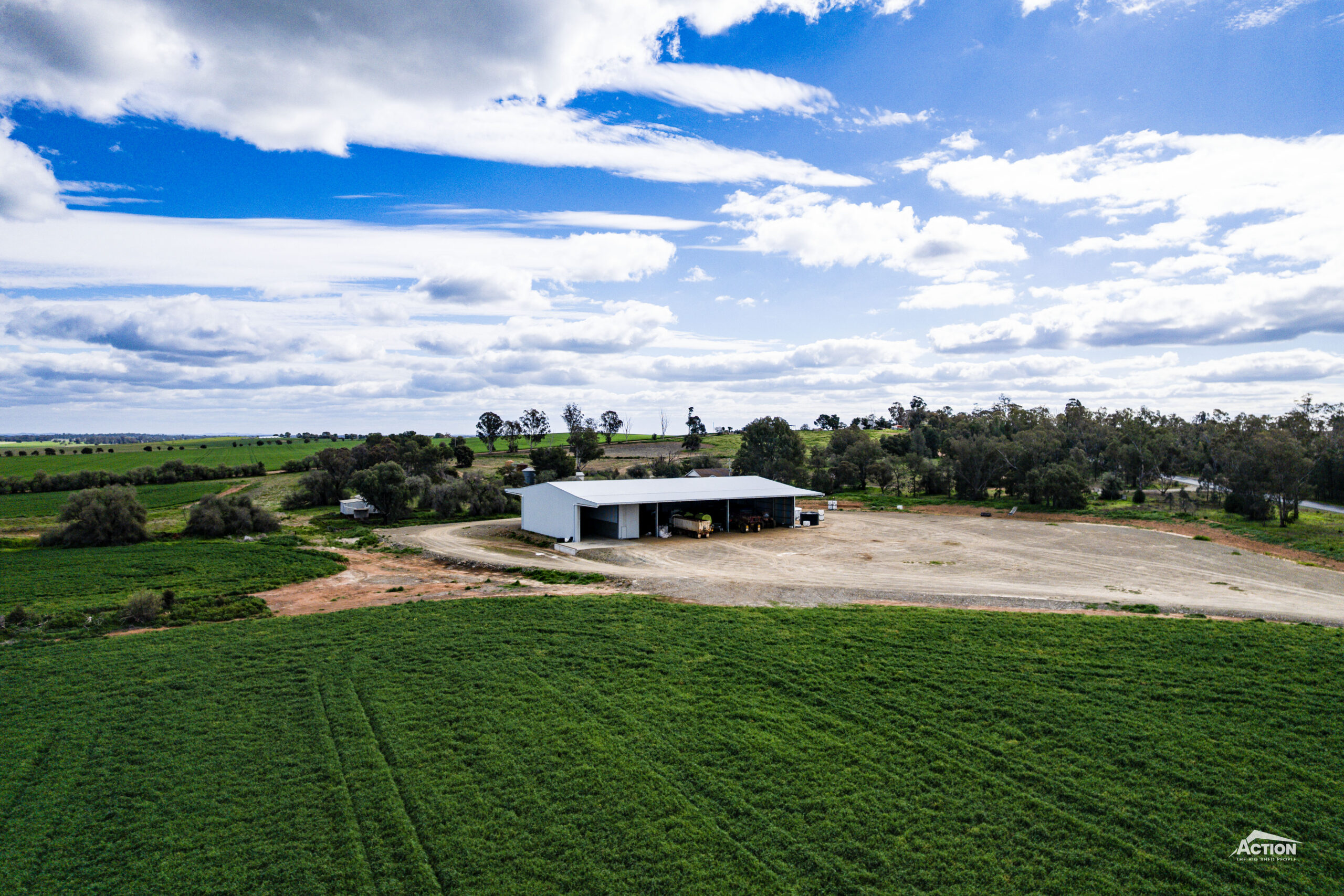
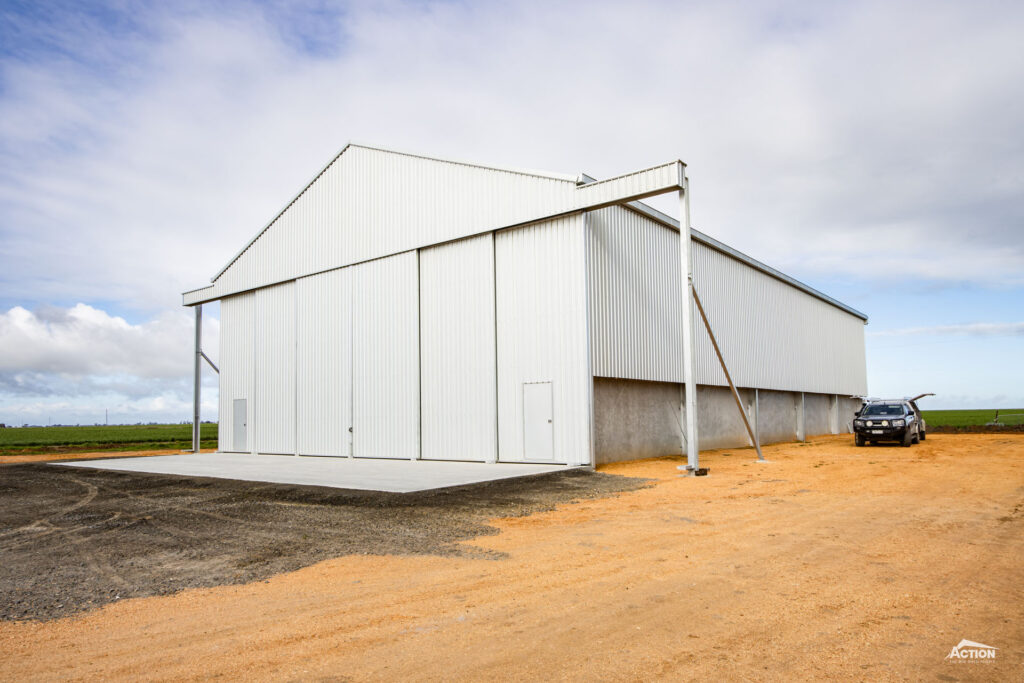
Let’s take a look at the 1500 tonne fertiliser shed at Laen in the Wimmera region of Victoria.
Project Overview
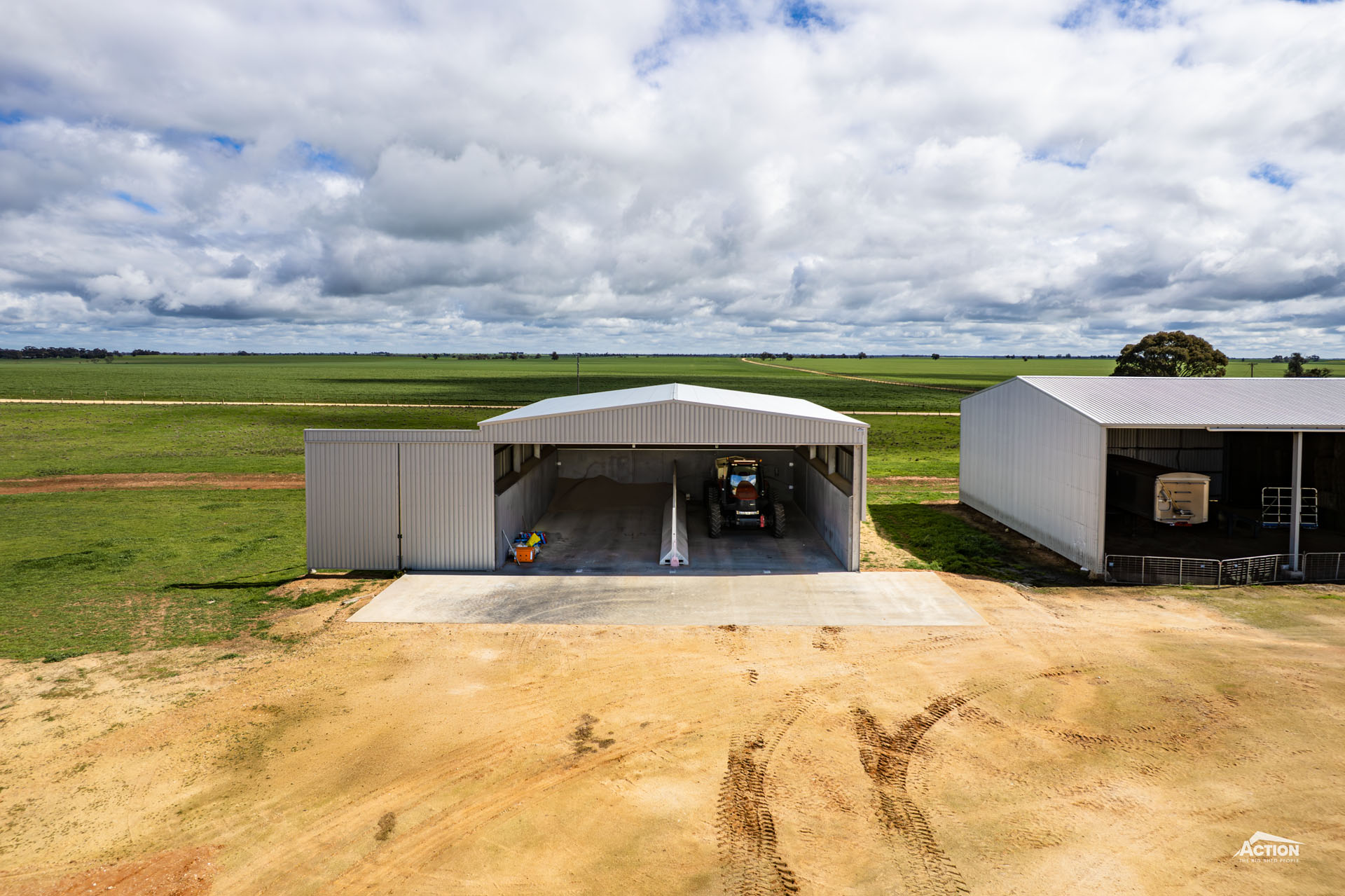
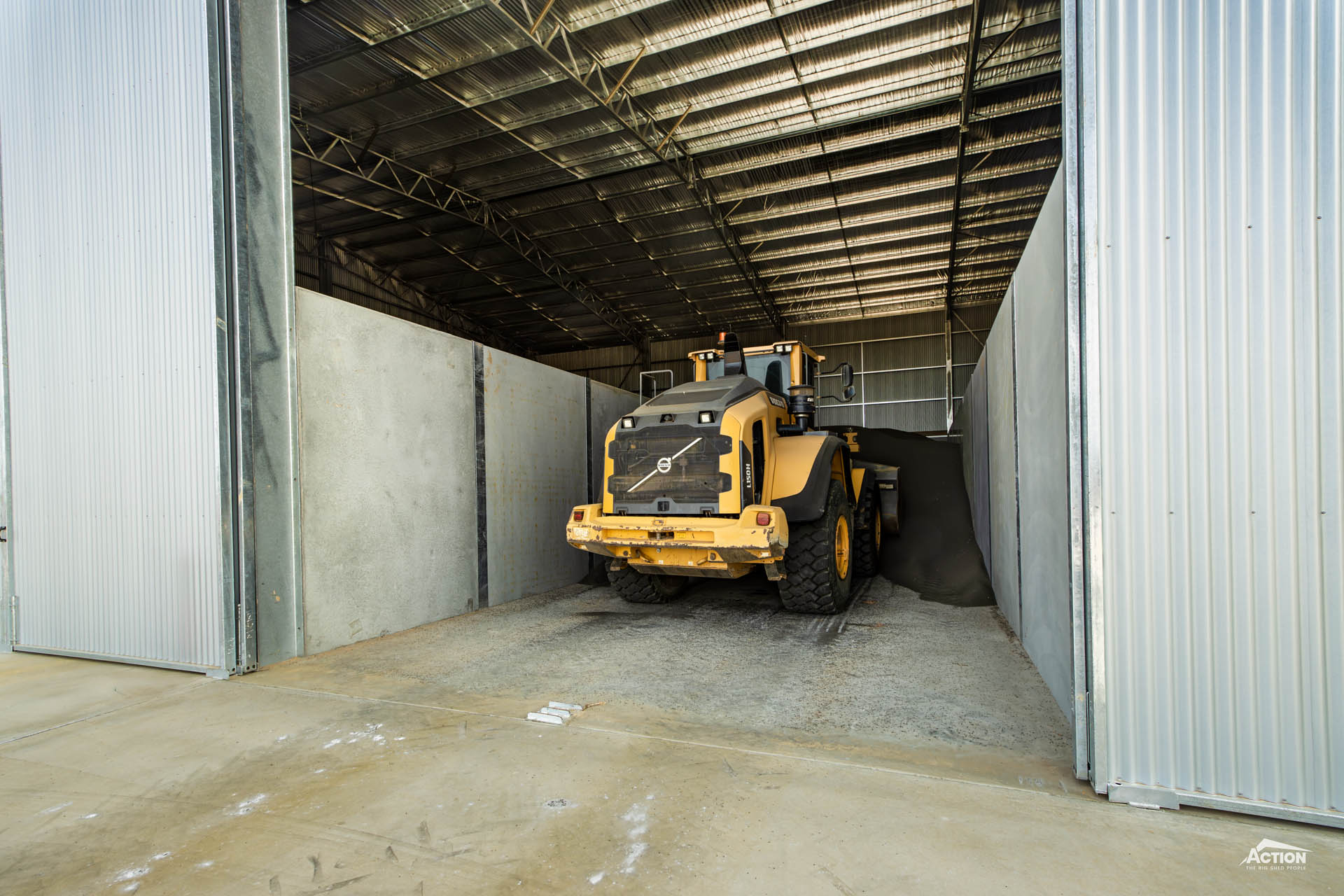
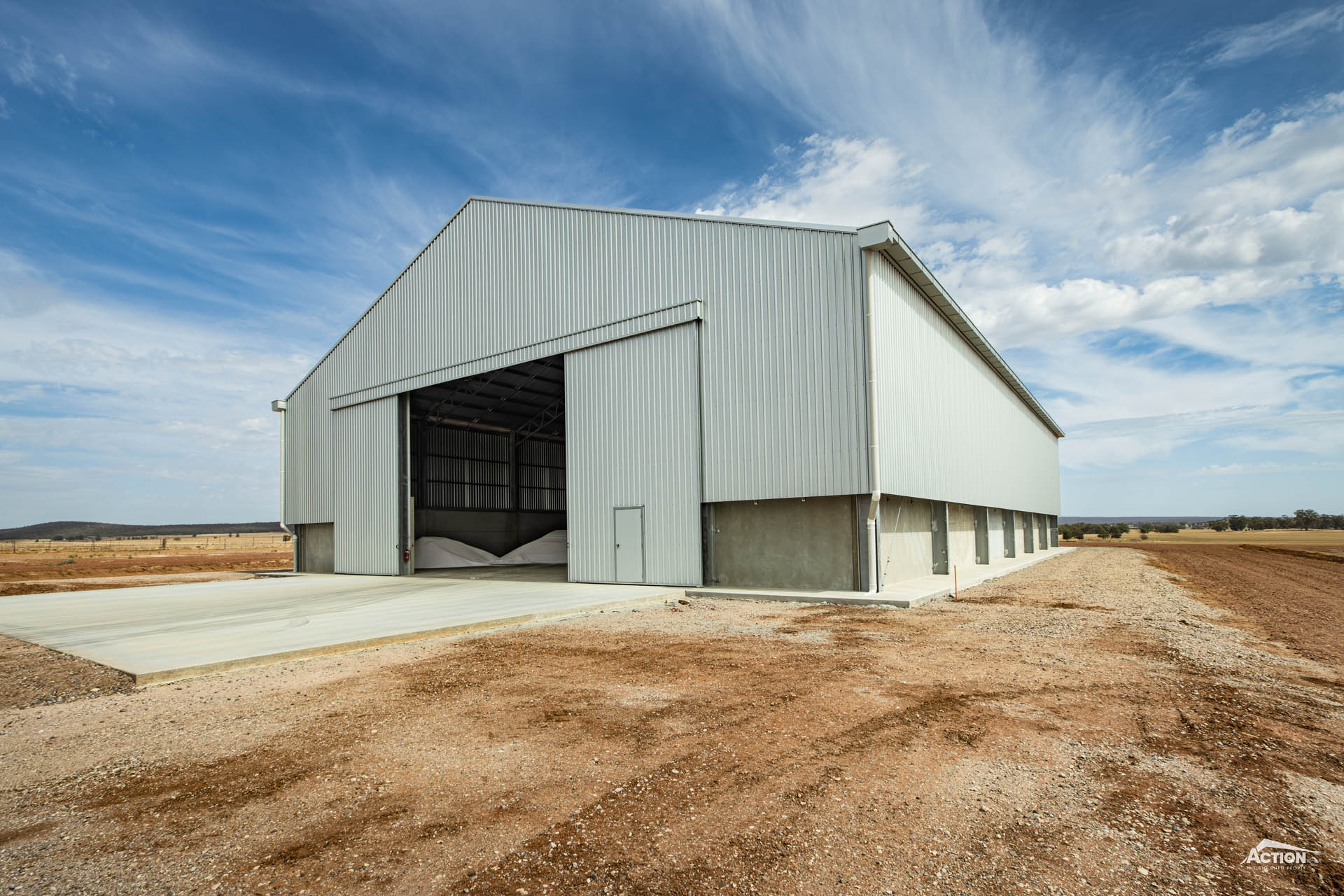
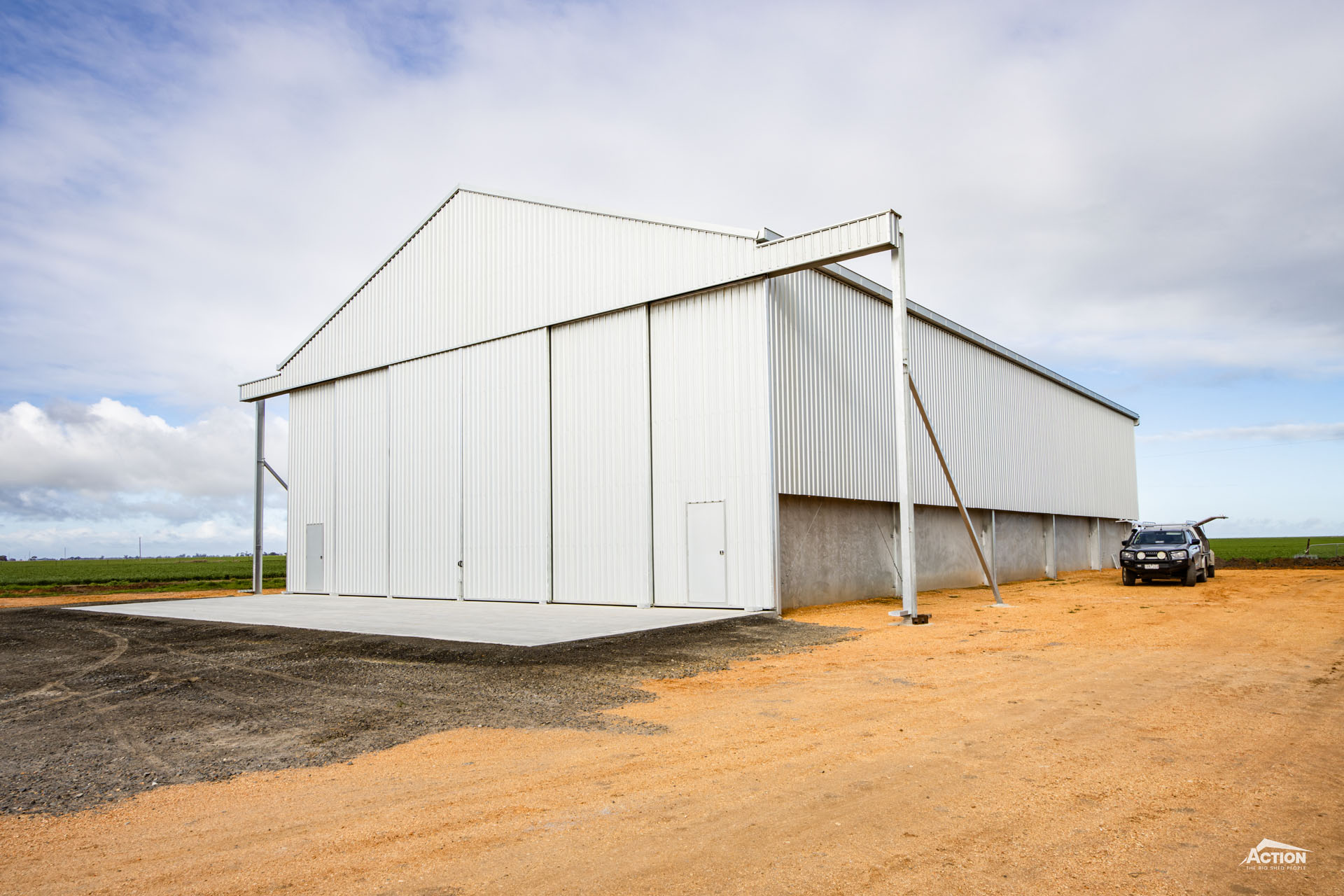
Configuration: Fully enclosed concrete panel shed with 21° roof pitch and sliding door outriggers for wide access.
Size: 32.5m (L) x 18m (W) x 7.5m (H) with 3m high panels
Capacity: Approx. 1500 tonnes. Actual capacity will vary depending on the bulk density of the fertiliser (or grain). Use our Grain Shed and Fertiliser Shed Calculators to compare scenarios.
Location: Laen VIC
Build Date: 2025
Top 3 Reasons Why This 1500 Tonne Fertiliser Shed Works
1
1. A Standard Design Used Smarter
This project is a great example of using a standard fertiliser shed design to achieve cost-effective and functional storage – and then customising it to suit specific requirements.
By combining features of both standard 1500 tonne designs, it achieves the best of both worlds, finding the balance between efficient access and effective weather protection.
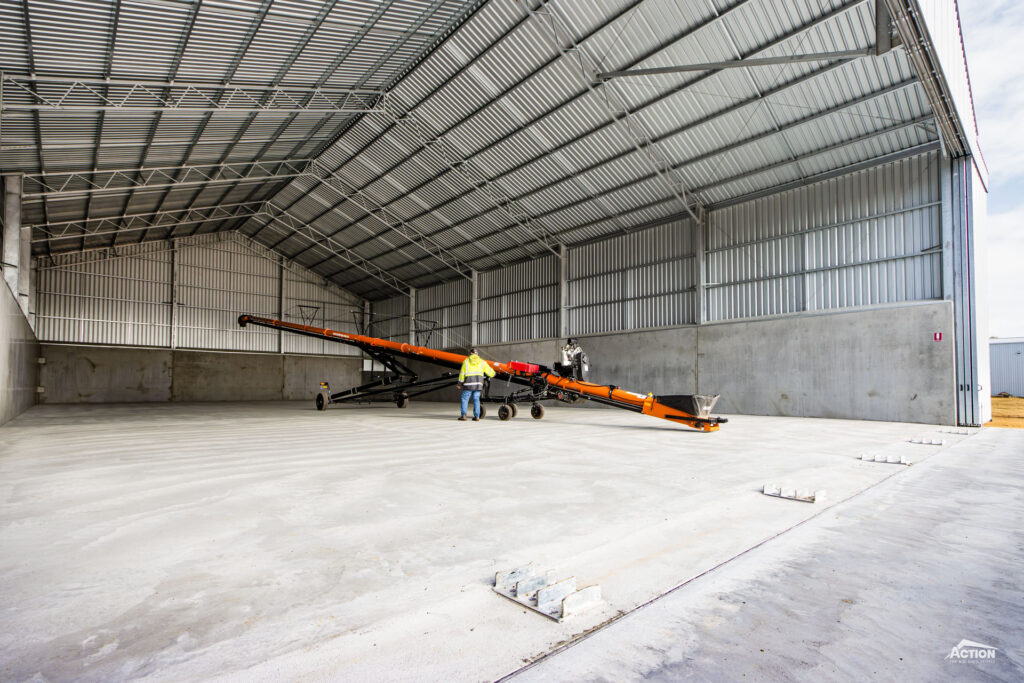
It uses the 32m (L) x 18m (W) fully enclosed option with extra height and a steep roof pitch to allow tipping inside the shed.
The result? This approach simplifies the design process, removes unnecessary complexity, and delivers cost-effective, functional, and smart storage.
2
2. Pays Attention To Access
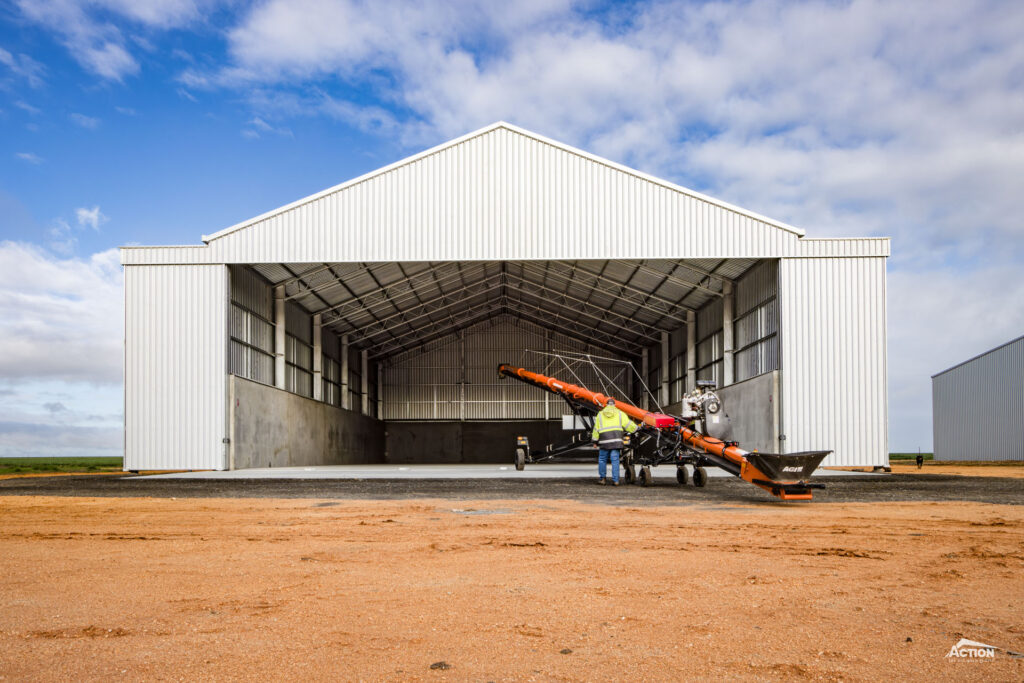
A standout feature of this 1500 tonne fertiliser shed is the safe and easy access.
Good access is essential for a safe and efficient storage set-up, especially at busy times of the year, like at cropping and harvest. It is also invaluable during the installation stage of the project.
Several details contribute to this:
- A clear, well-prepared site. Don’t underestimate the importance of good site preparation! Proper site preparation, including turning circles, ensures safe, all-weather access.
Preparing your shed site? You might find this article helpful – Farm Shed Pad Guide (Ideas, Sizes & Prices)
- A concrete apron also helps keep the shed accessible in wet weather, reduces fertiliser wastage, and makes loading and unloading more efficient.
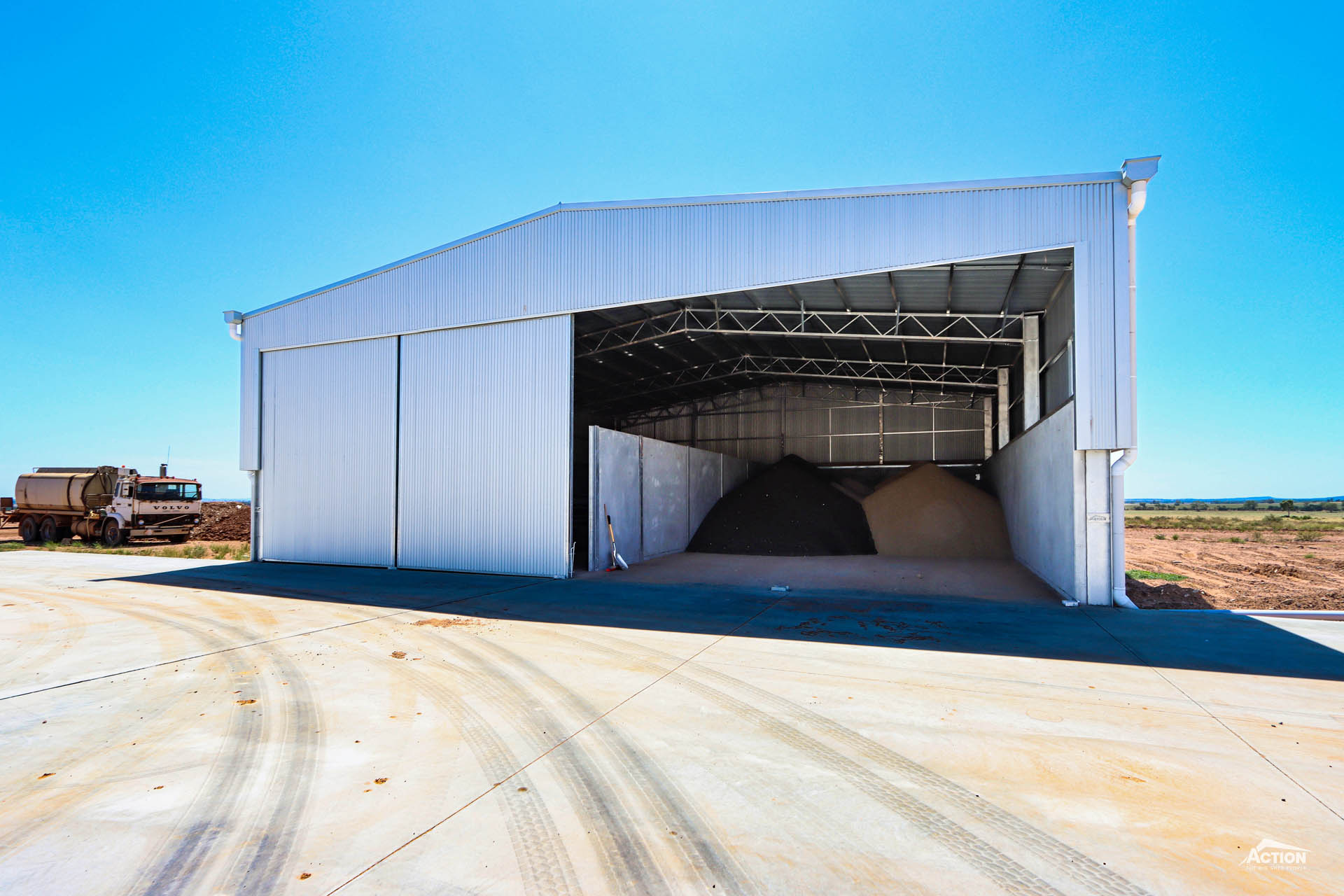
- Sliding doors with outriggers provide full-width access for quicker loading and unloading, without the risk of damaging doors, while still allowing the shed to be fully enclosed for the best weather protection.
- Personal access doors are a compliance requirement and allow entry to the shed without needing to open the sliding doors.
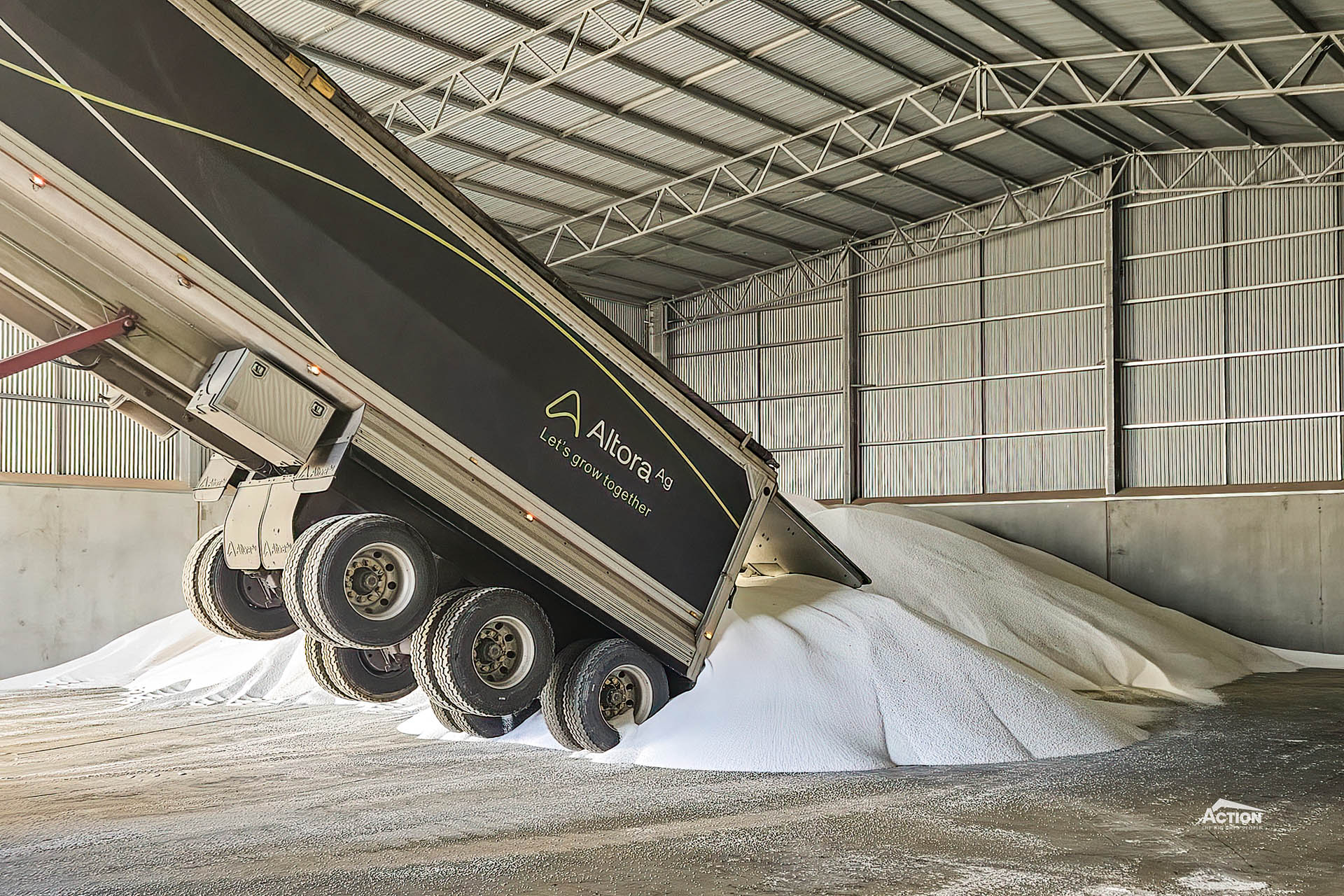
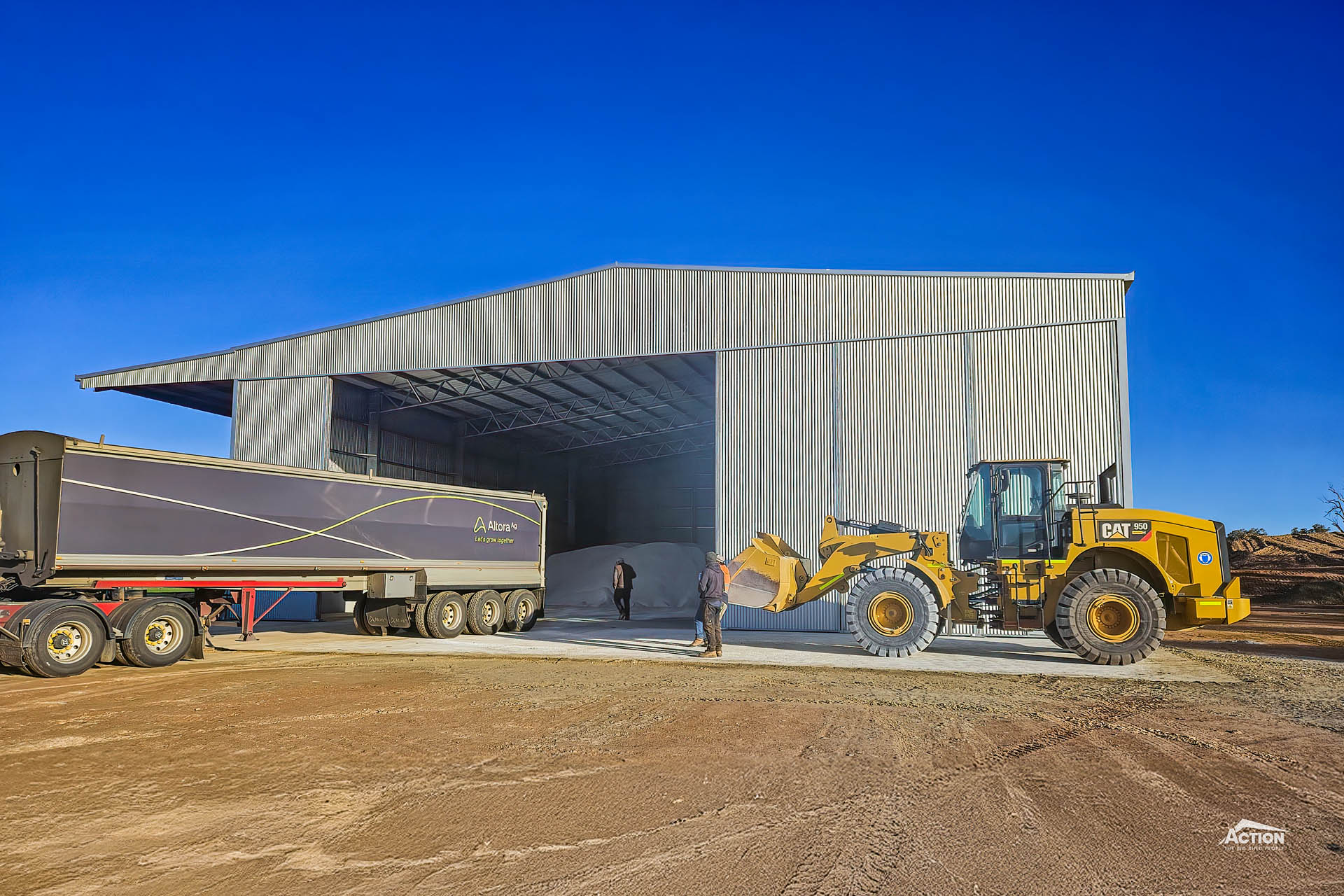
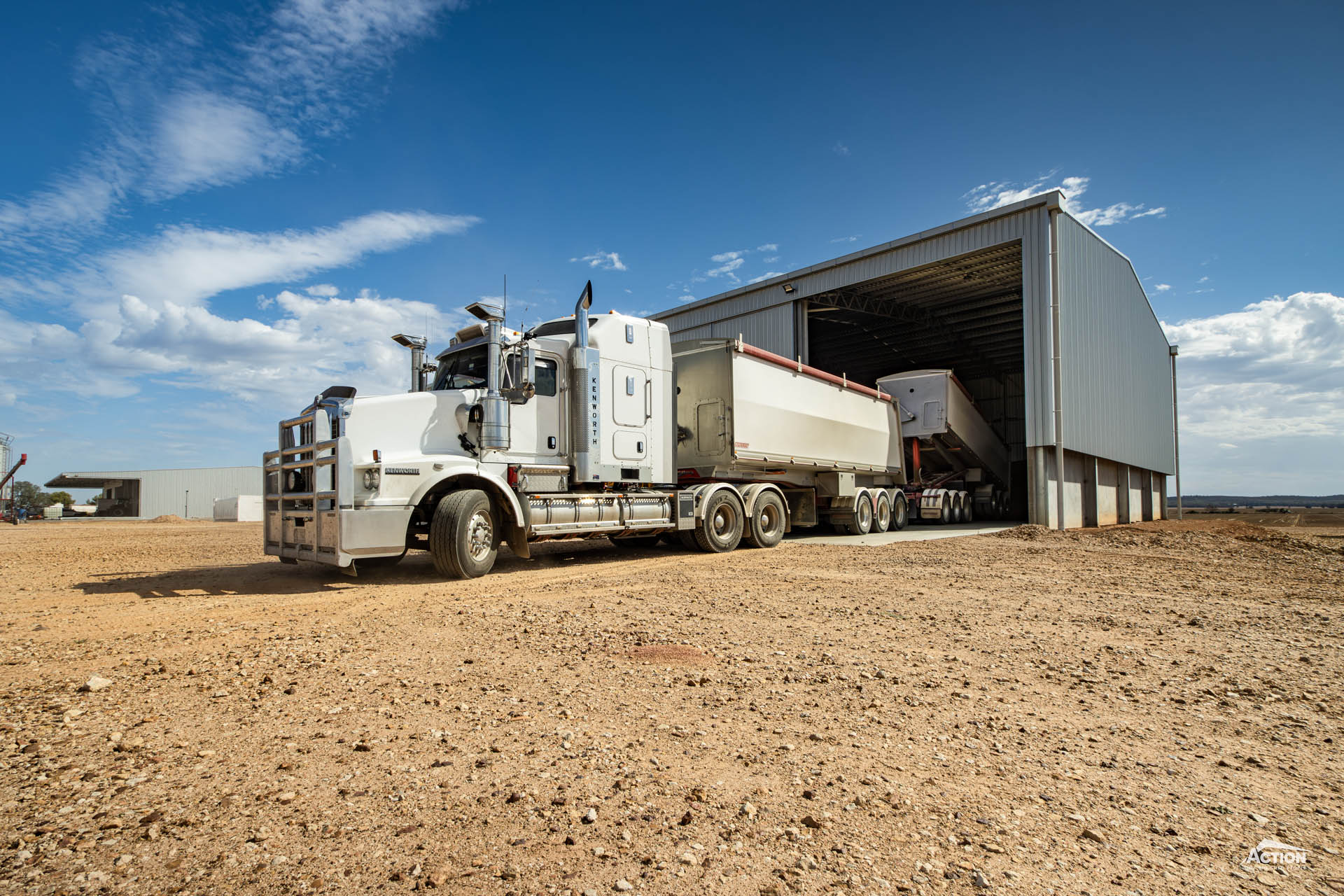
- Extra height and roof pitch work together to allow a truck to tip inside the shed.


3
3. Works Well For Grain Storage
A versatile shed design provides excellent value for money – and this project is a great example.
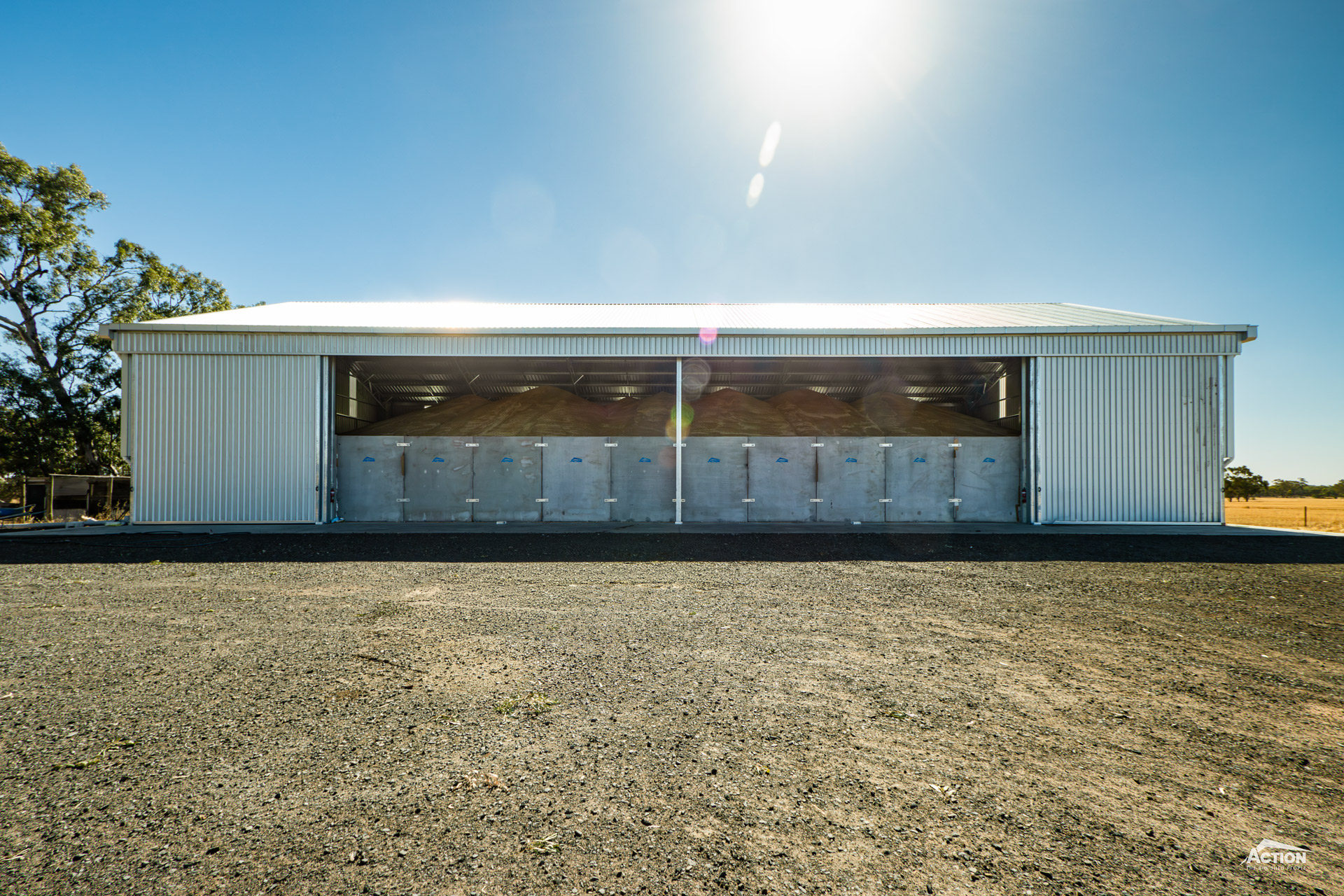
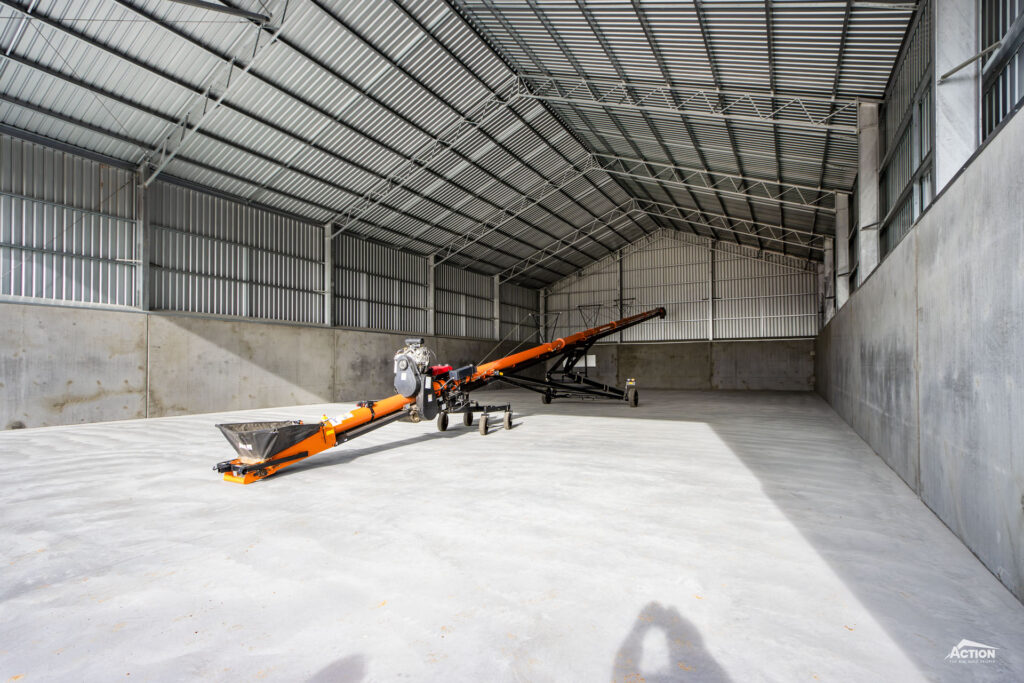
A bulk storage area with concrete panels is always a good starting point for fertiliser/grain shed design.
L-walls can then be used for storing multiple products without permanently reducing the capacity of the shed.
The extra height and best-practice 21-degree roof pitch also work well to accommodate tipping trucks and the angle of repose of grain.
Other details that work well for grain storage include:
- Panel flashing (prevents overfilling)
- Turning circles and site layout (for safe logistics at harvest time)
- Concrete apron (makes it easier to sweep out the shed between products)
- 3 metre high concrete panels (ideal for fertiliser storage and smaller scale grain storage)
1500 Tonne Fertiliser Shed Price Guide
A similar project in 2026 would cost approx. $300,000 – $400,000 including GST, delivery, concrete slab and installation.
This works out to be $200 – $270 per tonne.
Please note that this is a guide only. The price for your project will depend on the location and how you choose to customise the design.
For an idea of how pricing can vary between sizes and designs, check out the Standard Fertiliser Shed Size & Price Guide.
The Verdict – Is This The Best 1500 Tonne Fertiliser Shed Design?
Is a standard fertiliser shed the right choice for your operation? What other shed designs are available for storing 1500 tonnes of fertiliser?
This standard fertiliser shed design:
- Is cost-effective
- Is easily accessible
- Can be easily customised
- Can be segregated with L-walls
However, there are other options you can consider, including:
- Standard open gable design (usually includes an extra bay for weather protection)
- Shed accessed from both gable ends (you could include a segregating wall in the middle – or keep it clear for drive-through storage)
- Fully enclosed shed accessed from the long side (Often used with permanently segregated bays, but this has a higher cost per tonne)
- Open front shed with concrete panels in several bays (this is better suited for shorter-term storage)
This 1500 tonne fertiliser shed design certainly ticks all the boxes.
But depending on your needs, you may find that one of the other designs works better – whether it is due to segregation requirements, site restrictions or how you intend to repurpose the shed after cropping
You can find examples of these alternative designs in the gallery below.
Frequently Asked Questions About Fertiliser Sheds – Answered
Quick answers to the top questions about fertiliser sheds
The best fertiliser shed design is one that:
- Effectively protects fertiliser from the weather
- Is safe and easy to load and unload
- Uses concrete panels to protect the cladding from corrosion and machinery damage
Several designs can achieve this, with the top three being
- Fully enclosed with access to side bays
- Fully enclosed with access to both gable ends
- Fully enclosed or three-sided with access to one gable (The standard Action fertiliser shed design)
The best design for your fertiliser shed will depend on what product/s you are storing, how much you are storing, and how you plan to load and unload the shed.
There are several ways you can customise your fertiliser shed design to make sure it works for you.
These include:
- Increasing the height to allow tipping inside the shed
- Using a steep roof pitch to increase clearance inside the shed
- Installing sliding door outriggers to provide a wide opening and protect the doors from machinery damage
- Segregating your fertiliser with permanent concrete panels or movable l-walls
- Adding a concrete apron for easy clean up and access year-round
The best size for your fertiliser shed will depend on:
- The number of products being stored (and how you plan to segregate them). For example, permanent segregating walls will reduce the overall capacity of your shed.
- The volume and bulk density of the product/s being stored. For example, the bulk density of Urea (at 750kg/M3) is approximately the same as storing 1/3 MAP (1000kg/M3) and 2/3 Urea combined.
- How you load and unload the shed. For example, you may need to increase the height of your shed to allow tipping inside.
- The design of your shed. For example, if you choose an open gable design you may choose to increase the length of the shed by a bay for extra weather protection. Or you may need to increase the height of your shed to accommodate the sliding door beam.
Based on these considerations, here are some sizes that often work well:
- 12m (W) x 18m (L) x 6m (H). Stores approx. 400 tonnes.
- 18m (W) x 24m (L) x 6.75m (H). Stores approx. 1000 tonnes.
- 18m (W) x 32m (L) x 6.75m (H). Stores approx. 1500 tonnes.
You may also find the fertiliser shed size calculator here, helpful.
The best way to segregate your fertiliser shed is with concrete panels, and there are two options for this: Permanent panels and movable L-walls.
If you have a clear understanding of your current and future storage requirements, permanent segregating concrete panels are a great option for purpose-built fertiliser sheds.
However, it is worth noting that permanent walls will reduce the overall capacity of the shed.
In contrast, movable L-walls provide you with much more flexibility in how you use the storage space.
Action Steel manufactures both panels and L-walls in-house, providing control over the quality and cost compared to using a third-party supplier.
The average cost of fertiliser shed projects in 2025 so far is around $285,000.
The cost typically ranges from $125,000 for smaller scale storage to $500,000 or more for a bulk storage facility.
The cost of your project will depend on factors like size, design, location and how you choose to customise your shed.
The 1500 tonne standard fertiliser shed offers a versatile, cost-effective, and practical solution for bulk storage. With the ability to customise, add L-walls, and optimise access, it’s a design that works well for a range of cropping operations.
Whether you choose a fully enclosed shed, an open gable design, or a configuration with segregated bays, careful planning ensures your storage solution meets both your operational needs and long-term goals.
Ready to start your fertiliser shed project? Call us on 1800 687 888 – or submit a REQUEST A QUOTE and we will be in touch.