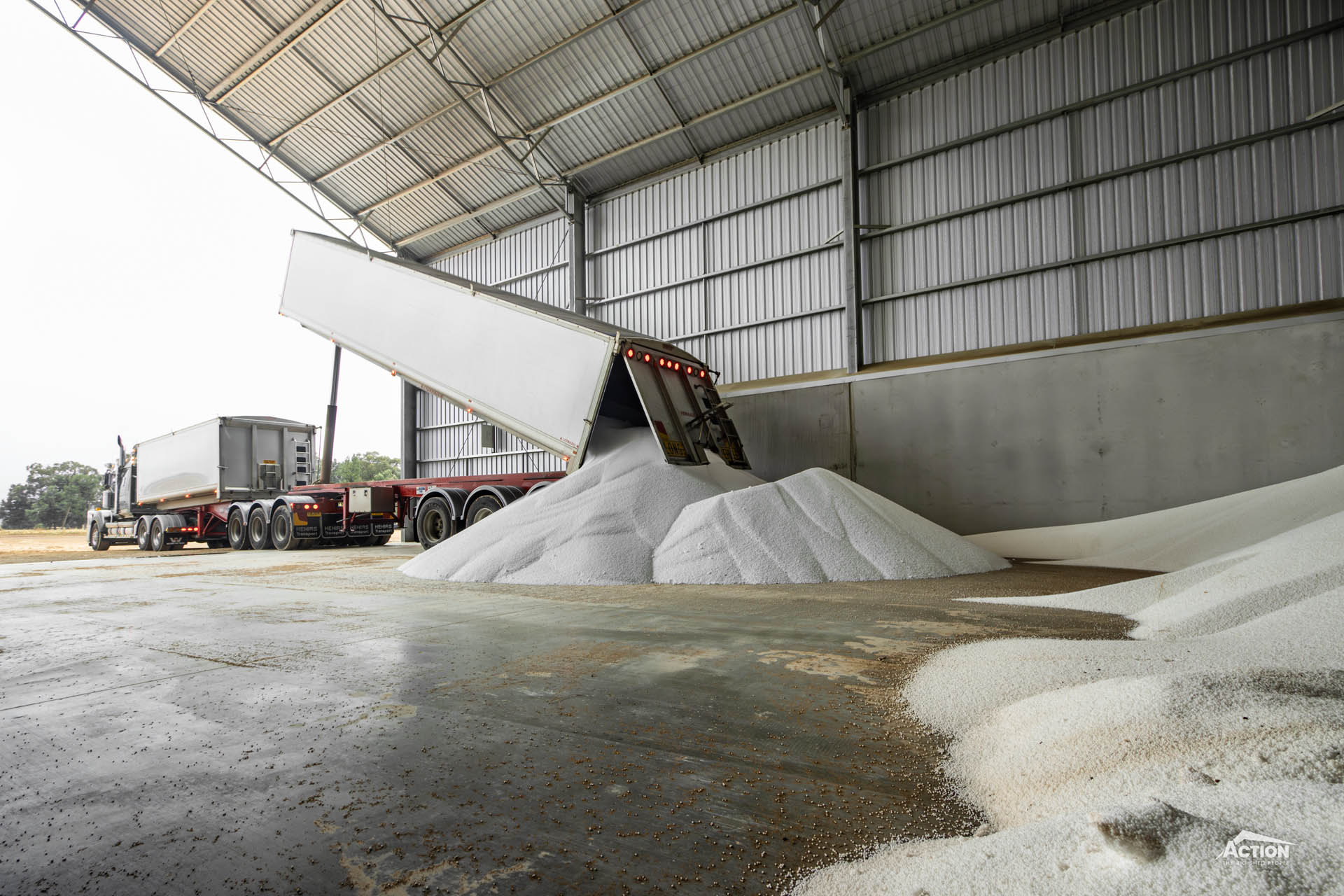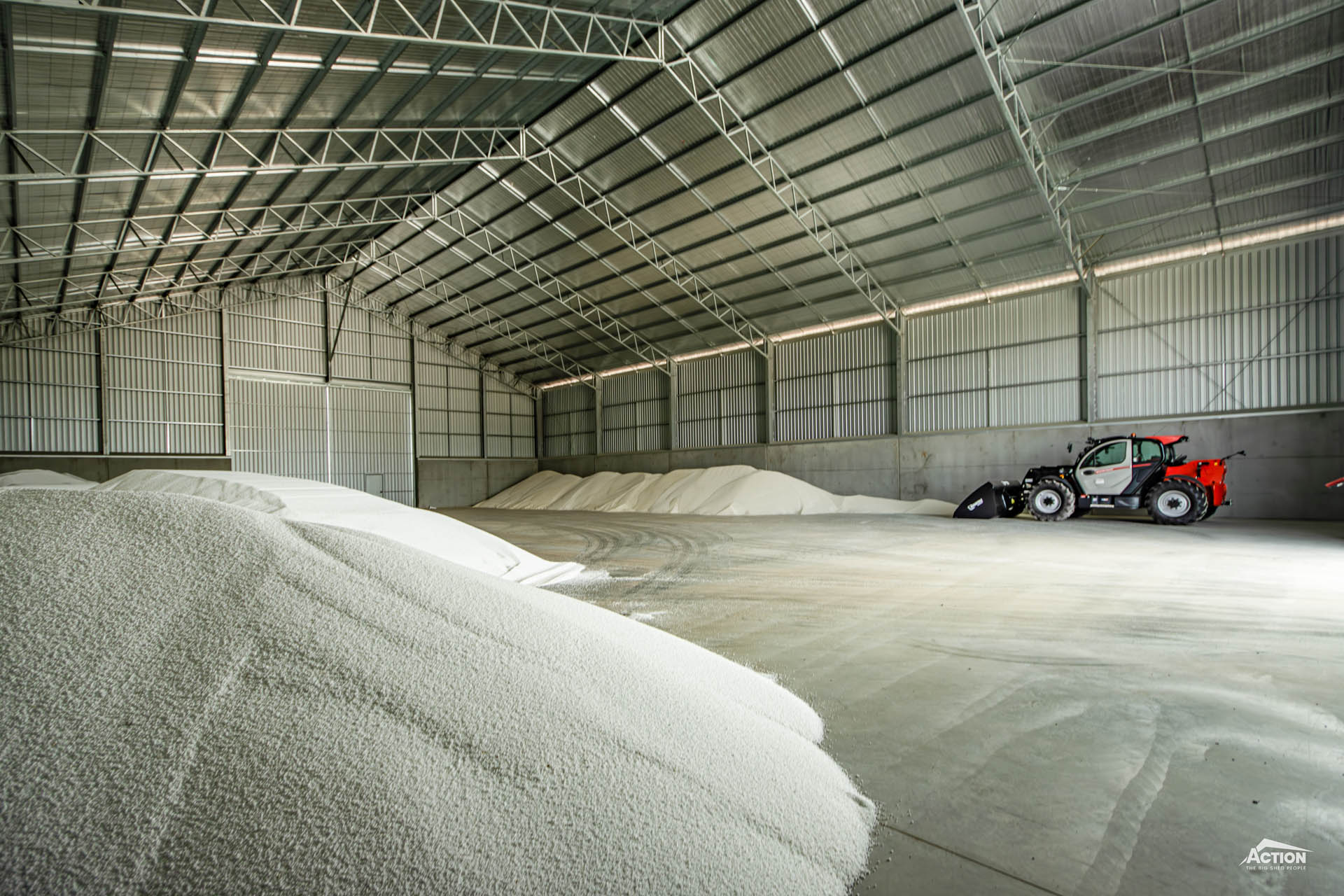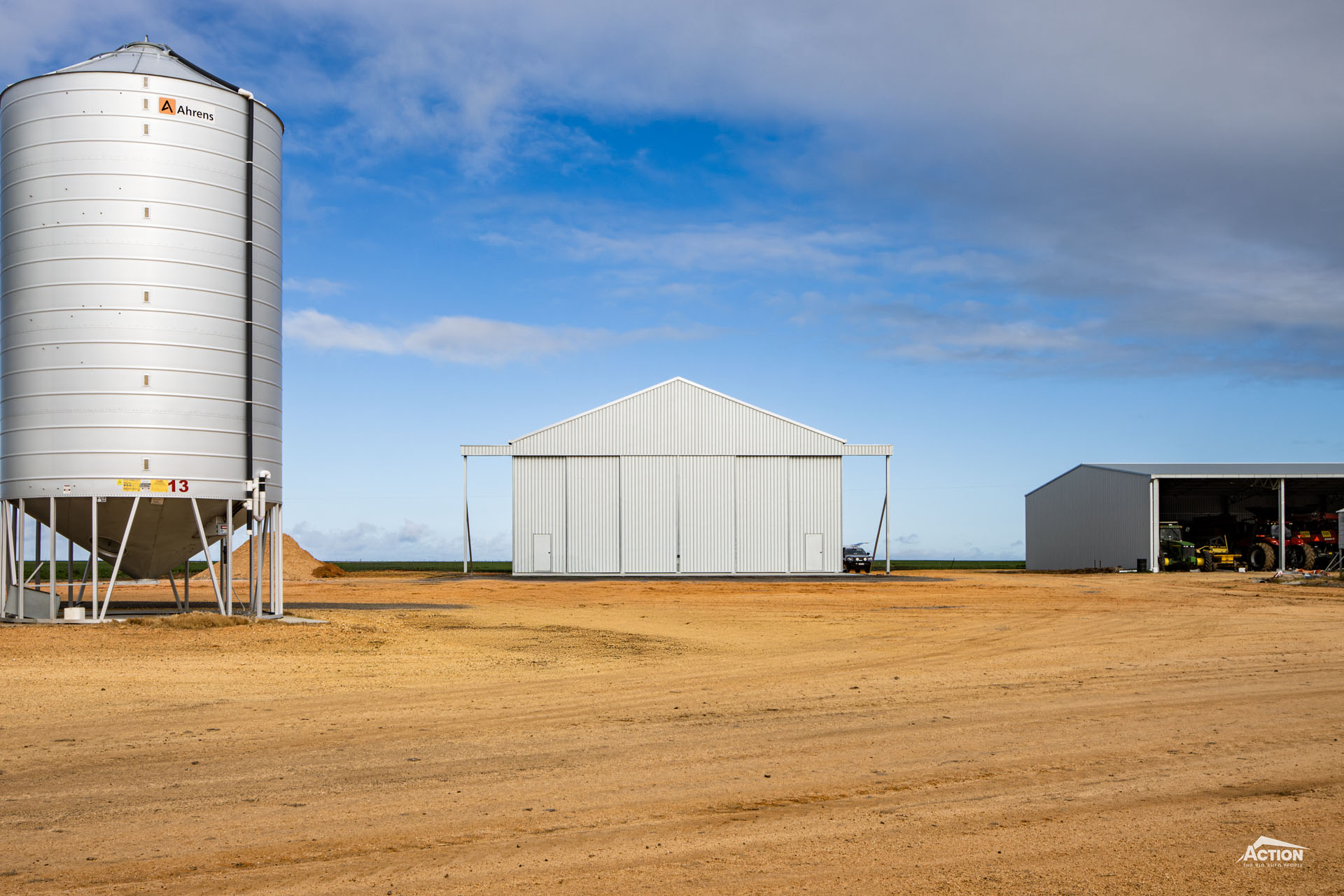
How can I customise my fertiliser shed? What fertiliser shed design options are available? How do I make sure my fertiliser shed design works for me?
Regardless of whether your fertiliser shed is storing 200 tonnes or 2000 tonnes, good design is essential.
And while shed configuration is an important place to start (such as open gable versus fully enclosed, segregated bays versus bulk storage area), it is often the smallest design details that make the biggest difference.
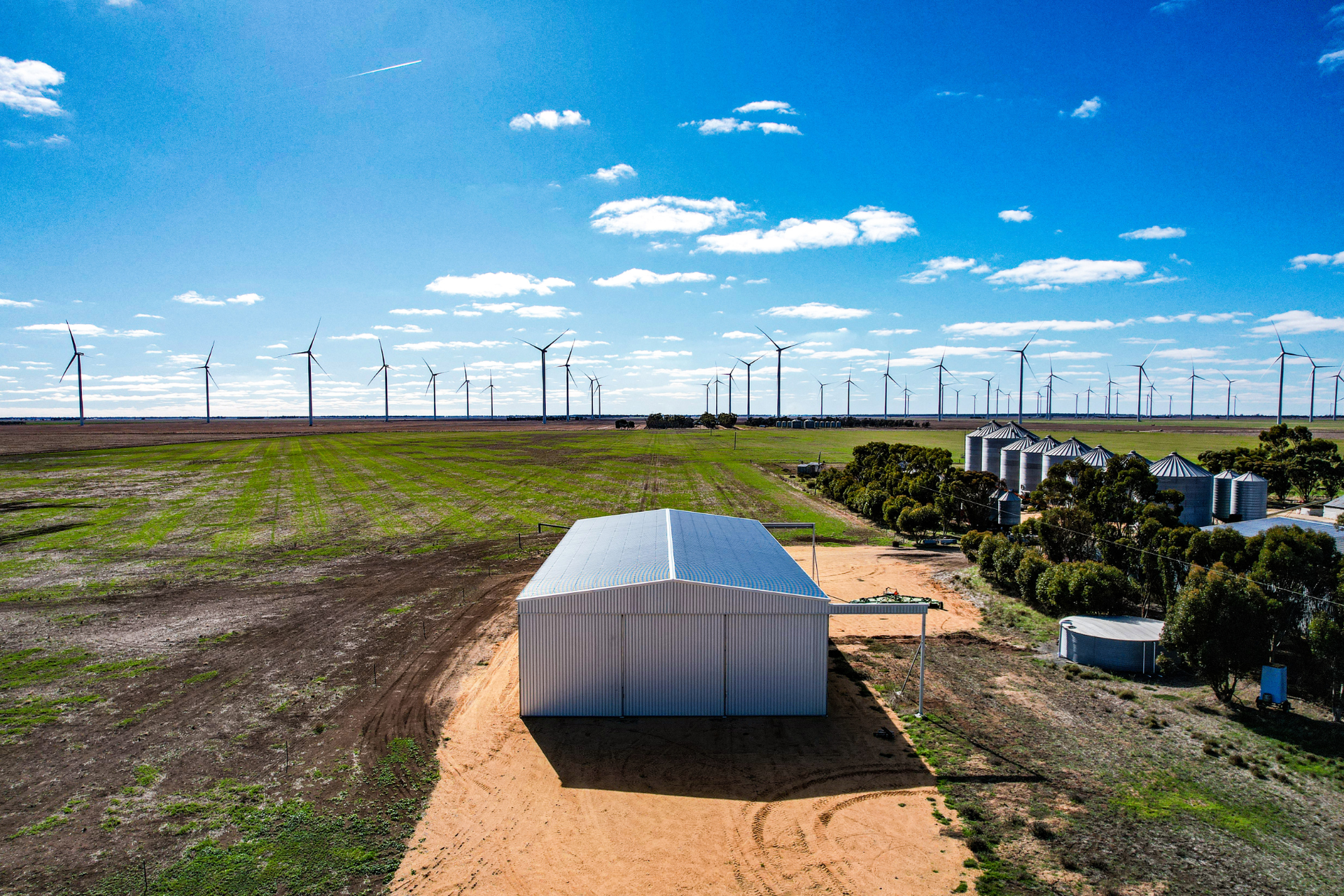
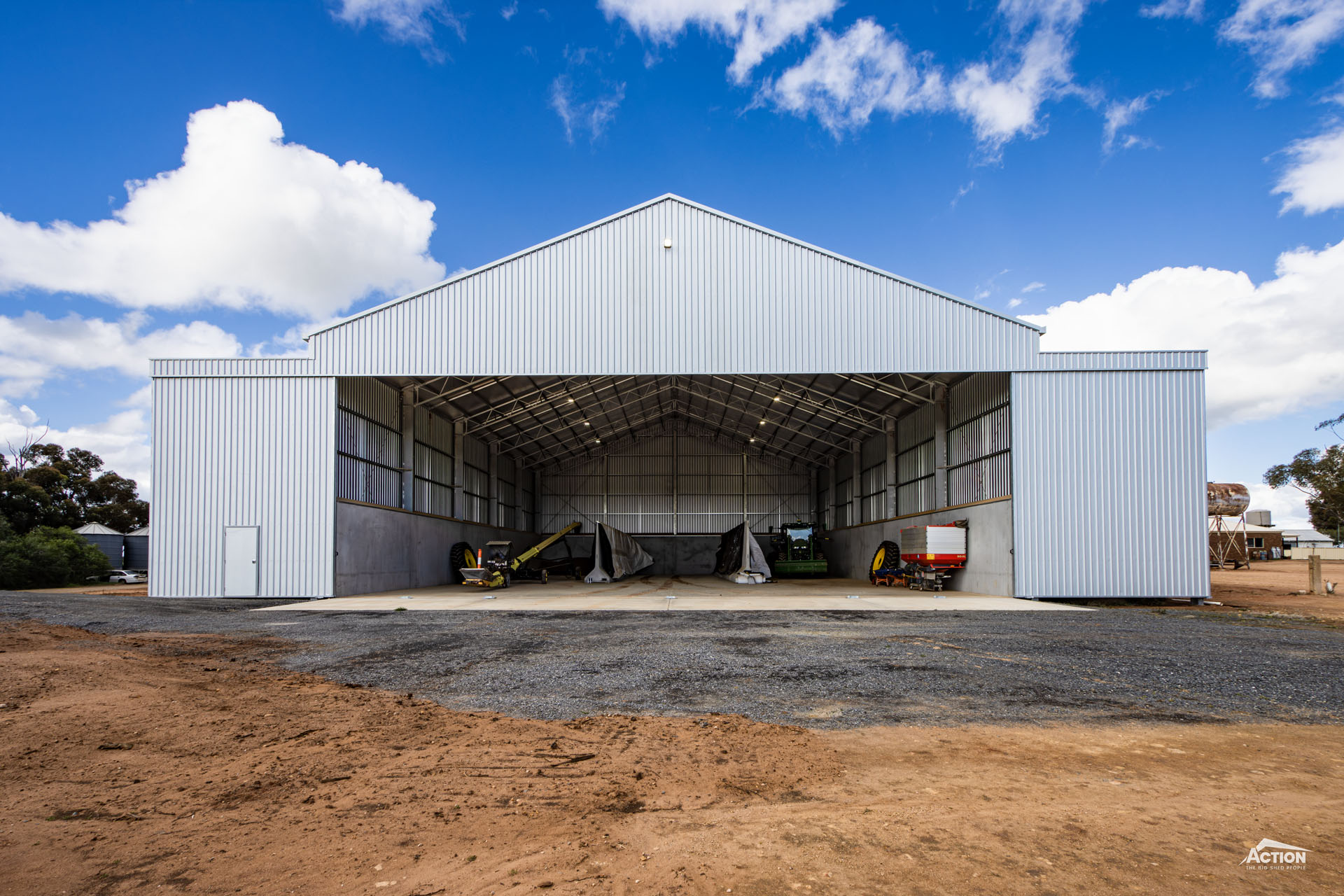
Fertiliser shed design options, such as sliding door outriggers, make sure your set-up is functional, efficient, and helping your operation grow.
So, read on to learn about eight details to include in your fertiliser shed design.
- Concrete Apron
- Panel Flashing
- Sliding Door Outriggers
- Concrete Plinth
- Internal Cladding/Wall Lining
- L-Walls
- Personal Access Doors
- Sisalation Paper
We will explain the benefits, show examples and provide handy price guides.
First up – concrete aprons.
Top 8 Fertiliser Shed Design Options
1
1. Concrete Apron
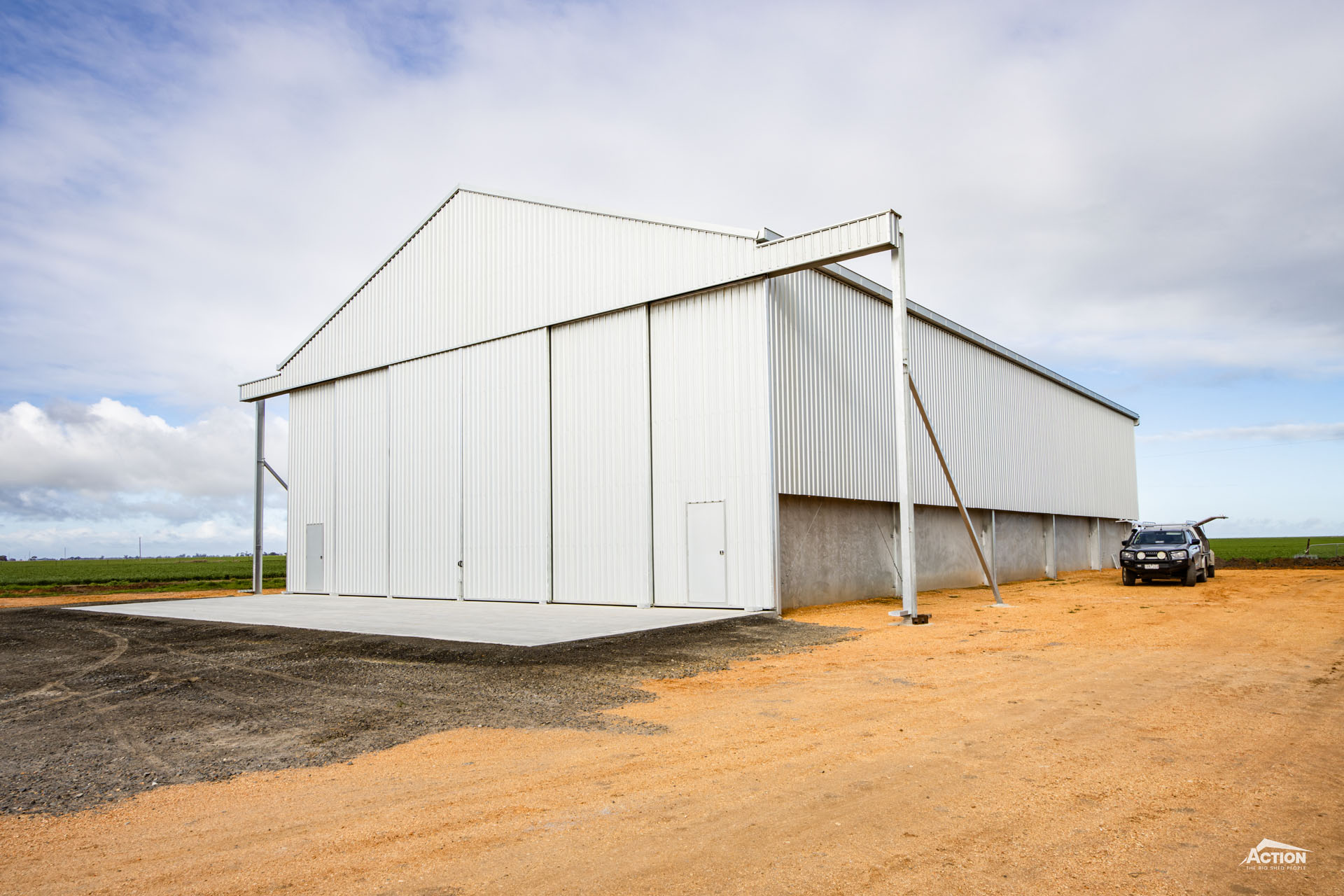
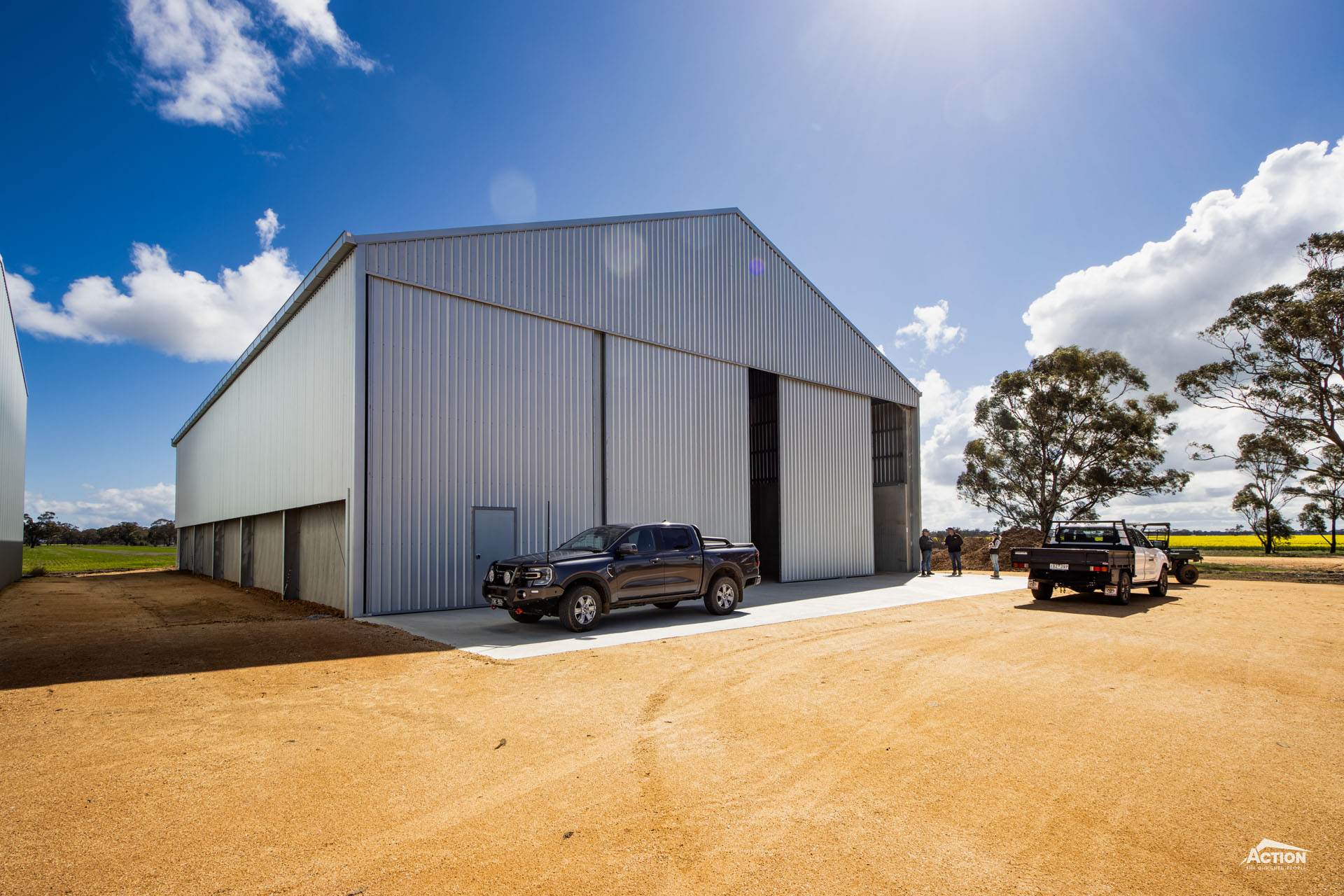
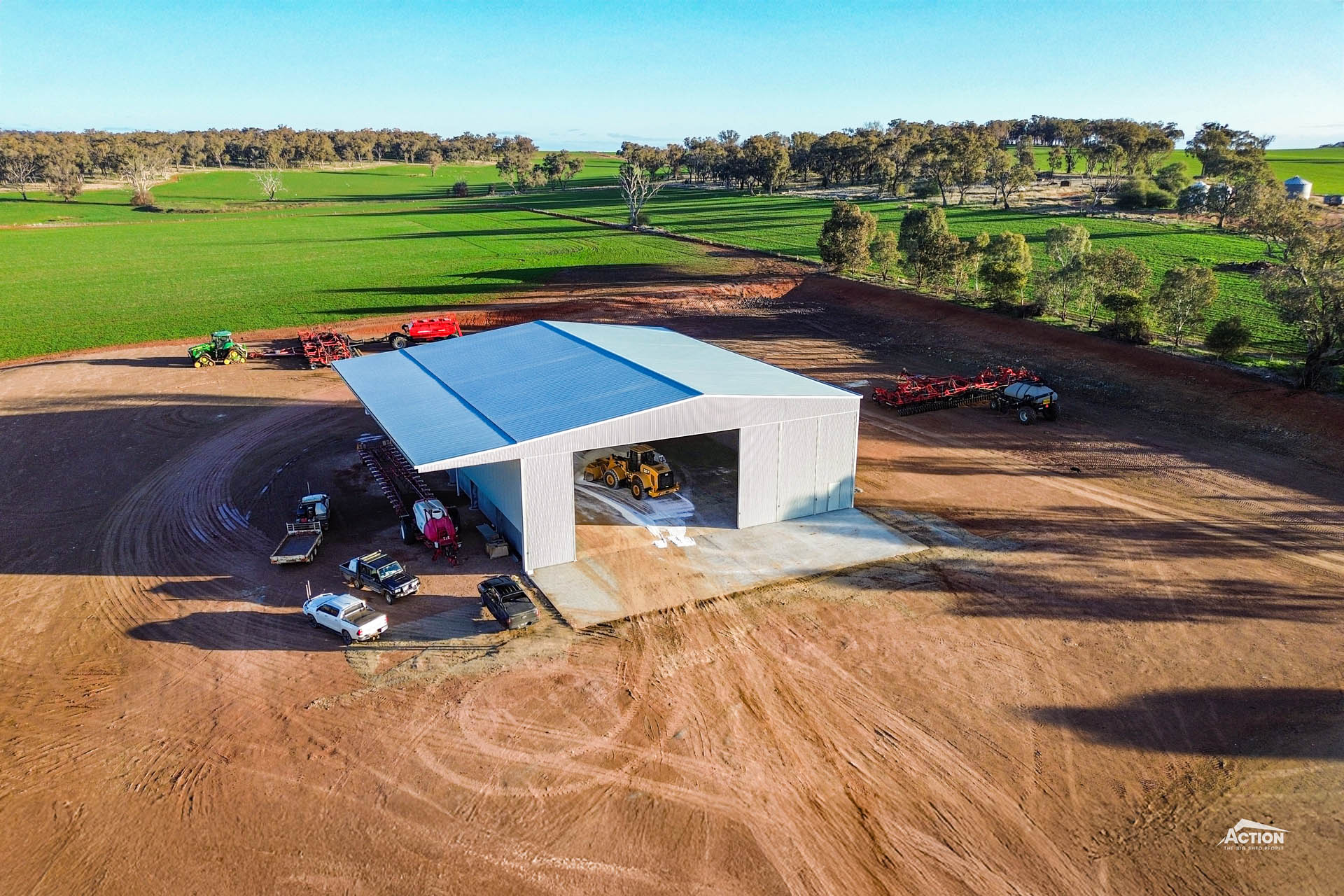
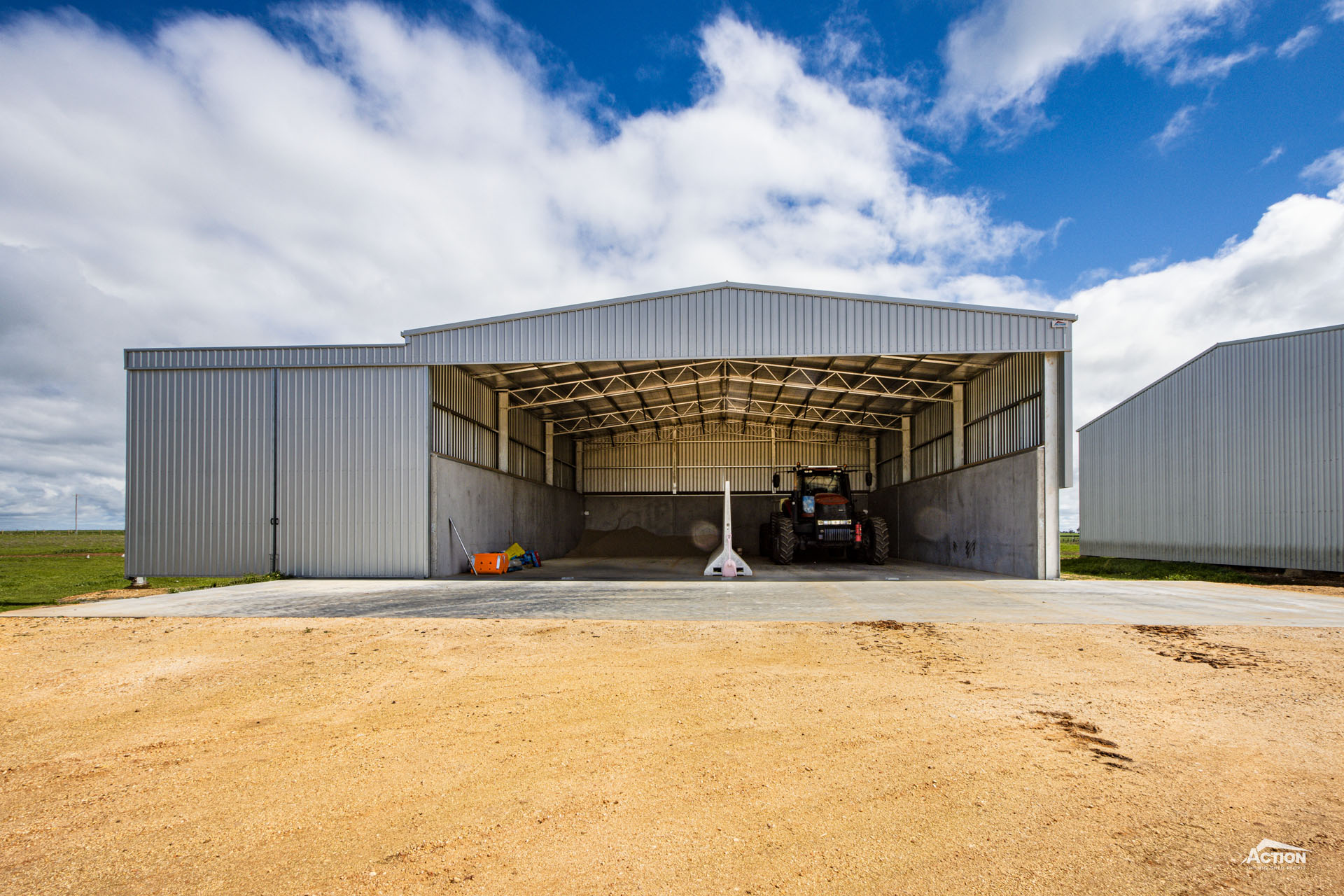
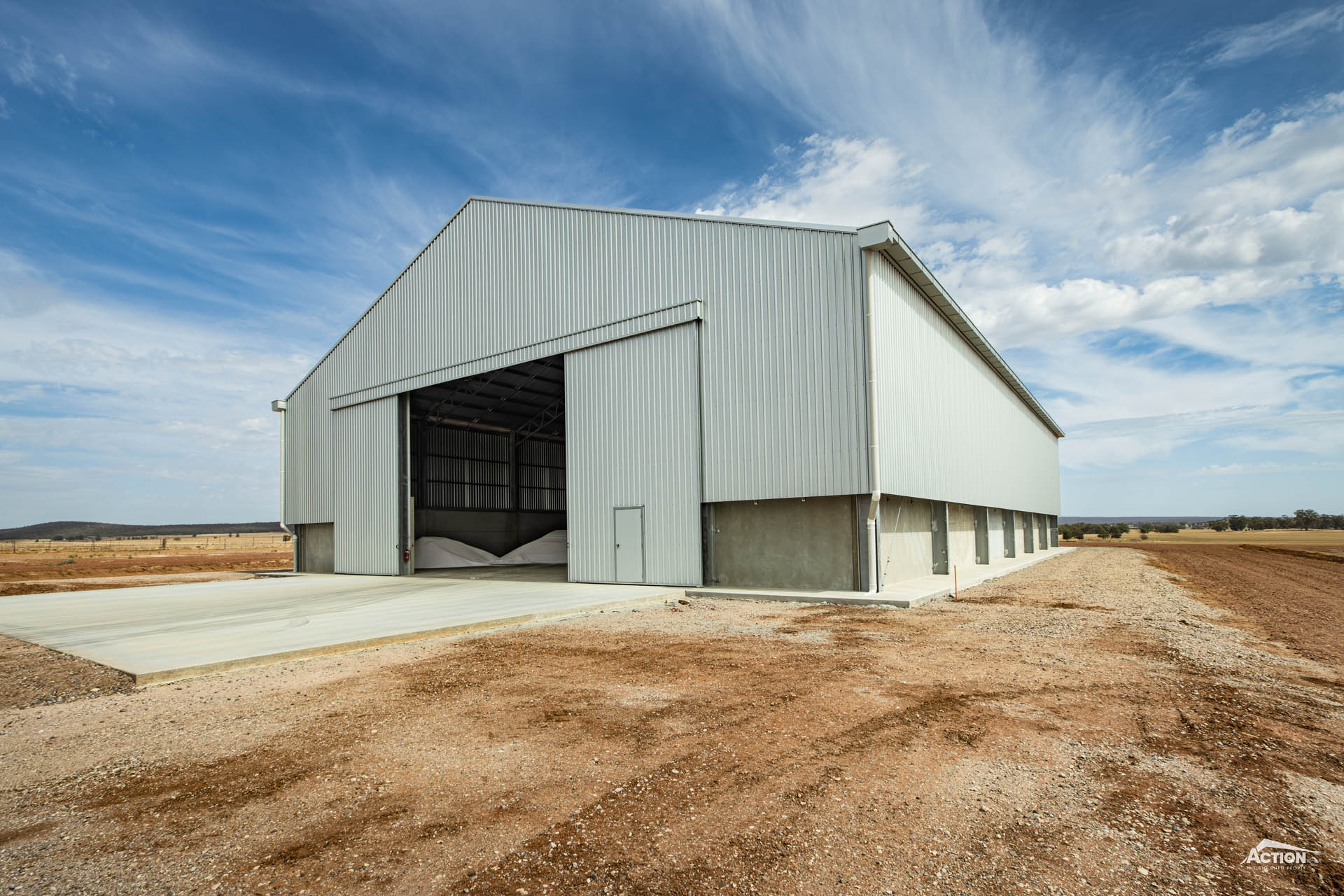
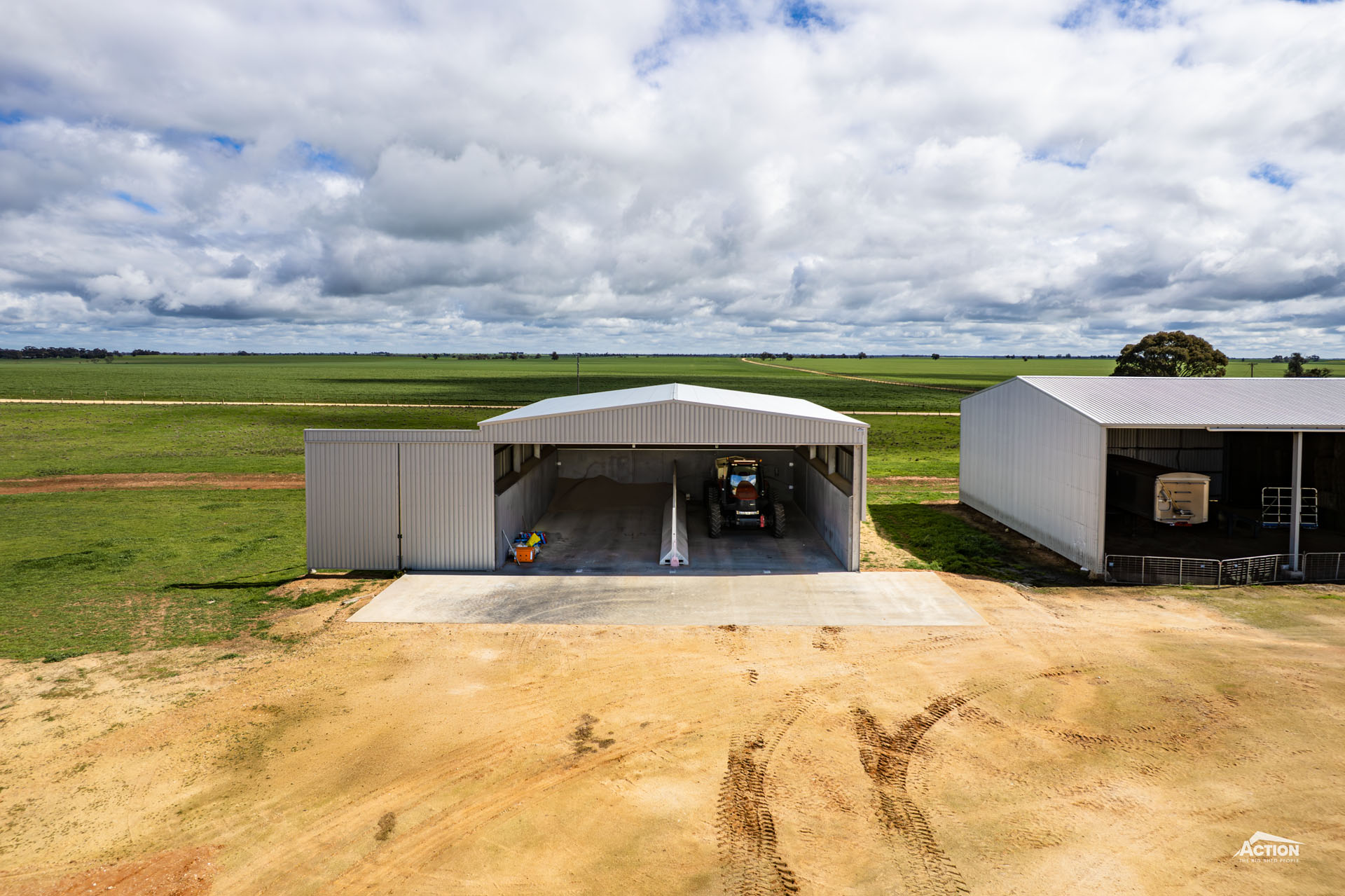
A concrete apron leading up to the main access points is a smart inclusion.
- Helps keep your fertiliser shed accessible after wet weather (a well-prepared site is also important!)
- Makes it easier to clean up spills and reduce waste. This is especially valuable for multi-use and multi-product sheds.
- Saves time with more efficient loading and unloading.
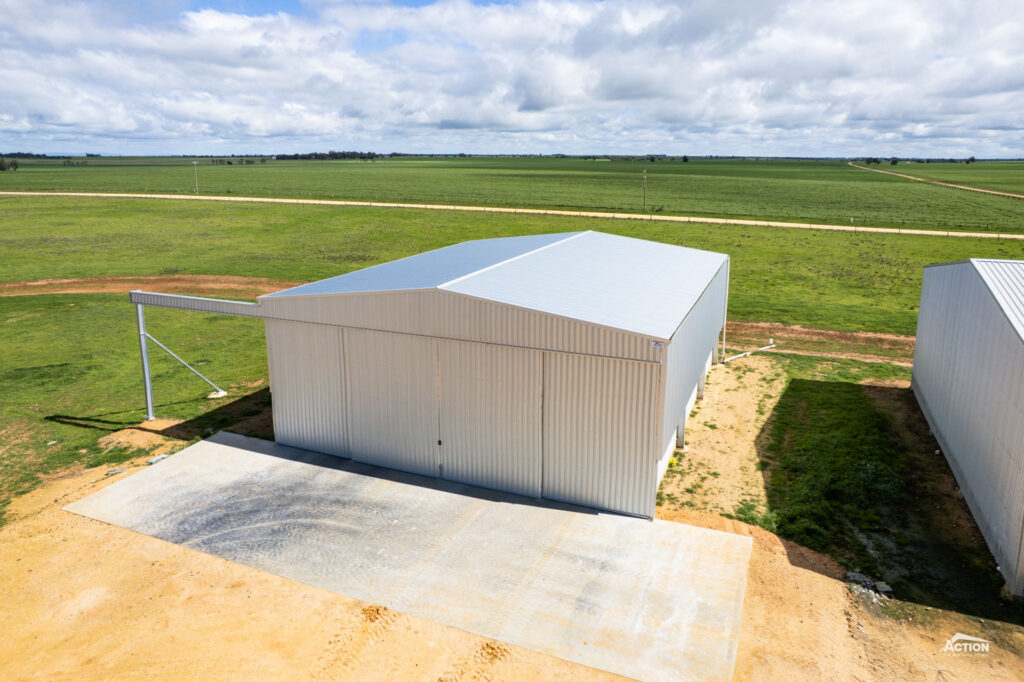
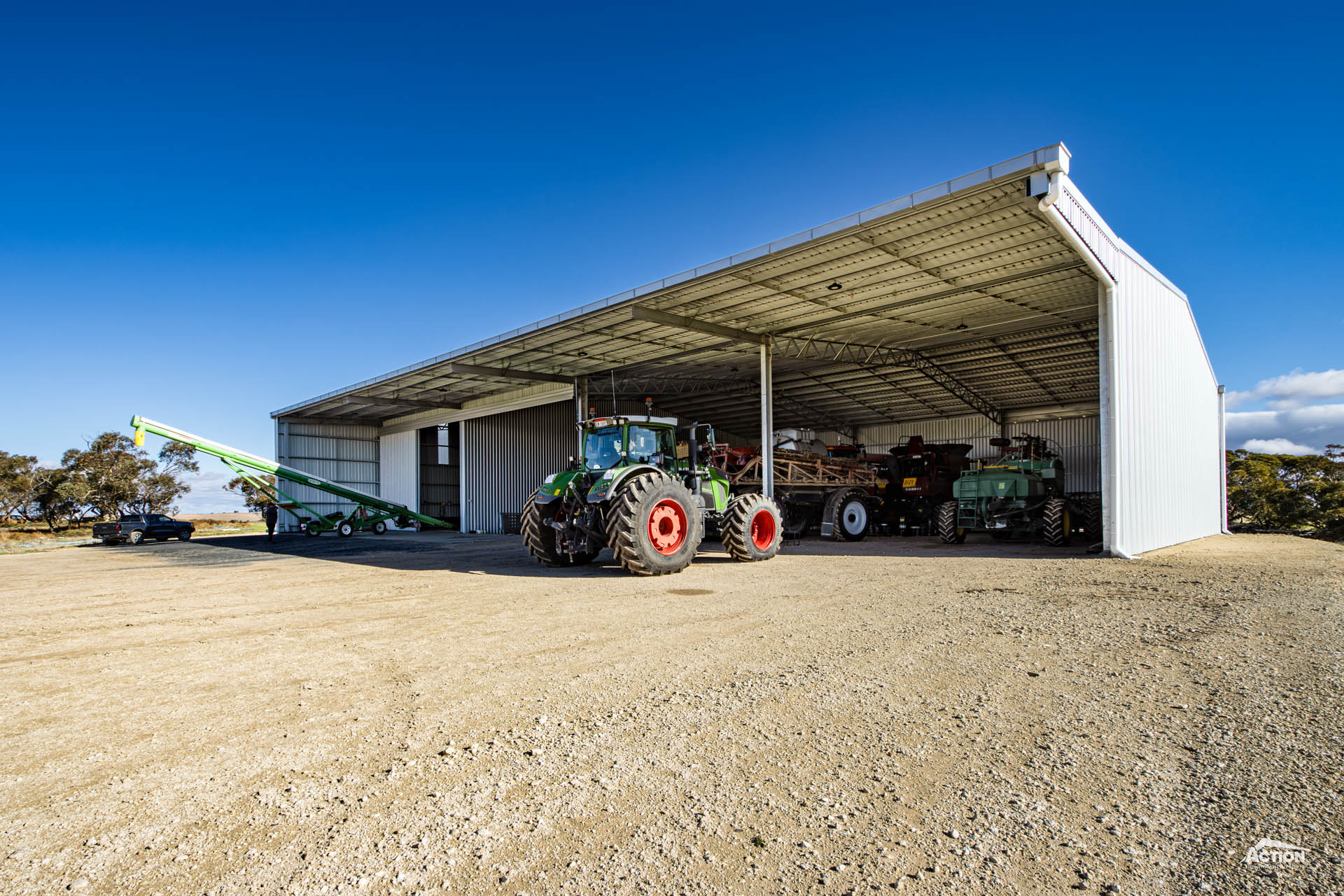
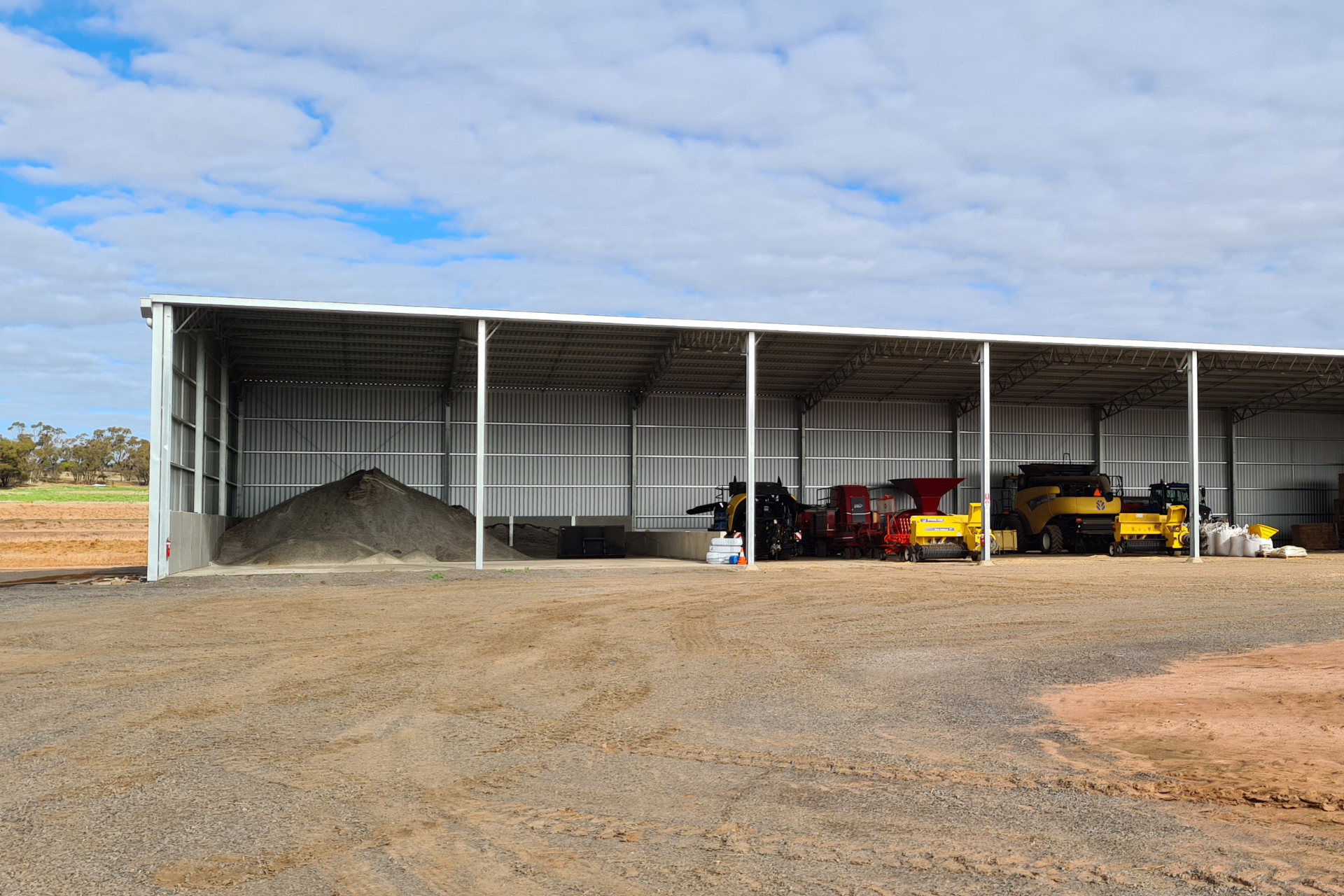
If you are looking to create a multi-use or versatile fertiliser shed design, another popular way to use a concrete apron is under a shed canopy. This provides a handy, sheltered work area for trucks and machinery – with no columns in the way.
Looking to include a concrete apron in your fertiliser shed project? Our projects team can coordinate this on your behalf.

How Much Will A Concrete Apron Cost?
The cost of a concrete apron ranges from $120m² to $190m² including GST – depending on the thickness, the size of the area being concreted and the project location (the cost of concrete and concreting is often higher in remote areas).
While the cost will vary from project to project, below are some examples to help you budget.
Concrete Apron Cost Examples
Please note that these examples are general only and do not take the place of a formal quote.
- A 6m concrete apron on the gable end of an 18m span shed would cost approx. $17,000 including GST.
- A 12m concrete apron on the gable end of a 24m span shed would cost approx. $45,000 including GST.
- A 3m concrete apron to one 8m bay would cost approx. $4,000 including GST.
- An 8m concrete apron the full length of a 40m long shed would cost approx. $50,000 including GST.
2
2. Panel Flashing
Panel flashing is our favourite one percenter, and it is a standard inclusion in all Action fertiliser shed designs.
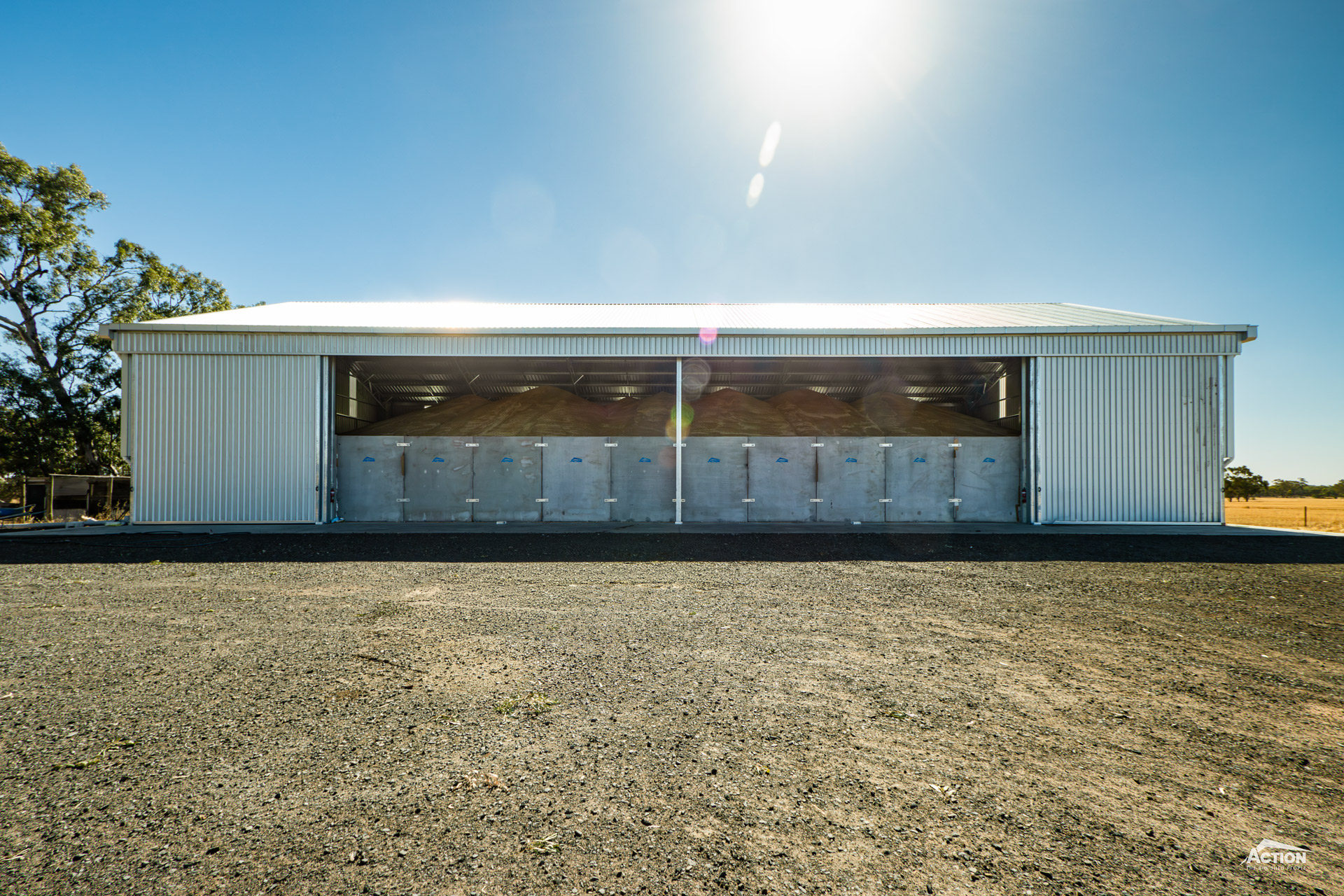
Panel flashing – a small, simple, yet effective detail – is the angled flashing from the top of the concrete panels to the shed wall.
This design detail achieves two things; it provides a barrier if the shed is overfilled and it helps stop bird from getting inside the shed.
3
3. Sliding Door Outriggers
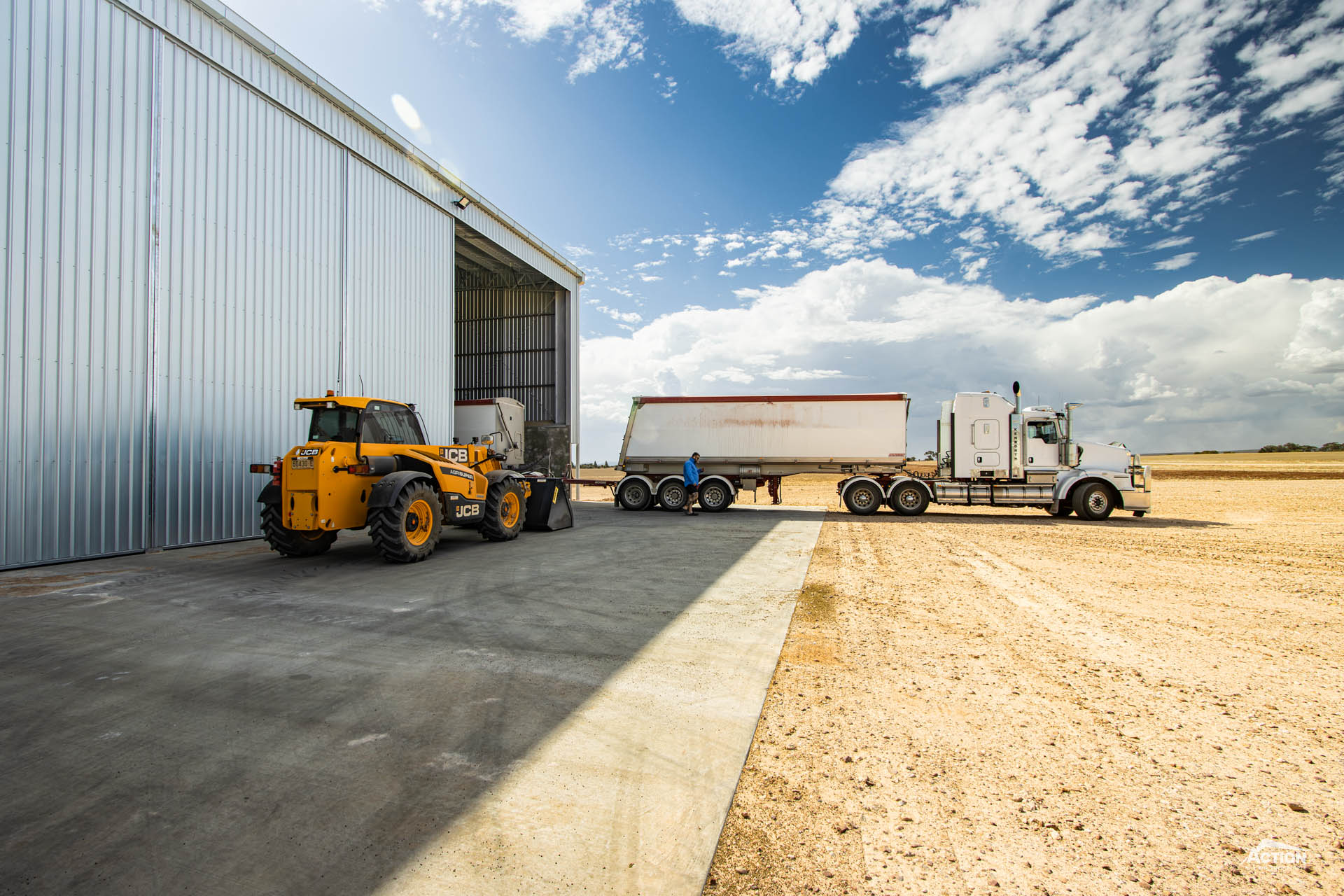
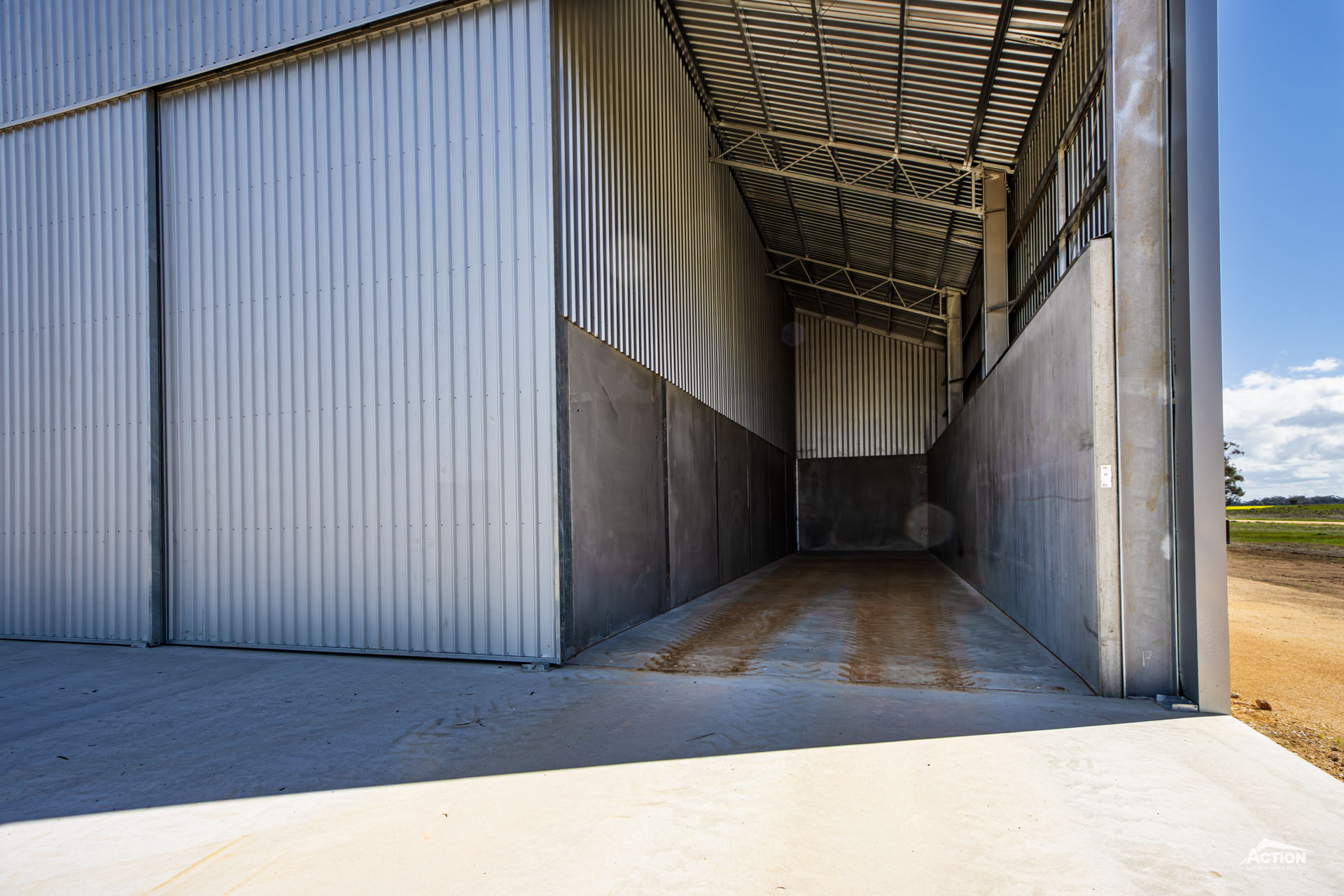
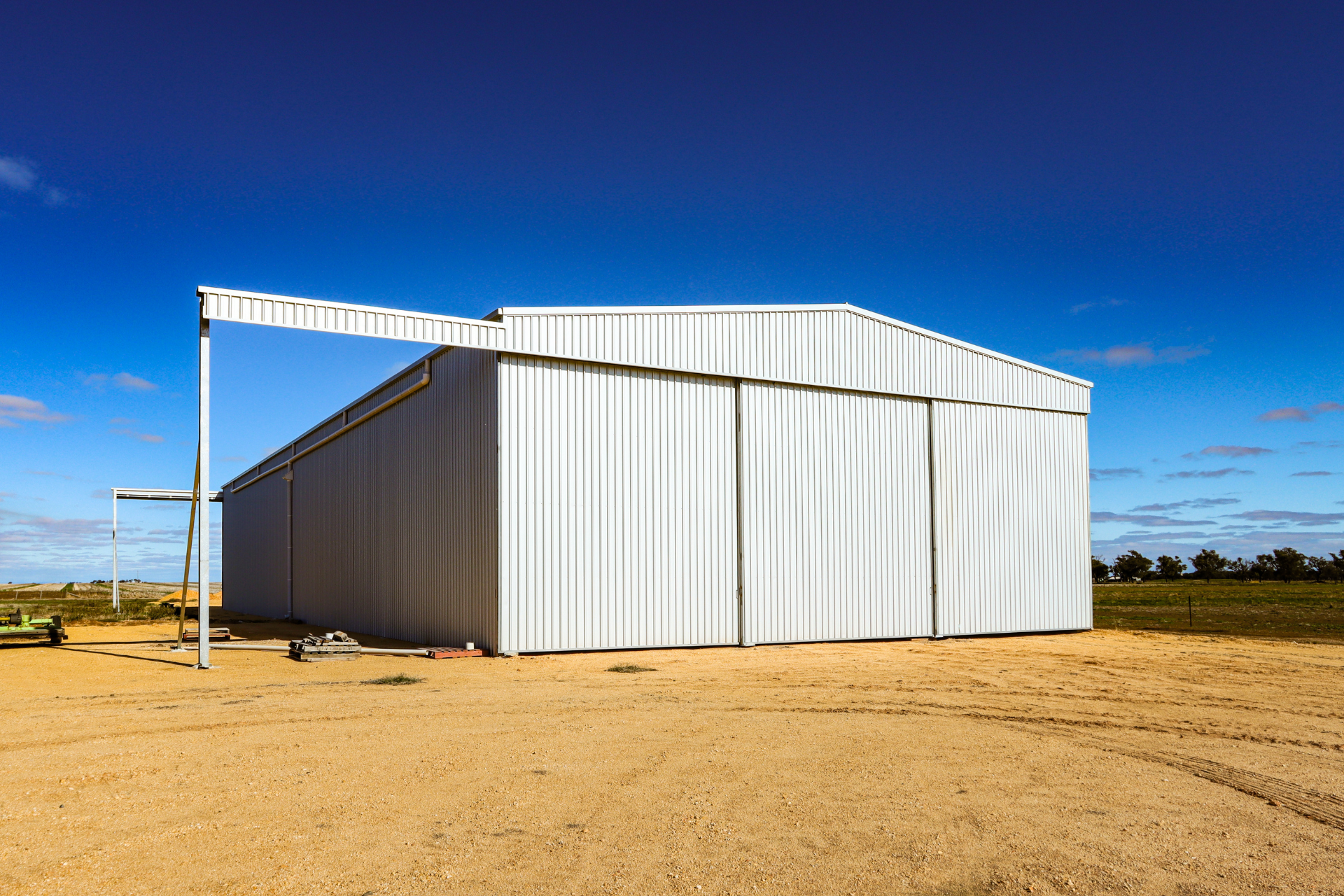
A sliding door outrigger is a frame on either one or both sides of the shed, that allows the doors to be opened and stacked out of the way.
This reduces the risk of machinery damage to doors and provides a wide access point for safer, easier and more efficient loading and unloading.
Sliding door outriggers really shine when there are permanent segregating panels in the gable end, by providing clear access to both areas.
So, a fertiliser shed design with sliding door outriggers provides the best of both worlds: wide access when in use and the best possible weather protection during storage.
And an outrigger is one of the fertiliser shed design options that can quickly pay for itself with increased efficiency and ease of use.
In the video below, Ben takes a walk through a standard fertiliser shed design which includes a outrigger on one side of the gable.
4
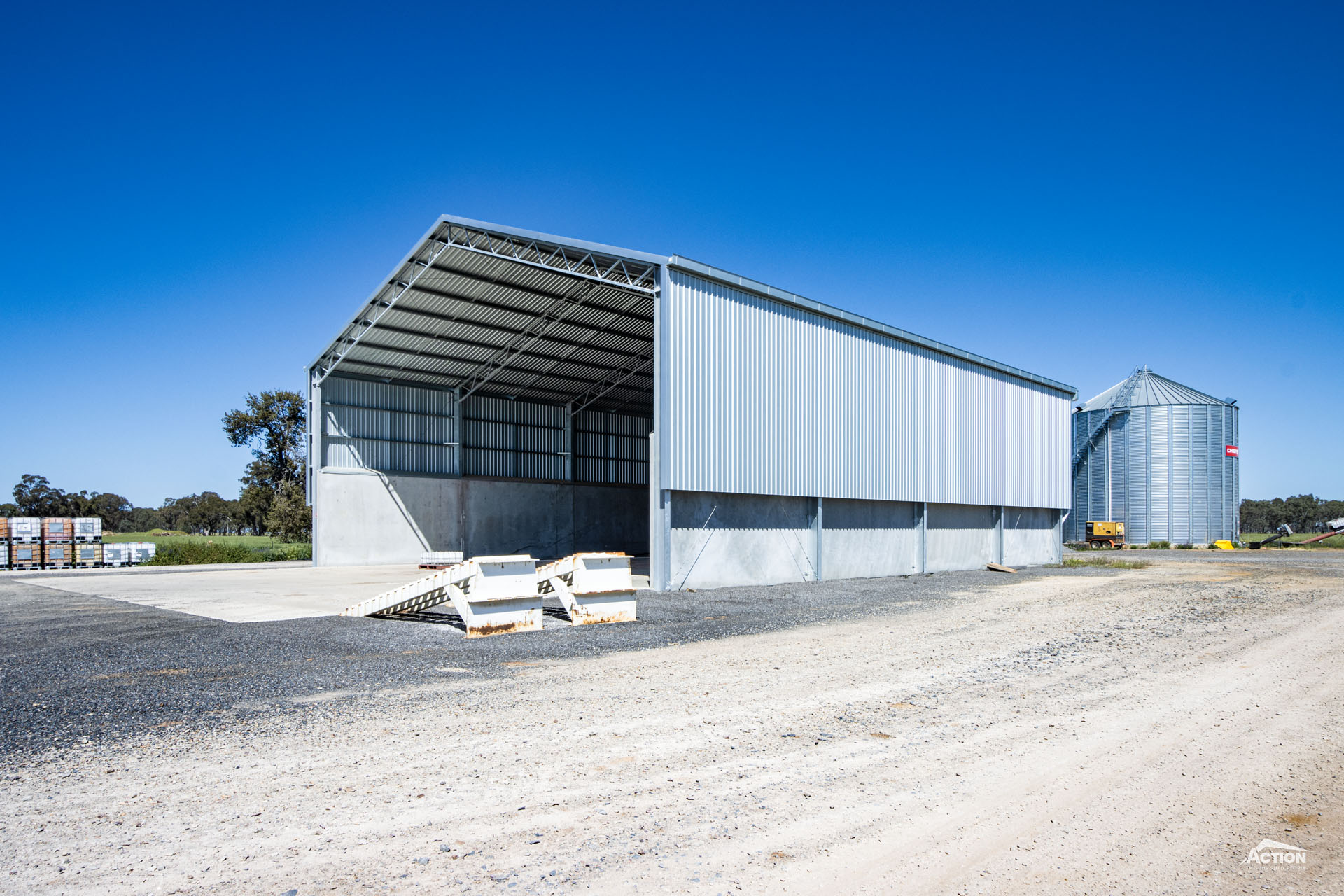
4. Concrete Plinth
Concrete plinths are one of the fertiliser shed design options that are growing in popularity.
Also popular for grain sheds, concrete plinths are a section of concrete extending from the outside wall panel to the outside of the shed columns.
This is not just a neat finishing touch. A concrete plinth acts as a moisture barrier, providing an additional buffer to make sure moisture around the outside of the shed doesn’t seep inside, keeping your fertiliser in top condition.
5
5. Internal Wall Lining
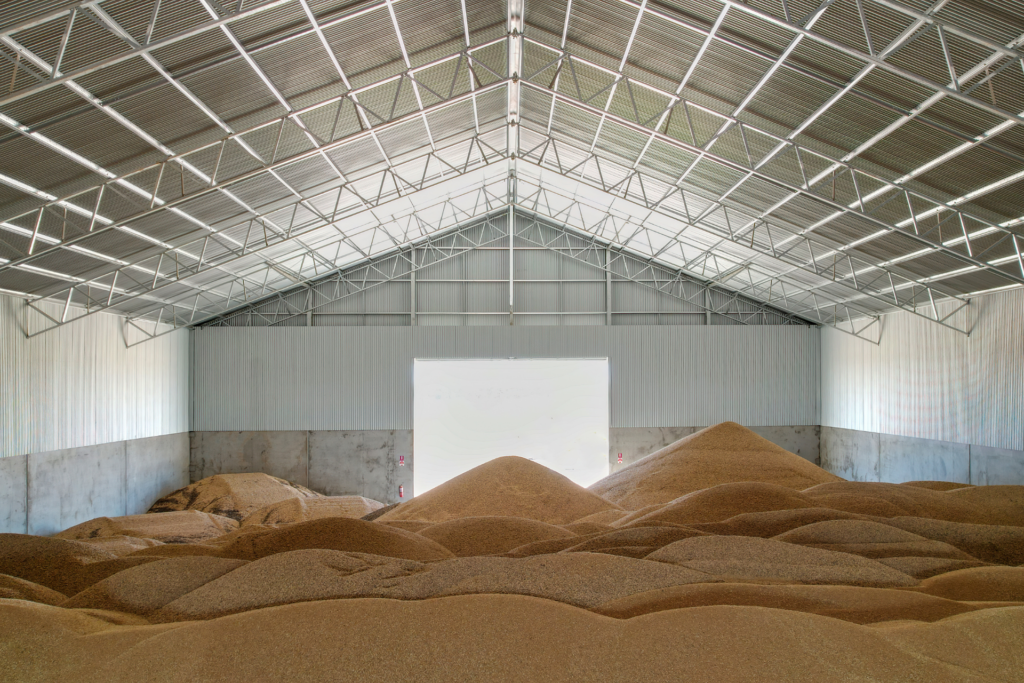
Internal wall lining, also referred to as internal cladding, provides an additional layer of protection to increase the longevity of your fertiliser shed.
This involves lining the inside of the walls from the top of the panels to the roof with cladding. This stops fertiliser dust from settling on the wall girts, reducing the risk of corrosion and need for maintenance.
How Much Does Internal Wall Lining Cost?
The cost of lining the inside walls of your fertiliser shed is largely determined by the size of the shed (length and height) itself.
Generally, zinc cladding typically costs between $13 per square metre and $20 per square metre including GST.
You will also need to factor in the cost of installation.
6
6. L-Walls
Are your looking to include segregation in your fertiliser shed design?
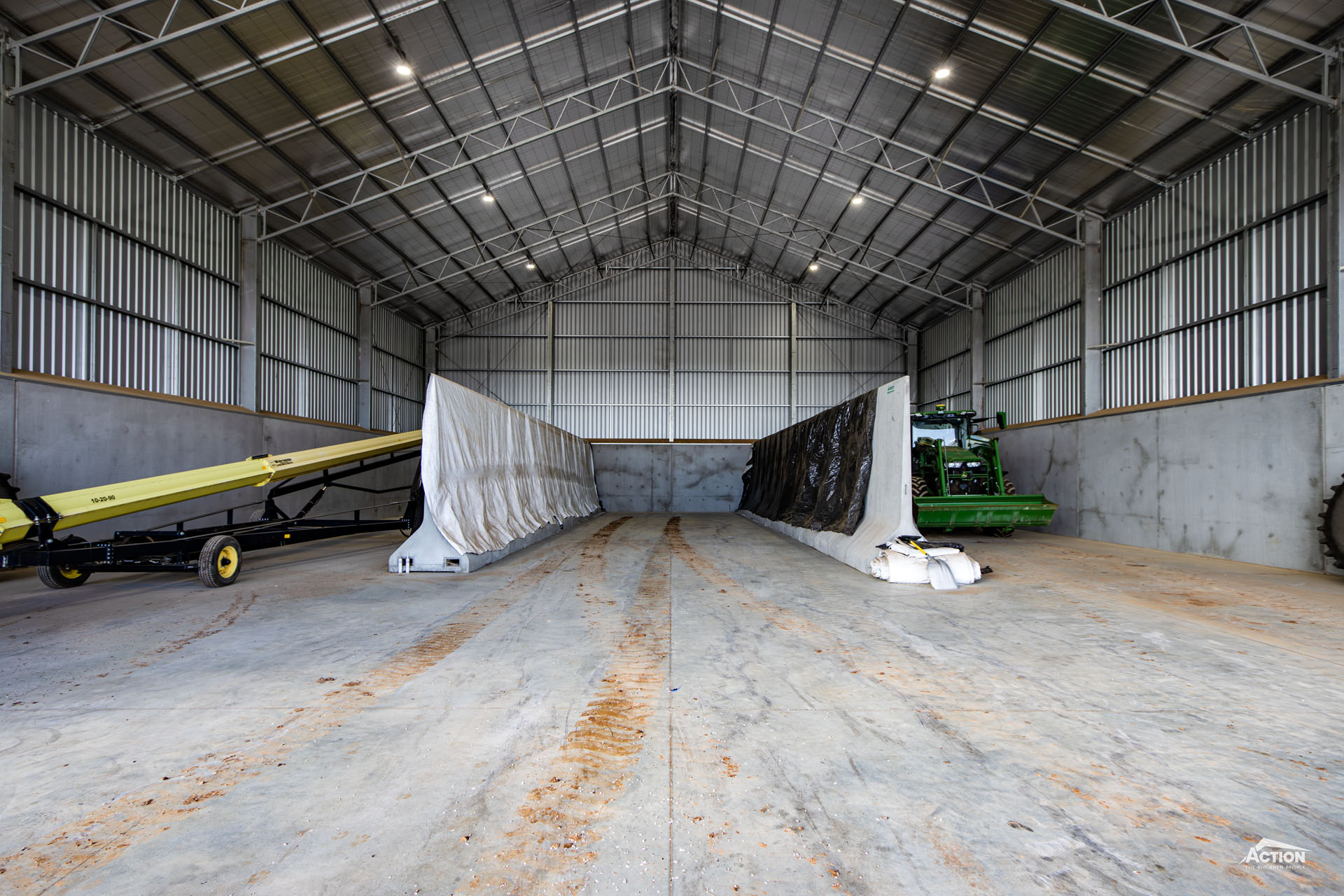
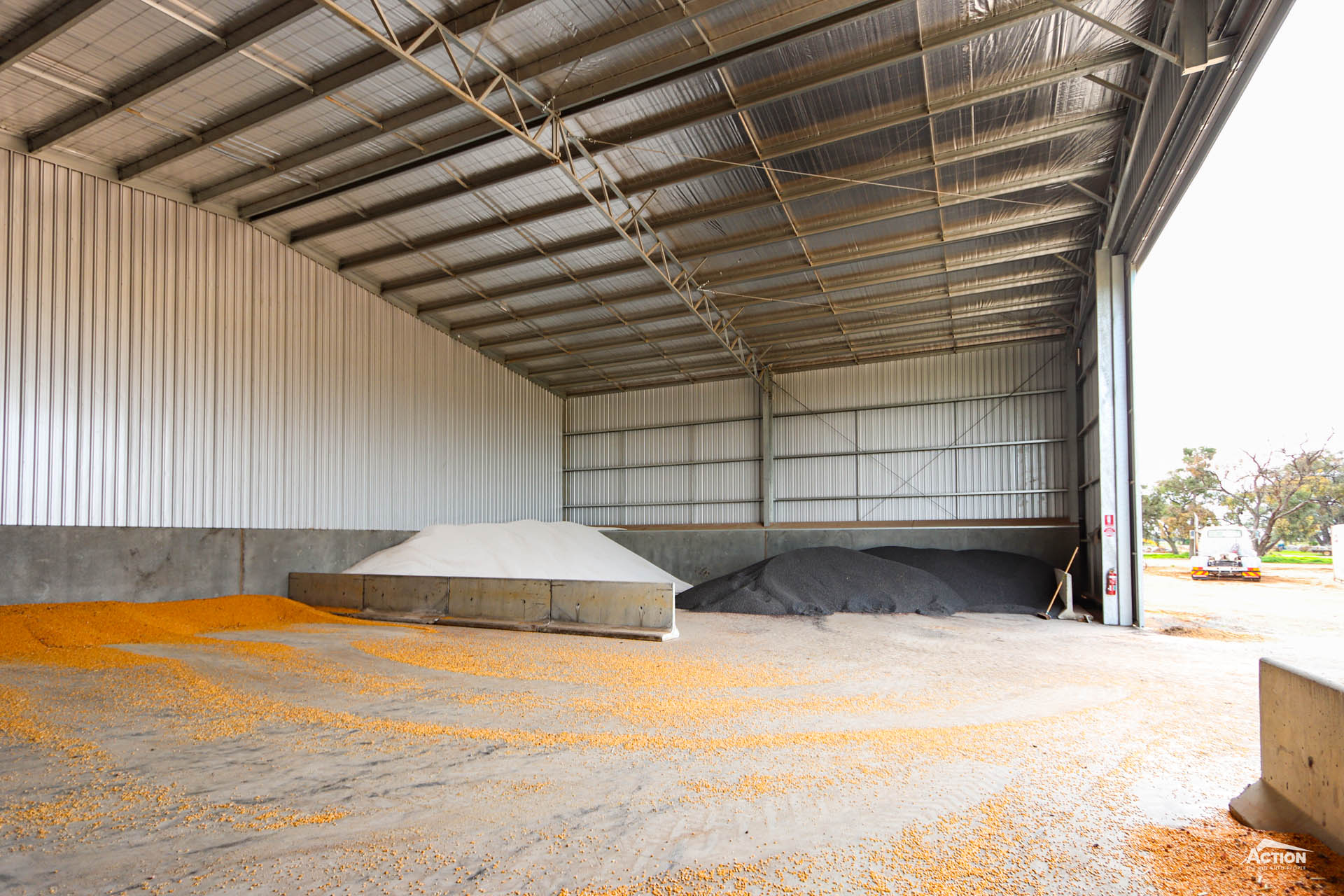
We often recommend starting with a large bulk storage area and then segregating the area with movable L-wall panels.
The benefit of L-walls is that they allow segregation without reducing the overall capacity of the shed.
This provides you with much more flexibility in how you use your shed – especially as storage requirements change from season to season.
How Much Do L-Walls Cost?
The cost of L-walls depends on the size, the supplier, and your location.
We manufacture L-walls in-house, making them a cost-effective option for projects within ~ 500km of our facility at Stawell, western Victoria.
As a guide:
- 2.4 metre L-walls costs approx. $2,000 – $2,300 each including GST but not including delivery.
- 3 metre L-walls cost approx. $2,300 – $2,600 each including GST but not including delivery.
Please note, these price guides are general only and do not take the place of a formal quote.
7
7. Personal Access Doors
Personal access (PA) doors are often a compliance requirement for larger fertiliser sheds and grain sheds.
Compliance aside, PA doors are handy fertiliser shed design options – allowing you to quickly and easily access the shed to check your fertiliser, without having to open and close the main sliding doors.
How Much Do Personal Access Doors Cost?
Standard personal access doors typically cost around $1500 each, depending on the supplier, your location and any customisation you include.
8
8. Sisalation Paper
Fertiliser shed designs have evolved over the last few years and one design option becoming more common is sisalation paper.
Sisalation paper is installed to prevent condensation build up and dripping by acting as a vapour barrier.
This is another simple measure to keep your fertiliser dry and in the same condition as it was when it went into the shed.
There are several different sisalation options for your shed including sisalation paper, sisalation blanket and AIR-CELL Insulbreak by Kingspan.
AIR-CELL Insulbreak is the most premium product of the three options, but it may not be necessary for your shed project.
So, that’s a round-up of eight fertiliser shed design options you could consider for your project!
Looking for more information on fertiliser shed designs, sizes and prices? Check out the list of resources we have collated below.
Useful Resources
- Standard Fertiliser Shed Size & Price Guide (Flipbook)
- Fertiliser Storage Calculator
- How To Create A Versatile Fertiliser Shed Design
- What Are The Best Concrete Panel Sizes?
Fertiliser shed design options can be the difference between a functional set up and a dysfunctional one, directly impacting the safety and efficiency of your operation.
Looking for project advice? Reach out to the Action team on 1800 687 888 for best-practice design recommendations.