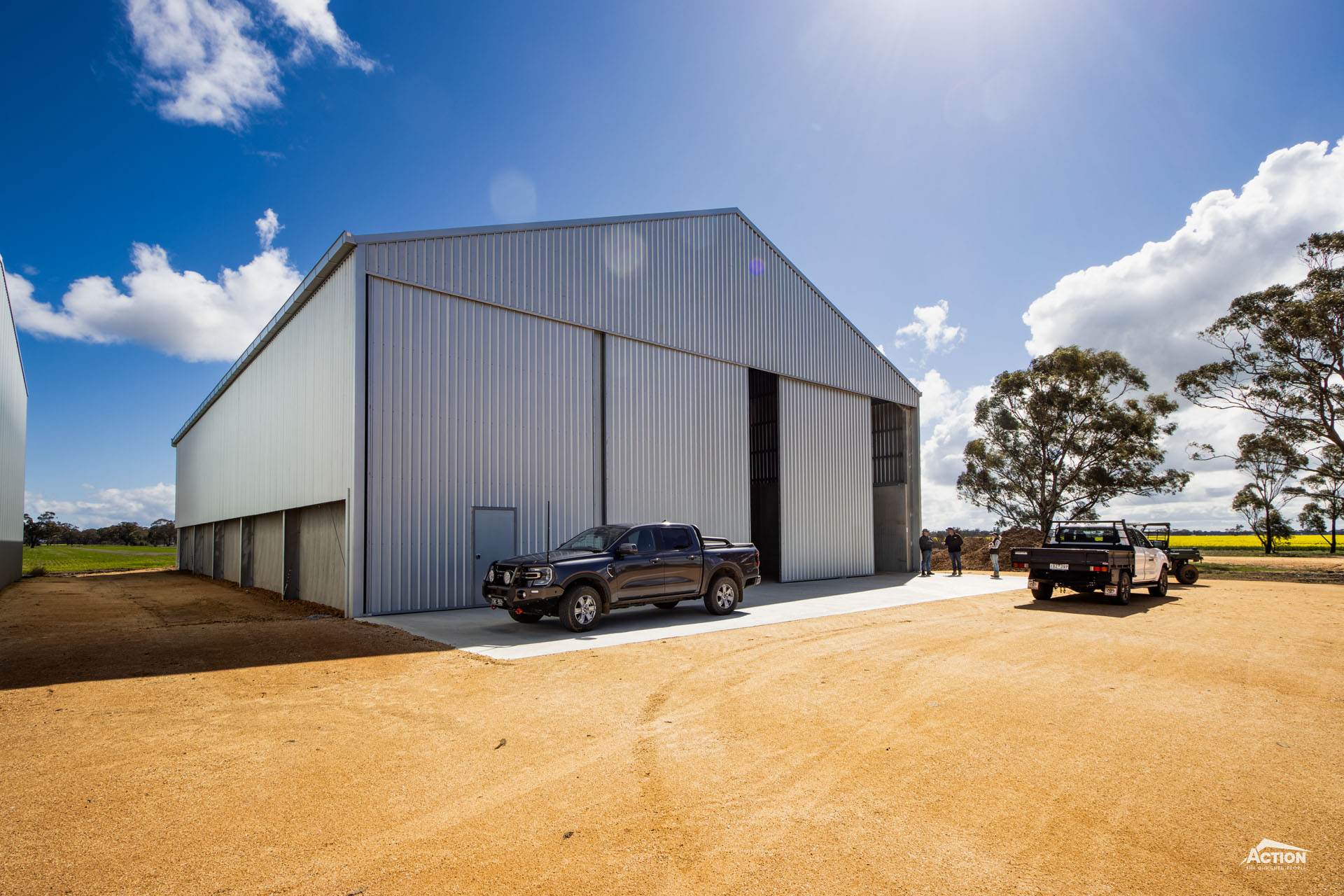
Don’t underestimate the importance of grain shed design!
Your grain shed design can be the difference between a functional, efficient storage set-up that provides value season after season – and a set-up that causes capacity headaches and frustrating delays at harvest and limits future growth.
So, what is the best grain shed design?
Can open-front grain sheds provide value?
Are inside-out grain sheds a thing of the past?
What does the future of grain shed design look like?
In this article, we discuss grain shed design, including:
- Where it’s been, where it’s at and where it’s headed
- Design decisions you can make today to ensure you are set up for the future
We trust this discussion is helpful, whether you are building a bulk grain storage shed or considering your options for a multi-use set-up.
So, let’s take a deep dive into grain shed design.
From inside-out sheds to fumigated systems.
Are Inside-Out Grain Sheds A Design Of The Past?
Popular in the early 2000s, an “inside-out” grain shed design has iron cladding installed to the inside of the shed rather than on the outside of the shed frame.
This allowed grain to be stored against the wall.
However, the design did have its limitations. For example, the cladding could be damaged by machinery or if the shed was overfilled, and it wasn’t suited for fertiliser storage.
It was for these reasons that the inside-out grain shed declined in popularity over the past 5 – 10 years, with concrete panel designs taking their place.
Do Open-Front Grain Sheds Still Provide Value?
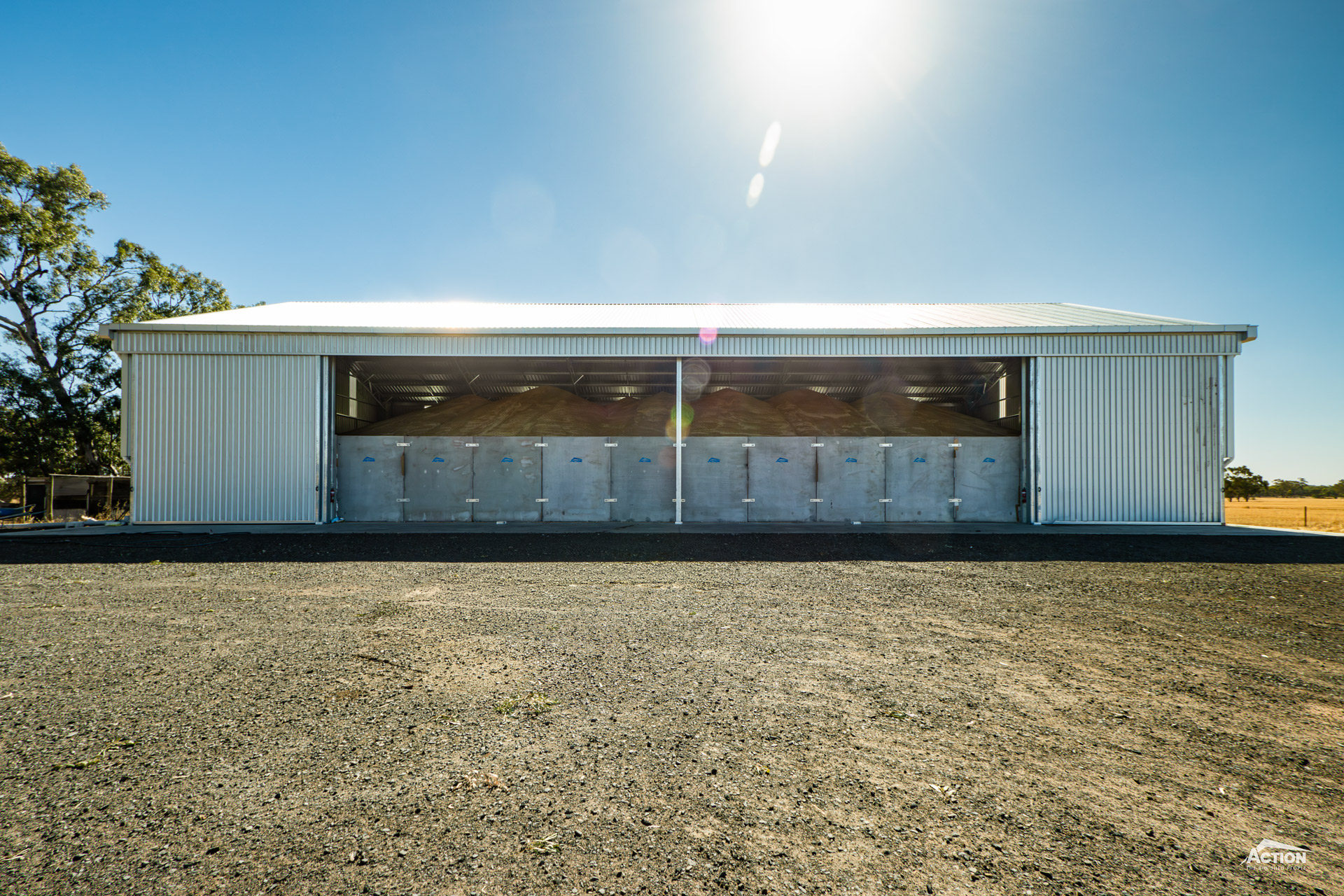
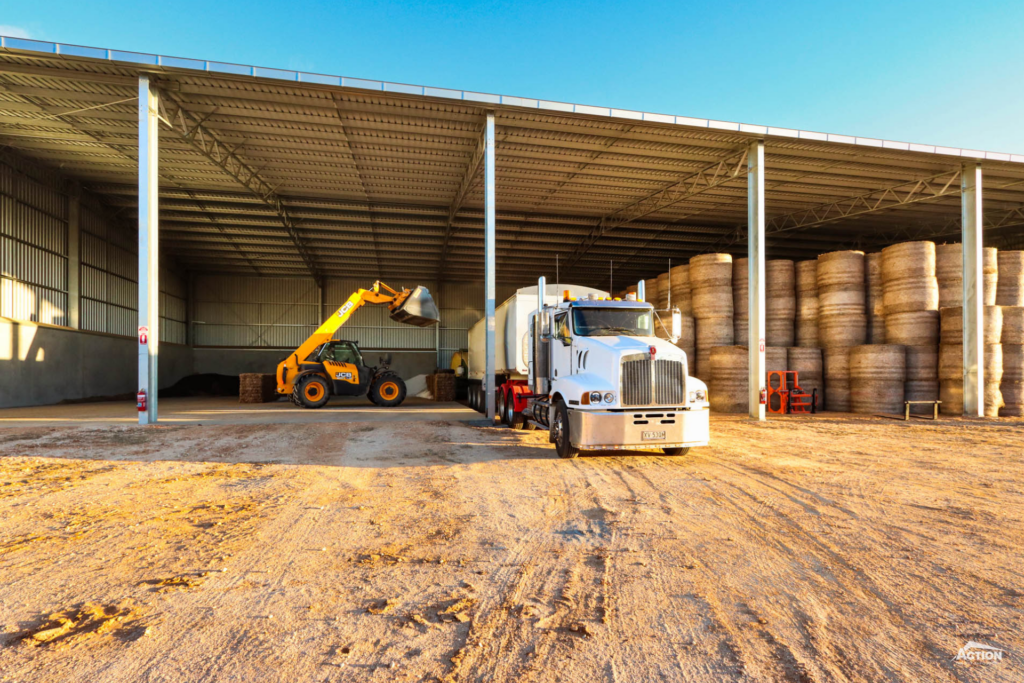
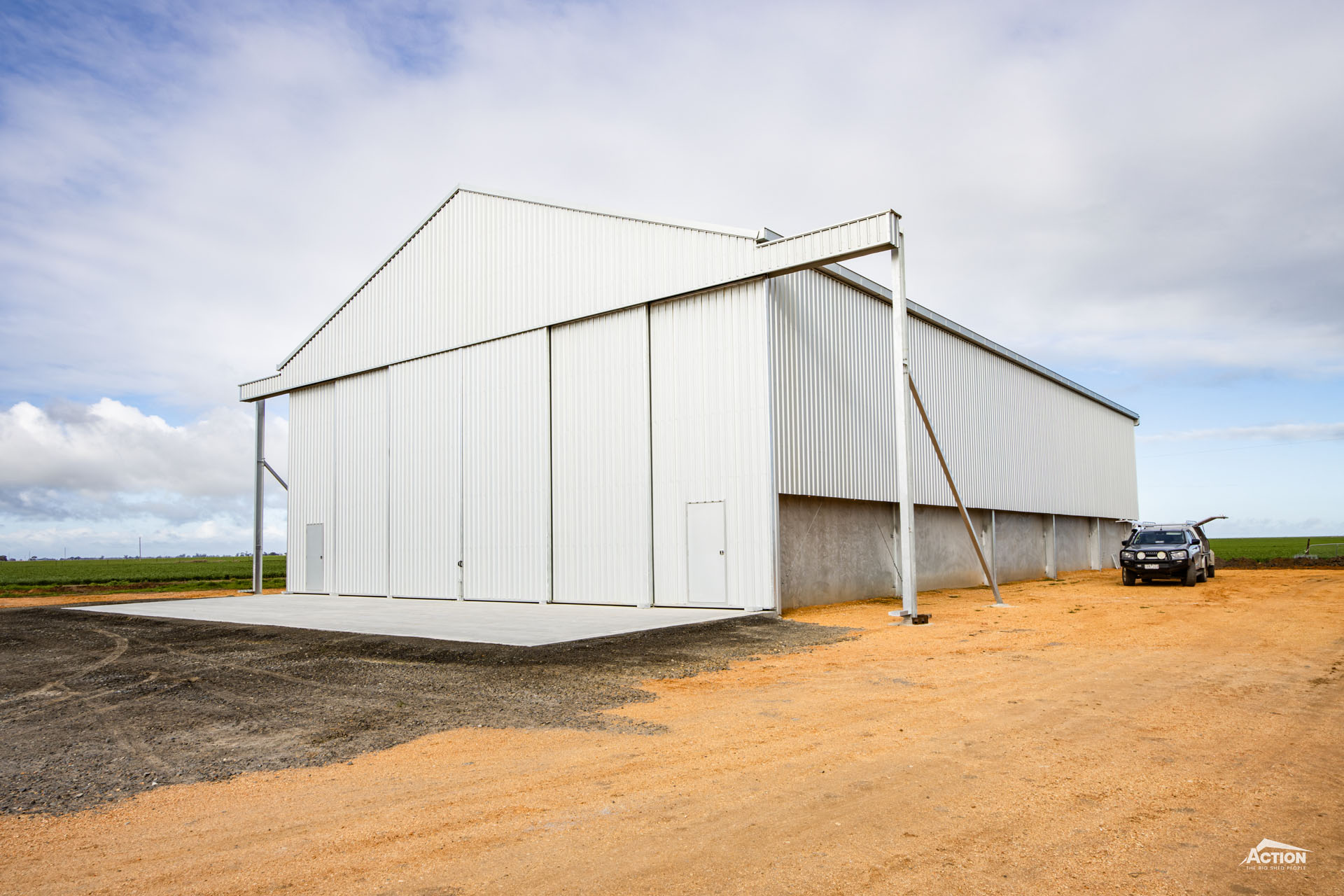
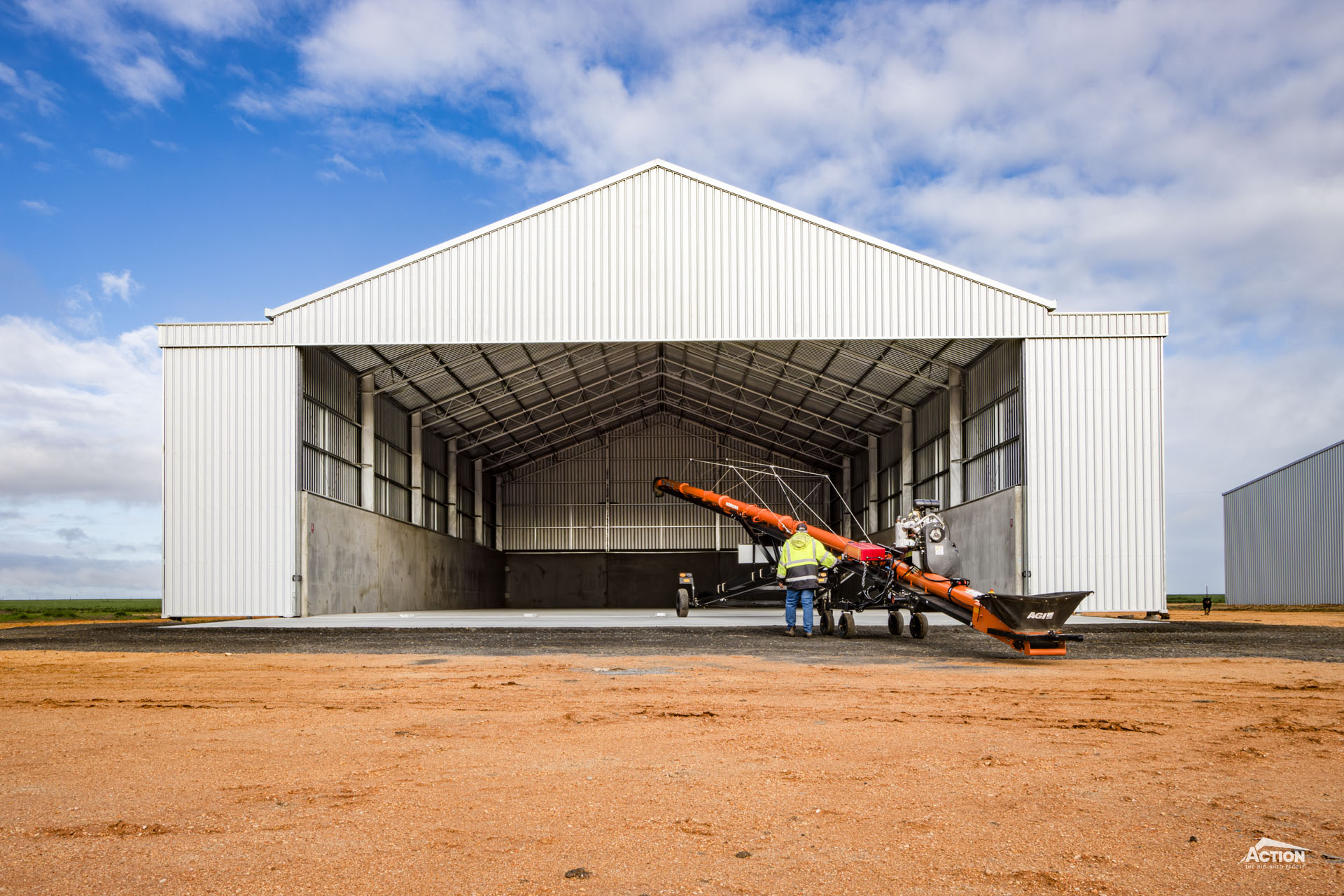
Open-front grain sheds are typically a three-sided shed (open on a long side) with either concrete panels or combination walls.
This design has proved its value over the years.
For example, an open front design worked well for Read Farming in 2021, as it provided effective aeration for faba beans and could be used for machinery storage in the off-season.
However, this design doesn’t provide the most effective weather protection – and the open side limits storage capacity too.
This is why these days the open front design is more commonly used with concrete panels for short-term grain or fertiliser storage.
John Bennett’s versatile shed – pictured – is a textbook example of this.

What Does Best-Practice Grain Shed Design Look Like Today?
So, what is the best grain shed design?
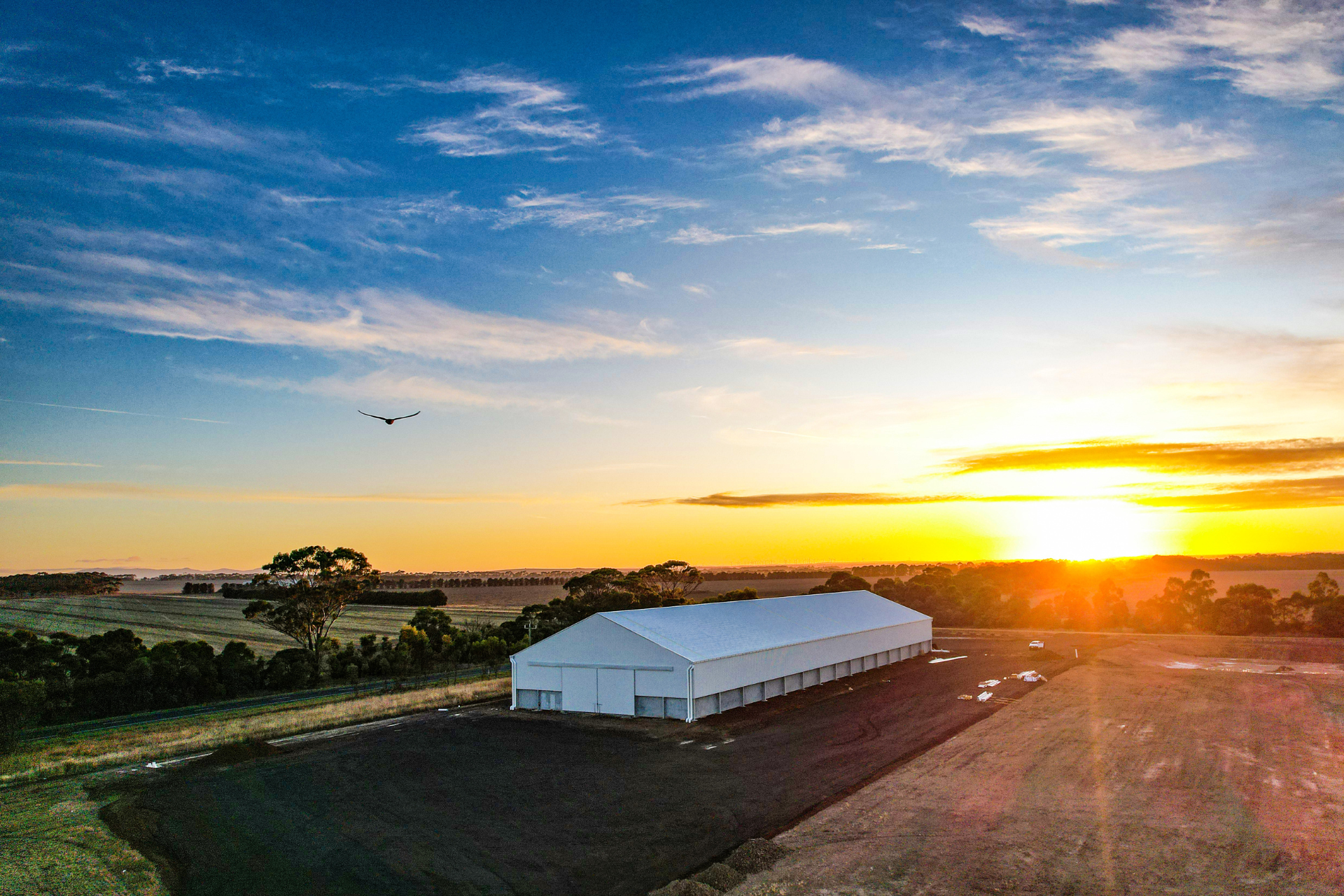
The best-practice grain shed:
- Is fully enclosed (this provides the best protection)
- Includes concrete panels and slab (3.5m high panels and 180mm slabs are most common)
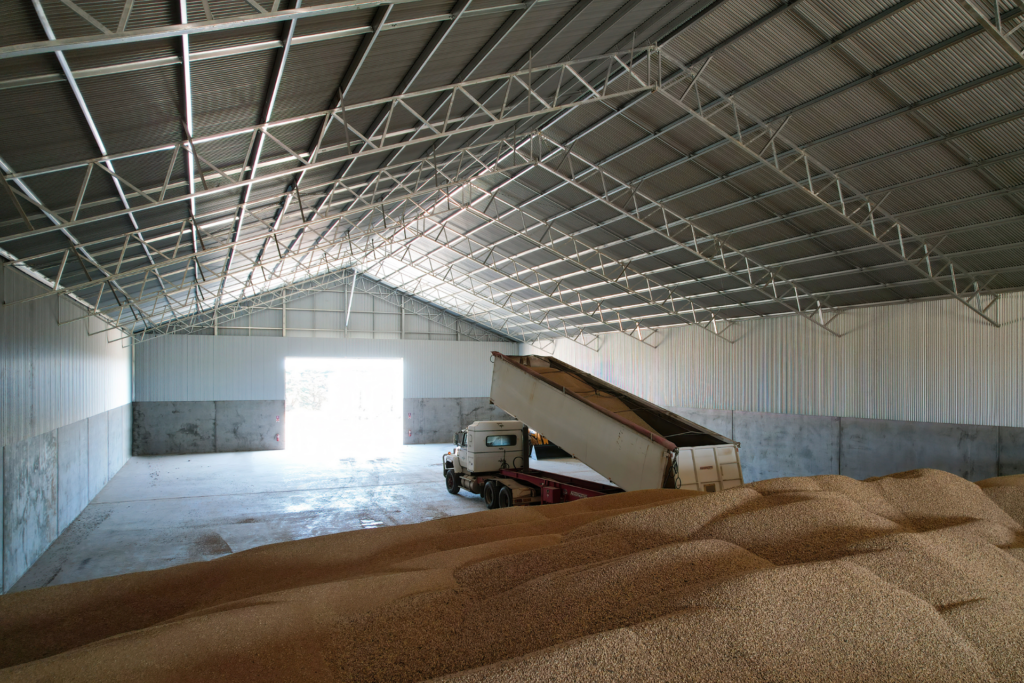
- Has a steep roof pitch (to accommodate the angle of repose and tipping in the shed)
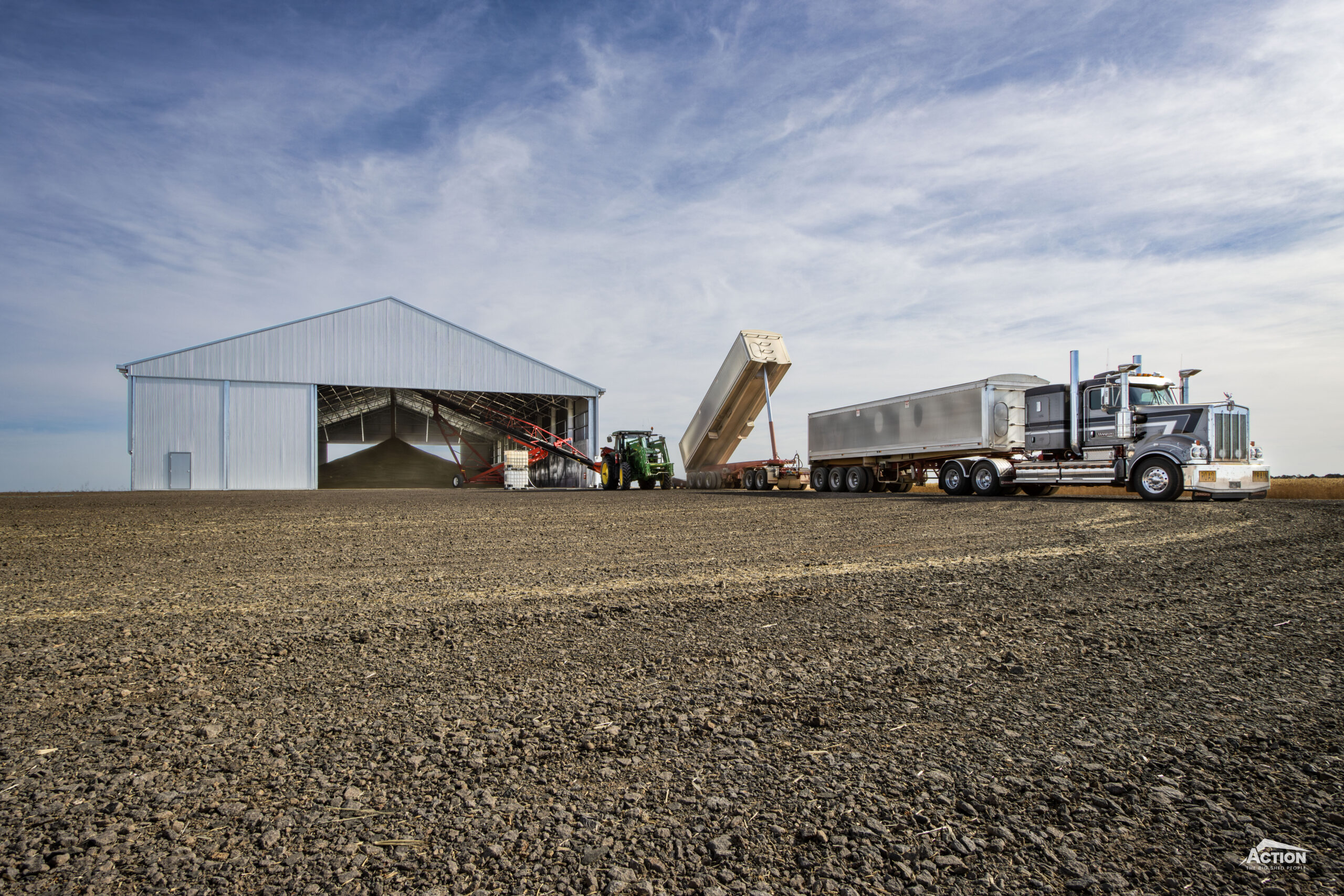
- Is designed to suit how you load and unload (such as height for tipping inside, width for trucks to turn or the frame engineered for an overhead system)
- Addresses operational priorities (such as fumigation for pulses, or versatile storage by segregating products with L-walls or using canopies for machinery storage)
- Considers your future storage requirements – which leads to our next discussion point!

What Is The Future Of Grain Shed Design?
There are several current design trends we expect to continue – and there are several design details we recommend addressing to ensure your grain shed design is future-ready.
1
1. Bigger Is Better
Is a shed ever too big?
The average farm shed size continues to increase – and for grain sheds, it’s easy to see why.
Firstly, increasing your grain shed size lowers the cost per tonne. (The best way to do this is to make your shed longer)
Secondly, it’s a great way to be ready for the future – whether it’s upsizing the panels to increase capacity, increasing the height for future machinery purchases or choosing a span that allows a truck to turn inside the shed.
Finally, the bigger the shed, the more opportunities – simply because you can store more grain on-farm.
2
2. Segregate Smarter
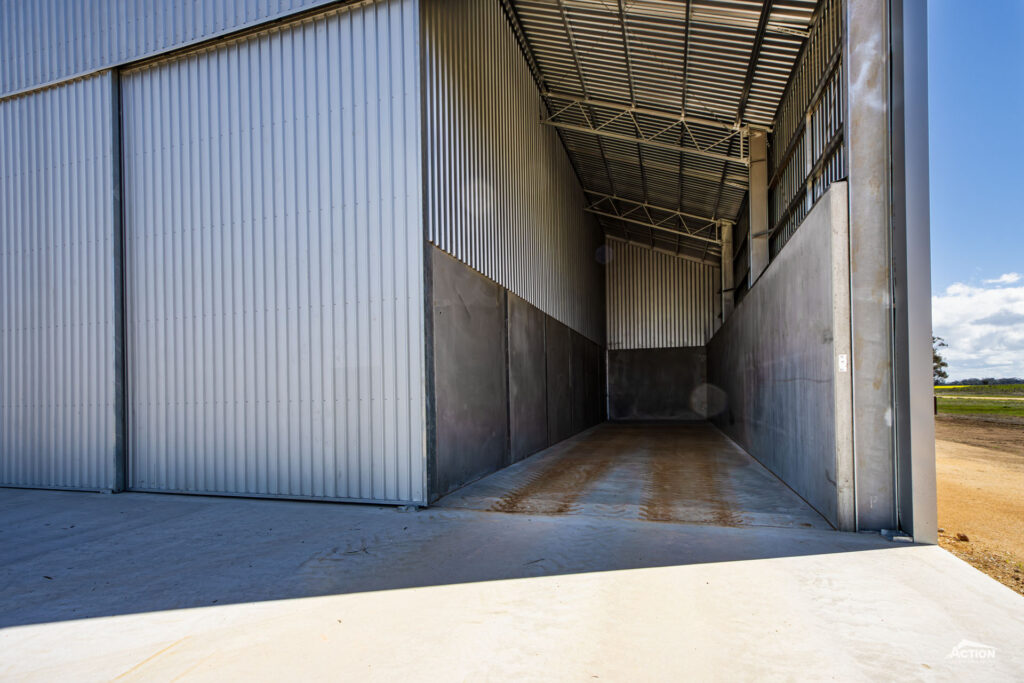
One way to capitalise on a big bulk storage space is to segregate it with movable L-walls.
It’s the smarter way to segregate because it doesn’t permanently reduce the shed capacity, providing much more flexibility – you can choose how you use your shed from season to season.
While permanent segregation still has its place, particularly if you need strict segregation between products, it is becoming less common in grain shed designs – a trend we expect to continue.

3
3. Value With Versatility
Versatile grain shed designs are a hot topic as growers look to get the best value for their money, with grain/fertiliser sheds being the most popular.
The two grain shed trends we have discussed so far are a great place to start – a large bulk storage area with movable segregation.
Other ways to achieve a versatile grain shed design include:
- Installing a canopy for machinery storage
- Choosing a panel height that works for both fertiliser and grain (3.5m is usually the sweet spot)
- Increasing the shed height for your large machinery
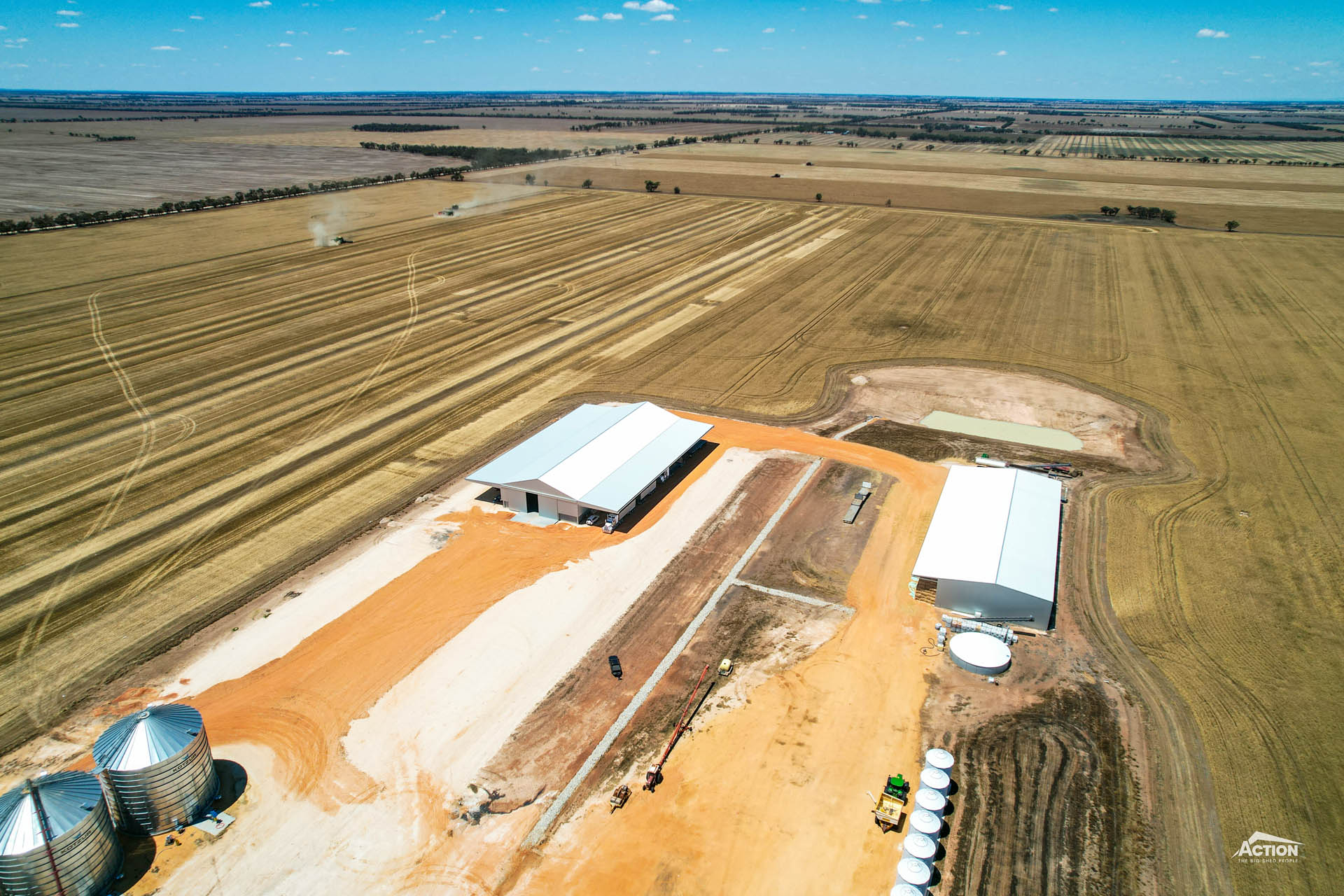
- Including a separate fertiliser bunker (like this 2000 tonne segregated grain shed)
These all work well for bulk grain storage sheds.
For smaller-scale sheds or for short-term grain storage, you could consider an open-front shed with one or more enclosed concrete panel bays.
4
4. Factor In Fumigation
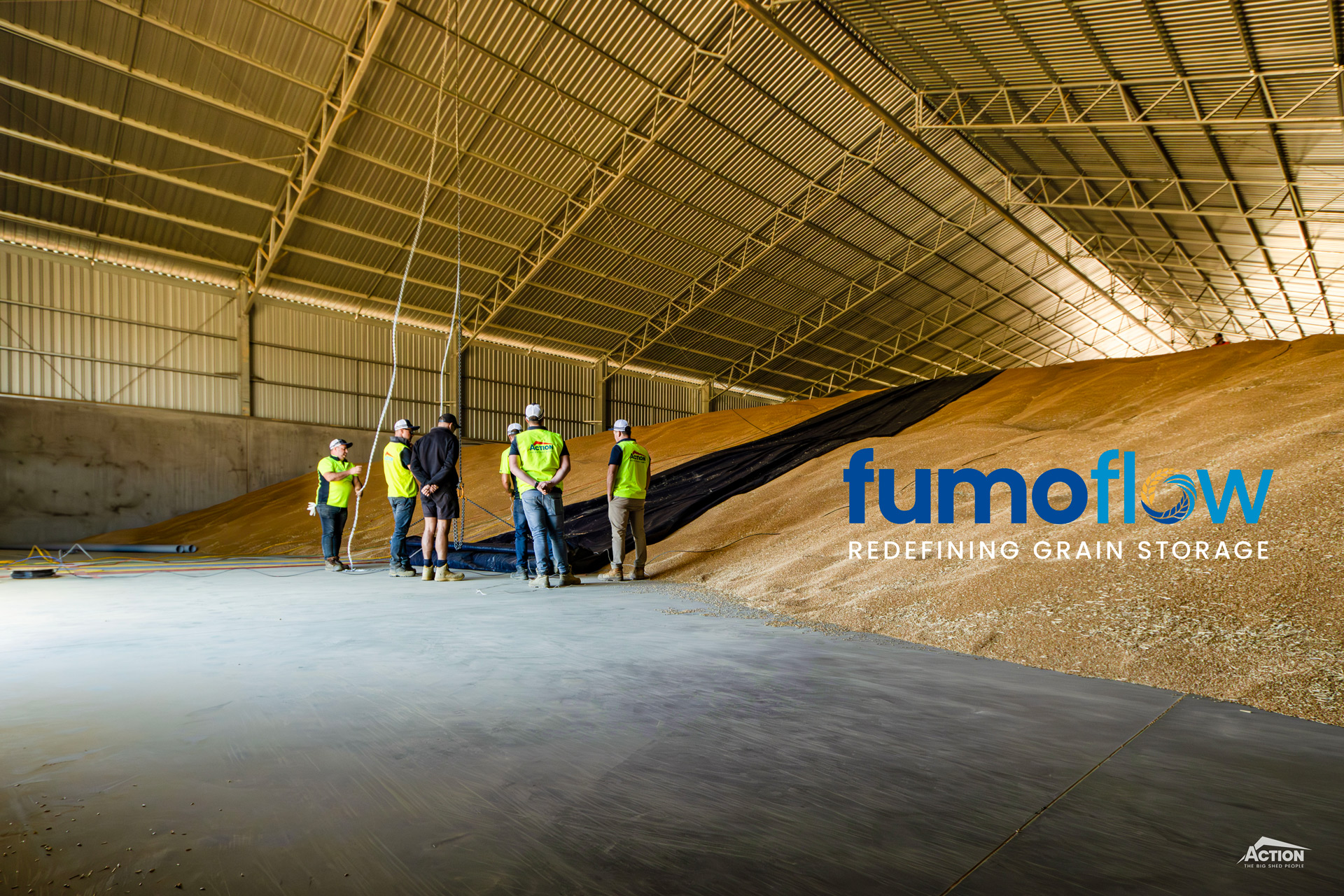
Setting your shed up for fumigation is a smart move.
For example, it allows you to store pulses on-farm, opening new market opportunities, avoiding off-farm storage delays at harvest and reducing your dependence on third parties.
Grain shed fumigation is gaining traction, with leading cropping enterprises choosing to set their Action grain sheds up for fumigation.
To learn about your Action grain shed fumigation options, talk to the team on 1800 687 888.
5
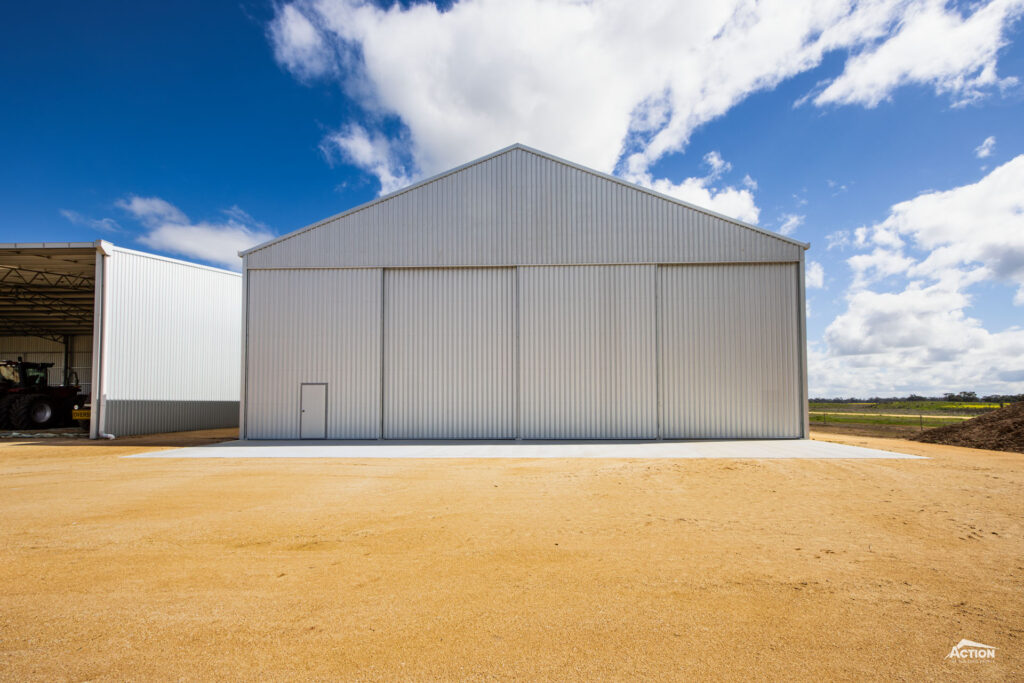
5. Keep Up With Compliance
Our Projects team manages the council permit application on your behalf, so they keep across any new fire design requirements or changing shed classifications that will impact the process.
Often, these requirements can also impact your grain shed design.
For example, personal access doors are now a compliance requirement for large storage sheds, such as grain sheds.
Depending on the size of the shed, more than one is required. There are also parameters regarding the location of these.
Similarly, required water storage tanks need to be factored in.
It is essential to consider requirements like this early in the design stage to minimise the impact on shed functionality, capacity and site logistics – and to ensure there are no delays in the permit process.
6
6. Pay Attention To One-Percenters
We often say, when it comes to shed design, that it is the little details that make the biggest difference – like the one percenter that changes the momentum of a football game.
There are several details we recommend, including in your grain shed design now, that you will prove the value of season after season.
These include:
- Concrete aprons
- Concrete plinth
- Panel flashing
- Wall lining


7
7. Set Your Site Up
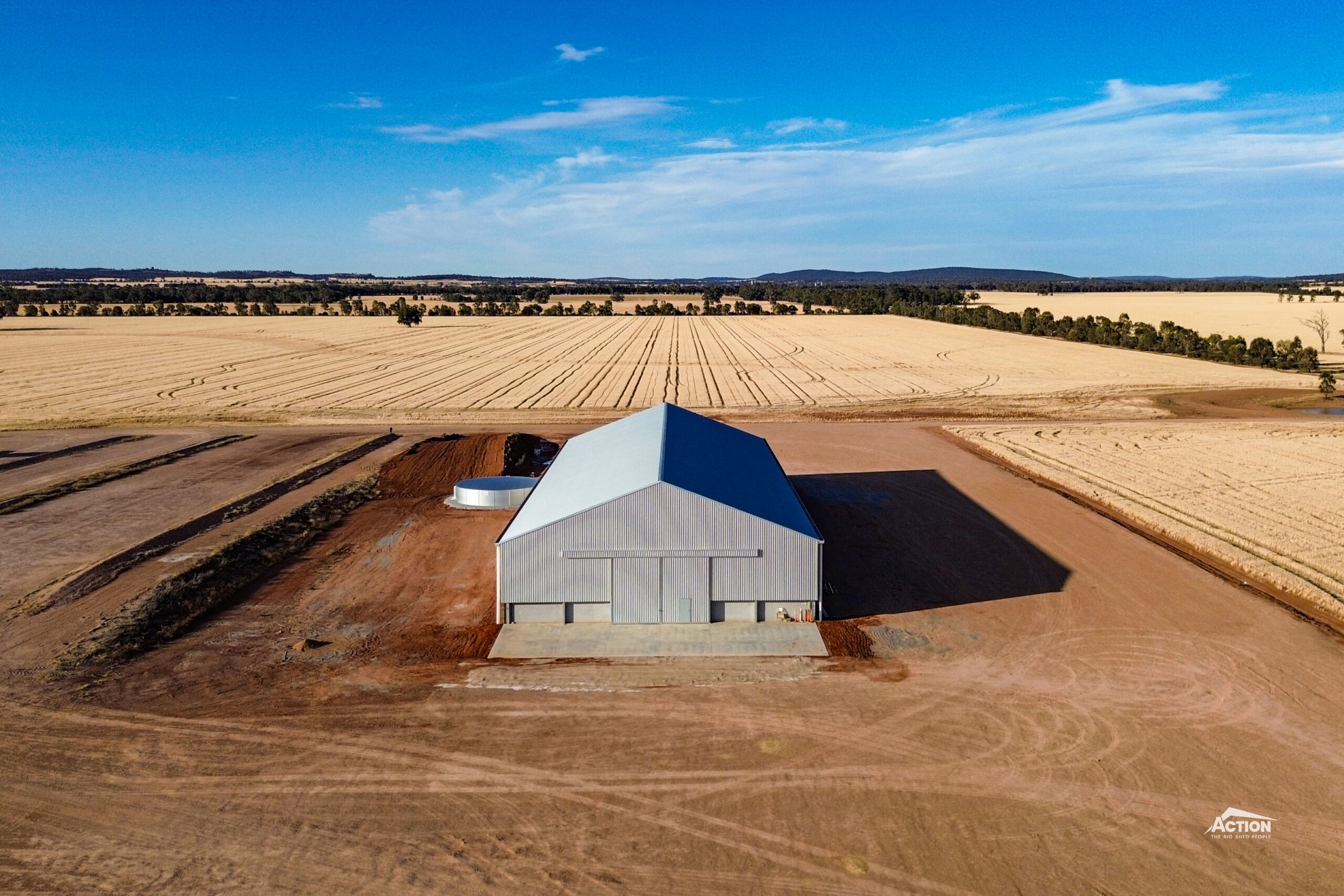
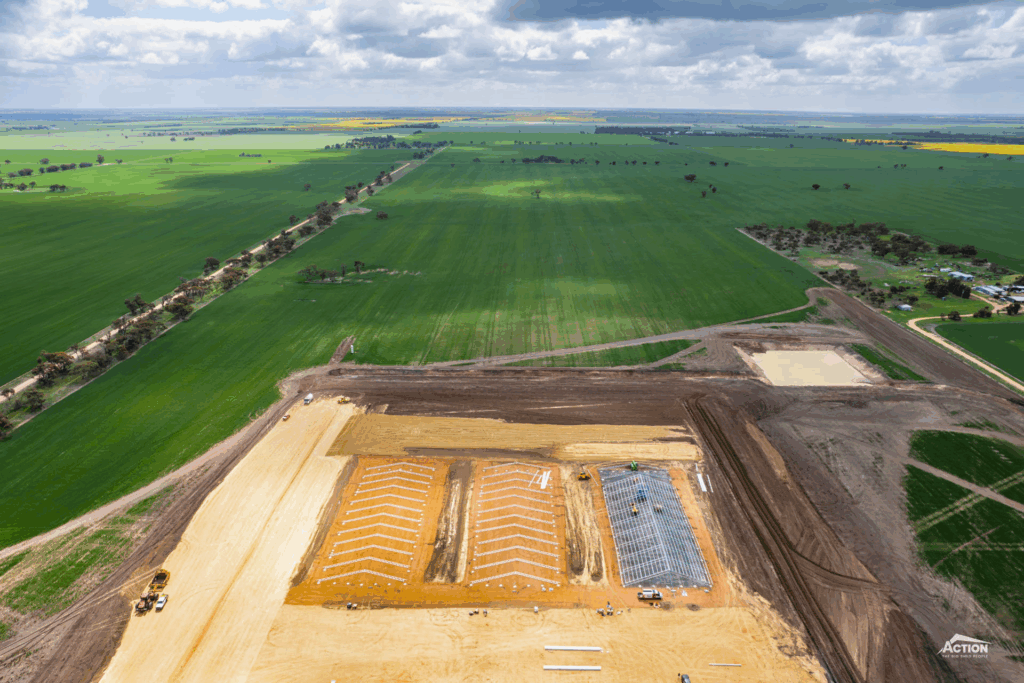
While not a grain shed design detail, the site layout for your grain storage also has a major impact on efficiency and functionality – now and in the future.
Grain sheds aren’t going anywhere – instead, they are set to play an important role in Australian agriculture.
So, if you are planning a grain shed build now, consider what your storage requirements might look like in five years, and set the site up for expansion.
This could include:
- Allowing room for additional sheds, including any required water storage tanks
- Considering how you will be loading and unloading the shed
- Creating a traffic management plan and ensuring there are adequate turning circles and access roads

What else should you be considering in the planning stages?
Read on to find out!
Planning Your Grain Shed Design
Here’s what else you need to consider before committing to your grain shed design.
- The grain type – is it suited to shed storage? Does it need to be fumigated? How will bulk density impact capacity?
- Your operational goals and priorities – what are you trying to achieve? Reducing delays at harvest? Opening more market opportunities throughout the year? Building a versatile asset?
- Your budget – What is the most cost-effective design? How can you lower the cost per tonne without sacrificing functionality or quality?
- The capacity – How much grain are you storing? Do you require segregation?
- Access – How will you be loading and unloading the shed? Do you need to be able to turn a truck inside the shed? Will you be tipping inside the shed? Does the shed need to be engineered for an overhead system?
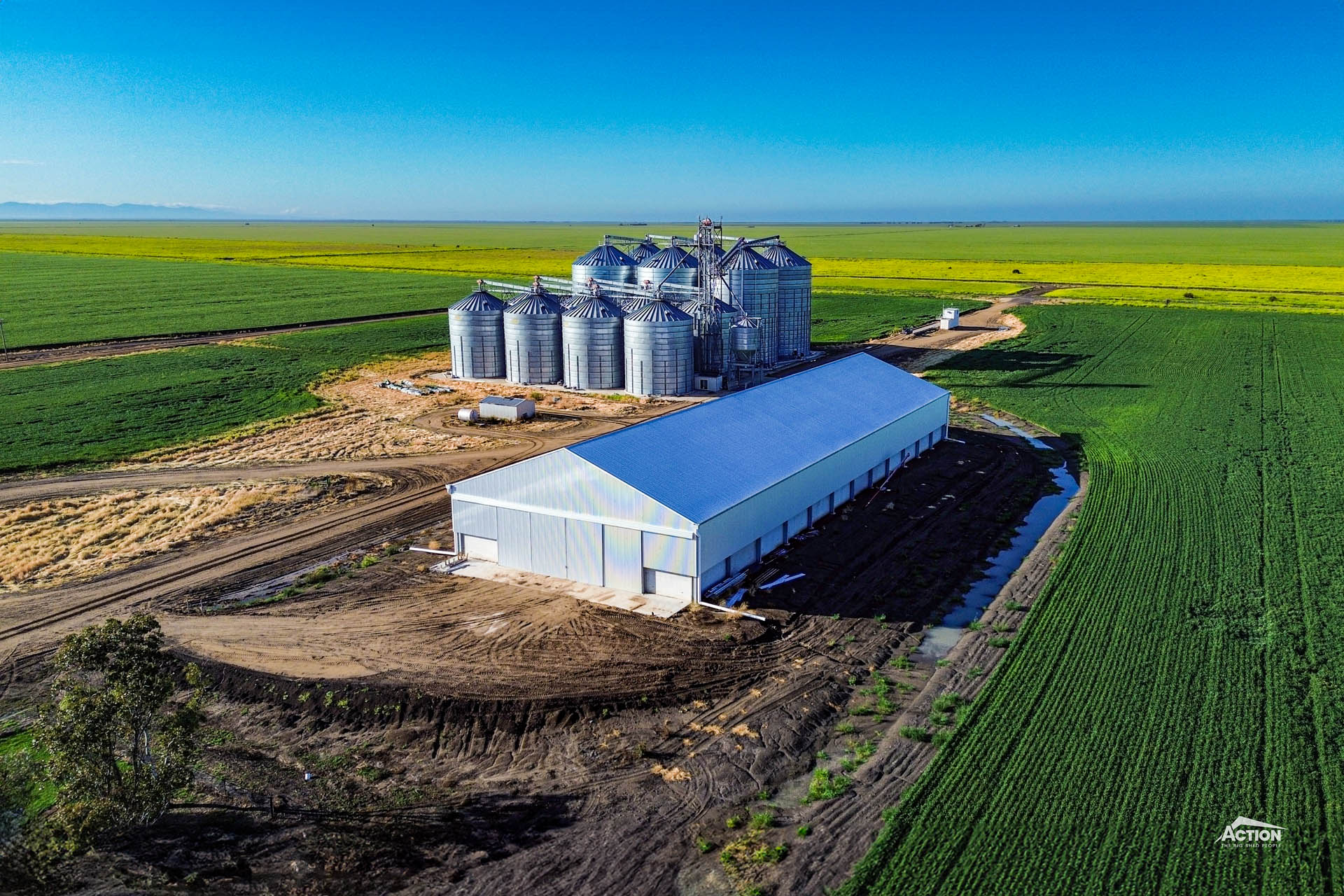
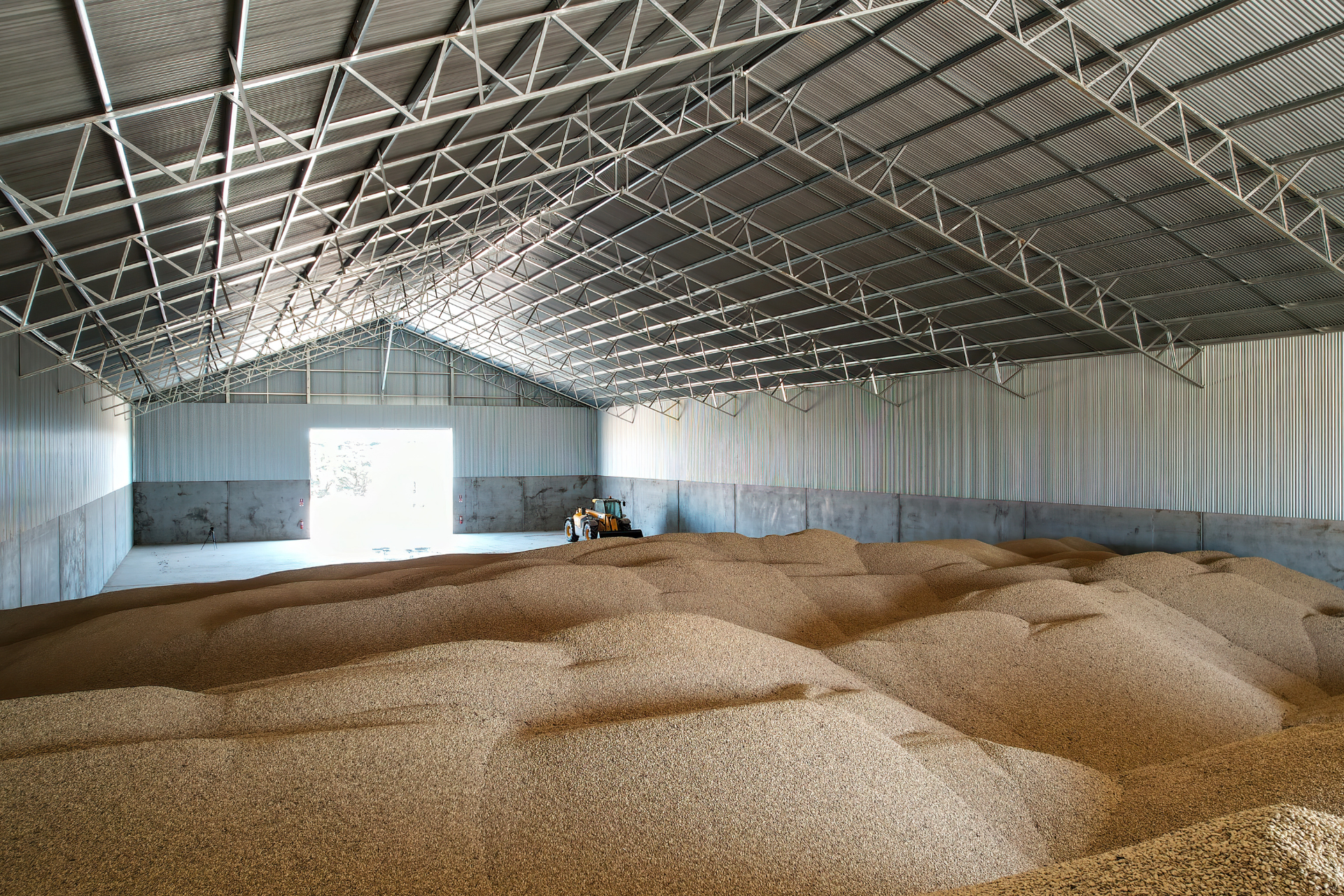
Inspiration Gallery


Your Top Grain Shed Questions – Answered
Quick answers to the top questions about grain sheds.
The cost for your grain shed project will depend on:
- Size (the bigger the shed the lower the cost per tonne)
- Configuration (longer sheds are more cost-effective than wider sheds)
- How you choose to customise the design
- Location and site conditions
Generally, concrete panel grain sheds usually cost between $100 – $200 per tonne including GST and installation.
Here are some price guides to help with your budgeting:
- A 30m x 18m grain shed stores 1,500 tonnes and costs approx. $150 – $190 / tonne.
- A 36m x 24m grain shed stores 3,000 tonnes and costs approx. $130 – $160 / tonne.
- A 56m x 27m grain shed stores 6,000 tonnes and costs approx. $100 – $135 / tonne.
Learn more here – Grain Sheds Versus Silos (Pros, Cons & Prices)
The most cost-effective grain shed design is typically a large bulk storage shed with concrete panels.
- The bigger the shed the more cost-effective it is per tonne.
- We manufacture concrete panels in-house making them a cost-effective option for your project.
- If segregation is a requirement, we recommend movable l-walls as these will not reduce the overall shed capacity.
The configuration of the shed will also impact how cost-effective the design is.
For example, a longer shed will be more cost-effective than a wider shed.
So, increasing the length of your shed is a great way to increase capacity and lower the cost per tonne!
If you are looking for cost savings on your project, remember not to sacrifice quality or functionality – you will pay more in the long run!
The building consultants at Action Steel are available to provide advice and costings for different designs and sizes to help you achieve a cost-effective and functional design – Call us on 1800 687 888.
The grain shed size that you require will largely depend on:
- The type of grain being stored
- The volume of grain being stored
- How you load and unload the shed
For example, you will need to consider the bulk density of the grain. Use the grain storage calculator here to see how bulk density will impact shed capacity.
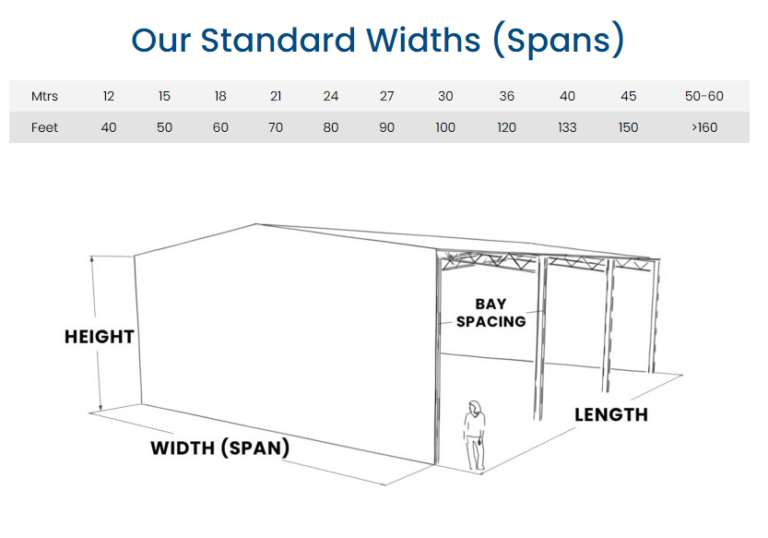
The length of your grain shed will be determined by the bay spacing and the number of bays.
- 6.5 metres is the best-practice bay spacing for grain sheds, as no stub columns are required to support the panel
- Increasing the length of your shed (rather than the width) is a cost-effective way to increase capacity.
For grain shed width there are several standard spans that work well.
- 18 metres is popular for smaller scale storage, 24 metres or 27 metres are most popular for larger scale storage.
- A 27 metre span allows a truck to turn inside the shed.
- Choosing a standard span helps create a cost-effective and functional design, you can learn why here – What Are The Standard Spans For Farm Sheds?
The height and roof pitch need to be considered in conjunction.
- A 21 degree roof pitch accommodates the angle of repose and allows a truck to tip in the shed.
- Popular heights include 7.5m, 8m and 9m.
The lead time for a new grain shed typically takes between four and six months.
The lead time for your project will depend on details like:
- Size (For example, a shed with a standard span size will be manufactured faster)
- Design features (For example, design features such as sliding door outriggers will increase the manufacturing time)
- Permit requirements (Permit requirements can vary from state to state, and site to site)
- Concrete slab curing time (We usually recommend allowing approx. four weeks of curing time to prevent cracks and issues)
- Site conditions (For example, were the earthworks completed ahead of shed build? Is there room for crane access? Is it an all-weather site?)
You can learn more about shed site preparation here – Farm Shed Pad Guide: Ideas, Sizes & Prices
Still got questions? Check out the 2025 Grain Shed Guide (Flipbook) here.
Useful Resources
- Grain Shed Capacity Calculator
- 2025 Grain Shed Guide (Flipbook)
- What Is The Best Concrete Panel Size?
- Grain Sheds Versus Silos (Pros, Cons & Prices)
- How To Maximise Grain Shed ROI
- Darcra Farming’s 6000 Tonne Grain & Fertiliser Shed (Video)
Planning your grain shed design to suit your current and future storage requirements is the secret to a successful project and setting your business up for growth.
Ready to get your planning underway? Curious about potential grain shed designs and pricing?
Book a project consultation on 1800 687 888 or submit a REQUEST A QUOTE form, and we will be in touch!