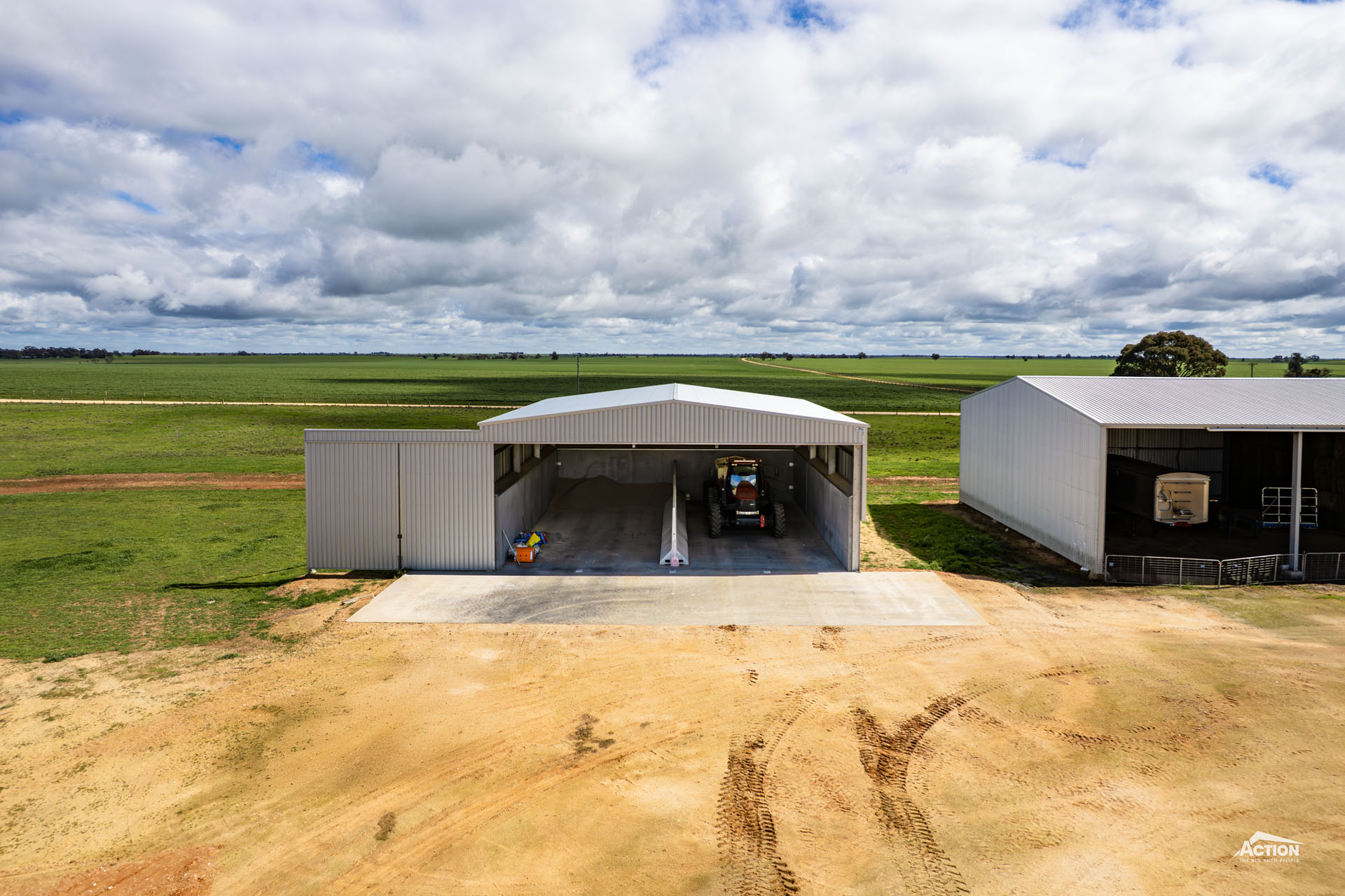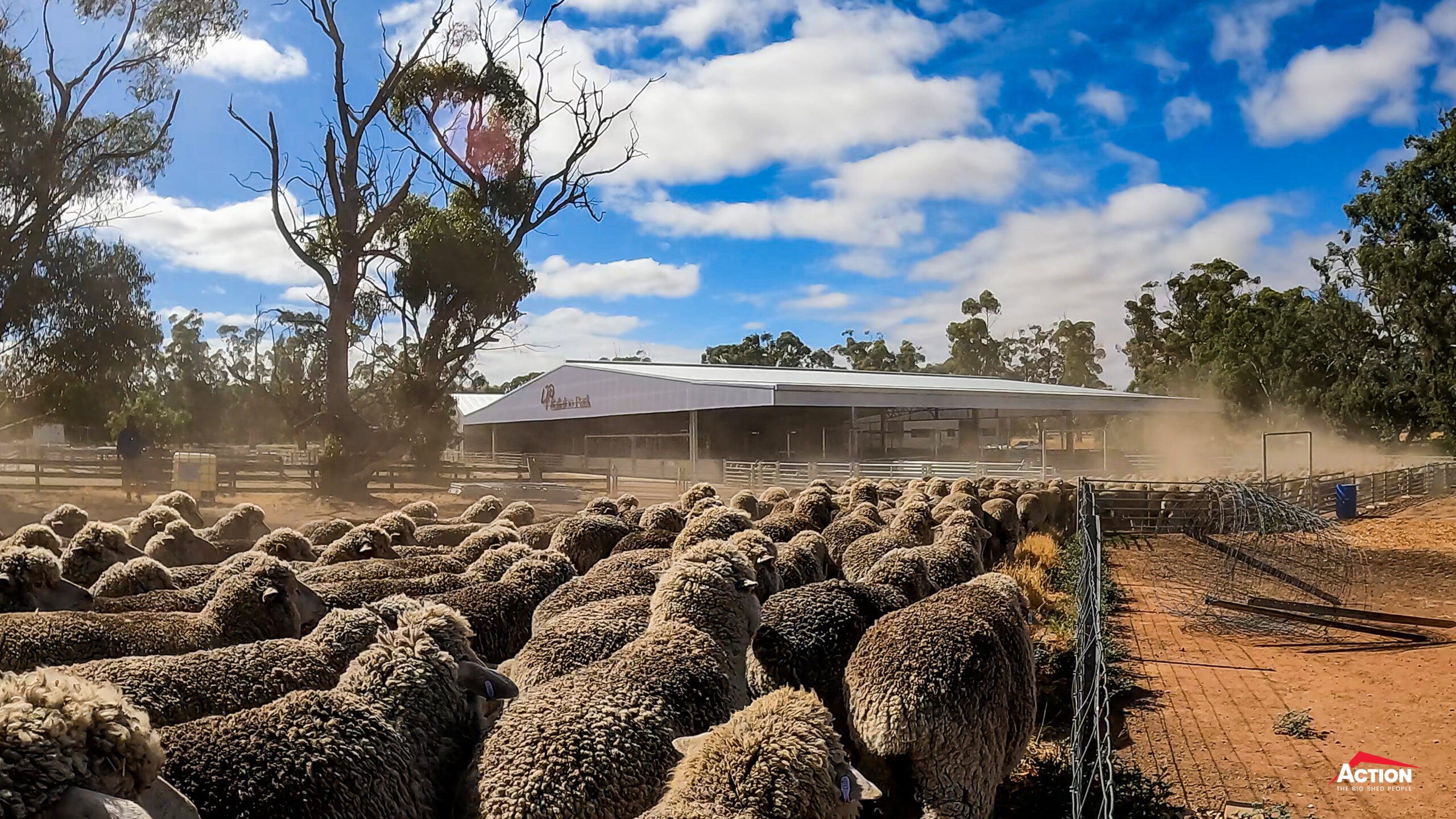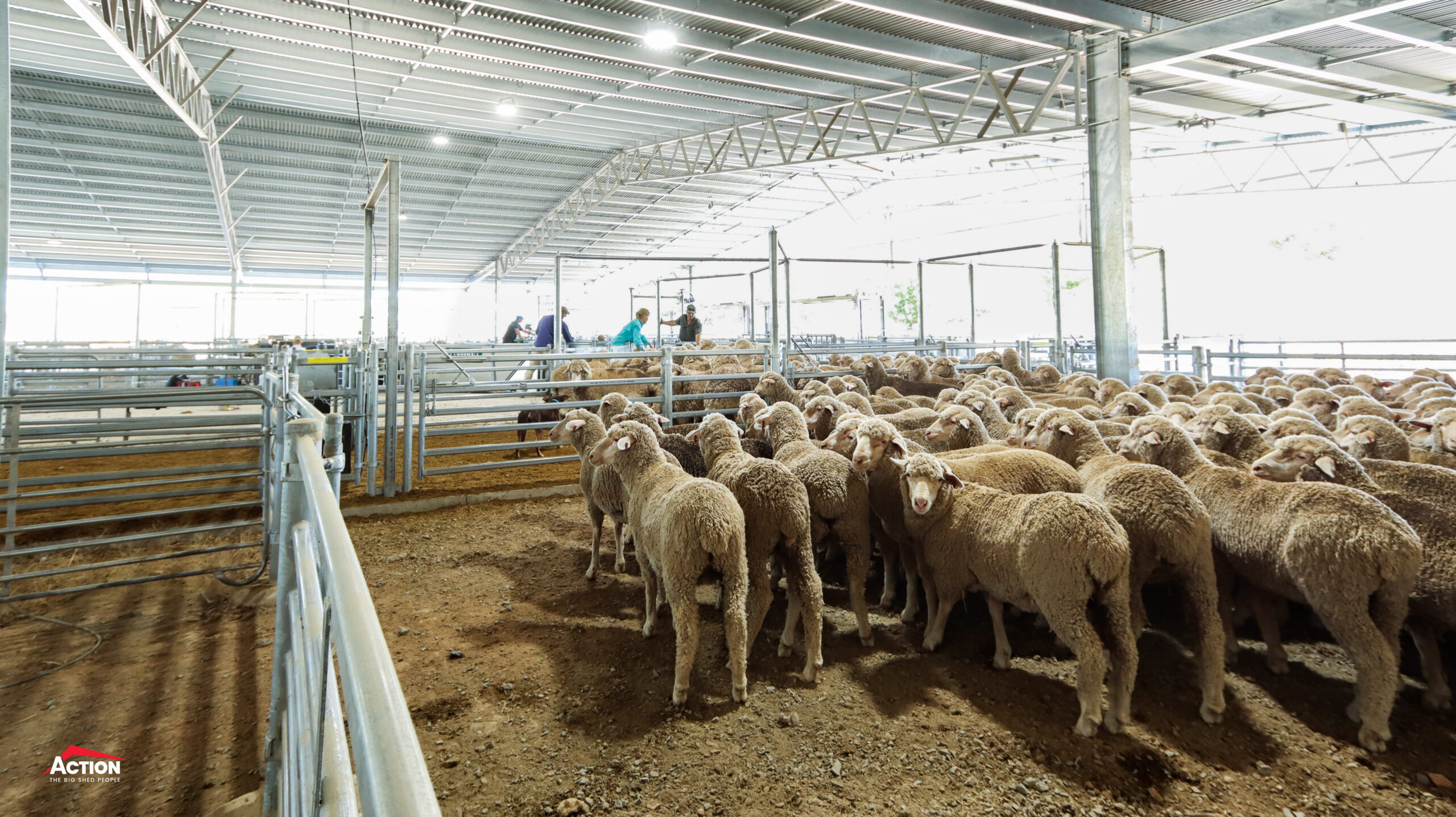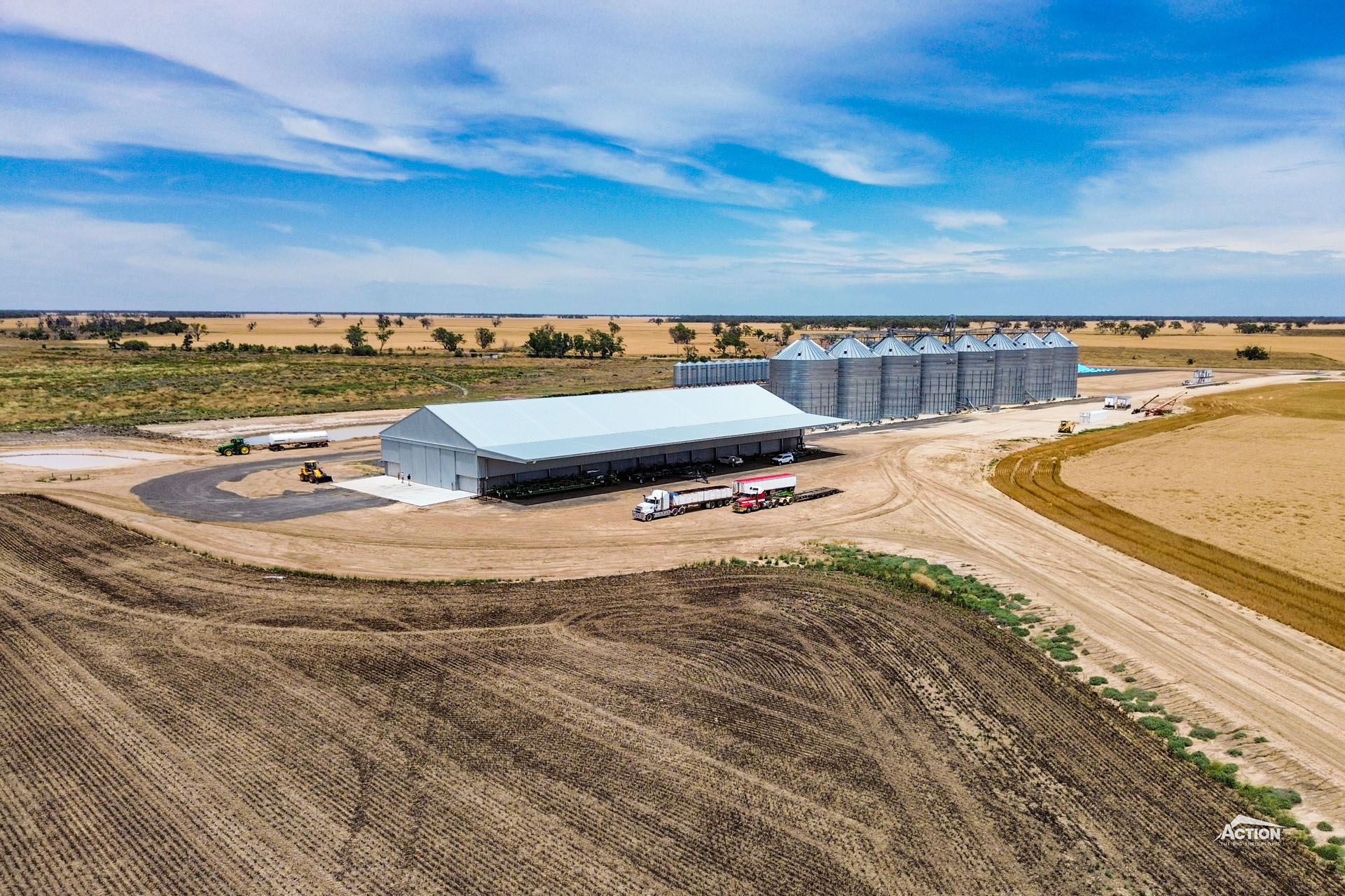
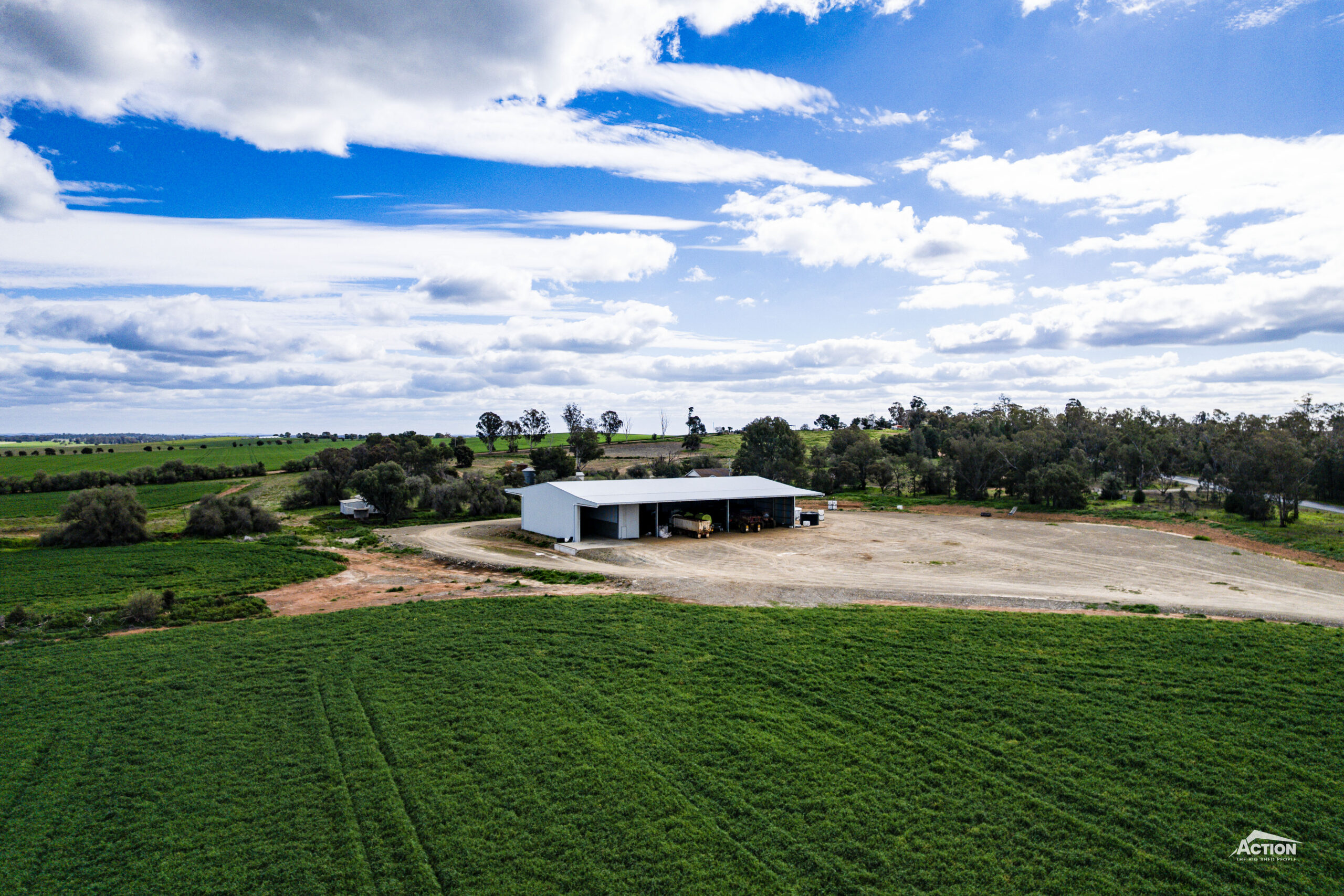
Right now, the conversations we’re having with growers tell a clear story. Farmers aren’t just asking about machinery sheds. They want to know how much more that same shed can do.
We’ve signed off a run of these builds across New South Wales and Victoria over the past couple of months, and the brief is nearly always the same: a multi-purpose farm shed.
This style of shed suits operations where fertiliser storage is less than 300 to 400 tonnes. If you generally require more than this, a dedicated fertiliser shed built to suit your operation’s required volume is usually the better fit. Our Fertiliser Shed Sizes article covers that end of the scale.
Why farmers are asking for this now
“The comments we keep hearing are about flexibility,” Jason Stone, one of Action Steel’s building consultant, says.
“Growers want a shed that houses cropping machinery but also gives them a bay for fertiliser or grain, whilst having the added flexibility of using the space as a dedicated hay shed. One roof, multiple jobs. That’s where the enquiries are heading.”
It makes sense. A shed that shelters machinery is already doing the job it’s built for. Add a fertiliser or grain bay under the same roof and you get real versatility: dry, secure storage for machinery, inputs and produce alike, without the cost of a second build.
There’s a seasonal logic to it too. Machinery sits idle for stretches of the year, but that same shed space can carry grain through summer or fertiliser ahead of sowing. It’s the kind of practical thinking farmers already apply to their paddocks – now applied to their sheds.
What a multi-purpose farm shed adds
One shed, not two
A second structure means a second slab, a second permit and a second set of walls. Combine machinery, fertiliser or grain and even hay under one roof (at different times of the year) and that spend, the slab included, works for multiple jobs instead of one, on a smaller footprint than building separately.
Segregation without another building
Custom concrete panels installed to the shed walls, as well as T-walls and L-walls, let you segregate products like fertiliser and grain into a proper storage bay. Walls can be permanent or moveable, so the split can change as the mix of products on hand changes.
Weatherproof, not just for fertiliser
Concrete panels are standard because they prevent corrosion caused by fertiliser, but the protection is built into the wall, not tied to what’s stored against it. A concrete plinth stops moisture seeping in from below, and sisalation paper stops condensation forming, regardless of what’s in the bay.
Right-sized storage
A multi-purpose shed adds fertiliser or grain storage sized to what your operation actually needs, not what a standalone structure would require to justify building one. Factoring in the design of a dedicated bay in your new machinery or hay shed allows you to obtain the required on-farm storage without needing to overcapitalise on the extra build.
What we’re building right now
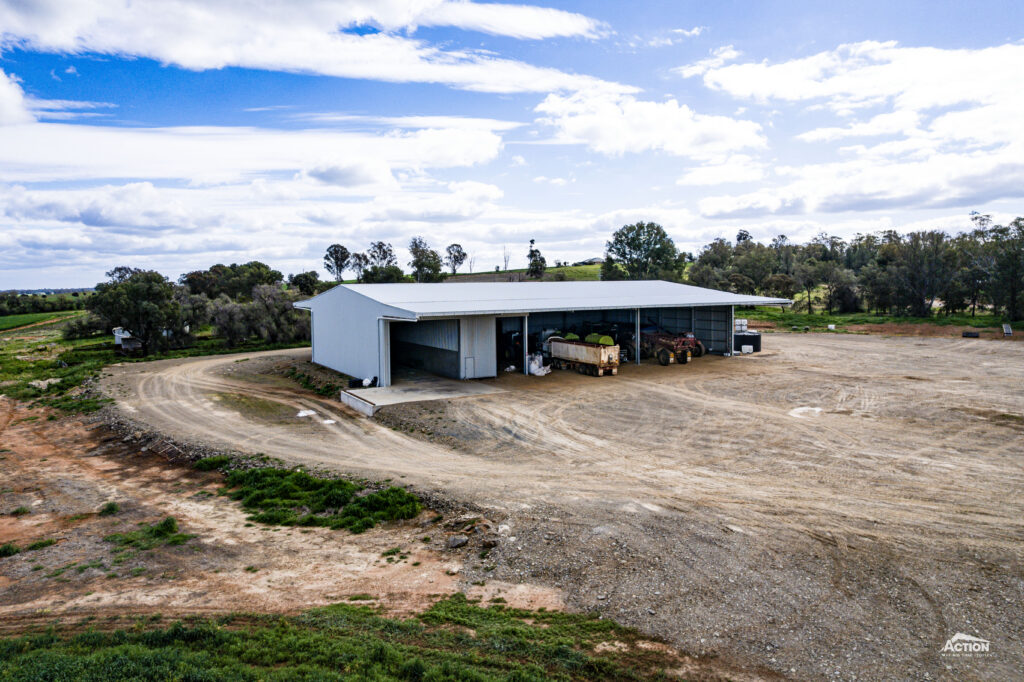
21m x 36m x 7.5m multi-purpose farm shed, with 6m canopies.
Stores approx. 340 tonnes of fertiliser across two 170-tonne bunkers..
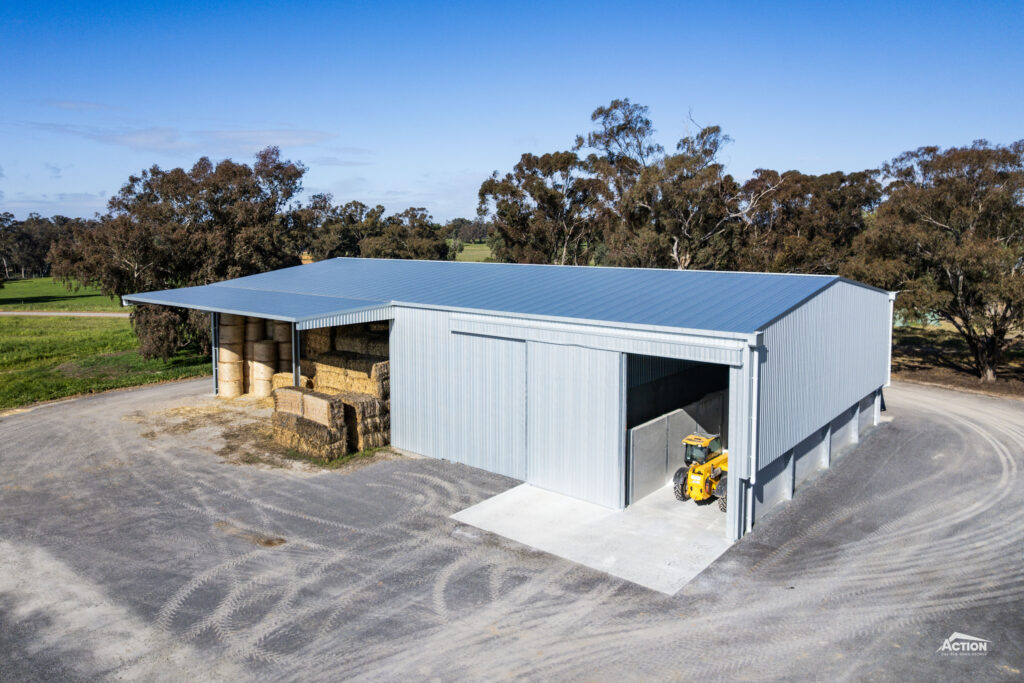
15m x 32m x 6.75m multi-purpose farm shed. Stores 200 tonne of fertiliser.
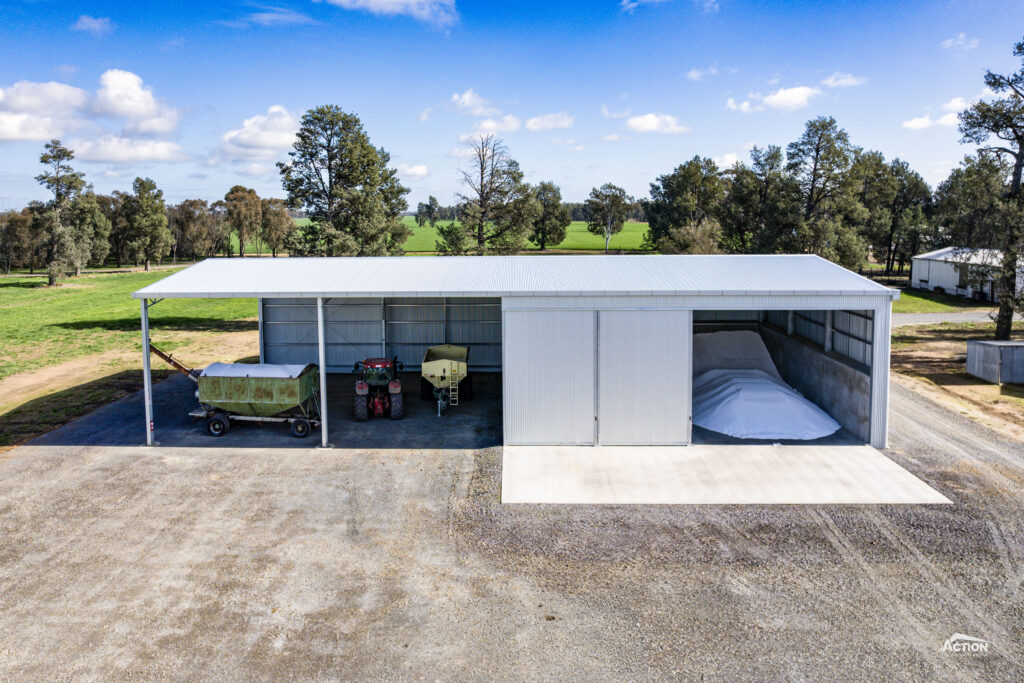
27m x 48m x 8.25m multi-purpose farm shed with 9m canopies on both sides.
Stores approx. 500 tonne of fertiliser.
Built for how you farm
That’s why the conversation with us doesn’t stop at the shed itself. We work through the detail with each grower – concrete panels, permits and timing – so the finished build matches how the operation actually runs, whether that’s a cropping enterprise on the Liverpool Plains or a livestock operation in western Victoria.
It’s the whole process handled alongside the farmer, built on feedback from growers rather than an off-the-shelf template.
Planning your multi-purpose shed
If you’re weighing up how a shed could work across machinery, fertiliser and grain or hay on your farm, the next step is sizing it against your own storage requirements.
For sizing detail specific to fertiliser and grain storage, see our Fertiliser Shed Sizes article. For the design features that make segregation and multi-use work well, see our Fertiliser Shed Design Options article.
Call 1800 68 78 88 or contact us to talk through what a flexible farm shed could look like for your operation.