Our most popular fertiliser shed designs all start with the same questions. How much product are you storing? How will you load and unload it? And will the shed need to store anything else?
The answers usually lead farmers to one of three designs. Below, we break down each one, who it suits and what it costs, so you can plan your next season with confidence.
1. Standard fully enclosed fertiliser shed
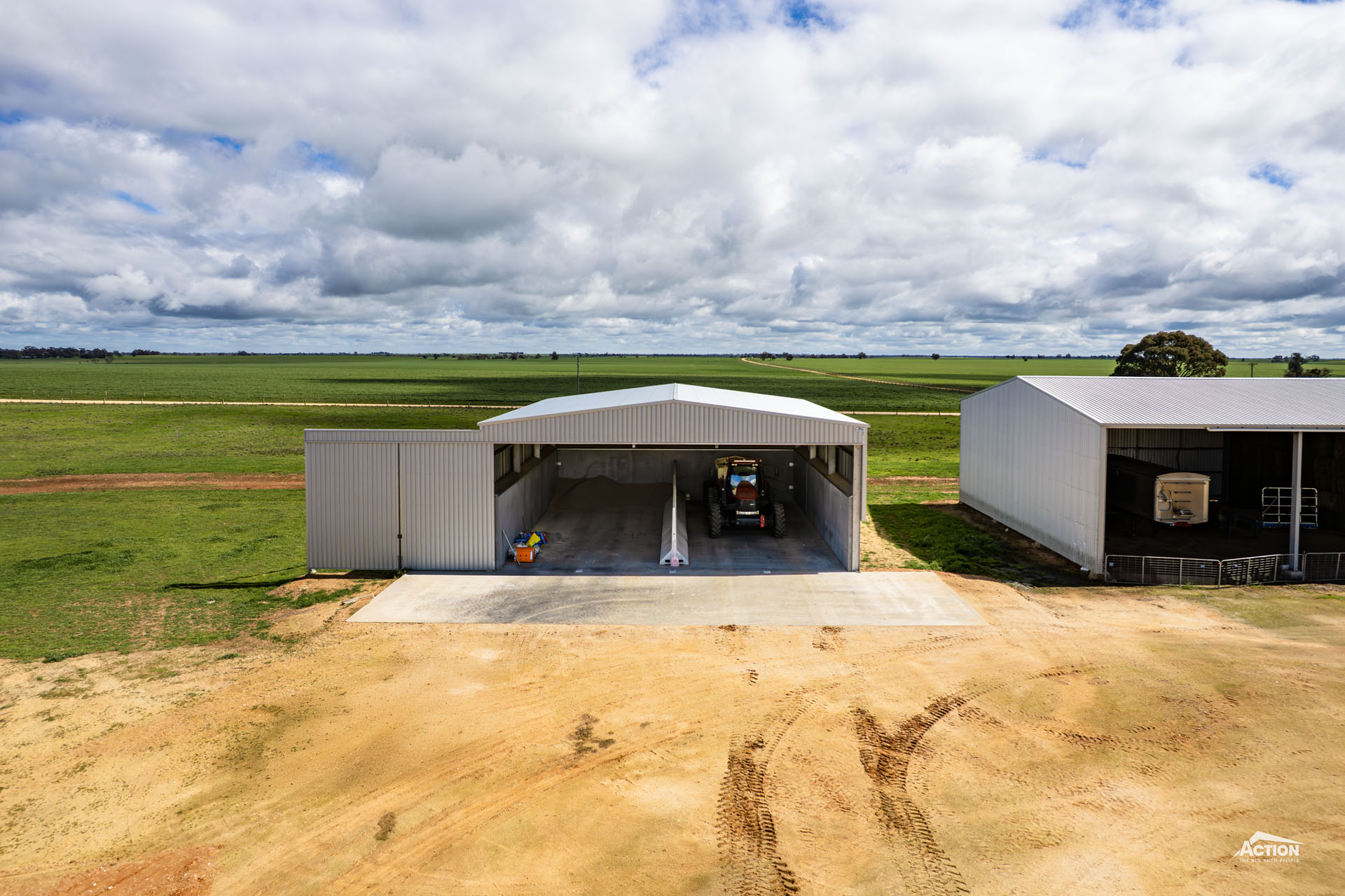
Our standard fertiliser shed is the popular fertiliser shed design in our range. It is fully enclosed for superior weather protection, with sliding doors on one gable end. Add an optional outrigger system and the doors stack clear of the opening, giving machinery more room when loading and unloading.
Every standard shed includes 3-metre-high concrete panels to three sides. Concrete panels are the optimum solution for fertiliser storage, given its corrosive nature. They also give you a solid face to push product against when loading out.
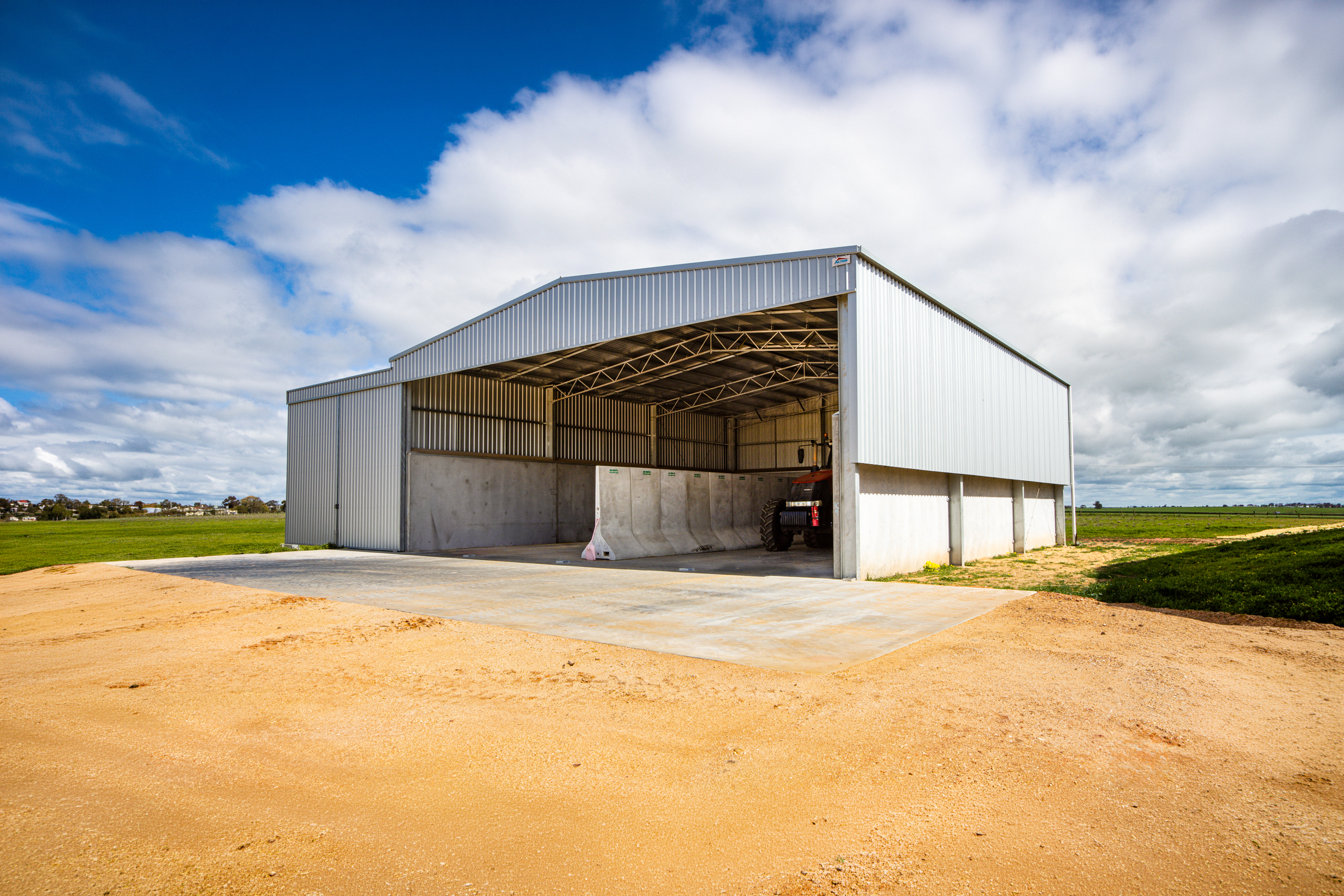
These sheds suit cropping enterprises that want to buy fertiliser in bulk when prices are right. Fertiliser sheds are the storage option recommended by fertiliser manufacturers and suppliers, keeping your product safe, dry and in top condition until sowing. The wide gable opening also makes loading and unloading efficient, saving time when it matters most. The three most popular sizes are below.
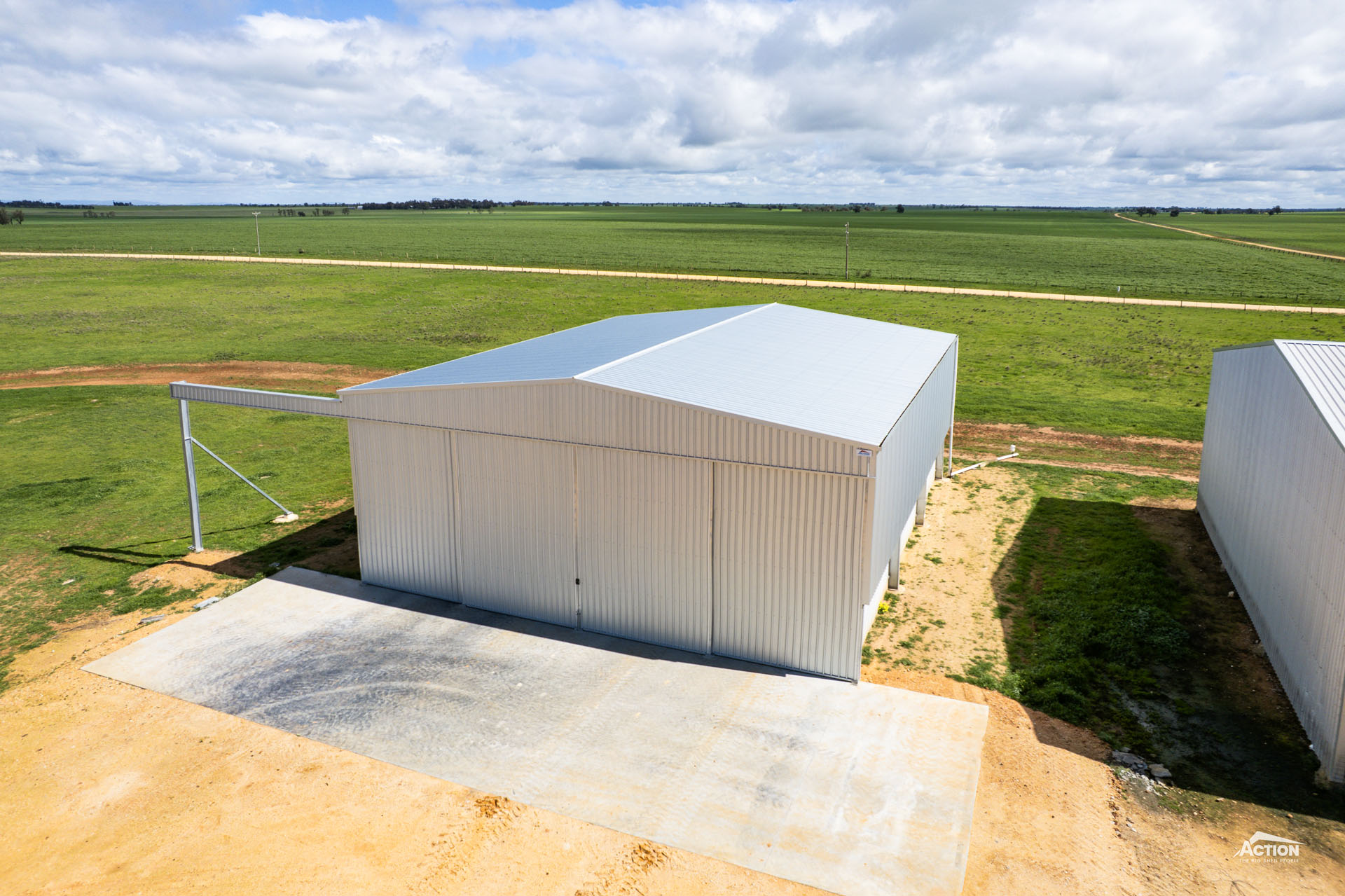
STANDARD FULLY ENCLOSED FERTILISER SHEDS
CAPACITY | SIZE (W x L x H) | PRICE GUIDE |
|---|---|---|
500 tonne | 15m x 18m x 6.75m | $220K to $280K |
1000 tonne | 18m x 24m x 6.75m | $300K to $360K |
1500 tonne | 18m x 32m x 6.75m | $390K to $470K |
Please note: prices above include GST, delivery, installation and concrete slabs but are approximate and should only be used as a budgeting tool. For accurate pricing for your project, please request a formal quote.
Need to store more than one product? Removable concrete T-walls let you segregate urea, MAP and DAP, or pull the walls out for one bulk product. If you plan to tip inside, the 1000 and 1500 tonne sheds are also available with an open gable, 8.25m height and an extra bay for weather protection.
2. Multi-use fertiliser and machinery or hay shed
A multi-use shed puts fertiliser storage and machinery or hay storage under one roof, giving you the flexibility to use the space as your season demands. It is one of our fastest-growing popular fertiliser shed designs, and for good reason. One shed with cost-effective storage across multiple products and on-farm assets.
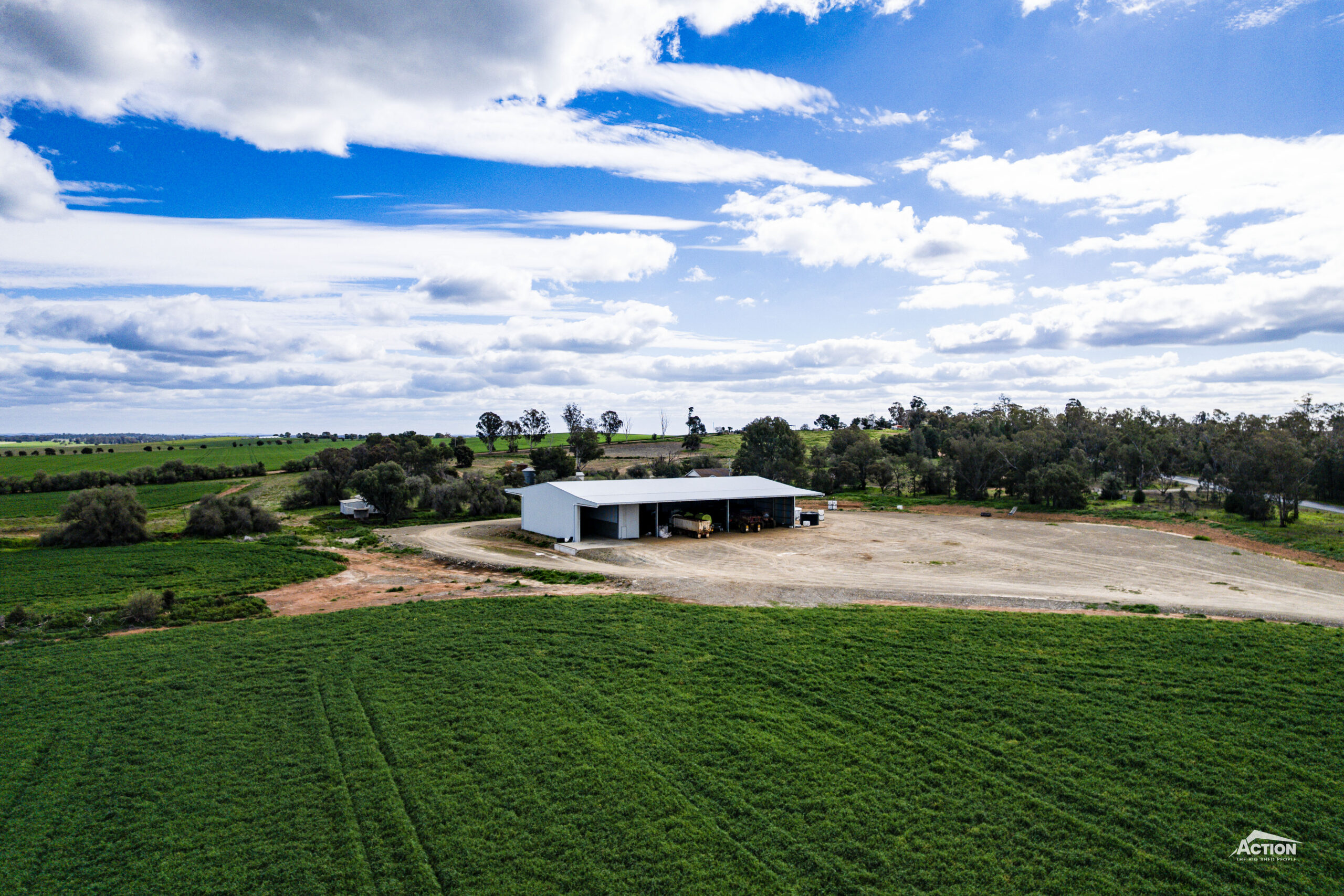
Most multi-use sheds enclose one or more concrete panel bays for fertiliser within an open-front shed, accessed from the long side. The remaining open bays take machinery or hay. Here are some recent projects:
Multi-use fertiliser shed examples
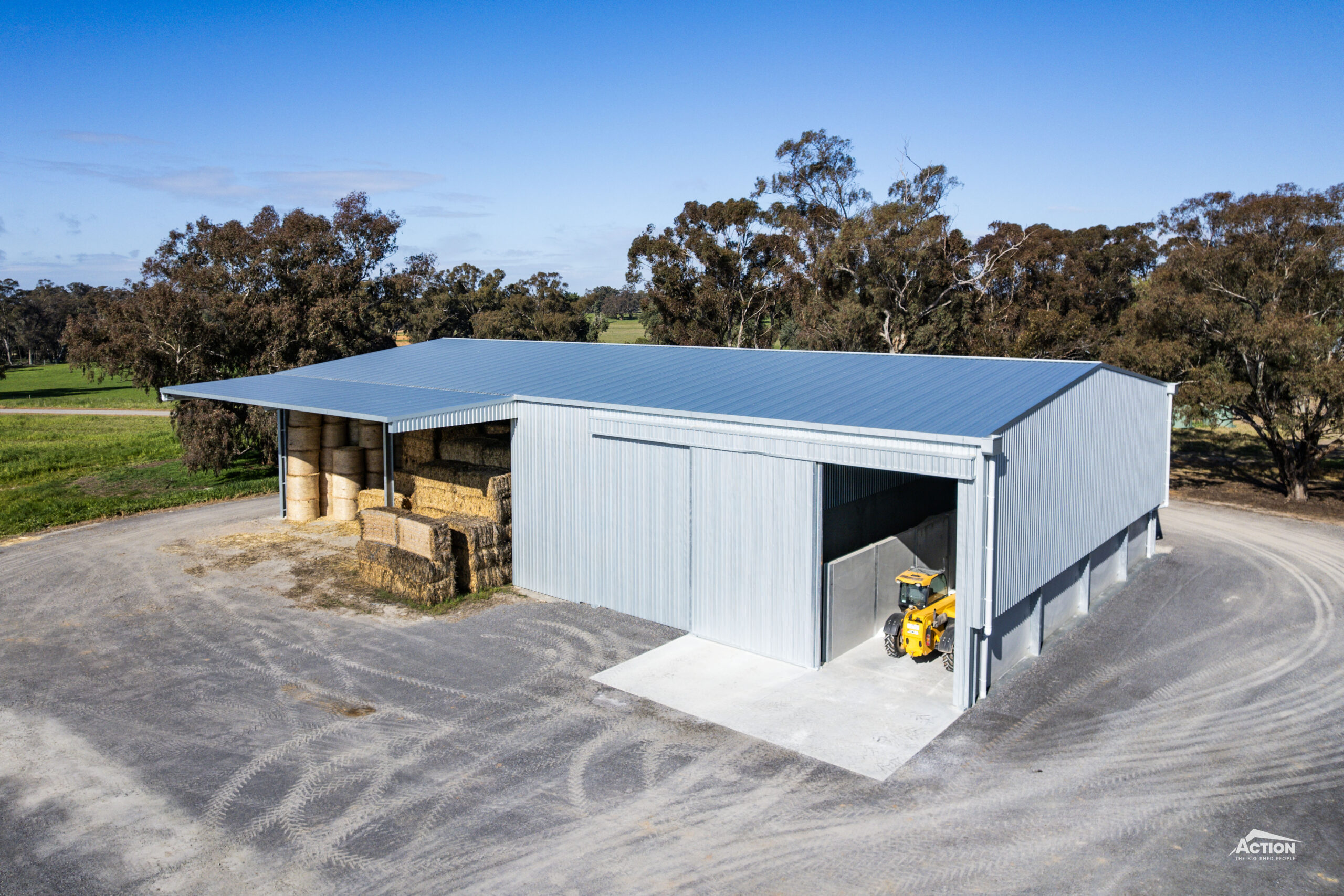
PROJECT 1: 21m x 36m x 7.5m with 6m canopies, storing approximately 340 tonnes across two 170-tonne bunkers.
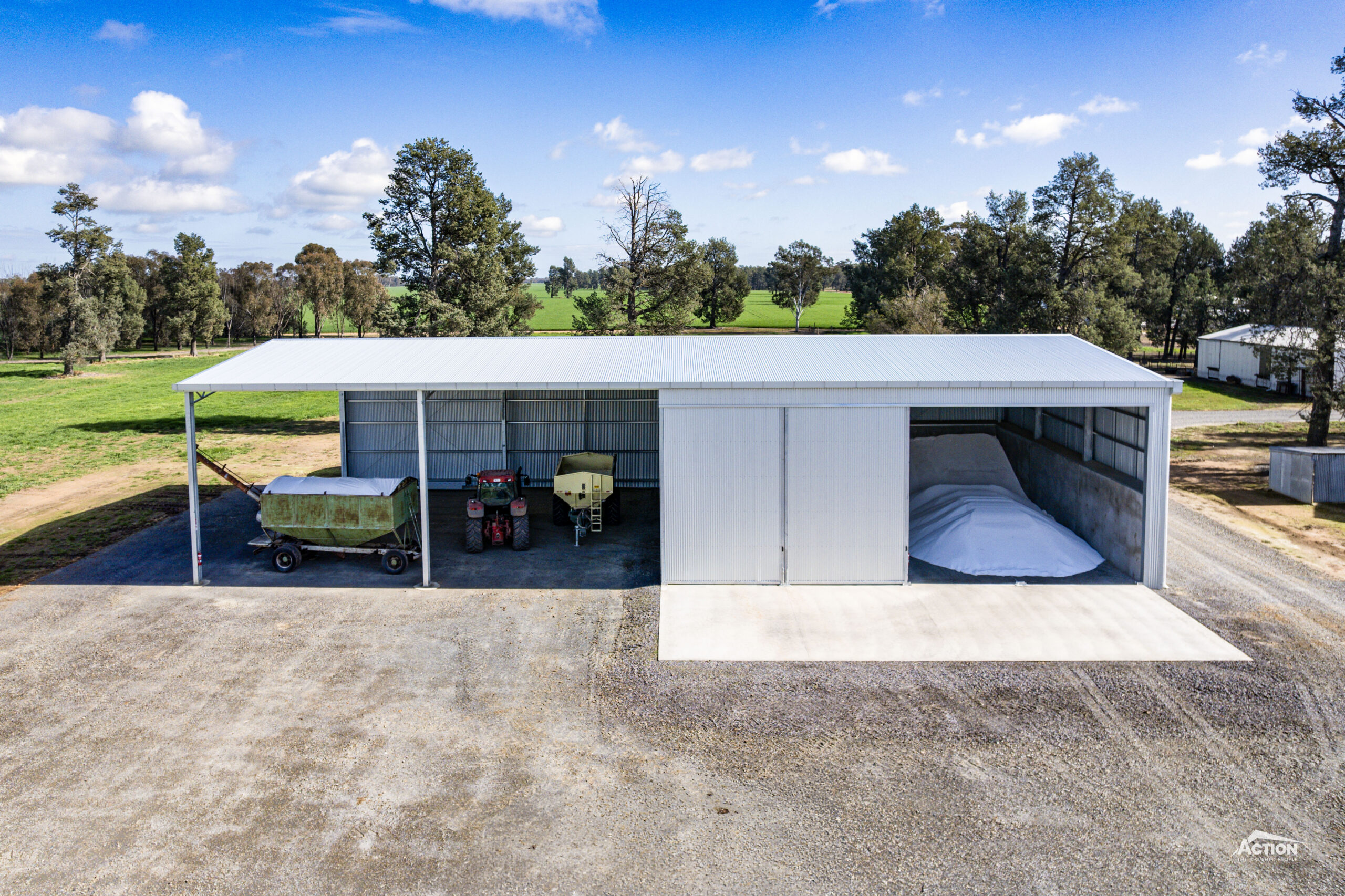
PROJECT 2: 15m x 32m x 6.75m, holding 200 tonnes of fertiliser.
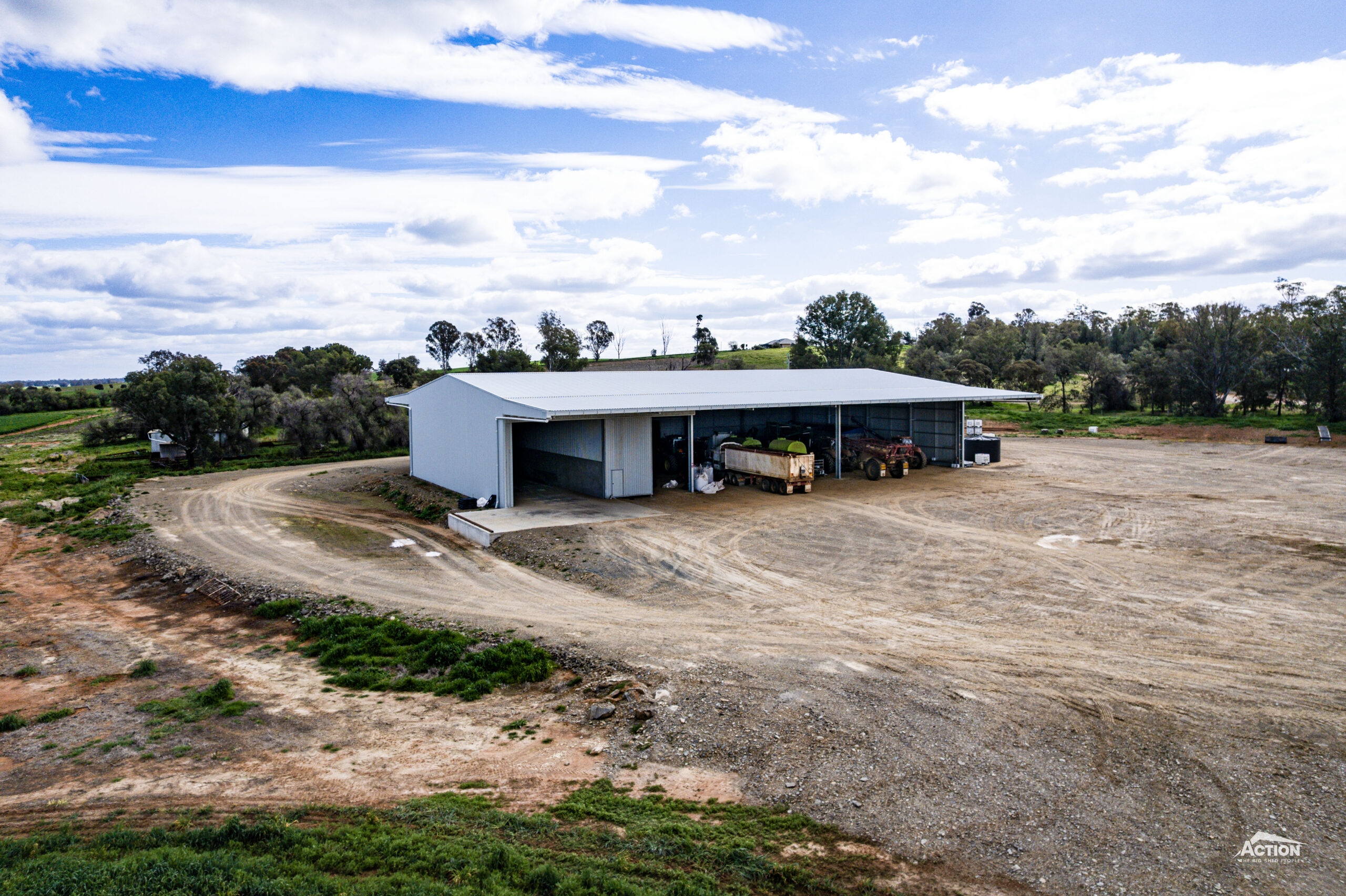
PROJECT 3: 27m x 48m x 8.25m with 9m canopies on both sides, holding approximately 500 tonnes.
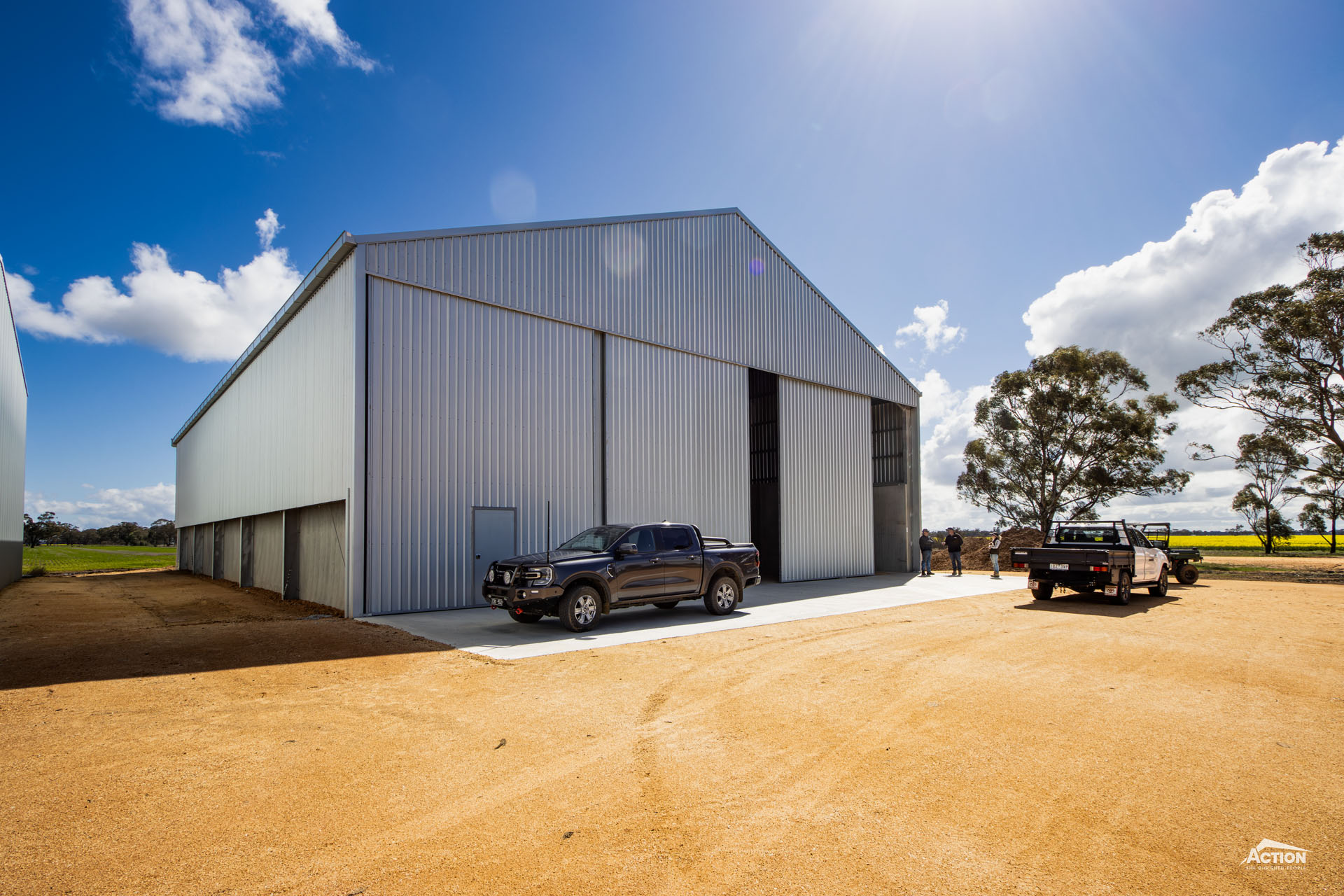
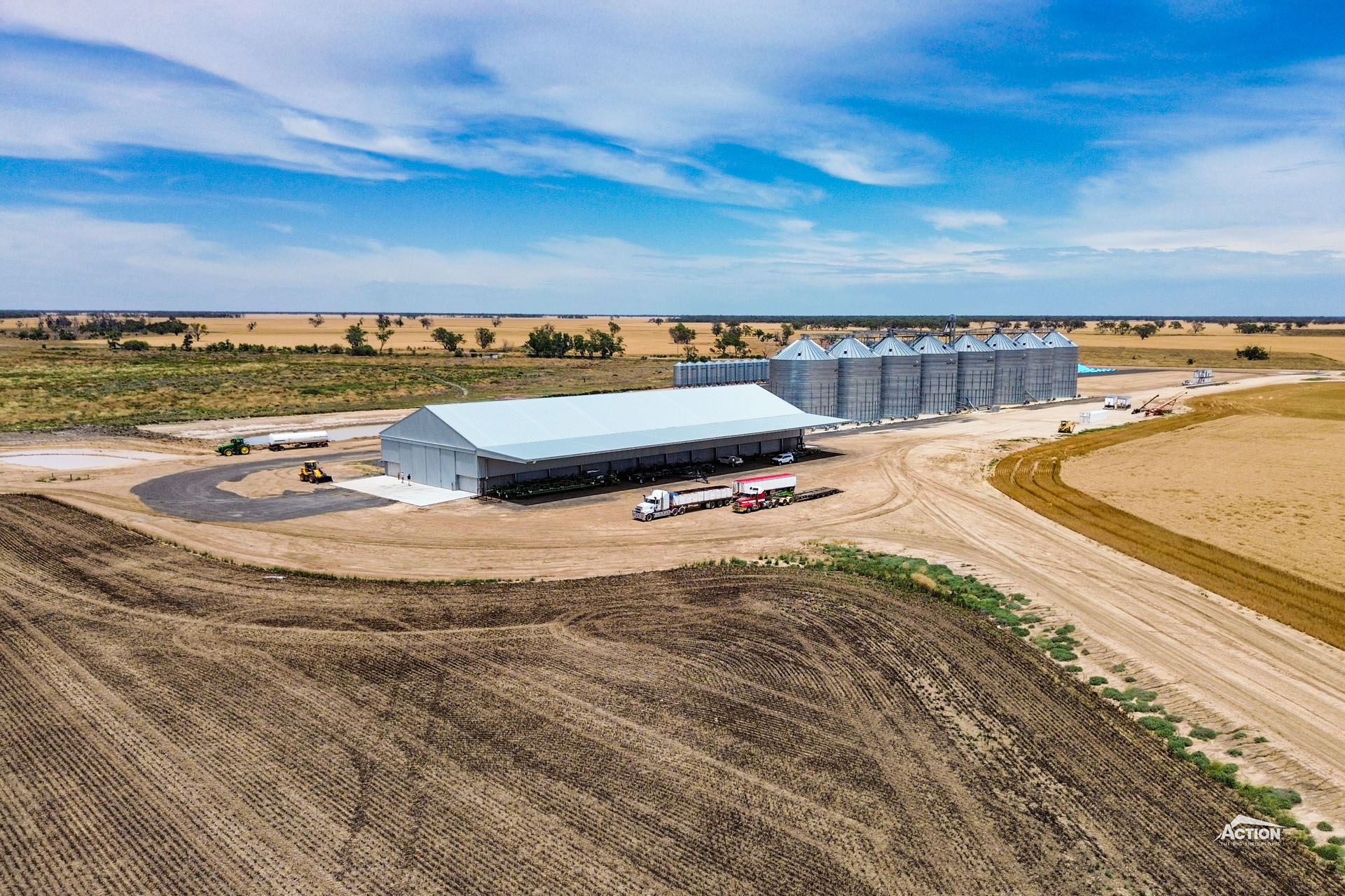
PROJECT 4: 32.5m (L) x 21m (W) x 7.5m (H) grain shed with a fertiliser bunker. It stores approximately 1800 tonnes of grain and 200 tonnes of fertiliser in one build, providing value at both cropping and harvest.
Movable L-walls let you reshape the bays as your needs change throughout the season. After sowing, the fertiliser bay can store grain at harvest or machinery in the off season.
This design generally suits farms storing up to 300 to 400 tonnes of fertiliser. Beyond that, a dedicated shed is usually the better investment. If you plan to co-store fertiliser and machinery, check with your insurer that you are covered.
3. Segregated bay fertiliser shed
If you buy several fertiliser products each season, a segregated bay shed keeps them apart and easy to reach. Sliding doors run along one long side, and each door opens onto its own concrete panel bay. This flexibility means you can access one product at a time, with ease and without having to worry about cross contamination.
Bays are usually spaced around 8 metres apart when accessed from the long side. Concrete panels run 3 metres high, and depending on the capacity of the shed, the door and eave height is increased to facilitate internal tipping.
Segregated fertiliser shed examples
A great example is a 26m (L) x 24m (W) x 9m (H) fertiliser shed with segregated bays, storing approximately 1500 tonnes. Accessing the bays from the long side works well when you store multiple products and strict segregation is a requirement.
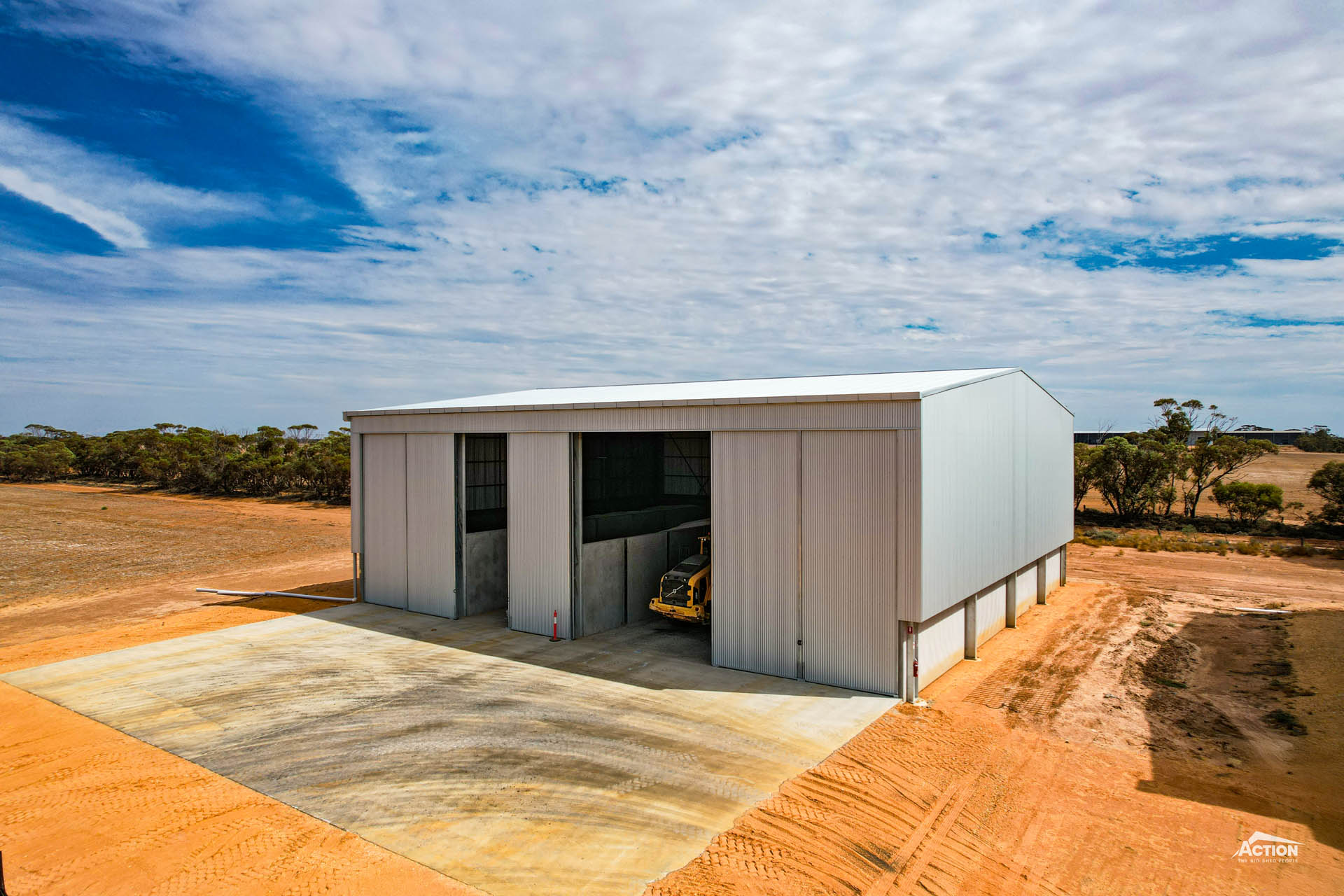
At the larger end, a 40m (L) x 24m (W) x 9.5m (H) shed stores approximately 2000 tonnes across three bays: two 800-tonne bays and one 400-tonne bay. Double-bay spacings with girder trusses and a full-length concrete apron make loading and unloading quick. Take a closer look in our 2000 tonne segregated fertiliser shed case study.
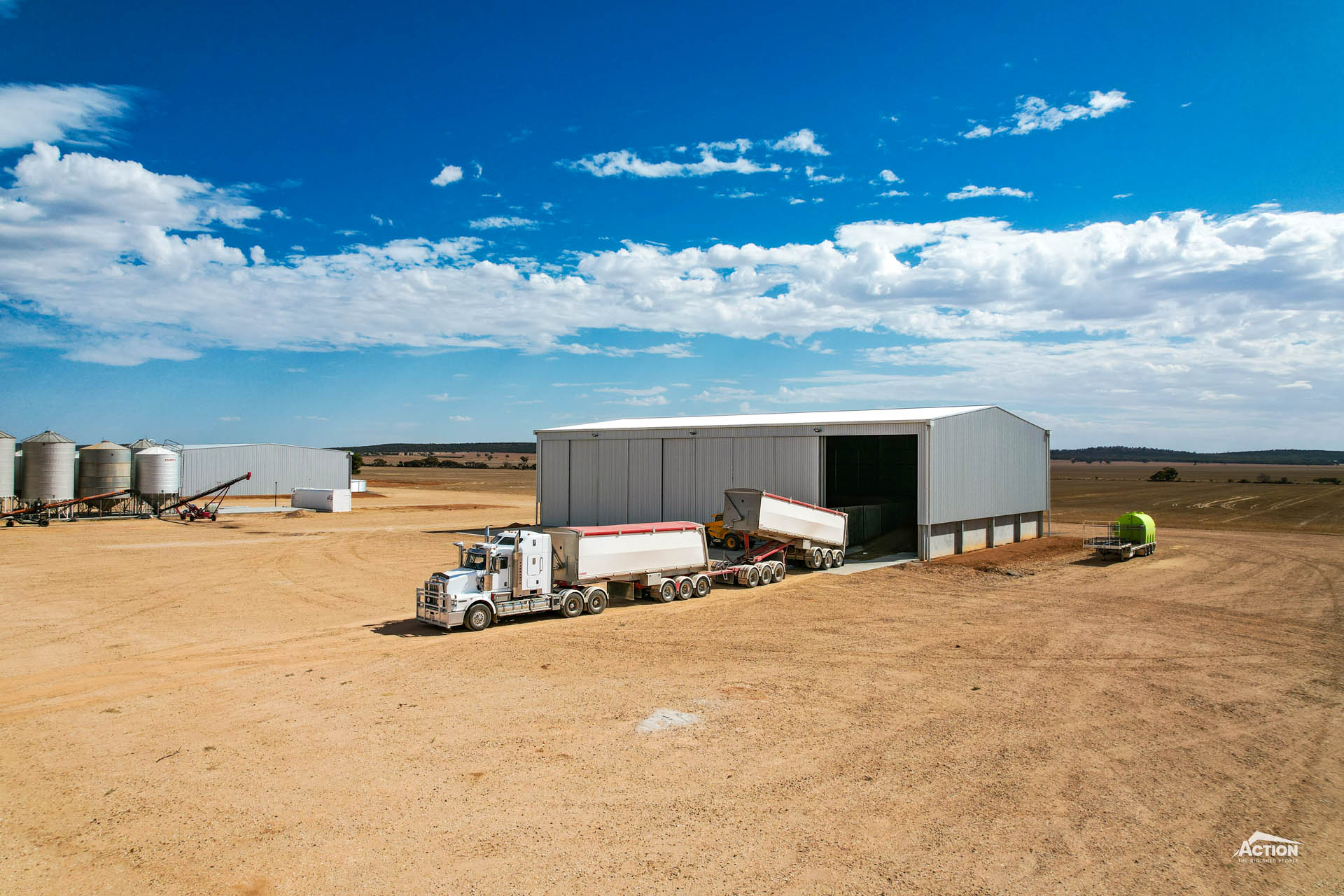
This design suits larger cropping enterprises running a mix of fertilisers, or anyone who wants lock-up security on their product.
While permanent segregation is common for large or corporate cropping enterprises, movable L-walls can provide more flexibility in how you use your storage space.
WHICH FERTILISER SHED DESIGN SUITS YOUR FARM?
DESIGN | BEST FOR | TYPICAL CAPACITY |
|---|---|---|
Standard fully enclosed | Bulk buying, weather-tight lock-up storage | 500 to 1500 tonnes |
Multi-use | Fertiliser plus machinery, grain or hay | Up to 300 to 400 tonnes of fertiliser |
Segregated bay access | Several products, easy to access each | 1500 to 2000 tonnes plus |
Whichever design you choose, every Action fertiliser shed includes a concrete slab, concrete panels, panel flashing and a heavy-duty, fully hot-dip galvanised frame. We manage the whole project, from site evaluation and council permits through to erecting.
These sizes are a starting point only. Each design can be customised to suit your operation, machinery, products and site layout.
For more design options, project examples and planning tips, download our 2026 Fertiliser Shed Guide.
Ready to plan your fertiliser shed? Talk to our building consultants on 1800 68 78 88 or make an enquiry to get your quote.