With harvest rolling and sheds filling, it’s one of the questions our team hears most: can I fumigate grain in a shed?
The short answer is yes, it can be done. But in a standard grain shed, it has traditionally been difficult, labour-intensive and hard to rely on. Sheds are built to keep the weather out, not to hold gas in, so getting the fumigant to the right concentration right through the stack takes a lot of work, and it can be hard to know whether it has worked.
It’s the same question that led us to develop FumoFlow, a grain shed with fumigation built in. More on that below.
First, here’s what fumigation needs, why a standard shed makes it so hard, and the ways growers fumigate grain in a shed today.
What fumigation needs to work
Whatever fumigant you use, the rule is the same. The gas must reach every part of the grain stack and be held there at the right concentration for long enough to work. Hygiene, aeration and protectants help prevent problems, but GRDC notes that only fumigation or a controlled atmosphere will control an infestation once it’s there.
Phosphine is by far the most common fumigant used on farm, so it’s the example we use through this article.
With phosphine, the concentration needs to be held long enough to control insects at every life stage, including eggs and pupae, which take up very little gas while they’re dormant. When fumigation is passive, that depends entirely on the storage holding the gas, which is why GRDC places so much weight on gas-tight storage for those methods.
- 200 ppm held for 10 days, commonly cited for controlling susceptible insect populations at all life stages.
- 550 ppm held for 7 days, commonly referenced for addressing most phosphine-resistant insect strains.
These figures aren’t universally agreed, and the right target for your grain depends on your resistance history, the grain type and advice from your fumigation contractor. But the principle is clear. The concentration must be reached right through the stack and held for the full period. If the gas leaks away before then, insects survive.
Why a standard grain shed can’t hold the gas
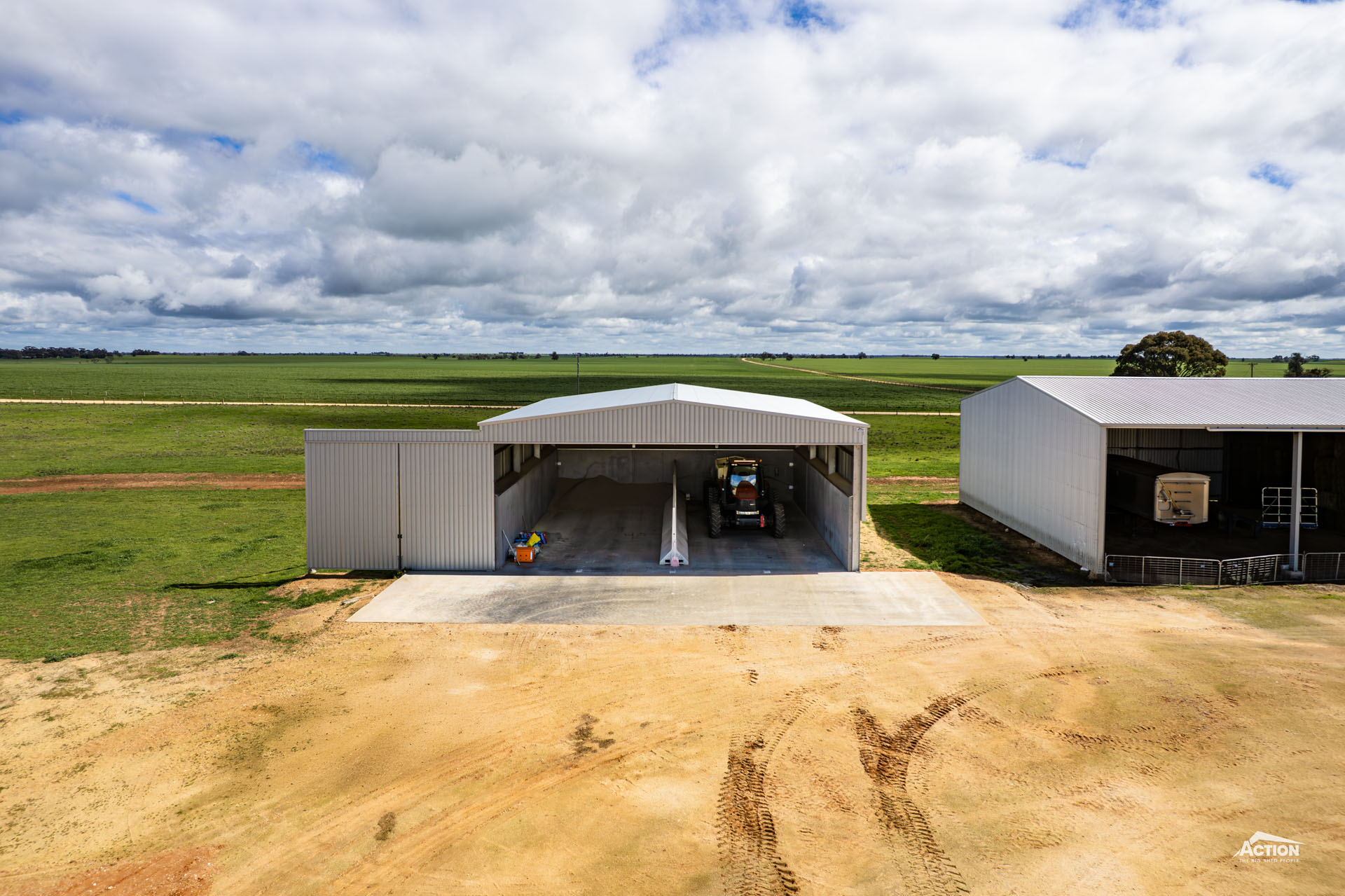
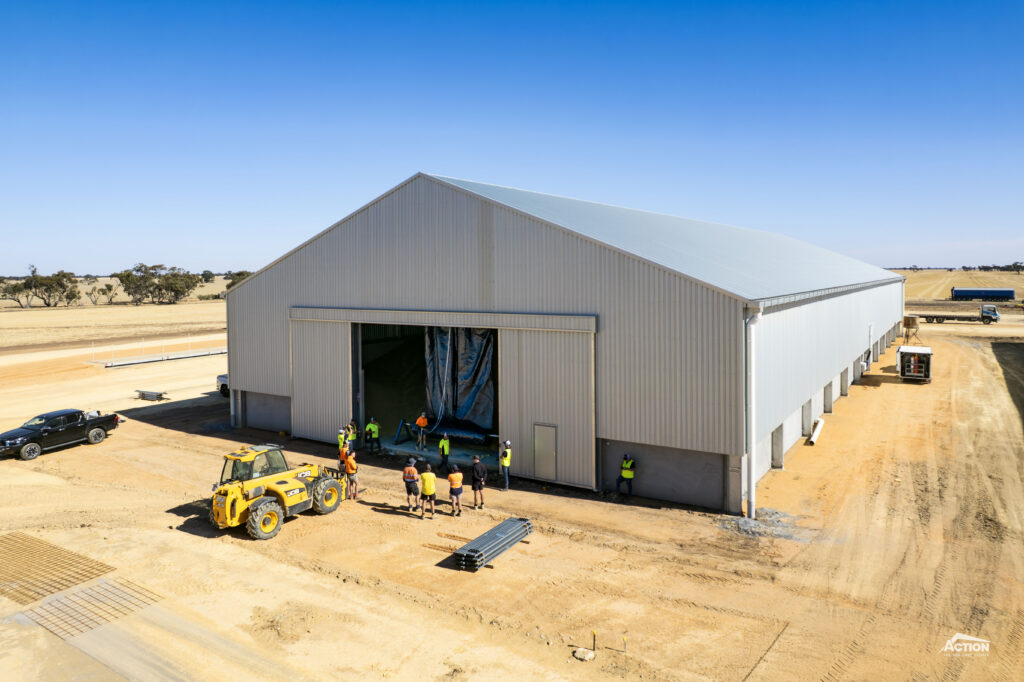
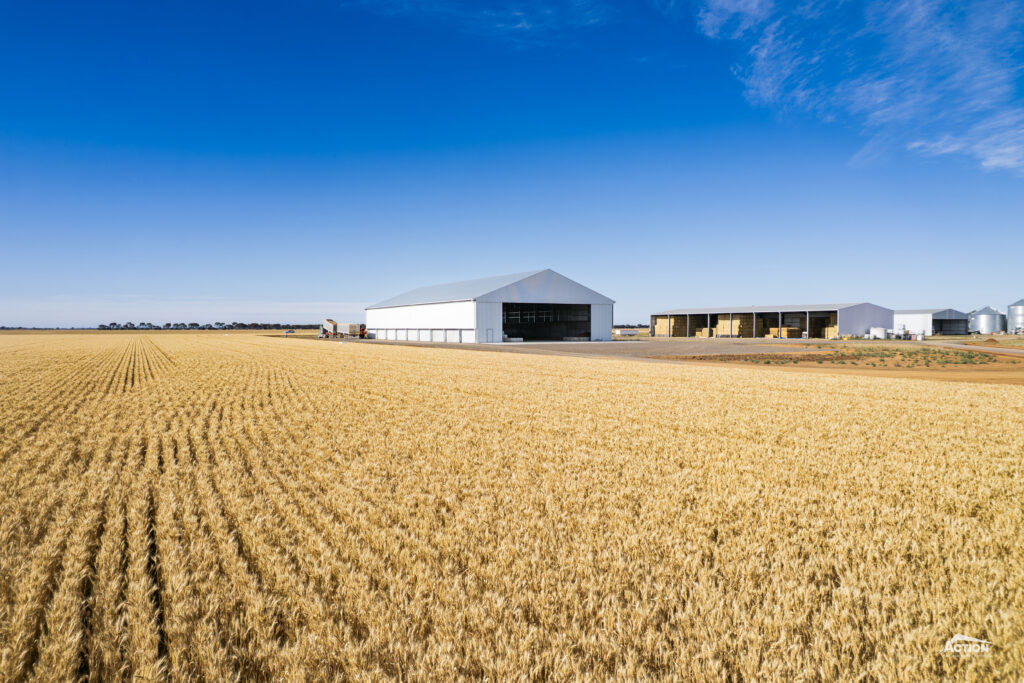
A standard grain shed does a great job of what it’s designed for. Concrete panel walls carry the grain load, the roof and cladding keep the rain off, and big sliding doors let trucks and loaders in and out.
But a shed isn’t gas tight. There are gaps at the doors, eaves, ridge and cladding laps, and air moves through the building every day. Fumigant released into an open shed escapes before it builds to the right concentration through the stack.
That matters for a few reasons:
- The treatment doesn’t work. Insects survive and the grain may still be rejected at receival.
- Resistance builds. Repeated low-dose fumigations select for insects that survive phosphine. GRDC reports about 10 to 11 per cent of storage pest populations tested from eastern Australian farms are strongly resistant. Our article on insecticide resistance covers this in more detail.
- Gas ends up where you don’t want it. Fumigant leaking from the building sits closer to the people working around the shed.
Phosphine labels also set the conditions the product can be used in. GRDC’s guide lists “well-sealed structures” as the storage requirement for phosphine tablets, bag chains and blankets, so always read and follow the label.
How to fumigate grain in a shed
There are three main ways to fumigate grain in a shed. The first two are the traditional methods. The third is newer.
- Sealing the whole shed
The shed itself becomes the gas-tight space. Doors, eaves, ridge and every other gap are sealed so the building holds the fumigant. Some sheds are built to be sealed, and some growers seal up an existing shed before each fumigation. The bigger the building, the more there is to seal, and every door and join must keep sealing over the life of the shed. Once treatment is finished, doors are usually opened by hand and the shed is left to air out before anyone goes in.
- Tarping the grain stack
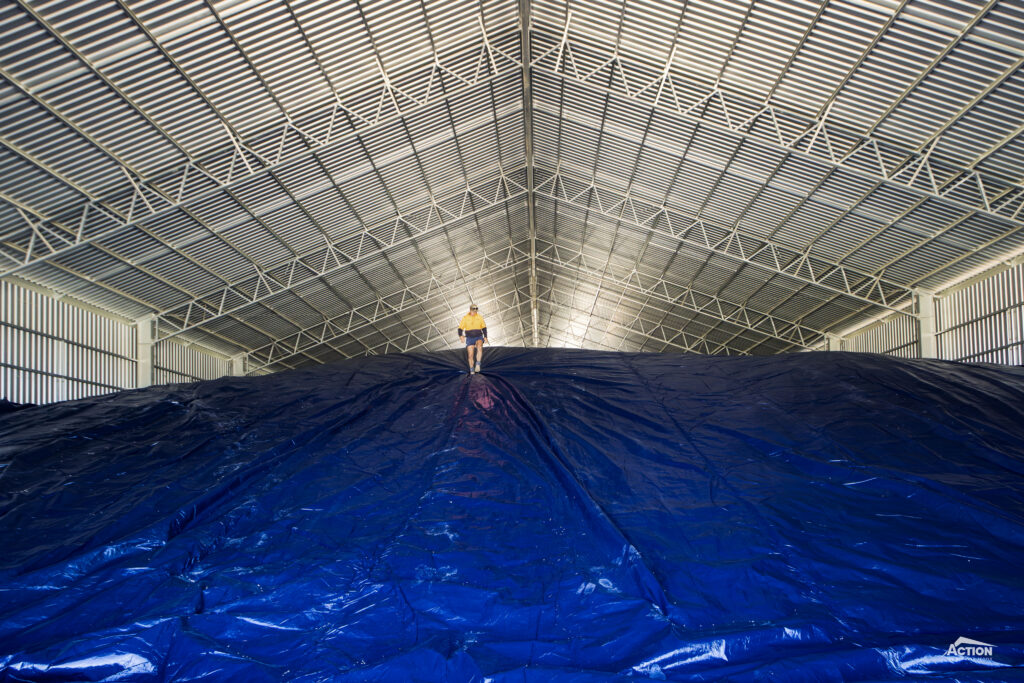
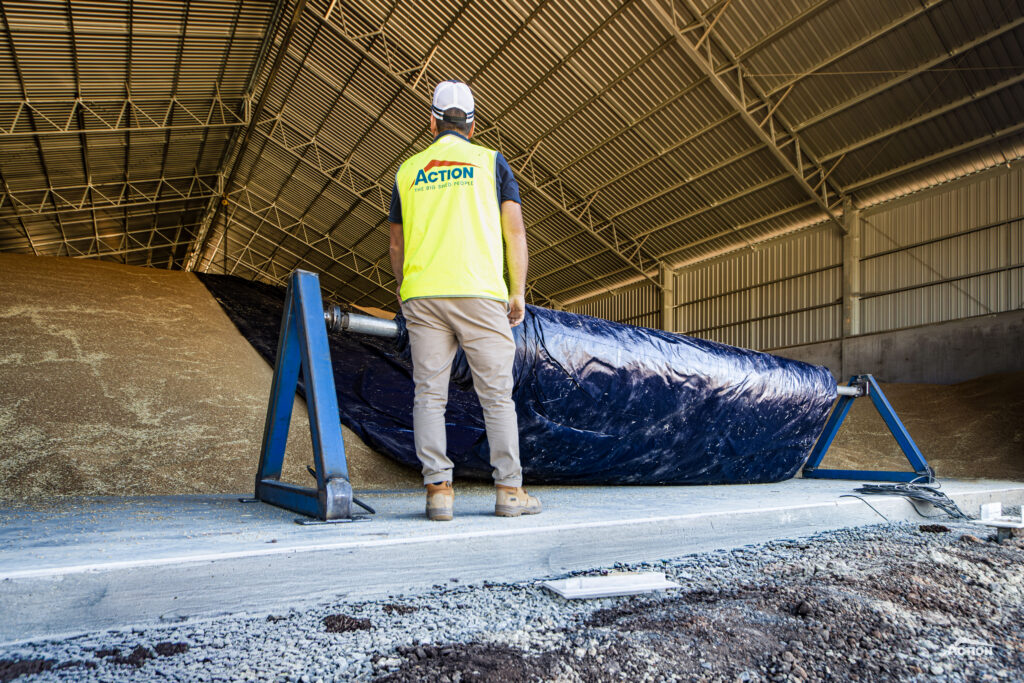
Instead of sealing the building, the grain is sealed. GRDC’s Phosphine Best Management Practices guide groups grain sheds with bunkers and bag stacks, and notes that with sheds, licensed fumigators are often brought in to tarp up the grain. Large tarps are pulled over the stack, joined and sealed so there are no gaps, then the fumigant goes in. Someone usually must enter the shed to introduce the fumigant, and again afterwards to pull the tarps and start venting.
What the first two methods have in common
Both are passive. Once the fumigant is in, the gas is left to spread through the grain on its own. It tends to build up near where it was released and at lower points in the stack, which can leave pockets where the concentration falls short. Those pockets are where insects survive and resistance builds. Grain Trade Australia’s strategy for managing insect resistance to grain protection chemicals identifies uneven application as a key driver of resistance.
It’s also hard to know for sure whether the gas has reached every part of the stack. Tarped grain and sheds can’t be pressure tested the way a sealed silo can, so GRDC says gas meters are an essential part of best practice. Even with a meter, confirming the concentration right through a large stack takes probing in a lot of places. And a zero-insect count after fumigation isn’t always proof the treatment worked, because resistance can build quietly before it shows up. Venting is passive too, relying on natural air movement to clear the gas.
Our FumoFlow team has covered this in more detail in Gas Distribution In Bulk Grain Fumigation: Why It Matters.
- A grain shed with recirculation and ventilation built in
This is the thinking behind FumoFlow, Action Steel’s patent-pending fumigation system for grain sheds. It’s designed for fumigants generally, not just phosphine, and it turns fumigation from a passive process into an active one.
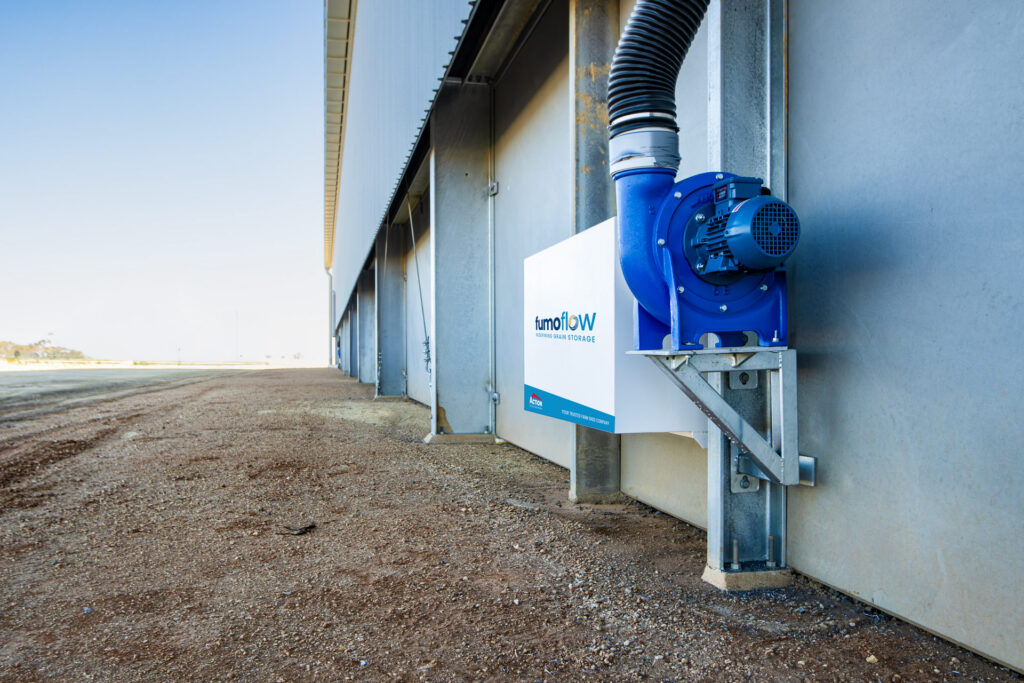
For most of the year a FumoFlow shed works like a standard concrete-panel grain shed. When grain needs treating, a purpose-built tarp is pulled across the stack on a pulley system and seals to flashings at the top of the wall panels. Setup takes under 30 minutes. Fumigant is introduced from outside the shed, in solid form (such as phosphine blankets or tablets) or as cylinderised gas. Fans and ducting then continuously move the gas through the stack, drawing it from vents low in the wall panels and pushing it back in over the top of the grain. Once treatment is finished, the same fans vent the shed, all run from outside.
Unlike a sealed silo, a FumoFlow shed doesn’t rely on being gas-tight to work. Rather than leaving the gas to hold and spread on its own, the tarp contains the fumigation zone and the fans keep the fumigant moving through the stack for the full treatment.
The first full-scale trial used phosphine. In March 2026, on 5,420 tonnes of wheat, every one of the 12 probes held above commonly referenced concentration thresholds across the full stack. The shed reached safe clearance in 4 days.
FumoFlow is added at the design stage of a new Action grain shed rather than retrofitted, because the fans, ducting and fumigant entry points are part of the shed structure. questions growers ask most.
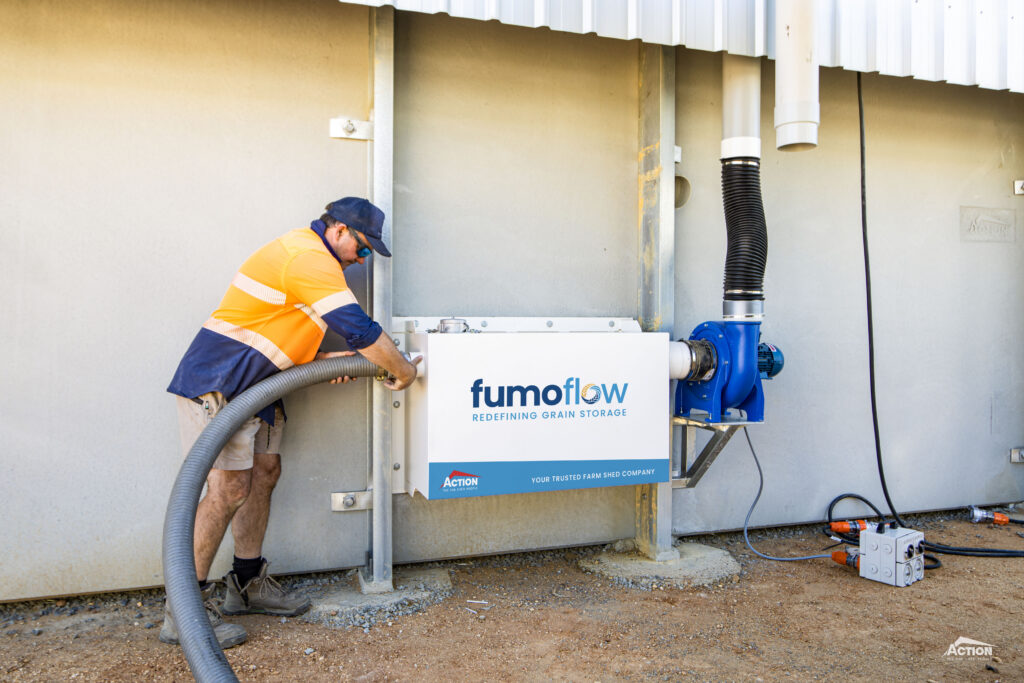
It scales from around 500 tonnes up to full commercial capacity. How FumoFlow Works walks through the full process step by step, and the FumoFlow FAQs answer the
Why recirculation matters in a big grain stack
Left to itself, gas moves slowly through grain. GRDC puts it at around 6 metres every 24 hours through cereal grain. That’s why, without powered recirculation, labels stretch the exposure period out. GRDC notes a 20-day exposure for surface-only application in silos over 300 tonnes, and labels specify 20 days for well-sealed bunkers over 1,000 tonnes. With powered recirculation, the standard 7-to-10-day periods apply.
When you fumigate grain in a shed holding thousands of tonnes, moving the gas actively means a more even treatment from floor to surface, and less time with grain locked up under fumigation.
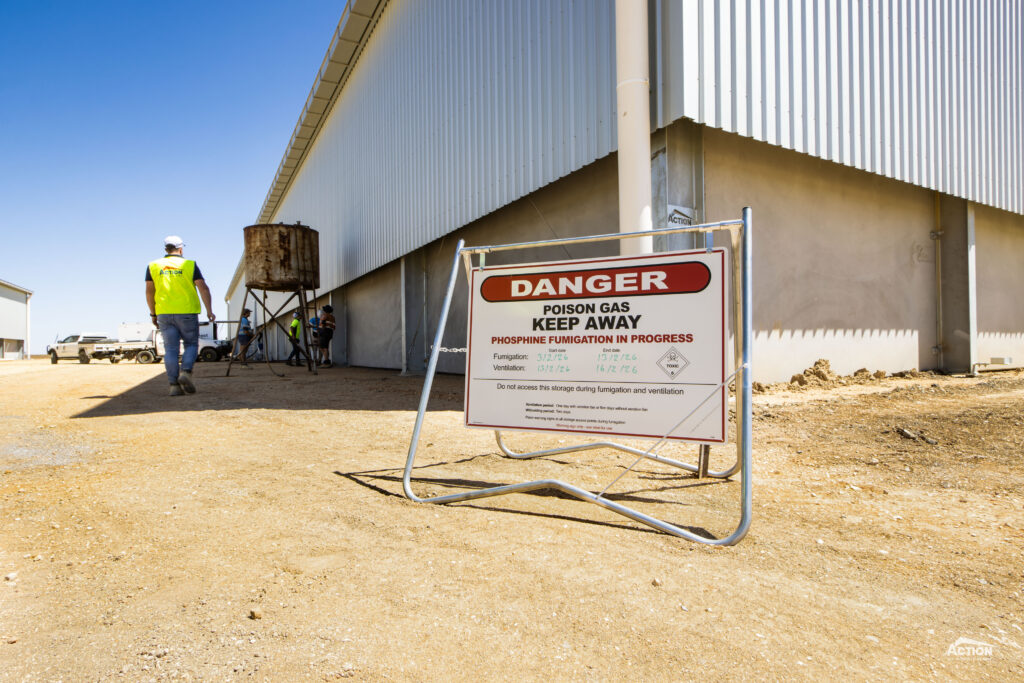
What about the new phosphine exposure limits?
The new workplace exposure limits for phosphine cut the 8-hour average from 0.3 ppm to 0.05 ppm. Start dates now vary by state. Victoria and Western Australia have moved to 1 December 2029, New South Wales to 1 July 2028, and South Australia has also deferred.
Whatever the date in your state, the direction is the same. How a fumigated shed is vented, and how close people need to be while it happens, is getting more attention.
Questions to ask before you fumigate grain in a shed
- How will the fumigant be contained and kept at concentration right through the stack, and how will you check it? With tarped grain, that means a gas meter.
- What concentration and exposure period are you targeting, based on your resistance history?
- Do you have a high-range meter to monitor the fumigation, and a low-range meter to confirm safe clearance?
- Who is applying the fumigant, and are they working to the label?
- How will the grain be vented, and how will people be kept clear?
- What does your buyer or receival site need from you?
Planning a grain shed for future harvests?
If you plan to fumigate grain in a shed, it’s worth deciding at the design stage. It shapes the shed layout, the doors, and where fans and access points sit. Our grain shed options article walks through the main designs, and Understanding Grain Shed Project Timeframes covers how far ahead to plan.
To learn more about how FumoFlow came about, read Industry-First Grain Sheds By Action.
If you’re weighing up how to fumigate grain in a shed on your property, visit fumoflow.au or call our FumoFlow team on 1800 68 78 88 to talk it through.
For anything else on grain storage for next harvest and beyond, request a quote at actionsteel.com.au.
This article is general information only. Always follow the fumigant product label and get advice from a licensed fumigator for your situation.